
Buy PDF guide

Buy PDF guide — 6.43 USD

PDF — 6.43 USD

Ioannina - Lake, old town, fortress, island on the lake, local cuisine

Ioannina - Lake, old town, fortress, island on the lake, local cuisine

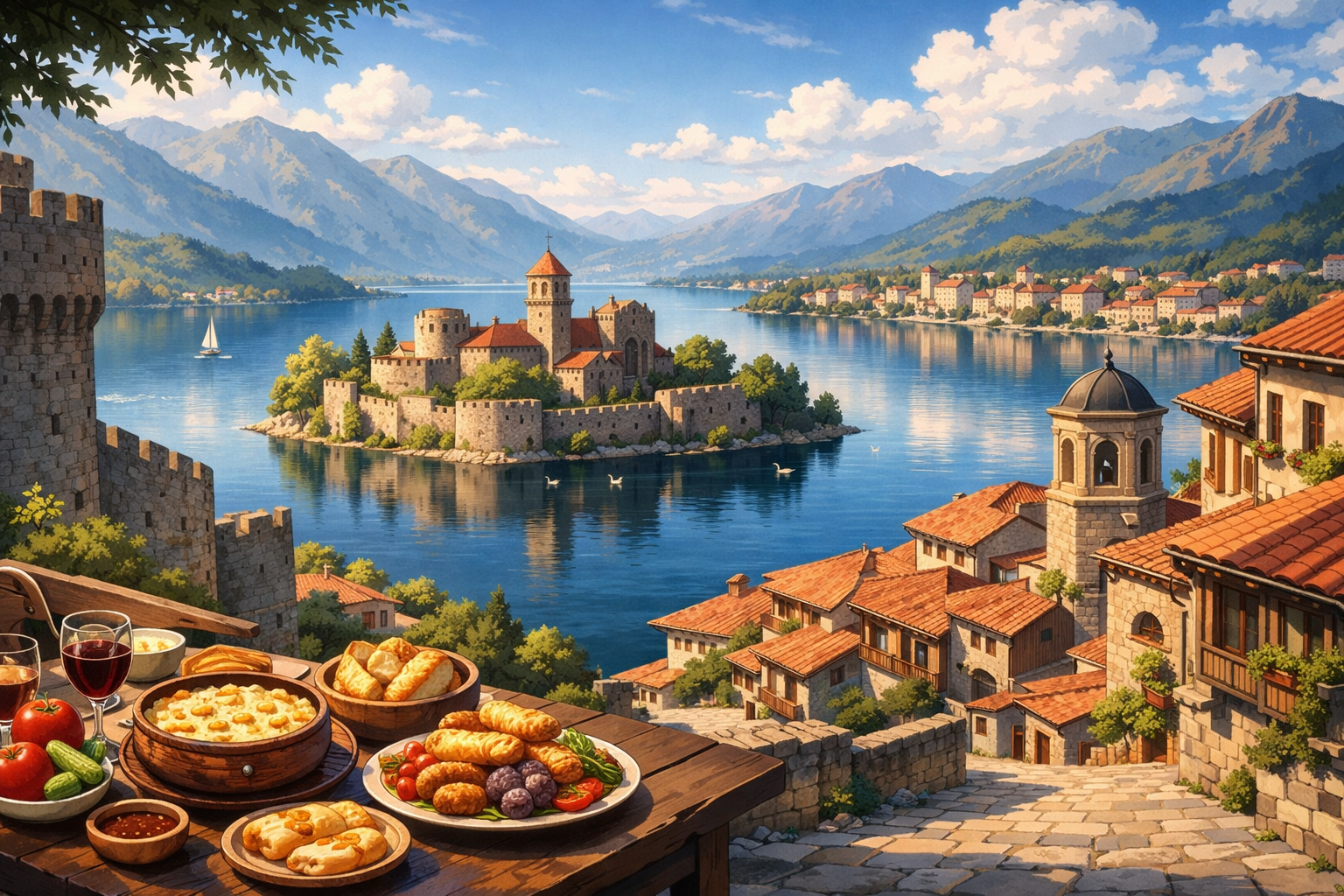
Ioannina blends lakeside calm with centuries of history, where Lake Pamvotida reflects the stone lanes of the old town and its imposing fortress. Just offshore, the tiny island on the lake adds a quiet sense of escape, while the city’s rich local cuisine makes every stop feel warm and memorable.

🧭 DAY-BY-DAY ITINERARY

Ready-made country and city routes with daily plans, sights, transport and accommodation. Buy PDF guides for independent travel.

🧭 DAY-BY-DAY ITINERARY


Day 1 — Ioannina: Lake Pamvotida, the waterfront and the old town

  • 🚕 If you are arriving at Ioannina Airport, allow about 15 minutes to reach the center by city bus or taxi, plus another 15–30 minutes for check-in and a short rest at the hotel. For a comfortable start, it’s better not to overload the first day with long transfers: Ioannina is best enjoyed through a slow immersion — everything essential is gathered around the lake and the walls of the old town.

  • 🚶 Begin your route with a walk along Lake Pamvotida — the main natural symbol of Ioannina. It is a quiet, almost meditative space where the city reveals itself not through noisy squares, but through reflections on the water, a light haze above the surface, boats by the piers, and changing light over the mountains of Epirus. The lake shapes the entire rhythm of the city: it is pleasant to walk here in the morning, when the air is cool and clear, and in the evening, when the facades of old houses, fortress walls, and tree canopies are painted in a soft golden light. The waterfront near the Mavili area and the approaches to the fortress are especially good for a first introduction: on one side, urban life with cafés and promenades; on the other, calm water and a view of the famous island.

  • 🚶 Then head to the old town and the fortress of Ioannina — one of the most atmospheric historic spaces in northwestern Greece. Unlike many city fortresses, this is not just a separate monument, but a living fabric of the city: inside the walls, narrow streets, stone houses, courtyards, small squares, and an entire layer of Byzantine, Ottoman, and Balkan history have been preserved. Walking along the cobbled passages, it is easy to feel that Ioannina was for centuries not only a fortress, but also a trading, craft, and cultural center of the region. Inside the walls, it is especially beautiful to simply wander without hurry: old arches, textured stone, unexpected views of the lake, and the silence that appears just a few steps away from the modern city create a rare sense of a complete historical landscape.

  • 🏛️ If you still have energy after the journey, dedicate part of the day to the inner citadel of Its Kale: here the history of the Ali Pasha era is especially vivid, and the panoramas of the lake and the city make this part of the fortress one of the most photogenic in Ioannina. Depending on your pace, it is convenient to allow 1.5–2 hours for a relaxed walk along the walls, courtyards, and museum points without rushing and with stops for photos.

  • 🍽️ The evening is best finished with an introduction to the local cuisine of Epirus. Ioannina is famous for its tradition of simple but very expressive products: pies with cheese and greens, dishes made with local cheeses, meat specialties, seasonal appetizers, and recipes connected with the lake. In the city’s gastronomic culture, you can feel the character of the whole region — hearty, honest, “earthy” cuisine where dough, dairy products, herbs, slow cooking, and local ingredients matter most. An idea for dinner on the first day is to order an Epirus pie, dishes with local cheeses, and something from the regional meat cuisine, and if you want to go deeper into the local context, pay attention to the gastronomic traditions connected with lake fish.


Day 2 — Ioannina: deeper into the fortress, museums and local cuisine

  • 🚶 The second day is worth dedicating to a deeper acquaintance with the fortress and the museum spaces inside and around the old town. Start in the morning, when the stone quarters are still quiet and less hot: this is the time when the character of Ioannina reveals itself best — a city of silversmiths, scholars, merchants, and layered history, where Christian, Jewish, and Muslim communities lived side by side for centuries and shaped a special urban culture.

  • 🏛️ The Silversmithing Museum of Ioannina is one of the best places to understand local identity. Ioannina is historically known as a city of silversmiths, and the museum helps you see behind the beautiful jewelry, church utensils, and household objects an entire world of craft techniques, trade, and the artistic traditions of Epirus. Even if you do not usually consider yourself a fan of decorative arts, this place impresses with the way it tells the city’s story through metal, ornament, and tools. It is reasonable to allow about 1 hour for the visit, and then give yourself a short break for coffee or a refreshing drink inside the fortress or near its exits.

  • 🏛️ After that, it makes sense to continue to the Byzantine Museum of Ioannina and the Ethnographic Museum, housed in the Aslan Pasha Mosque. Together they explain very well why Ioannina cannot be reduced to a single romantic image of a “city by the lake.” This is a place where Byzantine heritage, the Ottoman era, urban communities, and regional tradition are intertwined. What is especially interesting is the contrast itself: outside — fortress walls, views of the water, and the ancient silhouette of the city; inside — icons, household objects, textiles, weapons, jewelry, and evidence of the lives of different communities. For the entire museum block, it is comfortable to allow 2.5–3 hours, including unhurried walks between locations.

  • 🚶 After lunch, take a lighter walk around the outer perimeter of the old town, the streets around the fortress, and the shoreline. This rhythm makes the route realistic: after the museum part, you want not a new volume of information, but air, water, and simple contemplation. You can return to the lake, find a calm spot with a view of the island, and then walk through the quarters where everyday Ioannina is strongly felt — less ceremonial, but very alive and authentic.

  • 🍽️ In the evening, dedicate dinner specifically to the local cuisine. For Ioannina and Epirus, a wide variety of pies, cheese dishes, local meat recipes, and gastronomy connected with the lake are especially characteristic. In the city, attention is often drawn to traditional dishes made from eel and frog legs — this is part of the old culinary identity of lakeside Ioannina, although of course you should choose them according to your own tastes. A more universal option is to order several small local appetizers, an Epirus pie, aged cheeses, lamb or pork dishes, and finish dinner with a homemade dessert or coffee. Such an evening rounds off the day well, because in Ioannina cuisine is not just food, but another way to understand the character of the place.

Day 3 — Ioannina: the island on the lake, monasteries and a farewell walk

  • ⛴️ Dedicate the third day to the island on Lake Pamvotida — one of the most unusual and essential locations on the route. Boats depart regularly from the area near the fortress and Mavili Square, so the day can begin without haste: breakfast at the hotel, a short walk to the pier, waiting to board, and the crossing itself. Allow about 10–15 minutes for the boat ride one way, but including waiting and boarding, it is better to count on about 30 minutes from the moment you reach the pier until arrival on the island.

  • 🚶 The island itself is not just a viewpoint, but a separate world with its own rhythm, silence, and an almost monastic detachment from the city, which at the same time remains visible very close by. It is considered one of the few inhabited lake island communities of this type, and that is exactly why it makes such a strong impression: in just a few minutes, you are literally transported from an urban environment into a space of narrow lanes, stone houses, trees, small courtyards, and old monasteries. Here it is especially important to walk slowly, without rigid timing, allowing the island to reveal itself not as a checklist of sights, but through its atmosphere.

  • 🏛️ The main historical point of the island is the Museum of Ali Pasha and the Revolutionary Period, located in the Monastery of Saint Panteleimon complex. This place is closely connected with the dramatic final chapter of Ali Pasha’s story and is therefore perceived not as an abstract museum, but as a space of a specific historical event. The very path to the museum through the island’s lanes already sets the right mood: silence, greenery, the lake all around, and a sense of distance from the larger world make the visit especially expressive. It is reasonable to allow 2.5–3.5 hours for the museum and an unhurried exploration of the island.

  • ⛪ In addition to the museum, on the island it is worth paying attention to the monastic architecture and the walking routes themselves between churches, houses, and the shore. Here Ioannina shows its quieter, more contemplative side: not the fortress and not the urban facade, but the inner, almost intimate face of the region. If the weather allows, be sure to stop by the shore and look back at the city: from the water side, the fortress, the waterfront, and the silhouette of Ioannina are perceived quite differently — more unified and even a little theatrical.

  • 🍽️ After returning to the city, end the tour with a late lunch or early dinner by the lake. This is a good moment to gather the impressions of the last three days: the waters of Pamvotida, the old town within the fortress walls, the island with its monasteries, and the rich local cuisine come together into a route that is rare in its coherence. Ioannina does not require racing from point to point — on the contrary, it is especially generous to those who leave time for pauses, a view of the water, a long dinner, and one last unhurried farewell to the city.

Flight tickets

eSIM for travel

Buy PDF guide

Buy PDF guide — 6.43 USD

PDF — 6.43 USD