
Buy PDF guide

Buy PDF guide — 6.43 USD

PDF — 6.43 USD

Volos - A city by the sea, promenade, taverns, trip to Pelion

Volos - A city by the sea, promenade, taverns, trip to Pelion

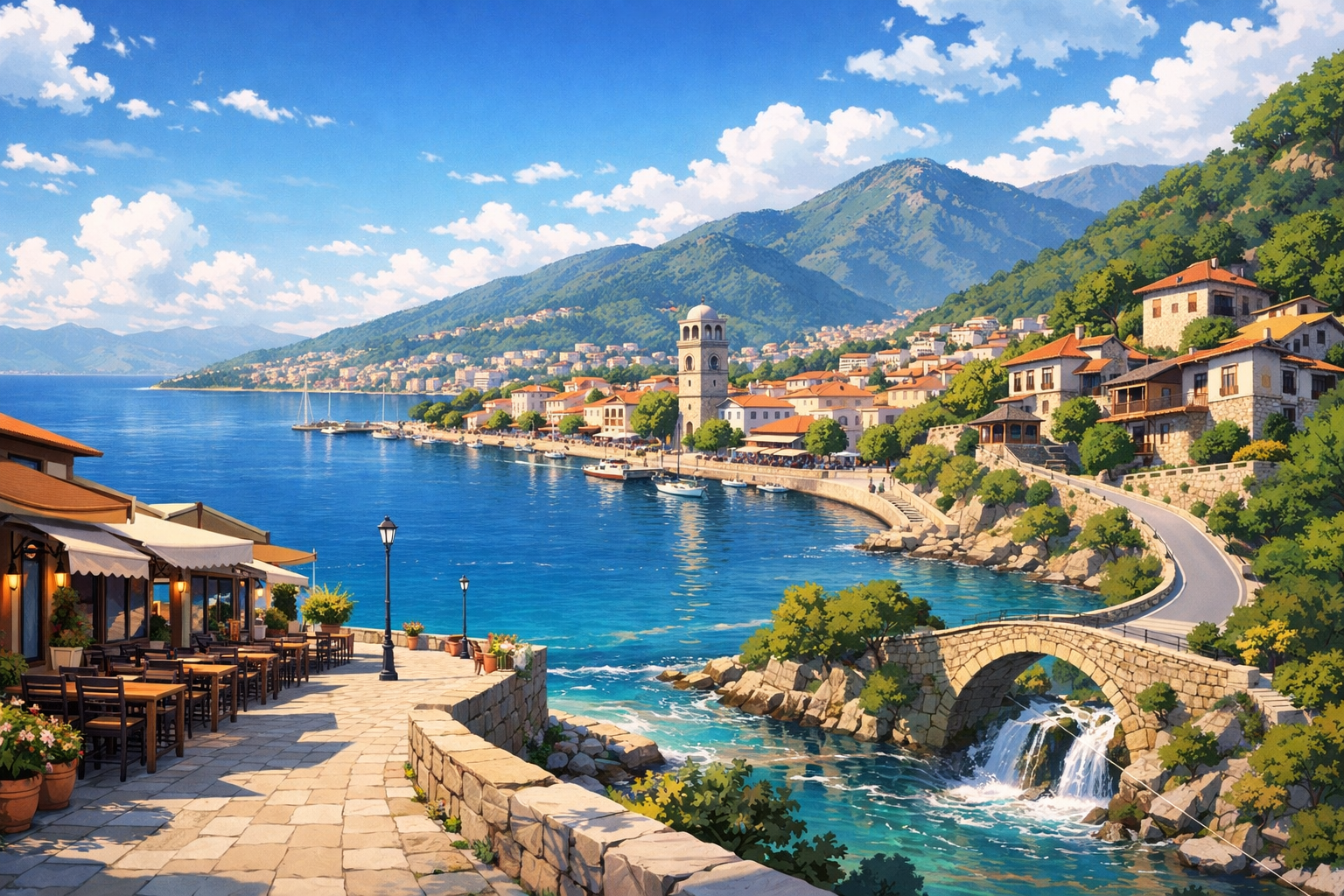
Volos is a lively seaside city where long walks along the promenade end with fresh seafood in welcoming taverns. It’s also the perfect gateway to Pelion, where mountain villages and beautiful beaches are just a short trip away.

🧭 DAY-BY-DAY ITINERARY

Ready-made country and city routes with daily plans, sights, transport and accommodation. Buy PDF guides for independent travel.

🧭 DAY-BY-DAY ITINERARY


Day 1 — Volos: seaside city, promenade, port, and an evening in taverns

  • 🚖 Arrival in Volos is convenient to plan via Nea Anchialos Airport (VOL), located about 30 km from the city. The trip to central Volos by taxi or pre-booked transfer usually takes around 35–45 minutes, depending on the season and traffic. After check-in, it is best not to overload the first day with long transfers: Volos works best as a lively maritime city that reveals itself gradually — through the salty air, broad promenade, port views, and the rhythm of local life.

  • 🚶 Start your introduction with a walk along the Argonafton promenade and the central seafront of Volos. This is one of those Greek cities where the sea is not just “somewhere nearby,” but literally built into everyday life: families stroll here, people drink coffee overlooking the bay, watch the sunset by the water, and move unhurriedly from cafés to taverns. The port, yachts, long promenade line, and open views of the Pagasetic Gulf create a sense of lightness and resort-like spaciousness, although Volos itself remains a real city rather than a decorative postcard. In clear weather, it is especially beautiful to watch how the light falls on the water, while the mountain outlines of Pelion gradually appear on the horizon — an ideal prologue to tomorrow’s trip into the mountains.

  • 🏛️ In the second half of the day, it is worth visiting the Archaeological Museum of Volos — one of the key museums in the region, where the depth of Thessaly’s history and the whole coastline becomes clear. The exhibition helps you see Volos not only as a modern maritime city, but also as part of an ancient cultural landscape connected with settlements, trade, and the mythology of the Argonauts. About 1–1.5 hours is a comfortable amount of time to allow for the visit, after which you can continue your walk without rushing.

  • 🌆 In the evening, return to the sea and enjoy a long promenade along the water. Volos is especially beautiful at this hour: soft light, boats in the harbor, mirror-like reflections of the lights, and the feeling that the whole city has come out to the waterfront. If you want a more local gastronomic experience, choose not just a restaurant but traditional tsipouradika — local taverns where small carafes of tsipouro are served with a succession of small snacks: fish, seafood, vegetable meze, cheeses, olives. Such a dinner is not just food, but a social ritual of Volos, built around unhurried conversation and the city’s maritime character.

  • 💤 Staying overnight in Volos makes the most sense right in the center or by the promenade: that way you do not waste time on transfers, and your morning coffee can be enjoyed literally by the water, watching the port wake up and the city gradually fill with movement.


Day 2 — Trip to Pelion: Portaria and Makrinitsa with panoramas over Volos

  • 🚌 A trip to Pelion can be done without staying overnight in the mountains: buses run from Volos to Portaria and onward to Makrinitsa, while by car or taxi the journey usually takes about 25–40 minutes each way depending on the specific village and road conditions. It is better to leave in the morning so you can see both the sea and mountainous Pelion in good light, and also walk through the villages at a relaxed pace.

  • 🚶 The first stop is Portaria, one of the most convenient and atmospheric “gateways” to Pelion. Here the very texture of the journey changes: the urban coast remains below, and instead of the port line you find plane trees, stone houses, cool air, and narrow cobbled lanes. Portaria is appealing because it does not feel like a museum set — there is a sense of real life, while the characteristic architecture of Pelion and a very pleasant walking rhythm have been preserved. This is a great place to pause for coffee, stroll slowly through the old quarters, and simply adjust to the new scale of space after seaside Volos.

  • 🚗 Then continue to Makrinitsa — one of the most beautiful and best-known villages of Pelion, often called the “balcony” above Volos. The viewpoints here are truly impressive: below lies the whole city, the port, and the curve of the Pagasetic Gulf, while behind you remain green slopes and the stone architecture of mountain Pelion. Makrinitsa is especially powerful precisely because of this contrast: in just half an hour, you move from a seaside city into a completely different world, where stone mansions, stairways, covered passages, fountains, and shady squares form an almost cinematic landscape.

  • 🏛️ In Makrinitsa, it is worth visiting the Museum of Folk Art and History of Pelion, housed in the historic Topali Mansion. It helps you understand how people once lived here: everyday life, crafts, clothing, household items, local memory, and the cultural character of mountain settlements. 40–60 minutes is enough for a visit, after which it is especially pleasant to go back outside and look at the same panoramas with a sense of context — as a living cultural landscape, not just a beautiful view.

  • 🍽️ It is best to have lunch in Pelion itself — in a tavern with a terrace where you can try the region’s homemade cuisine. The atmosphere here is completely different from coastal Volos: more mountain coziness, less urban energy, a slower pace, quieter conversations, fresher air. After lunch, it is worth leaving time simply for a walk and rest, without trying to cover too many points in one day.

  • 🌇 In the second half of the day, return to Volos. The way back usually feels especially beautiful: after the mountain views, the city by the sea seems even wider and brighter. In the evening, you can go out to the promenade again, but without a packed program — simply for dinner in one of the seafood taverns or a glass of wine by the water.

Day 3 — Volos: city museum, calm sea, final walk, and rest before departure

  • ☕ It is best to make the third day softer and more relaxed so the itinerary does not turn into a race. Start the morning with breakfast by the sea and a walk through central Volos, when the promenade is not yet crowded, the light is soft, and the port looks especially photogenic. This is a good moment to feel Volos not as a transit point on the way to Pelion, but as a destination in its own right — a maritime city with a strong everyday aesthetic.

  • 🏛️ Then head to the Museum of the City of Volos, where the history of the modern city unfolds through urban memory, industrial development, the port, migration, and local identity. Unlike the archaeological museum, the focus here is no longer on antiquity, but on Volos itself as a living urban organism. This kind of museum rounds off the route well: after it, walks through the streets, markets, and promenade feel deeper, because you gain a sense of how this city took shape and why it looks the way it does.

  • 🌿 If you still have time and energy, add a short walk through the seaside park area or along quieter stretches of the coast, to give the itinerary a sense of air and pause. Volos is particularly good because you do not always need to “see sights”: sometimes it is enough just to sit by the water, watch the boats, listen to the seagulls, and feel how the city combines maritime openness with the closeness of the mountains.

  • 🍤 The final lunch or early dinner should again be devoted to taverns and meze. If on the first evening this was an introduction to the local gastronomic tradition, then on the last day it becomes a conscious return to it: seafood, small plates, tsipouro, a calm pace, conversation, and a view of the water. For a short three-day trip, this is the perfect ending, because it brings together everything essential: a city by the sea, the promenade, local food, and the proximity of Pelion.

  • 🚖 Departure to Nea Anchialos Airport or onward transfer is best planned with extra time. From central Volos to the airport, people usually allow around 40 minutes for the road, and if you are traveling in high season or using a private transfer, it is wise to include additional time for boarding and waiting.

Flight tickets

eSIM for travel

Buy PDF guide

Buy PDF guide — 6.43 USD

PDF — 6.43 USD