
Buy PDF guide

Buy PDF guide — 29.99 USD

PDF — 29.99 USD

HUNGARY

HUNGARY

Start in Budapest, where the Danube shines beneath stately bridges, then follow the river to the Danube Bend, Eger’s baroque lanes, and Tokaj’s golden vineyards. Cross the Great Plain to Debrecen and the wide skies of Hortobágy. Continue south to Szeged and Pécs before unwinding on Lake Balaton’s sunlit shores.

🧭 DAY-BY-DAY ITINERARY

Ready-made country and city routes with daily plans, sights, transport and accommodation. Buy PDF guides for independent travel.

🧭 DAY-BY-DAY ITINERARY


Day 1 — Budapest: Castle Hill (Buda Castle, Fisherman’s Bastion, Matthias Church)

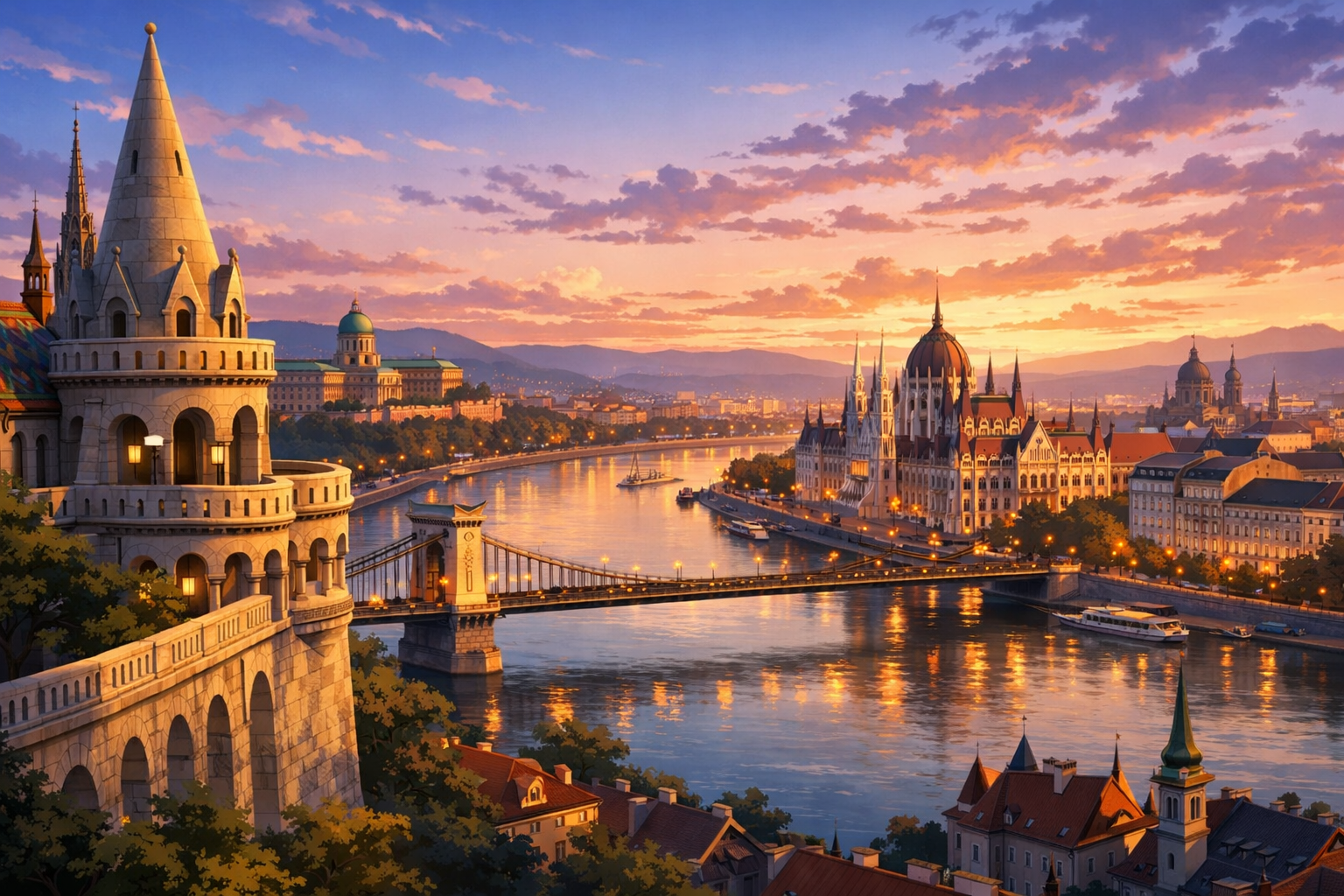
  • 🚶 Devote your first day to the historic heart of Buda. Climb up to Castle Hill—a web of cobblestone lanes leads to the palace complex and museums, and the bastions open up panoramas of Pest and the broad Danube. The snow-white battlements of Fisherman’s Bastion create a fairy-tale silhouette, and the colorful tiles of Matthias Church sparkle in any light. The neighborhood’s atmosphere is Hungarian classic: carillons, the smell of roasted chestnuts, cozy courtyards, and the spirit of the old imperial capital.


Day 2 — Budapest: Parliament, embankments, Margaret Island

  • 🚶 Walk along the embankments between the Chain Bridge and Margaret Bridge: the neo-Gothic lacework of Parliament, the “Shoes on the Danube Bank” — a quiet memorial — and then a green pause on Margaret Island with alleys, monastery ruins, and a musical fountain. In the evening, take in views of the illuminated bridges: the city seems to float above the river.

Day 3 — Budapest: Jewish Quarter and ruin bars

  • 🚶 The Jewish Quarter is a labyrinth of arches, passageways, and courtyards. The Dohány Street Synagogue is one of the largest in the world; around it are tiny galleries and artisan shops. In the evening, drop by the iconic ruin bars: carefully preserved “shabby chic” in former courtyards and workshops turned into lively art spaces with music and installations.

Day 4 — Budapest: Széchenyi Baths, Heroes’ Square, and Városliget

  • 🚶 Daytime relaxation—Széchenyi Thermal Bath in Városliget Park: yellow neo-Baroque facades, billowing steam, chess players in the pool, and a sequence of pools with different mineral content and temperatures. Nearby are Heroes’ Square with monuments to Hungarian rulers, the Museum of Fine Arts, the House of Hungarian Music, and the romantic Vajdahunyad Castle. The perfect “museums + nature + thermal baths” balance within walking distance.

Day 5 — Danube Bend: Szentendre → Visegrád → Esztergom

  • 🚆 Transfer (day trip): Budapest → Szentendre (suburban HÉV line H5: ~40 min), then by bus or boat along the Danube to Visegrád (~30–45 min), then to Esztergom (~30–40 min). Return to Budapest by train/bus in the evening.

  • 🚶 Szentendre—cozy cobbled streets and artists on scooters; Visegrád—coronation legends and a citadel with views of the “Danube knee”; Esztergom—a majestic basilica and the quiet of the high riverbank. The day will unfold like a film reel: painting, fortress, cathedral—and the endless bends of the Danube.

Day 6 — Eger: the fortress, minaret, and “Bull’s Blood” wine

  • 🚆 Transfer: Budapest (Keleti) → Eger (via Füzesabony): ~1 h 50–2 h by MÁV train, convenient arrival close to the city center.

  • 🚶 Eger is a city of Baroque facades, a fortress-symbol of defense against the Ottomans, and the northernmost minaret from the Ottoman era. Be sure to visit Szépasszony-völgy (Valley of the Beautiful Woman)—a horseshoe row of wine cellars with tastings of classic Egri Bikavér. In the evening: warm thermal-bath water and unhurried walks along the Eger stream embankment.

Day 7 — Eger/Egerszalók: the salt “sódomb” and thermal spa

  • 🚕 A short trip to Egerszalók (≈10–15 km from Eger): a thermal resort by a snow-white calcite “salt hill” with cascades. This is a rare natural landscape in Europe and one of the country’s signature wellness experiences: open-air baths in steam, hill views, silence. Daytime—spa and rest; evening—return to Eger or overnight in Egerszalók.

Day 8 — Tokaj: a historic wine landscape

  • 🚆 Transfer: Eger → Tokaj (via Füzesabony/Nyíregyháza): ~2.5–3.5 h by MÁV train. Stay in Tokaj or nearby Tarcal.

  • 🚶 Tokaj is a living museum of winemaking: Furmint, Hárslevelű, and Aszú; cool cellars and the aroma of noble mold. Walk around the small center, visit the city museum—from medieval charters to the story of the terroir—and join a tasting in historic underground cellars. Sunset at the confluence of the Tisza and Bodrog is soft, watercolor-like, very “Tokaj.”

Day 9 — Debrecen: the Great Reformed Church and Déri Museum

  • 🚆 Transfer: Tokaj → Debrecen: ~1.5–2 h by InterCity/regional train (often with one change).

  • 🚶 Hungary’s second-largest city features broad boulevards, university clusters, and a restrained Protestant aesthetic. The Great Reformed Church carries the “capital-city” feel of the Rákóczi era, while the Déri Museum ranges from Egyptian sarcophagi to Munkácsy’s famous paintings. Beyond the Nagyerdő city park is the Aquaticum complex: a tropical aqua-dome and thermal zones—ideal for unwinding after museums.

Day 10 — Hortobágy: the Puszta, the Nine-Arch Bridge, and shepherd traditions

  • 🚌 Transfer: Debrecen → Hortobágy (bus/train + local transfer): ~1–1.5 h on the road. Return to Debrecen in the evening or stay overnight nearby.

  • 🚶 Hortobágy is Europe’s largest protected steppe: the horizon to the sky line, herds of Hungarian gray cattle, horses, and flocks of cranes at sunset. The symbol is the nine-arch stone bridge. The visitor center tells the story of the “world of cranes” and Puszta ecosystems in an interactive way; in season there are trips to fish ponds and equestrian show programs on the “máta.”

Day 11 — Szeged: Cathedral Square, Secession, and Anna Baths

  • 🚆 Transfer: Debrecen → Szeged (via Szolnok): ~3.5–4.5 h by train/bus.

  • 🚶 Szeged is the “city of sunshine” on the Tisza. Cathedral Square with its twin-towered cathedral forms a perfect ensemble; nearby is the Dömötör Tower. Be sure to stop by the Reök Palace—Hungary’s Art Nouveau Secession branch, with wave-like facades. To relax: the historic Anna Baths with mineral water and an elegant Neo-Renaissance interior.

Day 12 — Pécs: the Early Christian necropolis and the Zsolnay Quarter

  • 🚆 Transfer: Szeged → Pécs: ~4–5 h (train/bus, usually with transfers via Pest/Pécs).

  • 🚶 Pécs is southern charm, hills, and warm stone. In the center is an underground UNESCO world: early Christian burial chambers with frescoes and the famous Cella Septichora. Next—the Zsolnay Quarter: a former porcelain factory turned cultural campus with museums, workshops, gardens, and distinctive “eosin” ceramics on the facades. On Széchenyi Square stands the former Mosque of Pasha Gazi Kasim, now a Catholic church—an eloquent reference to the Ottoman layer of history.

Day 13 — Balaton (Hévíz and Keszthely): the thermal lake and the Festetics Palace

  • 🚆 Transfer: Pécs → Hévíz/Keszthely: ~2.5–3 h by train/bus (via Nagykanizsa or Szombathely/Keszthely), then a short transfer to Hévíz.

  • 🚶 In the morning—swim in the world’s largest thermal lake suitable for swimming: water lilies, a light mineral scent, and wooden galleries of the historic bathhouse. In the afternoon—the Baroque Festetics Palace in Keszthely with its library and park; by evening—the Balaton promenade with soft light and seagulls.

Day 14 — Tihany and Balatonfüred → return to Budapest

  • ⛴ Balatonfüred/Siófok ↔ Tihany: stroll around the abbey and the lavender fields of the peninsula; a ferry runs between Tihanyrév and Szántódrév (frequent, seasonally), which is convenient for a circular route.

  • 🚆 Transfer: Balatonfüred → Budapest (usually a direct line to Déli/Keleti via Székesfehérvár): ~2–2.5 h. In the evening—a farewell view of the Danube and the lights of the bridges.

Flight tickets

eSIM for travel

Buy PDF guide

Buy PDF guide — 29.99 USD

PDF — 29.99 USD