
Buy PDF guide

Buy PDF guide — 29.99 USD

PDF — 29.99 USD

Wellington

Wellington

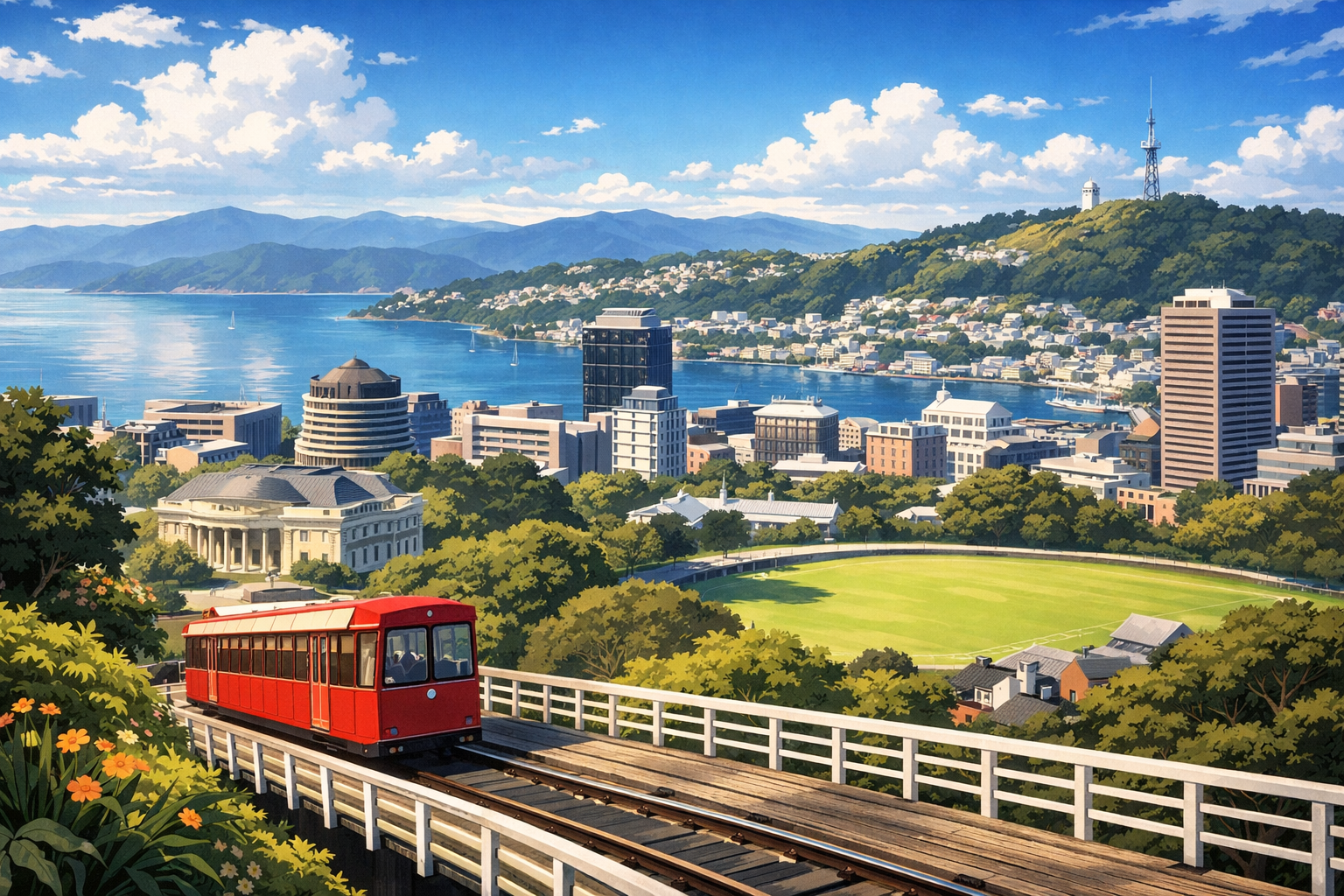
Wellington packs a lot into a compact, windswept capital, where the CBD and waterfront flow into the buzz of Te Aro and Cuba Street. From Kelburn’s green hills and the Botanic Garden to Miramar’s film-world energy, Newtown’s character, and the golden curve of Oriental Bay beneath Mount Victoria, the city feels creative, coastal, and effortlessly walkable.

🧭 DAY-BY-DAY ITINERARY

Ready-made country and city routes with daily plans, sights, transport and accommodation. Buy PDF guides for independent travel.

🧭 DAY-BY-DAY ITINERARY


Day 1 — Wellington: getting acquainted with the waterfront and the rhythm of the capital

  • 🚶 It’s best to make the first day gentle and easing you in. If you arrive at Wellington Airport, allow about 25–35 minutes to get to the center on the Airport Express to Wellington Station, and then another 5–15 minutes to your hotel in the CBD or Te Aro on foot or by a short ride. After checking in, give yourself time to rest, and only then head out to the Wellington Waterfront — one of the most pleasant urban promenades in New Zealand. Start at Queens Wharf and stroll slowly toward Te Papa and Tākina: here the city immediately shows its character — wind, water, modern architecture, runners, cafés, wooden boardwalks, and the soft shimmer of the harbor. This is not a ceremonial capital in the classic European sense, but a lively, maritime, and very human one. In the evening, it’s nice to simply walk to Oriental Bay or stop by the water for an early dinner: after a flight, this kind of day helps you tune in to Wellington without overloading yourself with museums and long climbs.


Day 2 — Wellington: Te Papa and the city’s cultural core

  • 🏛️ Today, give the city a serious cultural anchor and devote the day to Te Papa Tongarewa — New Zealand’s national museum. It makes sense to allow at least 3–4 hours for it, and if you love large museums, even half a day. The exhibitions here work not only as a “collection,” but as a way to understand Aotearoa through nature, the ocean, Māori culture, art, and history. After the museum, don’t rush to call it a day: head back out to the waterfront, walk along Cable Street, see how the museum is integrated into the urban landscape, and then turn toward the Courtenay Place area. Transfers within this day usually take 5–20 minutes on foot, so the pace stays comfortable. In the evening, you can leave yourself an hour to rest at the hotel, and then head out again for a short walk along the water — after a full museum day, the open line of the harbor is especially good for clearing your head.

Day 3 — Wellington: Cuba Street, Te Aro, and urban character

  • ☕ Today, get to know a more everyday, creative, and slightly ironic side of Wellington. The Te Aro area, and Cuba Street in particular, is where the city’s temperament is felt most clearly: independent shops, coffeehouses, vintage stores, bookshops, bright signs, a bit of street eccentricity, and a very lively local scene. Formally, the distances here are small — from the waterfront to Cuba Street is often just a 10–15 minute walk, so this day works well on foot. Don’t try to turn it into a checklist: Wellington is valued precisely for the atmosphere of small discoveries. Leave time for a long breakfast or a coffee break, then slowly walk the full length of Cuba Street, peeking into courtyards and side streets. Closer to evening, you can head back toward Civic Square and the city library area, then end the day with dinner in Te Aro. This is not a day about “must-see sights,” but about how the city starts to feel like your own.

Day 4 — Wellington: Cable Car, Kelburn, and Botanic Garden

  • 🌿 One of the most pleasant classic days in Wellington: ride the Wellington Cable Car from Lambton Quay to Kelburn. The trip itself is short — about 5 minutes — but it’s very symbolic: in just a few minutes, the center is left below, and views of the city, harbor, and hills open up before you. At the top, it’s convenient to combine several points right away — the lookout, Cable Car Museum, Space Place, and a walk through Wellington Botanic Garden ki Paekākā. Allow at least half a day, because this is a place where you’ll want to move slowly, stop for panoramas, and rest in the shade of the garden. If you go without rushing, the route from the upper station through the garden to the lower exits easily takes 2–4 hours. This is a good day for recovering from the density of the city: more air, greenery, slopes, flower beds, and quiet paths. In the evening, you can return to the CBD on foot down the slope or use the funicular again if you don’t want to tire your legs.

Day 5 — Wellington: the parliamentary quarter, Lambton Quay, and the old urban layer

  • 🏙️ Today, take in the more official and historic face of the capital. Start in the Lambton Quay area and head toward the parliamentary quarter: here Wellington looks stricter, more businesslike, and a little “British,” but without heaviness. Between office façades, government buildings, and tidy streets, it’s easy to feel that this really is the country’s administrative center, though the scale remains compact and almost intimate. Allow 5–15 minutes for walking between points. Along the way, you can stop at Old St Paul’s or simply walk around the Beehive and the Parliament buildings, then return to the water via the railway station and the wharf. This is a good day for a calm route without major climbs. After lunch, leave yourself a pause to rest, and in the evening walk along the waterfront again with a different feeling: by this point, the city will begin to come together not only as a tourist picture, but as a real capital living at its own scale and pace.

Day 6 — Wellington: Zealandia and a big nature day

  • 🦜 One of the most important days of the itinerary is worth dedicating to Zealandia Te Māra a Tāne in Karori. From the center, it usually takes 10–20 minutes to get here by shuttle/car or by a combination of public transport, and the visit itself is best planned for at least half a day. This is not just a park, but a rare urban experience: literally just minutes from the center, you find yourself in a large-scale restored natural space with forest, water, quiet trails, and the feeling that the city has retreated far away. You’ll want to walk slowly here, listening to birds and watching how the landscape changes from open areas to more sheltered ones. Don’t pack this day with extra must-see stops: Zealandia requires time and calm attention. After returning to the city, it’s worth leaving yourself an hour to rest, and in the evening limiting yourself to a short walk near the hotel or an unhurried dinner. It’s a full but very “breathing” kind of day.

Day 7 — Wellington: Mount Victoria and Oriental Bay

  • 🌊 Today, combine the best city view with the seaside line of relaxation. In the morning or closer to evening, head to Mount Victoria Lookout: from the center, you can get here in about 10–20 minutes by bus, taxi, or car, while the walking route with the climb takes noticeably longer and requires energy. If you choose to walk, allow around 1.5 hours or more for a full loop with ascent and descent. From above, Wellington opens up as a city laid out along water and slopes: you can see the harbor, rooftops, ferries, planes, and all the complex relief that makes it so photogenic. After the viewpoint, head down to Oriental Bay — it’s the perfect contrast: first the panorama, then the waterline, promenade, beachy mood, and calm urban relaxation. It’s ideal to finish the day right here, without rushing, with a pause for coffee or an early dinner. This route is very cinematic and at the same time not too demanding, as long as you don’t try to include too many extra stops.

Day 8 — Wellington: Miramar and Wētā Workshop

  • 🎬 A day for cinema, craft, and imagination. The Miramar area is tied to Wellington’s modern screen reputation, and it’s worth going here not only if you’re a fan of specific franchises. Wētā Workshop Experiences is usually about 20 minutes from the center by car or taxi; by bus the trip often takes longer, so allow extra time. The visit itself pairs well with an unhurried walk around the area: Miramar gives you a different scale of the city — less central, more residential and “production-oriented,” but with a special sense of creative infrastructure behind the façades of ordinary everyday life. It’s best to reserve a specific time slot for the tour and arrive early, then give yourself time afterward for a short rest and coffee. Don’t overload the day with evening obligations: the impressions here tend to be dense and visual. It makes sense to plan the return to the center with a 20–40 minute buffer depending on traffic and your mode of transport.

Day 9 — Wellington: Newtown and Wellington Zoo

  • 🦁 After several days of museums, viewpoints, and forest-style nature, you can switch to a lighter but still meaningful day. Wellington Zoo is in Newtown, about 10 minutes from the center by car; by bus with a transfer or on a direct route, the time may be longer. The Newtown area itself is interesting because it shows a more local, less polished side of the capital. At the zoo, allow 3–5 hours without rushing: the terrain is noticeably hilly in places, so it’s sensible to move with pauses and not plan a long city march right afterward. After the visit, you can walk around Newtown and then return to the center to rest. This day works well as a change of mood: less urban symbolism, more direct observation and simple human pleasure from a calm route.

Day 10 — Wellington: Museum of Wellington, urban history, and water

  • ⛵ Today it’s worth paying attention to the Museum of Wellington at Queens Wharf — a smaller but very important place for understanding the city itself. If Te Papa gives a national scale, then here Wellington becomes closer and more specific: the port, the sea, residents’ stories, urban growth, local memory. It’s convenient to allow 1.5–3 hours for the museum and then immediately continue the day with a walk along the adjacent part of the waterfront. The transitions are minimal, so the route is very convenient. You can walk to the City to Sea Bridge and Civic Square, then return to the water again to connect the exhibitions with the real view of the harbor and piers. This is one of those days when the city reads as especially complete: the museum and the surrounding space support each other. It’s better to leave the evening freer — for example, to return once more to your favorite part of the center or have a calm dinner without strict plans.

Day 11 — Wellington: a free day focused on favorite neighborhoods

  • ✨ By the middle of the second week, Wellington no longer feels like an “unknown point on the map,” and that is exactly why you need a free day. Return to the places where you felt especially good: to Cuba Street for the atmosphere, to Oriental Bay for the sea air, to the Botanic Garden for quiet, to the waterfront for the feeling of open space. If you like, you can split the day into two parts: an active morning and a calm evening with a mandatory rest break at the hotel. In compact Wellington, this is convenient — many rides take 10–20 minutes, which means the day doesn’t fall apart into tiring logistics. This kind of day is especially valuable for unhurried shopping, bookstores, coffeehouses, small galleries, and a “second look” at places you already know. Very often, this is the moment when the city starts to become genuinely lovable.

Day 12 — Wellington: Harbour day — ferry, water, and the feeling of a maritime city

  • ⛴️ Wellington should not only be explored on foot, but also seen from the water. If the weather allows and the schedule works, devote the day to the harbor: you can take an East by West Ferries crossing and make a sea outing toward Days Bay or, if the timetable fits, combine the trip with Matiu/Somes Island. The timing depends on the chosen sailing and the season, so this day is best planned flexibly, but the maritime part itself changes the perspective beautifully: the center recedes, the terrain becomes more legible in volume, and the capital looks almost like an amphitheater around the water. If you don’t want a long outing, you can limit yourself to a short ferry experience and a walk near the piers. After returning, be sure to leave time to rest — wind and water in Wellington can be more tiring than they seem. This day is about space, the horizon, and the city’s maritime character.

Day 13 — Wellington: art, Civic Square, and a calm urban finale

  • 🖼️ It’s good to devote the penultimate day to a calmer urban rhythm: Civic Square, the area around galleries and cultural spaces, short walks between central streets, coffee stops, and the freedom to move without a rigid script. If you’re interested in contemporary exhibitions, add City Gallery Wellington Te Whare Toi or other seasonal exhibition spaces. Wellington is great because even in the center it doesn’t demand a constant rush: points are often just 5–10 minutes apart on foot, and the day can be structured very gently. A good format is a short exhibition, then a walk to the water, then a late lunch, then an hour of rest, then an evening loop through familiar streets. This is a day of small discoveries and consolidating impressions, not of a big list of obligatory places.

Day 14 — Wellington: one last loop — favorite view, water, and farewell to the city

  • 🌅 Keep the final day as human and relaxed as possible. Don’t try to squeeze in one more “big” sight — it’s better to make one last loop through the places that matched your feeling of Wellington most closely. That could be an early walk along the waterfront, coffee in Te Aro, another ride up the Cable Car for the view, a short trip to Oriental Bay, or simply an unhurried hour on a bench by the water. If your flight is the same day, allow roughly 25–35 minutes to the airport on the Airport Express from Wellington Station, plus time for walking/waiting; by taxi or transfer the time depends on traffic, but a buffer is still essential. Wellington is best finished not with a “final checkmark,” but with a feeling: a compact, windy, cultural, maritime, slightly bohemian, and very cohesive city.

Flight tickets

eSIM for travel

Buy PDF guide

Buy PDF guide — 29.99 USD

PDF — 29.99 USD