
Buy PDF guide

Buy PDF guide — 6.43 USD

PDF — 6.43 USD

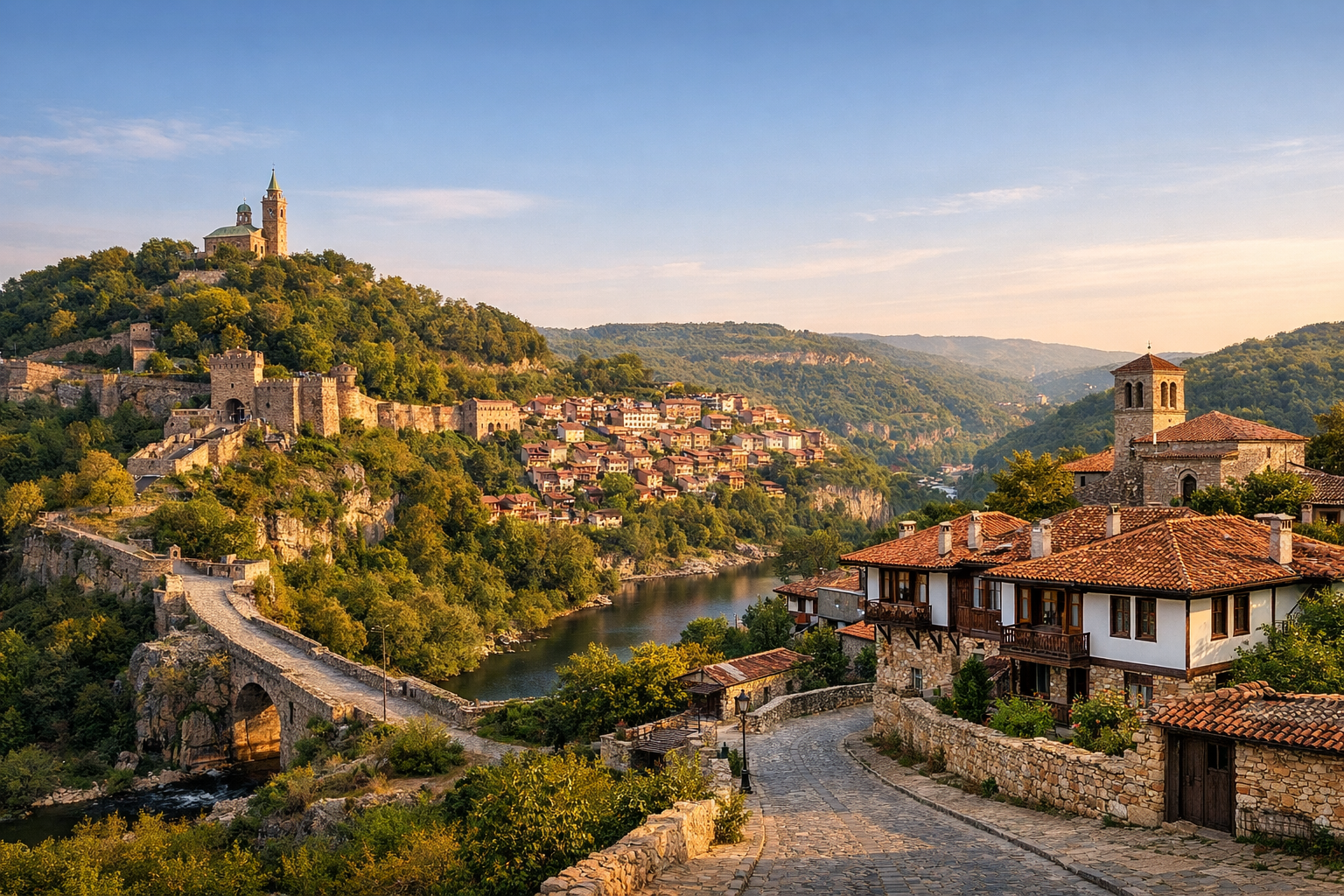
Veliko Tarnovo Arbanasi fortress and old houses

Veliko Tarnovo Arbanasi fortress and old houses

Step into Veliko Tarnovo, where the Old Town climbs dramatic hills toward the mighty Tsarevets Fortress and the quiet heights of Trapezitsa. Just beyond, Arbanasi charms with its fortress-like old houses, stone walls, and timeless village atmosphere.

🧭 DAY-BY-DAY ITINERARY

Ready-made country and city routes with daily plans, sights, transport and accommodation. Buy PDF guides for independent travel.

🧭 DAY-BY-DAY ITINERARY


Day 1 — Veliko Tarnovo: Tsarevets, the old town, and evening panoramas

  • 🚶 Start your journey with Tsarevets — the main symbol of Veliko Tarnovo and one of the strongest historical images of Bulgaria. It is best to devote the morning to the fortress itself: the climb up the hill takes energy, and in the soft light the walls, towers, and restored patriarchal complex look especially striking. What matters here is not just to “tick off the sight,” but to give yourself time to feel the scale of the former capital of the Second Bulgarian Empire: the wind on the open sections, the sharp changes in terrain, the views of the bends of the Yantra and the dense buildings on the neighboring slopes create an almost theatrical setting. After the visit, it is convenient to take a break for coffee or an early lunch in the old center area, then move on to the multimedia center “Tsarevgrad Tarnov” — a good way to gather historical context and see a more “three-dimensional” image of medieval Tarnovgrad. In the second half of the day, walk along General Gurko Street and through the quarters of the old town: the houses seem to cling to the slope, the facades hang over the cobblestones, and the balconies and stone retaining walls create the very visual drama that brings photographers and lovers of historic urban fabric here. Along the way, you can stop by the Sarafkin House — one of the best examples of affluent urban architecture from the Revival era. In the evening, do not hurry back to the hotel: Veliko Tarnovo is especially beautiful at sunset. The best way to end the day is a slow walk to one of the viewpoints overlooking the hills, the fortress, and the river, when the city gradually slips into warm illumination and turns into an almost stage-like historical landscape.


Day 2 — Arbanasi: fortified houses, churches, and the calm rhythm of the plateau

  • 🚗/🚌 Dedicate the second day to Arbanasi — it is not just a suburb, but a separate world with a completely different rhythm. The drive from Veliko Tarnovo is short, usually about 10–15 minutes by car or taxi, so you can leave unhurriedly after breakfast. Arbanasi lies on a high plateau, and the very change of landscape feels like a transition from a dramatic urban amphitheater to a more enclosed, almost intimate space. Start with the Church of the Nativity — one of the village’s most important monuments: from the outside it looks restrained, but inside it impresses with the richness of its wall paintings and the density of its visual narrative. Then it makes sense to continue to the Konstantsalieva House — an excellent key to understanding local life: the massive walls, courtyard, practical household layout, interior rooms, and the very plan of the house-fortress show how prosperity, caution, and a taste for monumentality came together in Arbanasi. After your visit, take a long break for lunch and rest: Arbanasi is best experienced at a slow pace, without rushing from point to point. In the second half of the day, add the Church of Saints Archangels Michael and Gabriel, then simply stroll through the village streets. Here, value lies not only in the “sites,” but also in the overall atmosphere: high stone fences, heavy gates, old roofs, occasional courtyards, silence, and openness. If you still have energy, make a short panoramic stop overlooking Veliko Tarnovo — from above, you can clearly see how the old town is literally carved into the terrain. This day is best ended quietly: with dinner in Arbanasi or a return to Veliko Tarnovo without a packed evening program.

Day 3 — Veliko Tarnovo: Trapezitsa, museums, and a gentle finale to the route

  • 🚶 It is best to structure the last day so that it does not duplicate the first, but complements it. Dedicate the morning to Trapezitsa — the second most important fortified height of medieval Tarnovgrad. Here there is less of the feeling of the “main stage” than at Tsarevets, but more space for a thoughtful walk, observing the terrain, and understanding how the capital was arranged across several hills at once. The route around Trapezitsa requires comfortable shoes and attention: this is not a museum corridor, but a living archaeological area with natural inclines and open sections. After the fortress, take a break for rest and a late breakfast or lunch in the center. In the afternoon, you can choose one of two scenarios: either dive deeper into the historical context through the Archaeological Museum and the Museum of the Bulgarian Revival and Constituent Assembly, or make the day lighter and combine one museum with a walk through Marno Pole. If you want one more powerful historical stop, add the Church of the Holy Forty Martyrs — a place where the continuity of Bulgarian history from the Middle Ages to modern times is felt especially sharply. For the finale, leave some time without a strict plan: buy a few local souvenirs, stroll calmly through the old streets, return to a viewpoint you liked, or simply sit with a coffee looking at the bends of the Yantra. For a three-day route, this is the right ending: not a race for “one more checkmark,” but the feeling that the city and Arbanasi have unfolded in layers — through fortresses, churches, old houses, and the landscape that makes this whole region so memorable.

Flight tickets

eSIM for travel

Buy PDF guide

Buy PDF guide — 6.43 USD

PDF — 6.43 USD