
Buy PDF guide

Buy PDF guide — 4.28 USD

PDF — 4.28 USD

Tryavna - wooden architecture and artisan streets

Tryavna - wooden architecture and artisan streets

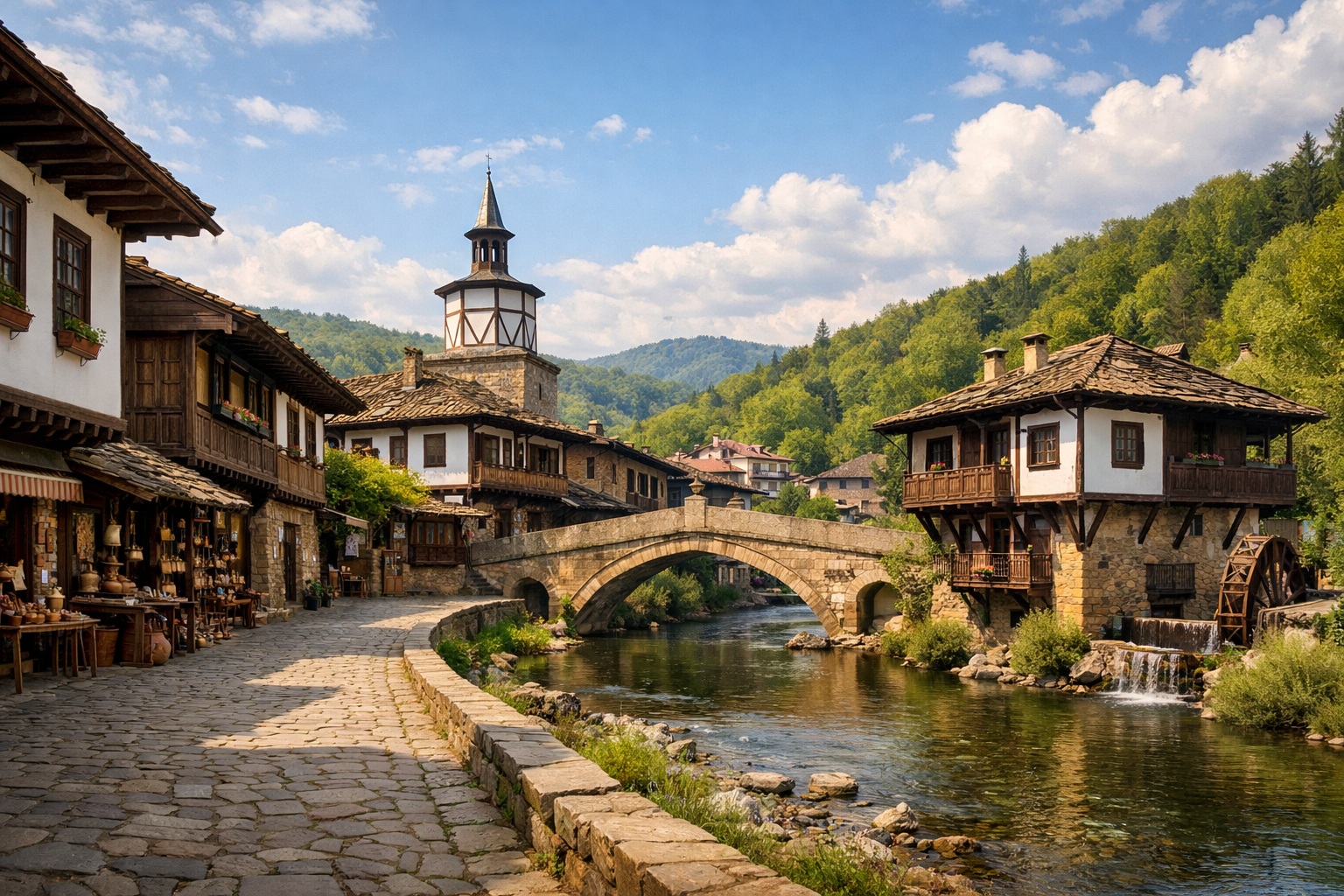
Tryavna charms with its old town of carved wooden houses, cobbled artisan streets, and the refined spirit of the Tryavna art school. Wander past workshops and small museums, then take in the quiet Balkan panoramas that give this mountain town its calm, timeless feel.

🧭 DAY-BY-DAY ROUTE

Ready-made country and city routes with daily plans, sights, transport and accommodation. Buy PDF guides for independent travel.

🧭 DAY-BY-DAY ROUTE


Day 1 — Tryavna: old center, wooden architecture, and artisan rhythm

  • 🚶 It’s best to spend the first day with almost no rush and no long trips out: Tryavna reveals itself not through “checkmarks,” but through slow attention to detail. Start at Captain Dyado Nikola Square and the area around the Clock Tower — this is the heart of the town, where you can especially clearly feel the scale of old Tryavna: low houses, stone, wood, the calm relief of the streets, and the sense that time flows a little differently here. From here it is convenient to walk to Kivgiren Bridge and then continue onto Petko R. Slaveykov Street, where artisan shops, souvenir stores, and facades in the spirit of the Bulgarian Revival create exactly the atmosphere people come here for. For this first stretch of the walk, including stops for photos, coffee, and shops, it is worth allowing about 2–2.5 hours.

  • 🏛️ Then it makes sense to visit Staroto Shkolo and Daskalova Kashta — two key places that explain Tryavna very well. Staroto Shkolo provides the cultural and educational context of the town: here you feel not just a museum setting, but the memory of a time when this seemingly provincial town was an important intellectual and artisan center. After it, Daskalova Kashta creates a completely different effect — more decorative and emotional. Its famous carved ceiling “suns” and the very story of the craftsmen’s competition make the house not just beautiful, but a truly living monument to ambition, craftsmanship, and taste. For both museums, together with the walk between them and a short rest, it is worth allowing about 2.5–3 hours.

  • 🍽️ After lunch, do not try to overload the day. The best format is to return to the artisan streets, stroll calmly along the old houses, look into workshops, and leave time for an unhurried dinner. If you want one more visual highlight, walk through the central part closer to evening: in the soft light, the wooden bay windows, stone bases, bridge, and tower look especially expressive. In the evening, Tryavna becomes very intimate: instead of big-city noise, there are footsteps on cobblestones, light from the windows, and the feeling of a quiet Balkan town where architecture is not decoration, but a natural living environment. Taking into account check-in, walks, museums, food breaks, and rest, this day turns out rich, but realistic and not overloaded.


Day 2 — Tryavna: museum houses, icon-painting school, and peaceful panoramas

  • 🚶 Dedicate the second day to a more “inner” Tryavna — not only the postcard views of the old center, but also the layers that show the town as a place of art, memory, and quiet everyday life. Start the morning with the Angel Kanchev House and the Museum of Asian and African Art. The contrast between them makes the route especially interesting: first — a local historical biography and revolutionary story deeply connected with the Bulgarian Revival, then — an unexpectedly broad view of the world through a collection of objects from Nepal, Tibet, India, China, and African countries. For a small town, such cultural proximity makes a strong impression. For these two stops, with the walk between them and an unhurried visit, it is convenient to allow about 2 hours.

  • 🎨 Then head to the Museum of the Tryavna Icon Painting School. This is one of the best ways to understand that Tryavna is famous not only for its carpentry and woodcarving tradition, but also for a painting school that influenced the artistic language of a whole region. The slow-viewing format works especially well here: do not rush, but look closely at the technique, ornaments, faces, and the reconstructed workshop atmosphere. After the museum, leave time for lunch and rest — about 1.5 hours — because it is precisely the pause that keeps a cultural day from turning into a marathon.

  • 🌲 The second half of the day is best kept lighter: a walk along quiet streets beyond the densest tourist core, a short climb to panoramic viewpoints, or a return to the old center area for one “last round” through your favorite places. Tryavna is remembered well not by the number of locations, but by the wholeness of its image: the woody scent of old houses, the light plaster of facades, workshops, the silence of small courtyards, the coexistence of museums and living urban fabric. Before departure, leave at least 1 hour of buffer time for packing, settling the hotel bill, and getting to the station or parking lot. If you are driving to Sofia, it is reasonable to allow about 3–3.5 hours for the journey itself, not counting long stops; if you are going by train with transfers, considerably more time will be needed, so it is better to plan your departure in advance.

Flight tickets

eSIM for travel

Buy PDF guide

Buy PDF guide — 4.28 USD

PDF — 4.28 USD