
Buy PDF guide

Buy PDF guide — 10.71 USD

PDF — 10.71 USD

Toronto + Niagara - city + waterfalls

Toronto + Niagara - city + waterfalls

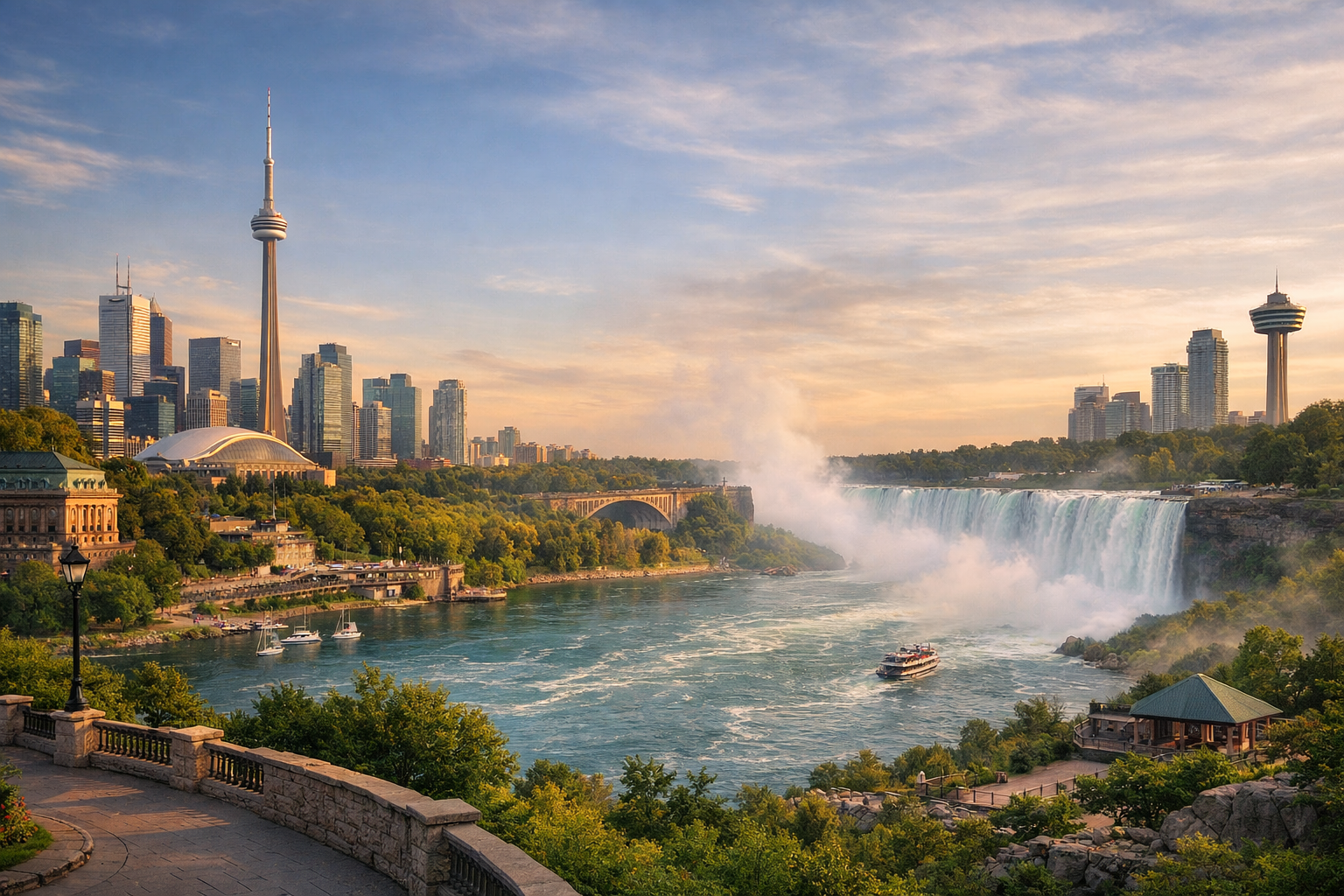
Toronto and Niagara bring together a dynamic city skyline and the raw power of world-famous waterfalls. Stroll from downtown streets to the waterfront and island views, soak up the city’s cultural energy, then head to Niagara for dramatic panoramas, misty lookouts, and beautiful parkland.

🧭 DAY-BY-DAY ITINERARY

Ready-made country and city routes with daily plans, sights, transport and accommodation. Buy PDF guides for independent travel.

🧭 DAY-BY-DAY ITINERARY


Day 1 — Toronto: downtown, CN Tower, and the waterfront

  • 🚶 It’s best to devote the first day to Toronto’s most recognizable image — its dense, glassy, energetic downtown by the water. Start locally and without rushing: Union Station, then a short walk to the CN Tower and the blocks around Rogers Centre and Ripley’s Aquarium of Canada. This part of the city immediately gives you the right sense of scale: you can feel the financial center, the tourist core, and the closeness of Lake Ontario all at once. If you plan to go up the tower, allow about 1.5–2 hours including entry and lines; if not, even a walk at its base still works as a strong visual introduction to the city. After that, head toward Harbourfront: the waterfront is pleasant to explore at an easy pace, with stops for coffee, photos, and a short rest by the water. In the evening, it makes sense to finish the day around Front Street or the Entertainment District: the lights of the skyscrapers, reflections in the glass, and the soft urban hum create a very cinematic ending to a first meeting with Toronto.


Day 2 — Toronto: St. Lawrence Market, Distillery District, and the islands

  • 🚶 This day works well when built around the contrast between the old city and open space. In the morning, head to St. Lawrence Market — one of Toronto’s most atmospheric city markets, where you feel not a tourist set piece but the living everyday rhythm of a big city. It is an ideal place for a late breakfast and an unhurried start. Then move on to the Distillery Historic District: the brick buildings of the former industrial zone, cobbled streets, galleries, cafés, and the sense of carefully preserved industrial history make this one of the most photogenic areas in the city. After lunch, if the weather is good, make your way to Jack Layton Ferry Terminal and head to the Toronto Islands. The short ferry crossing itself is already part of the experience: Toronto’s skyline opens up as a panorama that is best seen from the water. On the islands, don’t overload the day with too many stops — what matters more here is a long walk, fresh air, green paths, beach views, and the sense of unexpected quiet so close to a мегаполисом. It’s wise to allow extra time for getting to the terminal, waiting, and the ferry itself, especially in the warm season: during peak hours the wait can increase noticeably. Returning to the city closer to evening is especially beautiful — the towers and shoreline look almost theatrical.

Day 3 — Toronto: museums, the university district, and the city’s rhythm

  • 🚶 The third day is Toronto’s cultural core. Start with the Royal Ontario Museum: it is one of the country’s major museums, and it is better to come here with the mindset of “seeing the highlights” rather than trying to cover everything. The very combination of the historic building and the modern crystalline architecture already sets the tone for the area. After the museum, walk through Queen’s Park and the university quarters: here the city sounds different — calmer, more academic, greener. Then move on to the Art Gallery of Ontario if you want art, or leave part of the day for Kensington Market and Chinatown for a livelier, more human layer of the city. This route balances museum richness and street energy well. Time-wise, it is a comfortable day without long transfers: the main points are easy to connect on foot and with short TTC rides, while leaving room for breaks, coffee, and dinner. In the evening, you can return to the center or stay in the more informal atmosphere of the western districts, where Toronto reveals itself not as a set of landmarks but as a city of habits, tastes, and local routes.

Day 4 — Niagara Falls: transfer from Toronto, the falls, and evening views

  • 🚆 The fourth day is the transfer to Niagara Falls and your meeting with the most powerful natural highlight of the trip. If you are traveling by public transport, the most realistic option is a morning departure from Toronto via Union Station on GO Transit; depending on the day and the specific train/bus combination, the trip usually takes about 2–2.5 hours to Niagara Falls GO, after which you will still need a short local transfer to the tourist zone. An alternative is a car or carshare for part of the route, but then you need to factor in traffic leaving the GTA and parking near the falls. Upon arrival, don’t try to “do everything at once”: first walk the classic panoramic stretch along Niagara Parkway by Table Rock and the viewing platforms. A first encounter with Horseshoe Falls works best without rushing — the roar of the water, the drifting mist, the constant movement of the flow, and the almost physical sense of scale make this place far more powerful in person than in photos. Then you can add Journey Behind the Falls: for this experience, it usually makes sense to allow about 30–45 minutes plus time for lines and moving around. Leave the evening for another visit to the falls and a calm walk through Fallsview: after the daytime bustle, the place becomes more atmospheric, and the panorama of water and light feels almost meditative.

Day 5 — Niagara Falls: Niagara Parks, White Water Walk, and return

  • 🚶 The final day is best built around the natural corridor of Niagara Parks, leaving you with a sense of space rather than just the main postcard view at the edge of the falls. In the morning, you can choose White Water Walk — this is a different scale of Niagara: not the vertical drama of falling water, but the incredible force of the current in a narrow river canyon. Then, depending on your interest, add the Butterfly Conservatory for a calmer and visually lighter stop, or Niagara Parks Power Station + Tunnel if you want industrial history and a striking look at the river from inside former power infrastructure. For moving between the main tourist zones, WEGO is convenient — it connects the falls, parks, some hotels, and the key points of the corridor. Leave the second half of the day for the return to Toronto: if you are traveling by GO Transit, it is better not to leave your departure for the very last possible service, so the finale does not turn into a race. Overall, this day should feel like a gentle ending: one more look at the water, a little more air, and an unhurried departure after a very full but realistic 5-day route.

Flight tickets

eSIM for travel

Buy PDF guide

Buy PDF guide — 10.71 USD

PDF — 10.71 USD