
Buy PDF guide

Buy PDF guide — 29.99 USD

PDF — 29.99 USD

TEL AVIV

TEL AVIV

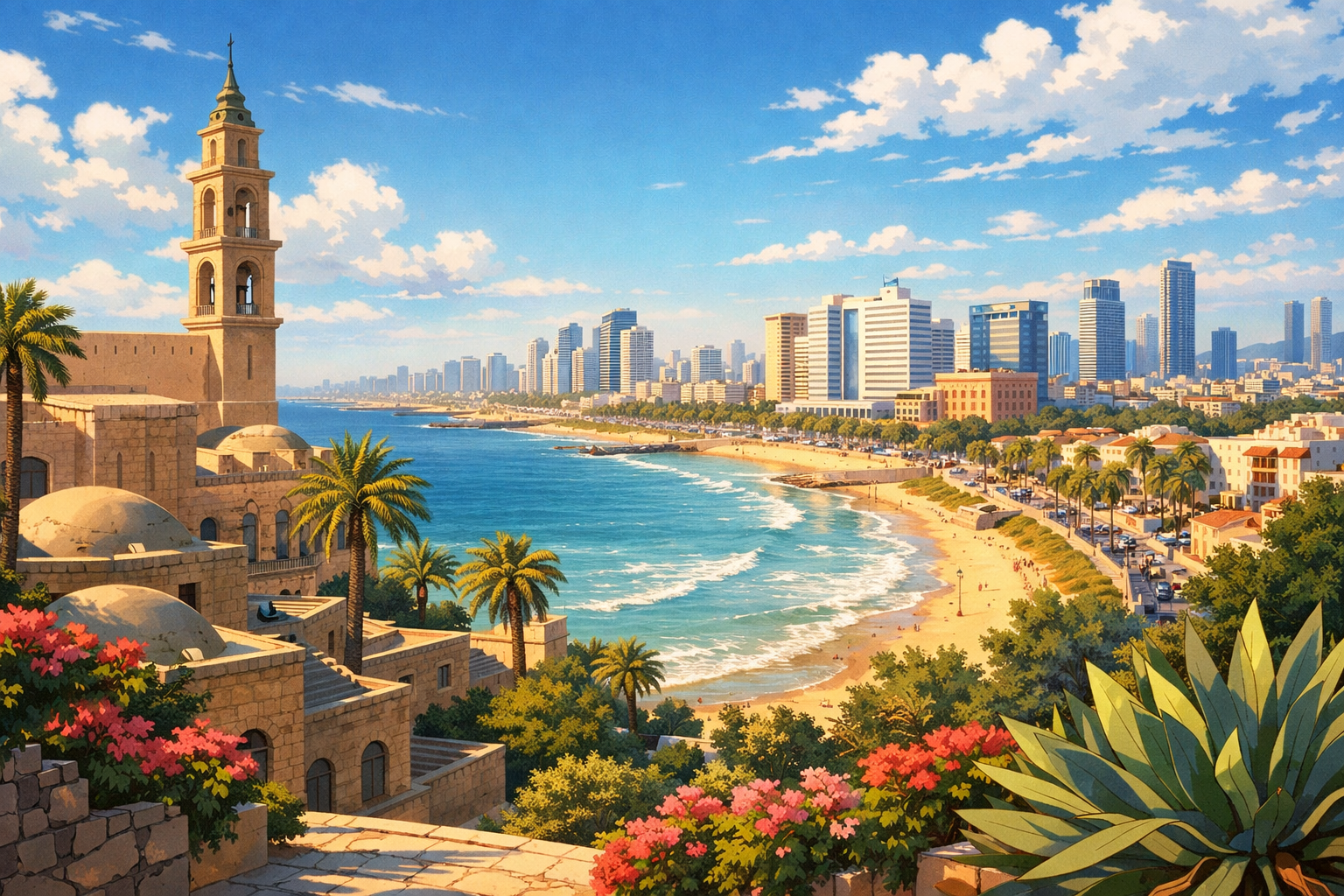
Tel Aviv blends Mediterranean energy with layered history, from the ancient lanes of Jaffa to the elegant streets of Neve Tzedek and the Bauhaus beauty of the White City. Wander along Rothschild Boulevard, linger in Sarona, then follow the coast north to the lively port and the leafy calm of Ramat Aviv.

🧭 DAY-BY-DAY ITINERARY

Ready-made country and city routes with daily plans, sights, transport and accommodation. Buy PDF guides for independent travel.

🧭 DAY-BY-DAY ITINERARY


Day 1 — Tel Aviv: arrival, check-in, and a gentle introduction to the sea

  • 🚶 After landing, the easiest way to get from Ben Gurion Airport to Tel Aviv is by train or official taxi: under normal conditions, the trip to the central districts takes about 20–35 minutes by train to one of the city stations and around 25–45 minutes by car, depending on traffic. After check-in, don’t overload your first day: leave 1–1.5 hours to rest, shower, and adjust your pace. In the evening, head to the Tayelet promenade — a long seafront stretch where the city immediately shows its character: light, humid sea air, runners, bicycles, beach volleyball courts, and the feeling of a very lively Mediterranean rhythm. Walk at an easy pace for 1.5–2 hours, choose a beach bar or café for dinner, and end the day without rushing: Tel Aviv opens up best not in a sprint, but through the physical feeling of the sea, the wind, and the warm evening light.


Day 2 — Old Jaffa, the port, and the flea market

  • 🚶 Dedicate the morning to Jaffa — the ancient part of the city, where stone lanes, slopes, arches, and the old port create a completely different scale from modern Tel Aviv. Allow 20–30 minutes to get from the center to Jaffa by taxi or bus, or 35–50 minutes for a leisurely walk along the promenade if you want to do the route on foot. Start with Old Jaffa and Kdumim Square, then go down to the port: here, not only the history matters, but also the texture of the place itself — sandstone, salty air, boats, workshops, and galleries. After that, move on to the Flea Market: the area works as a mix of market, designer shops, antique displays, cafés, and a noisy urban scene. Leave at least an hour for lunch and a break, and then another 1–1.5 hours for wandering freely through the blocks around the clock tower. This is one of those days when the route should breathe: Jaffa is beautiful not only in its highlights, but also in the transitions between them.

Day 3 — Neve Tzedek, HaTachana Station, and Charles Clore Park

  • 🚶 Today is built around a gentle urban rhythm. From Jaffa or the center, Neve Tzedek is easy to reach in 10–20 minutes by taxi or bus; on foot from Jaffa, it’s about 20–30 minutes along the coast. Neve Tzedek is one of the city’s most atmospheric districts: low historic buildings, neat facades, galleries, small shops, and streets where Tel Aviv feels almost intimate. Start with a morning walk through the neighborhood, then stop by HaTachana — the restored area of the old railway station, a good place for a coffee break. After lunch, move on to Charles Clore Park: it lies by the sea and works perfectly as a place to rest after a city walk. Plan 1–1.5 hours simply to sit on the grass, walk by the water, and not try to “cover” as many places as possible. This day is about beauty in the details, silence between the streets, and lightness.

Day 4 — Rothschild Boulevard, the White City, and Bauhaus

  • 🚶 This day is dedicated to the architectural face of Tel Aviv. From the beach area or Neve Tzedek to Rothschild Boulevard, it’s usually 10–20 minutes by taxi or 15–30 minutes by bus, and within the district it’s best to move on foot. Start with the boulevard itself: a wide green axis, bike lanes, cafés, historic houses, and a business rhythm alongside relaxed city life. Then gradually go deeper into the blocks of the White City, where Bauhaus and International Style modernist architecture creates that unmistakable “Tel Aviv” visual code — light facades, ribbon windows, balconies, tree shade, and the feeling of a city that was conceived as modern from the very beginning. It’s important to leave time not only for photos, but also for breaks: breakfast, coffee, lunch, a short rest in the shade. A good pace for the day is 4–5 hours of walking with two long stops, so the architecture doesn’t turn into a list of buildings, but remains a living experience of the urban environment.

Day 5 — Carmel Market, the Yemenite Quarter, and downtown streets

  • 🚶 After the more “intellectual” architecture day, switch to the flavors and noise of the city. Carmel Market is 10–15 minutes by taxi or 15–25 minutes by public transport from most central areas. It’s best to come in the morning or late morning, when the market has already come alive but is not yet too tiring. Here Tel Aviv becomes dense, loud, and very physical: spices, fruit, pastries, juices, street food, vendors, sharp smells, and constant movement. Nearby is the Yemenite Quarter — an older, more intimate district with narrow streets and a simple, honest character. A convenient structure for the day is: 1.5–2 hours at the market, then a long lunch and rest, followed by 1.5–2 hours walking through nearby streets, small shops, and central squares. Don’t try to make this day too packed: the market quickly becomes overwhelming, so a café break or returning to the hotel for 1–2 hours of rest will be very welcome.

Day 6 — Sarona, Azrieli, and modern business Tel Aviv

  • 🚶 Today it’s useful to look at another layer of the city — not coastal and not historic, but business-oriented and modern. Sarona is usually 10–20 minutes by taxi from the beachside part of the city, or 20–30 minutes by bus or light rail including the walking approach. Start with Sarona — a former Templer colony turned into a neat urban quarter with low historic houses, restaurants, shops, and open spaces. Then head toward the Azrieli area and the surrounding business blocks: glass, towers, streams of office life, and a completely different scale. A “contrast” format works well: 2 hours in Sarona, a lunch break, then 1.5–2 hours in the modern center. If you’re tired, don’t overload the evening — save your energy for dinner and an early return. This day is especially convenient in the middle of the trip because it changes the visual rhythm and shows that Tel Aviv is not only sea and cafés, but also an energetic metropolis.

Day 7 — Tel Aviv Museum of Art and the cultural center

  • 🚶 The seventh day is best dedicated to art and a calmer pace. Tel Aviv Museum of Art is easy to reach from the center in 10–20 minutes by taxi or 15–30 minutes by public transport. Don’t plan too many other major sights for this day: the museum itself requires time and attention. It’s better to set aside 2–3 hours for the main collection and temporary exhibitions, then take a long coffee or lunch break and walk a little around the surrounding cultural cluster afterward. A museum day in Tel Aviv feels different from one in “classic” European capitals: here contemporary art is connected with a very lively urban context, and after the galleries it’s especially pleasant to step back out into the bright light, open boulevard spaces, and squares. In the evening, you can leave a short walk around the area without any new program — just so the day ends gently.

Day 8 — Tel Aviv beaches and a recovery day

  • 🚶 On the eighth day, it’s best to consciously slow the pace. Tel Aviv is a city that quickly tires you out with heat, sun, and constant movement, so a full “beach” day here is not a luxury, but part of a sensible itinerary. Choose one of the central beaches and plan at least 3–5 hours of rest at whatever rhythm feels comfortable for you: swimming, walking barefoot along the water, reading in the shade, a late breakfast, or lunch by the sea. If you’re not staying near the beach, the journey usually takes 10–20 minutes. The main thing is not to turn this day into a set of activities. At most, you can add an evening walk along the promenade for 1–1.5 hours. A day like this helps you avoid burnout by the end of the trip and makes the remaining routes noticeably more enjoyable.

Day 9 — Tel Aviv Port and Yarkon Park

  • 🚶 Today combine urban leisure with green space. Tel Aviv Port is usually 15–25 minutes from the center by bus or taxi, and from there it’s convenient to continue to Yarkon Park. Start with the port: this is not a “port” in the harsh industrial sense, but a large promenade area by the sea with wooden decks, shops, cafés, and an open horizon. During the day, you can really feel the city’s modern lightness here — families, athletes, bicycles, sea, and wind. After a coffee or lunch break, move on to Yarkon Park: allow at least 2–3 hours for this part, especially if you want not just to reach some point, but actually to rest. The park is huge, and it’s better to choose one section than try to cover everything. This day is about air, distance, and a sense of space that the dense center sometimes lacks.

Day 10 — Ramat Aviv: ANU, MUZA, and the Palmach Museum

  • 🚶 This is one of the busiest but also one of the most meaningful days of the itinerary. The Ramat Aviv district is usually 20–35 minutes by taxi or 30–45 minutes by bus from the central neighborhoods. Several important institutions are concentrated here, and it’s important not to try to explore all of them deeply in one day. The best format is to choose one major museum as the main focus and one additional museum as a shorter visit. ANU offers a broad cultural and historical perspective, MUZA is strong for its layered nature and combination of archaeology, material culture, and open spaces, while the Palmach Museum works in a more emotional and narrative way. Between visits, make sure to leave at least an hour for lunch and rest. This is a day that adds depth to the trip: after seaside and architectural impressions, the city opens up through memory, identity, and historical narratives.

Day 11 — Bialik, the square, and the literary-historical center

  • 🚶 After a major museum day, it makes sense to choose a more intimate route. Bialik Square and its surroundings are easy to reach in 10–20 minutes from almost any central district. Start with Bialik House and the surrounding historic streets: here Tel Aviv feels neither beachy nor businesslike, but intellectual and early modernist. This area is best explored slowly, paying attention to the scale of the buildings, the trees, the small façade details, and the urban quiet that unexpectedly appears right next to the noisy center. Allow 2–3 hours for the walk and museum part, then lunch and a break. The second half of the day can be free: return to your favorite area, browse bookstores and design shops, or simply take a short loop through the evening city. A day like this is needed so that the trip doesn’t turn into endless consumption of impressions.

Day 12 — Jaffa again: galleries, viewpoints, and sunset

  • 🚶 It’s useful to return to Jaffa a second time: like many old seaside districts, it reveals itself better on a repeat visit, once the first orientation layer is already behind you. You can get here again in 15–30 minutes depending on your starting point. This time, focus not on the “must-see” places, but on the atmosphere: galleries, alleys, stone staircases, unexpected courtyards, craft shops, and viewpoints above the sea. During the day, take a long break for lunch and rest, and then wait for golden hour and sunset — Jaffa is especially beautiful at this moment, when the stone turns warm and the city seems to slow down. A day like this doesn’t need many items: 3–4 hours of leisurely walking plus an evening by the sea is enough.

Day 13 — Free day: shopping, favorite districts, and your personal Tel Aviv

  • 🚶 It’s best to keep the penultimate day as flexible as possible. Return to the places where you felt especially good: Rothschild, Neve Tzedek, the beach area, the market, or Jaffa. A good format is a late breakfast, then 2–3 hours for relaxed shopping and small discoveries: ceramics, design objects, books, local cosmetics, gastronomic souvenirs. After that, be sure to leave 1–2 hours to rest at the hotel or in the shade by the sea. In the evening, you can arrange one last “big” dinner. A day like this gathers the trip into a personal experience: instead of a new mandatory attraction, you choose your own Tel Aviv.

Day 14 — Final loop, sea, and departure

  • 🚶 On the last day, don’t try to fit in too much. Leave time for packing, check-out, and a buffer for the trip to the airport: for Ben Gurion, it’s usually sensible to have at least a 60–90 minute transport window, taking into account the journey to the station or the taxi ride, and for an international flight — extra time for airport formalities. If time allows, take a short 1–2 hour walk by the sea or through your favorite neighborhood, have a coffee without rushing, and end the trip calmly. Tel Aviv is remembered best in exactly this state — not as a list of points, but as a city of light, salt, architecture, warm asphalt, a long promenade, and a very lively human rhythm.

Flight tickets

eSIM for travel

Buy PDF guide

Buy PDF guide — 29.99 USD

PDF — 29.99 USD