
Buy PDF guide

Buy PDF guide — 8.57 USD

PDF — 8.57 USD

Old Montreal - history architecture streets

Old Montreal - history architecture streets

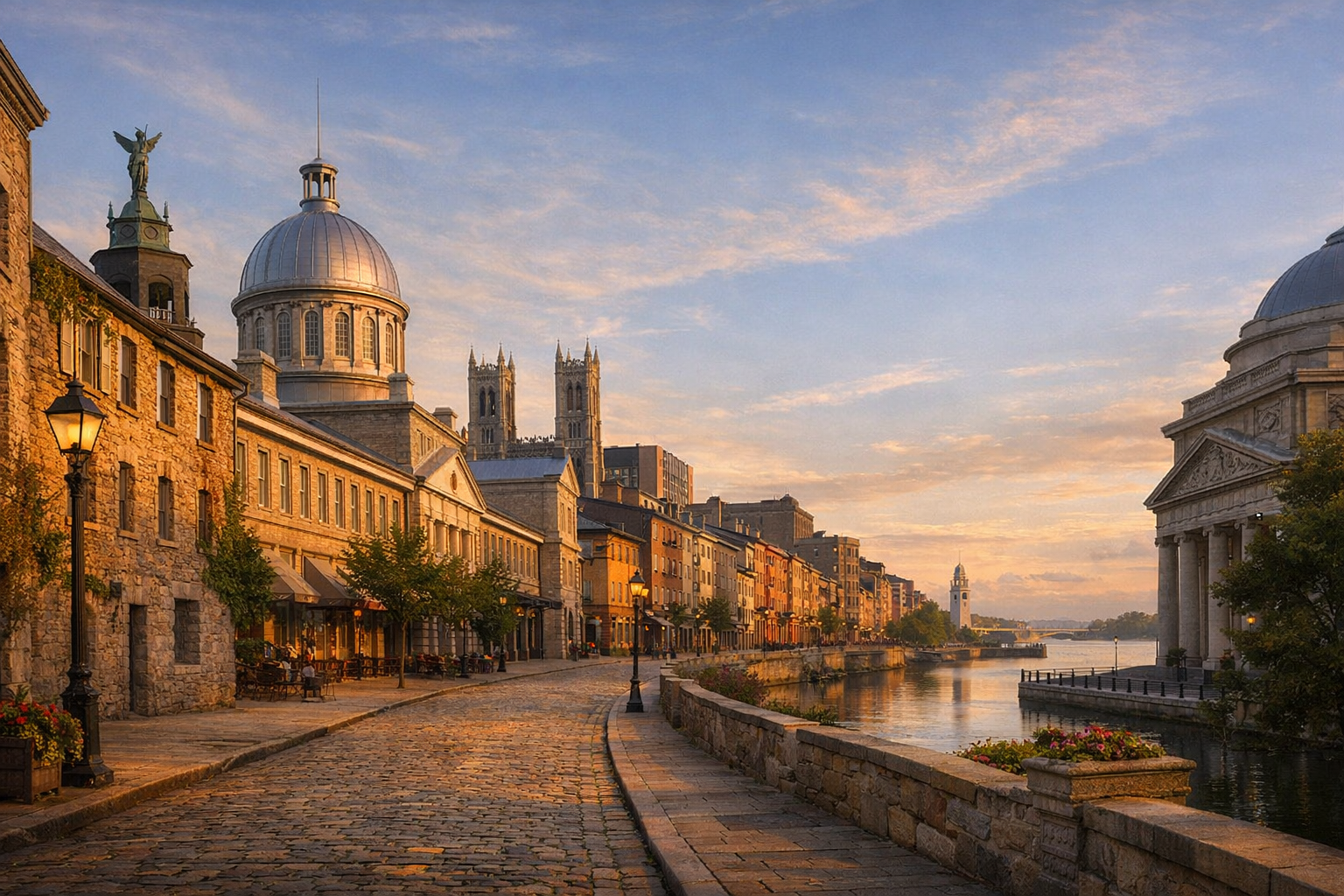
Wander Old Montreal’s storied streets, where grand architecture and centuries of history unfold from Place d’Armes to Place Royale. Continue past Bonsecours to the Old Port, where cobbled lanes open onto the waterfront and the city’s past feels vividly alive.

🧭 DAY-BY-DAY ITINERARY

Ready-made country and city routes with daily plans, sights, transport and accommodation. Buy PDF guides for independent travel.

🧭 DAY-BY-DAY ITINERARY


Day 1 — Old Montreal: Place d’Armes, the basilica, and the first alleyways

  • 🚶 Start your journey at Place d’Armes — one of those squares where Old Montreal immediately opens up like a theatrical stage of history. Stone, copper, neo-Gothic forms, and строгие деловые facades stand side by side so naturally, as if the city had spent decades rehearsing exactly this view. The morning’s main highlight is Notre-Dame Basilica of Montreal: from the outside it looks restrained and monumental, while inside it amazes with the depth of blue light, carved wood, golden details, and an almost stage-like sense of space. Plan about 1–1.5 hours for the visit itself, then take a coffee break around Rue Saint-Paul Ouest. After that, walk along Saint-Jacques and the nearby side streets: here you can especially feel how the former banking and commercial center of the colony and early city gradually became one of the most photogenic quarters in Canada. Transfers between points are short — usually 5–10 minutes on foot — so the day feels full, but never rushed. In the second half of the day, leave time for a slow walk without a strict goal: the cobbled streets, old signs, arches, stone facades, and the slightly European rhythm of this area are best experienced exactly in that mode. In the evening, it makes sense to return to the square or head out toward the illuminated facades around Place d’Armes: at dusk, Old Montreal becomes especially cinematic.


Day 2 — Old Montreal: archaeology, Place Royale, and the birth of the city

  • 🏛️ Dedicate the second day to the historic core of the district — Place Royale and the Pointe-à-Callière museum. This is the best way to understand that Old Montreal is beautiful not only at the level of facades, but literally through layers of earth: here the city’s history reads like an archaeological cross-section. It makes sense to allow 2–3 hours for the museum, especially if you are interested in the city’s foundations, old engineering structures, ruins, and how different eras accumulated in one place. After the museum, take a short walk through Place Royale and the adjacent streets: the distances here are very small, usually 3–7 minutes between the key points. Then move at an unhurried pace toward the Old Port waterfront to shift from the “museum” scale to open views of water and space. Along the way, it is worth leaving time for a short break — about 30–45 minutes for lunch or simply to rest on a terrace. The second half of the day works well for getting acquainted with the architecture of mercantile Montreal: old warehouses, commercial buildings, stone houses, and squares here do not look like museum scenery, but rather like a living historic quarter that still works and breathes. If you still have energy, end the day with a walk along the water — a gentle contrast to the archaeology and underground stories of the morning.

Day 3 — Old Montreal: Bonsecours, the chapel, the museum, and the river horizon

  • ⛪ Build the third day around the eastern part of Old Montreal. Start with Marché Bonsecours — one of the district’s most recognizable buildings, with its silvery dome and almost European urban poise. Even if you are not planning a long shopping stop, the space around the market itself is highly expressive: nearby, you can feel the city’s old administrative and commercial rhythm, and the street panoramas here are especially coherent. Then walk to Notre-Dame-de-Bon-Secours Chapel and the Marguerite-Bourgeoys Museum: this place adds a more intimate, almost personal historical tone to the route. From the market to these points takes only a matter of minutes, so the day can be planned without transport breaks. After that, it is logical to stop by Château Ramezay and Montreal City Hall — architecturally this is already a different register: more official, more civic, but still woven into the old fabric of the quarter. It is convenient to allow about 2 hours for the museum and nearby sights, then take a 45–60 minute break for lunch and rest. In the evening, head down to the Old Port and Bonsecours Basin: here the route changes mood — from the history of foundations to open air, water, piers, and a more relaxed rhythm. The light on the river, the long waterfront perspectives, and the old buildings behind you create a very beautiful finale to the day.

Day 4 — Old Montreal: Old Port, waterfronts, Science Centre, and a relaxed finale

  • 🌊 It is best to make the last day lighter and more “airy.” Start it in the Old Port of Montreal area: broad quays, access to the Saint Lawrence River, promenade spaces, and the feeling of a big city by the water create a completely different impression here than the tight historic streets inside the quarter. In the morning, you can stop by the Montréal Science Centre, especially if you want to balance architecture and history with a more interactive, contemporary format. It is convenient to set aside 1.5–2 hours for the center, and then leave time for a walk along the waterfront with stops for photos and rest. Between the Science Centre, the piers, and the main walking areas, transfers usually take 5–15 minutes on foot. After lunch, create a flexible block: return to your favorite street in Old Montreal, buy a few small souvenirs, walk Rue Saint-Paul once more, or find a quiet corner with a view of the old facades and river space. This is a good day not to “finish off” the checklist, but simply to let the district settle into your memory. At the end of the trip, a late walk through the Old Port and back to the stone streets of the old quarter works especially well: such a route beautifully connects water, history, architecture, and the calm, almost European atmosphere that draws people here in the first place.

Flight tickets

eSIM for travel

Buy PDF guide

Buy PDF guide — 8.57 USD

PDF — 8.57 USD