
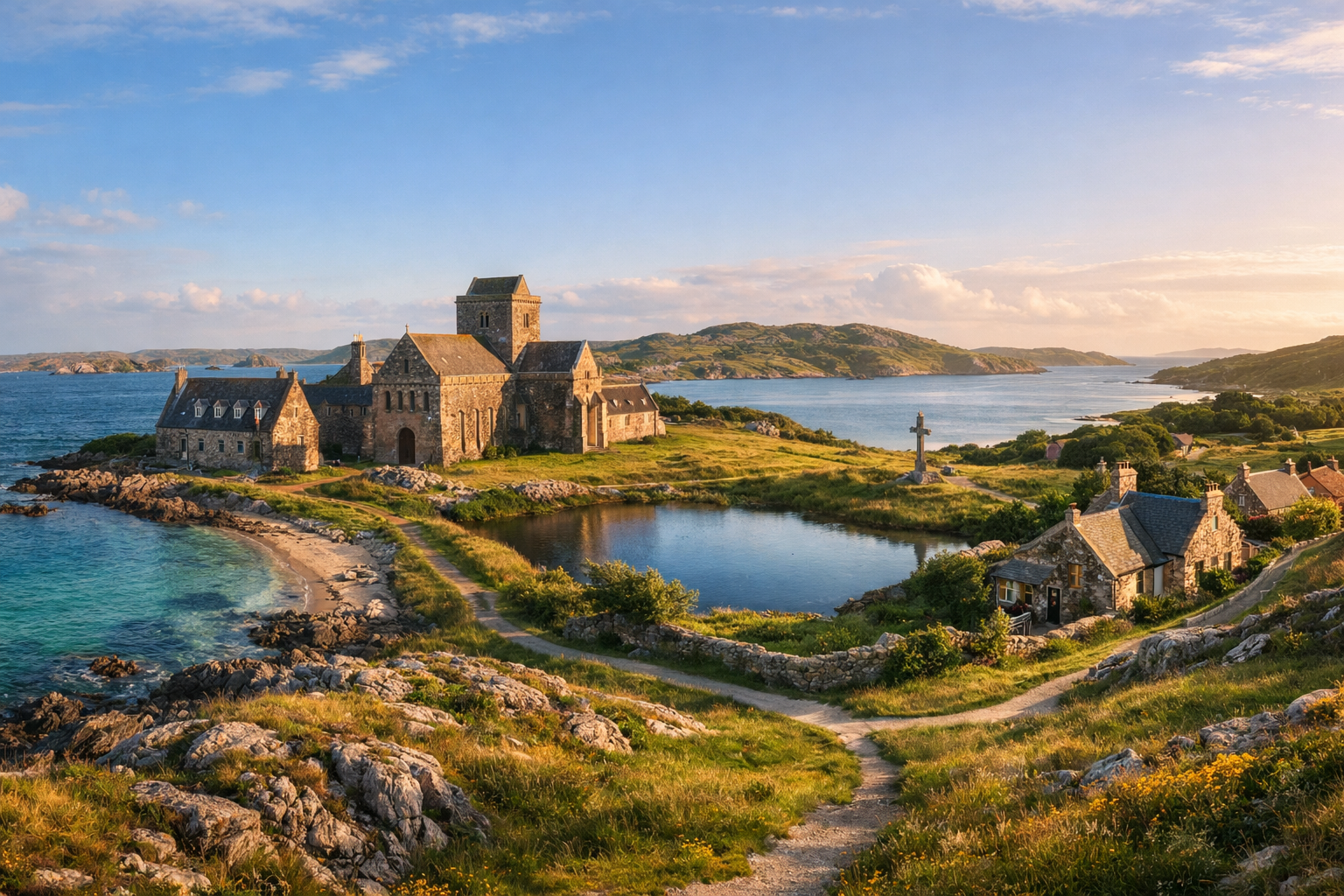
Day 1 — The pilgrimage road to Iona: Glasgow/Oban → Mull → Iona
🚆 The recommended logical arrival route: fly into Glasgow, then take a train or intercity bus to Oban, then the CalMac ferry Oban → Craignure on the Isle of Mull, the West Coast Motors 96/496 bus to Fionnphort, and a short passenger ferry Fionnphort → Iona. This is the real standard route to the island, and many people already experience the journey itself as part of the pilgrimage: water, changing shores, the gradual moving away from city noise, and the sense of entering a slower rhythm. In practical terms, keep in mind that the journey is long and involves connections, so it is better not to plan a packed program for your arrival day: getting from Glasgow to Iona usually takes most of the day, and ferry and bus schedules should definitely be checked again right before the trip.
🚶 After arriving on Iona, devote the rest of the day to a gentle introduction to the island’s space: a short walk from the pier through the village to the shore of Martyrs Bay, check-in, tea, an early dinner, and a very unhurried trip out to the sea. The bay’s name is connected with the tragic episode of 806, when monks were killed during a raid; this is part of the place’s historical memory, not a “dark attraction.” In esoteric and pilgrimage interpretations, the island is often described as a space of cleansing and inner silence, but such readings belong to spiritual culture and the personal experience of travelers, not to scientifically proven properties of the area.
🧘 It is best to make the first evening almost task-free: a walk along the shore, reading, silence, journaling, watching the light over the Sound of Iona. On Iona, people value a measured pace and respect for quiet. Car access to the island is limited, so the atmosphere here really is calmer than in many popular locations in Scotland. It is important to remember the wind, the rapid change of weather, and the early closing times of some services outside the peak season.