
Buy PDF guide

Buy PDF guide — 8.57 USD

PDF — 8.57 USD

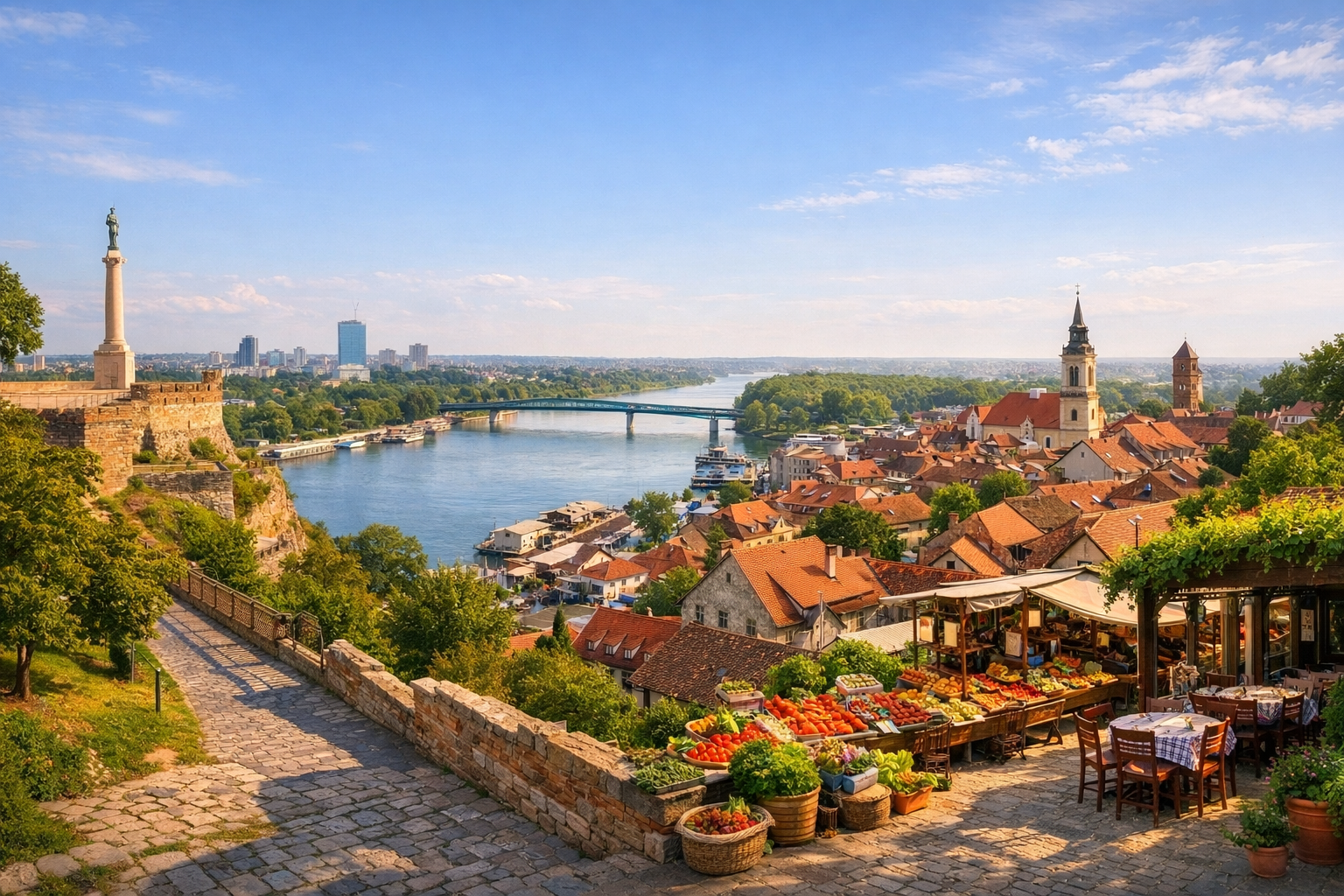
Serbia, Belgrade. Budget travel through Kalemegdan Fortress, the embankments of the Danube and Sava, the Zemun district, markets, and inexpensive traditional cafes. Season: April - October.

Serbia, Belgrade. Budget travel through Kalemegdan Fortress, the embankments of the Danube and Sava, the Zemun district, markets, and inexpensive traditional cafes. Season: April - October.

Belgrade is a great budget stop from April to October, where fortress views, wide riverfront walks, and the old streets of Zemun all come without a high price tag. Spend your days at Kalemegdan, along the Danube and Sava embankments, then dive into local markets and cozy traditional cafés for an easy, affordable taste of the city.

🧭 DAY-BY-DAY ROUTE

Ready-made country and city routes with daily plans, sights, transport and accommodation. Buy PDF guides for independent travel.

🧭 DAY-BY-DAY ROUTE


Day 1 — Belgrade: Kalemegdan and the old center

  • 🚶 Start your trip with Belgrade Fortress and Kalemegdan Park — this is the place where the character of the city, standing on the border of worlds, empires, and rivers, is felt most clearly. The fortress rises above the meeting point of the Sava and Danube and for centuries was the strategic heart of Belgrade: it was destroyed, rebuilt, fortified, and that is exactly why a walk here feels like a journey through layers of history. In the morning the area is especially pleasant for an unhurried walk: soft light falls on the bastions, the viewpoints are not yet crowded, and the wind from the rivers makes even a warm day comfortable. Explore the Upper Town, walk to the lookout points above the mouth of the Sava, stop by the old gates and stone walls, and then slowly descend into the park. Kalemegdan is especially good as a budget location: the main value here is not paid activities, but the views, the atmosphere, and the chance to absorb the geography of Belgrade without rushing.

  • 🚶 From the fortress it is easy to continue to Knez Mihailova Street and the area around Republic Square. This part of the route makes sense on foot: from Kalemegdan to the central streets it usually takes about 15–20 minutes of easy walking without much elevation change. Along the way the city shifts from green slopes and stone walls to the grand historic center, where late 19th- and early 20th-century facades, bookshops, old passages, and street musicians create a lively but not overly intense atmosphere. This is a convenient place to stop at an inexpensive traditional café and try pljeskavica, ćevapi, burek, or strong homemade-style coffee. For a budget format it is better to plan one long lunch rather than several scattered snacks: it gives you a break after the first walk and saves energy.

  • 🏛️ If you still have energy, in the second half of the day visit the National Museum on Republic Square or the Ethnographic Museum on Studentski Trg — both options complement a walk through the center well. The National Museum gives a broader historical and artistic context, while the Ethnographic Museum helps you see Serbia through everyday objects, folk costume, crafts, and the visual language of the Balkans. From Republic Square to the Ethnographic Museum it is about a 10–12 minute walk. It is also a convenient option in case of wind, heat, or a brief rain shower, all of which are вполне possible from April to October.

  • 💤 It is best to end the evening calmly: take a walk through the illuminated center, but do not overload your first day. If you stay in the Savski Trg or Terazije area, the return trip by taxi is usually short, and the walk from the center to your hotel is about 15–25 minutes depending on your base. For independent travel Belgrade is generally convenient and works well with normal precautions, but it is wise to avoid demonstrations and not get involved in any conflicts near sporting events, especially in the evening.


Day 2 — Belgrade: the Sava and Danube riverfronts

  • 🚶 Dedicate the second day to the rivers — they explain the spatial logic of Belgrade better than any guidebook. Start with the stretch along the Sava in the Savamala area and the Belgrade waterfront. In the morning it is pleasant to walk here at length without rushing: modern quarters stand next to the industrial past, and the wide pedestrian zones let you move at your own pace. From Savski Trg to the more developed parts of the waterfront you can walk in about 10–20 minutes. This route is especially good for budget travel because it gives you a sense of the city “in full scale”: water, bridges, river traffic, the lines of hills and old neighborhoods come together into a complete panorama without the need to spend money on excursions.

  • 🚶 After your walk along the Sava, it makes sense to pause for coffee or an inexpensive lunch, then continue toward the Danube views. If you do not feel like walking too much, part of the way can be shortened by taxi or public transport, but overall the day is easy to shape flexibly: with stops, benches, and photo breaks. In practice, Belgrade’s embankments are best understood not as a single point, but as a sequence of urban scenes — from the more modern and open spaces by the Sava to the more historic and panoramic sections closer to the fortress and the Danube.

  • 🚶 In the second half of the day, head back up to the viewpoints near Kalemegdan, but now for different light and a different sense of space. If yesterday the fortress was the main destination, today it becomes a frame for watching the rivers. The view of the confluence of the Danube and the Sava is especially expressive closer to sunset: the water changes color, bridges and new districts appear on the horizon, and old Belgrade feels like a balcony above a huge watery crossroads. This repeated point in the route is justified: Belgrade is a city that reveals itself precisely through returning to the same places at different times of day.

  • 🍽️ Dedicate the evening to traditional but inexpensive food. Look for local kafanas and simple cafés without pretension, where they serve soups, grilled dishes, salads, flatbreads, and Serbian desserts. For a budget format, places one or two streets away from the main tourist front line work well: prices are often gentler there, and the atmosphere feels more local. After dinner, it is best to return by the usual route while keeping basic caution: watch your belongings in busy places, avoid loud argumentative groups, and stay away from areas where fans or mass gatherings are concentrated.

Day 3 — Belgrade: Zemun, the riverfront, and the market

  • 🚆 In the morning, head to Zemun — one of Belgrade’s most atmospheric districts, perceived almost like a separate town with its own memory, rhythm, and visual character. From the central areas it is convenient to get here by bus or taxi; depending on your starting point, the trip usually takes about 25–40 minutes. Zemun feels different from Belgrade’s old center: there is less grand capital-city formality and more of a Danube, almost Central European tone — narrow streets, old facades, a square, access to the river, boats, low-rise buildings, and a slower pace.

  • 🚶 Start with a walk along the Zemun riverfront and around Gardoš, if you are ready for a slight climb. The very heart of the district is especially pleasant to explore on foot: here not only individual landmarks matter, but the entire urban pattern — stairways, slopes, tiled roofs, Danube views, and the long river line. If your energy allows, climb to the higher points for the panorama: the walk is not difficult, but it is better to allow time for stops and water, especially in July and August. For the whole Zemun segment, if you move at an easy pace, it is worth setting aside at least half a day.

  • 🛍️ Then stop by Zemun Market. This is a good way to see not a tourist postcard, but the living everyday life of Belgrade: seasonal vegetables and fruit, homemade products, pastries, local conversations, and the rhythm of an ordinary city morning. The market is also well suited to budget travel because you can put together an inexpensive snack or buy simple local products for the road. The atmosphere is especially good in the first half of the day, when trade is more active and the stalls and counters look most vibrant.

  • 🍽️ After the market, have a late lunch in one of Zemun’s inexpensive traditional cafés. Fish dishes, soups, grilled food, and homemade desserts feel especially fitting here, and the format of an unhurried meal by the water pairs perfectly with the spirit of the district itself. It is better to plan your return to central Belgrade before late evening if you want to keep the trip’s easy rhythm. The trip back usually takes the same 25–40 minutes. The area suits independent travelers well, but, as everywhere, it is better not to show carelessness with your belongings and not to get into arguments in noisy groups.

Day 4 — Belgrade: market, a museum touch, and a calm finish

  • 🛍️ It is best to make the last day softer and more local in mood. Start with one of the city markets closer to where you are staying — for example, a short visit to Kalenić or another market that is convenient logistically, if you want to see one more layer of everyday Belgrade. Morning markets in Serbia are not only about shopping, but also a social scene: vendors discuss the news, buyers choose seasonal products, and the smell of fresh pastries mixes with the aroma of fruit and coffee. For a traveler, this is an excellent final note before departure: not museum-like, but very alive.

  • 🏛️ Then choose one calm museum segment. The Ethnographic Museum works well if you did not get there on the first day, or the Museum of Science and Technology if you want something more unusual and less expected. Both places fit easily into a short final day without overloading the program. On average, it is worth allowing 1.5–2 hours for a visit, plus travel time and a coffee break. A finale like this helps not simply to “tick off points,” but to bring your impressions of Belgrade together into a more complete picture — between history, daily life, and urban energy.

  • 🚶 After the museum, leave yourself a free walk without a rigid to-do list: you can return to a favorite street in the center, walk part of the Kalemegdan route again, or sit quietly in an inexpensive kafana before leaving. This is an especially right format for Belgrade, because the city is remembered not only for its sights, but also for its pauses — the view of tram lines, the noise of summer terraces, the light on facades, the river wind, and the slow conversational rhythm.

  • ✈️ If your departure involves the airport, allow extra time. From the center to Nikola Tesla Airport, public transport or bus usually takes about 30–40 minutes, the A1 minibus takes about 30 minutes to the Slavija area, and a taxi from the central districts is often more convenient for an early flight or with luggage. It is not worth planning a busy evening on the final day. It is more practical to finish the route calmly, double-check your documents, and leave in advance.

Flight tickets

eSIM for travel

Buy PDF guide

Buy PDF guide — 8.57 USD

PDF — 8.57 USD