
Buy PDF guide

Buy PDF guide — 29.99 USD

PDF — 29.99 USD

Santiago

Santiago

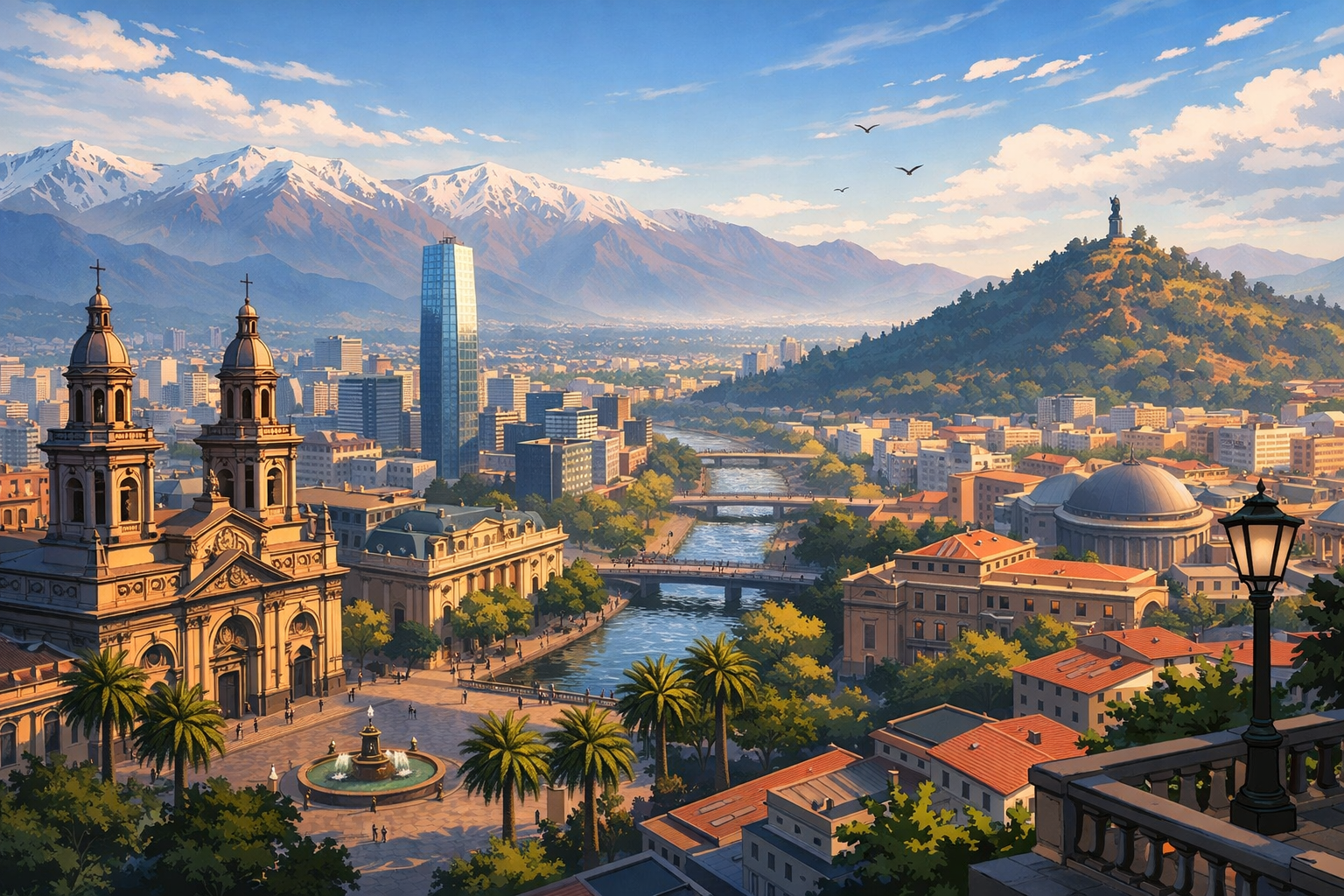
Santiago blends grand city energy with laid-back neighborhood charm, from the café-lined streets of Lastarria to the lively nights of Bellavista and the polished avenues of Providencia. Ride up Cerro San Cristóbal for sweeping views, then slow down in Quinta Normal, where museums and green spaces offer a quieter side of the city.

🧭 DAY-BY-DAY ROUTE

Ready-made country and city routes with daily plans, sights, transport and accommodation. Buy PDF guides for independent travel.

🧭 DAY-BY-DAY ROUTE


Day 1 — Santiago: the historic center and a first introduction

  • 🚶 Start your journey from the very heart of Santiago — the Centro district, where the city reveals itself through squares, colonial-era facades, government buildings, and an intense yet very lively urban rhythm. In the morning, it’s convenient to head to Plaza de Armas and walk around the cathedral, old administrative buildings, and pedestrian streets. Then it makes sense to continue toward Palacio de La Moneda and Paseo Ahumada: this stretch clearly shows how official capital city life, the commercial center of a metropolis, and everyday life coexist in Santiago. Allow 4–5 hours for a walk around downtown with a coffee break and a late lunch; between key points, it is usually a 10–20 minute walk. It’s best not to overload the first day with museums: it’s more important to feel the scale of the city, notice the height of the surrounding Andes in the gaps between streets, and understand how the main districts are laid out.


Day 2 — Santiago: Lastarria, Santa Lucía Hill, and the city’s cultural layer

  • 🚶 Today Santiago will show a more “intellectual” and atmospheric face. The Lastarria district is ideal for a slow day: bookstores, small cafés, facades of old houses, cultural centers, and a calm strolling energy. Start with Cerro Santa Lucía — it’s an easy climb, but it’s best to allow 1.5–2 hours with stops: stairways, viewpoints, and inner courtyards gradually reveal the city from above, and in the morning the light is softer and there are fewer people. After descending, walk along Lastarria and nearby Parque Forestal, dropping into museums depending on your mood. Walks between points in this part of the route are short — about 5–15 minutes each — so the day feels very comfortable. It’s a good moment to slow down a little after the center and let Santiago unfold through details, not only through the “must-see” spots.

Day 3 — Santiago: the Fine Arts Museum, Parque Forestal, and Bellas Artes

  • 🚶 This day is perfect for architecture, art, and a beautiful urban walk without long transfers. Start at Museo Nacional de Bellas Artes and the nearby paths of Parque Forestal: the area around it is very photogenic, and the Bellas Artes district itself offers one of the most pleasant impressions of central Santiago — a little more European, greener, and more walkable. After the museum, you can continue to Museo de Arte Contemporáneo or simply keep strolling slowly along the park. It makes sense to allow half a day for the museum and surroundings, then have a long lunch and leave the second half of the day more open. This day works well as a “semi-cultural” one: don’t chase the number of galleries, it’s better to combine 1 museum, 1 park, and a long walk through nearby streets.

Day 4 — Santiago: Bellavista, street life, and the evening city

  • 🚶 Bellavista is one of the city’s most recognizable districts, where Santiago becomes brighter, louder, and freer. There are many restaurants, bars, street art spots, and a dense urban energy here, so it’s better not to come too early: the district is especially good from late morning until evening. During the day, stroll through Patio Bellavista and the neighboring streets, then head to the entrance of Cerro San Cristóbal via Pío Nono to understand the logistics for the next day in advance. The district itself doesn’t require a complicated plan: 3–4 hours of unhurried walking with stops for a snack, coffee, and photos is enough. In the evening, Bellavista is great for dinner, but it’s better to keep your route calm and predictable, especially if you want to save energy for the packed program on the hill the next day.

Day 5 — Santiago: Cerro San Cristóbal, the funicular, cable car, and panoramas

  • 🚶 One of the most spectacular days of the route. In the morning, head to the Pío Nono entrance and go up on the historic funicular: the ride itself is short, but it’s best to allow at least 4–6 hours for the full visit to the hill, because it’s easy to linger at the viewpoints, sanctuary, terraces, and panoramic stops. At the top, you’ll see that iconic image of Santiago — a huge city spread across the valley and surrounded by the mountain wall of the Andes. After the summit, you can use Teleférico Santiago to descend or move to another part of the park, and walk part of the route on foot. This day calls for water, comfortable shoes, and rest breaks: even with the funicular and cable car, the distances inside Parquemet are noticeable. Don’t plan anything strenuous for the evening — let the finale be a slow dinner and rest.

Day 6 — Santiago: Providencia and a more modern urban rhythm

  • 🚶 After the historic center and the hills, it’s worth switching to a different side of Santiago — more businesslike, polished, and modern. Providencia is ideal for a long urban walk without museum overload: broad streets, shops, cafés, convenient connections, and a more “even” rhythm of everyday life. You can start from the Los Leones area and walk toward Costanera Center, then continue wandering through the blocks with an emphasis not on a list of sights, but on the atmosphere. Between key points in this part of the city, it is usually a 10–25 minute walk, and the metro makes it easy to shorten distances if you feel like it. This is a day for catching your breath, shopping, a late breakfast, and feeling that Santiago is not only an old center, but also a large modern Latin American metropolis.

Day 7 — Santiago: the market, local gastronomy, and the center without rushing

  • 🚶 Today it’s best to give yourself a more relaxed, “human” format for the route. Return to the central blocks for Mercado Central or the surrounding food streets and small shops. Even if you’re not building the day around shopping, this area lets you feel the city through smells, produce, the noise of conversations, and the everyday rhythm. Allow 2–3 hours for the market and nearby streets, then have a long lunch and leave the second half of the day free — for example, for another walk through the center, a visit to a café, or a short museum. A day like this is useful in the middle of a long route: it doesn’t require intense concentration, but it adds a sense of real urban everyday life to the trip.

Day 8 — Santiago: the History Museum and a deeper look at Plaza de Armas

  • 🚶 If the center on the first day was an introduction, today is a more thoughtful return. Visit Museo Histórico Nacional on Plaza de Armas and slowly walk the surrounding blocks once again. The history museum works especially well after several days in the city: you already understand the context of Santiago’s streets, neighborhoods, and visual codes, so the exhibition is perceived not as abstract history, but as a key to what you have seen. After the museum, you can walk to the former administrative quarters and old arcades of the center. It’s convenient to allow 1.5–2 hours for the museum itself, then 2–3 hours for a walk, coffee, and stops. This day is not about quantity, but about deepening the impression.

Day 9 — Santiago: the Museum of Pre-Columbian Art and the old town

  • 🚶 One of the richest museum days. Museo Chileno de Arte Precolombino is a place that offers a broader, continental view of the region and helps you see Chile not in isolation, but as part of the wider cultural field of the Americas. It’s best to set aside at least 2 hours for the museum, and more if ancient cultures truly interest you. Afterward, it’s nice to walk along the old streets around Bandera and Compañía, slowly returning toward Plaza de Armas. The area around the museum is compact, so the day can be planned very comfortably: museum, lunch, short walk, rest. This rhythm is especially good after several active days on foot.

Day 10 — Santiago: the República district and contemporary art

  • 🚶 The República district shows another layer of the city — more academic, historic, and a little less touristy. Here it’s worth visiting Museo de la Solidaridad Salvador Allende, then walking through the quarter itself, where old mansions, a university atmosphere, and quieter streets create a distinct mood. It’s convenient to devote half a day to the museum and a walk around the district, leaving the second half for rest or a return to your favorite part of the city. This is one of those days when Santiago reveals itself not through postcard views, but through intellectual and political memory, through contemporary art, and through an urban fabric with less tourist gloss but more depth.

Day 11 — Santiago: Quinta Normal and a large park

  • 🚶 After a series of central routes, it’s time for a day with more air and greenery. Quinta Normal is a good choice for a long walk, resting in the shade, an unhurried rhythm, and, if you wish, visiting one of the nearby museums. This is not the part of Santiago people go to for a “wow postcard,” but places like this are exactly what give the body a break and change your perception of the city. It’s easy to spend 3–5 hours here: walk slowly, sit by the water, read, drink takeaway coffee, observe local life. Afterward, you can return to the center by metro without feeling overloaded. A very useful day for balance in a 14-day route.

Day 12 — Santiago: a free day to revisit your favorite district

  • 🚶 It’s best to deliberately leave this day flexible. Return to the place where you felt especially good: to Lastarria for the atmosphere, to Providencia for a comfortable city walk, to Bellavista for dinner, to the center for architecture, or to Parque Forestal for calm. The point of a free day is not to “finish off the list,” but to turn the trip from a sightseeing program into something personal. If needed, use this day for rest, laundry, a late breakfast, and an unhurried rhythm without mandatory stops. Santiago opens up generously precisely through repeated returns.

Day 13 — Santiago: sunset views, final shopping, and a slow evening

  • 🚶 A good day for a final visual highlight. If the weather is clear, head again to a panoramic point — this could be Cerro San Cristóbal, a terrace in the Providencia area, or simply a walk through the city during the “golden hour.” During the day, leave time for souvenirs, books, local products, and small purchases. In the evening, arrange a beautiful dinner in the district you liked most. There is no need to fill the day with new museums anymore: it is more important to gather an impression of the city as a place you want to return to in your thoughts.

Day 14 — Santiago: a calm finale and one last loop through the city

  • 🚶 On the last day, don’t try to do too much. It’s better to choose a short “lap of respect”: a favorite square, a familiar street, a good coffee shop, one more walk through the park or the center. If your flight is later, keep the pace very calm and allow extra time for the trip to the airport: getting to SCL through the city usually takes about 25–45 minutes by taxi or transfer without heavy traffic, and more during rush hour. Let the end of the trip be not about rushing, but about the feeling of the city — contrasting, energetic, culturally rich, and very beautiful in those moments when the Andes are clearly visible above it.

Flight tickets

eSIM for travel

Buy PDF guide

Buy PDF guide — 29.99 USD

PDF — 29.99 USD