
Buy PDF guide

Buy PDF guide — 6.43 USD

PDF — 6.43 USD

SAAR - Saar + Luxembourg on one route

SAAR - Saar + Luxembourg on one route

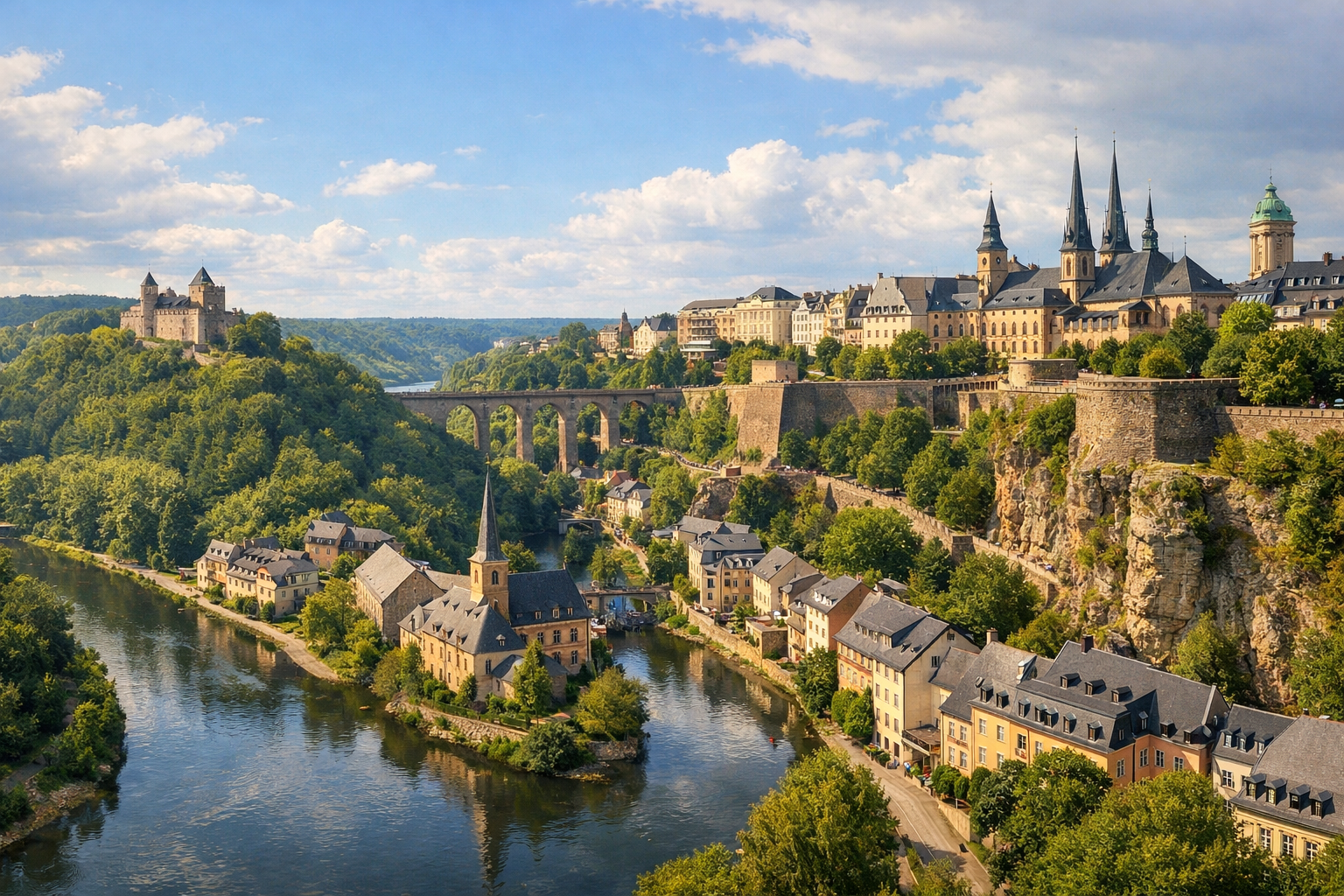
Discover a route where Saarland’s relaxed charm meets Luxembourg’s riverside elegance. From Saarbrücken to the Moselle and on through Luxembourg’s wine villages to the capital, this journey blends vineyard views, storybook towns, and easy cross-border flair.

🧭 DAY-BY-DAY ITINERARY

Ready-made country and city routes with daily plans, sights, transport and accommodation. Buy PDF guides for independent travel.

🧭 DAY-BY-DAY ITINERARY


Day 1 — Saarbrücken: baroque, castle, and the Saar riverfront

  • 🚶 Saarbrücken is one of the most pleasant cities in western Germany for a short itinerary: compact enough not to exhaust you with endless transfers, yet layered enough to show, in a single day, both baroque grandeur, university-town lightness, and the French cultural flavor of this border region. Start your walk in the Schlossplatz area and at Saarbrücken Castle: here the city reveals itself not as a harsh industrial center, but as the elegant capital of the small state of Saarland, where the architecture is full of light, symmetry, and an almost theatrical solemnity. The castle’s modern appearance combines old forms with careful reconstructions, and the viewpoints above the river immediately give you a sense of the city’s scale: below flows the Saar, bridges connect different quarters, and baroque facades create a soft European panorama without unnecessary pomp.

  • 🚶 Then it makes perfect sense to continue to Ludwigskirche and the surrounding baroque ensemble — one of the most recognizable architectural landmarks in the entire region. The square around the church is especially appealing because it works not just as a collection of beautiful facades, but as a stage for a slow urban stroll: this is a place where you want not to rush, but to pause, look at details, wander into quiet side streets, and catch that rare kind of atmosphere in which a capital-city feel is present without any overload. After that, head toward St. Johanner Markt — the lively heart of the city, where Saarbrücken becomes less ceremonial and more human: cafés, terraces, local shops, the soft murmur of conversation, and the feeling that you have arrived not just at a tourist spot, but in a place where people actually live.

  • 🚶 In the second half of the day, leave time for the Saar riverfront and the museum area near Bismarckstraße. Saarlandmuseum – Moderne Galerie fits into the route especially well: after picture-postcard baroque, it offers a contemporary cultural contrast — 20th–21st century art, bright spaces, and a sculpture garden that works equally well for a thoughtful visit or simply as a beautiful pause. In the evening, the city is best experienced without a rigid plan: stroll along the waterfront, cross a bridge, return to the old center, and have dinner around St. Johanner Markt. Saarbrücken does not overwhelm with a list of must-sees, but it charms very easily with its rhythm — and that is exactly what makes it the perfect first base for a three-day itinerary through Saarland and Luxembourg.


Day 2 — Transfer to Luxembourg via the Moselle: Remich, wine villages, and a relaxed day without rushing

  • 🚆 Transfer: Saarbrücken → Luxembourg, direct regional bus/express or a train connection via central hubs, approximately about 1 hour. This is a rare case where an international transfer does not “eat up” the day, so the route can be planned comfortably, without leaving at dawn.

  • 🚗 If you want to make the second day especially beautiful, it makes sense to rent a car for a few hours and not go directly to central Luxembourg, but instead travel through the wine-growing Moselle — with a stop in Remich and one or two villages along the river. This section of the route is valuable not for the number of “big-name” sights, but for the sense of transition: an urban German day gives way to a gentle landscape of vineyards, bends in the river, low hills, and neat borderland settlements. Remich is often called one of the most pleasant strolling spots on the Luxembourg Moselle: a wide promenade, boats, wine terraces, an unhurried rhythm, and an almost resort-like atmosphere make it an ideal place for lunch and rest.

  • 🚶 After lunch, continue toward Luxembourg at an easy pace, leaving time for short stops by vineyard slopes and viewpoints. This day matters precisely because of its tempo: do not try to squeeze in three more museums and five more districts. It is much better to arrive in Luxembourg in the second half of the day, check in calmly, rest a little, and spend the evening in the Upper Town. A first encounter with Luxembourg is especially powerful at sunset: the city stands on rocky ledges and seems assembled from levels — bridges, bastions, terraces, illuminated facades, deep valleys, and unexpectedly dramatic changes in elevation. Walk to the Corniche, wander the old streets around Grand-Rue and Place Guillaume II, and then simply let the city reveal itself through its panoramas. Luxembourg works best not as a checklist, but as a sequence of views.

Day 3 — Luxembourg: old town, Corniche, museums, and park

  • 🚶 It is best to devote the third day entirely to Luxembourg itself, because this is a city perceived not as points, but as layers. Start with the Corniche — the famous promenade above the valley, often called “the most beautiful balcony in Europe.” Here it becomes especially clear why people love the city so much: it is both intimate and monumental at once. Under your feet are ancient fortifications, below are quarters carved into the terrain, and ahead are bridges, spires, and stone facades that change color depending on the light. This is not a capital that impresses by size; it impresses compositionally, like a perfectly assembled theatrical set in which ordinary city life nonetheless continues.

  • 🚶 Then make your way down toward the historic core and set aside time for Lëtzebuerg City Museum, if you want to better understand why the city looks exactly the way it does. Its history is one of a fortress, borders, destruction, and constant rethinking of space, and after the museum the old town reads much more deeply. If, instead, you feel drawn to contemporary art and striking architecture, head to Mudam and the Fort Thüngen area: the combination of old fortifications, modern museum volumes, and the open spaces of Kirchberg creates one of the most expressive contrasts in the entire trip. This is one of those cases where a few minutes on the road turn into a transition between whole urban eras.

  • 🌿 The best way to finish the route is in Parc municipal d’Edouard André or by Villa Vauban, where Luxembourg suddenly becomes almost a garden city. After fortress walls, viewpoints, and museum halls, the park provides the necessary exhale: wide lawns, old trees, gentle paths, and that rare sense of European care without coldness. It is the perfect finale for a three-day itinerary: Saarbrücken shows friendly borderland Germany, the Moselle links it to a wine landscape, and Luxembourg completes the trip with a capital remembered not for noise, but for the beauty of relief, light, and space.

Flight tickets

eSIM for travel

Buy PDF guide

Buy PDF guide — 6.43 USD

PDF — 6.43 USD