
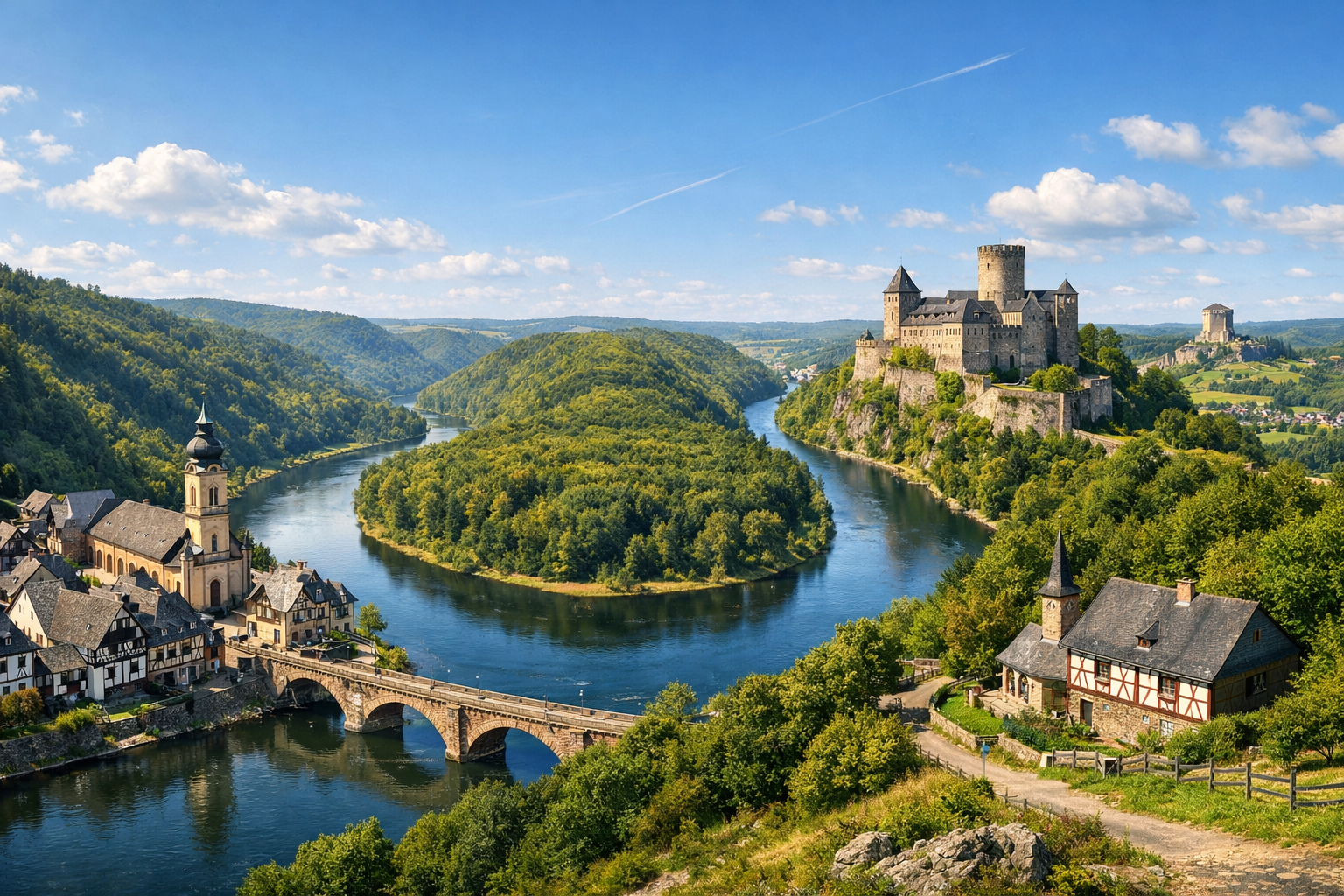
Day 1 — Saarbrücken: baroque, castle, and a gentle start to the trip
🚶 Saarbrücken is the ideal entry point for a nature tour through Saar and Hunsrück because this city does not try to overwhelm with scale, but wins you over with atmosphere: the French proximity can be felt here in the rhythm of the streets, in the cafés, in the relaxed pace, and in the special lightness of the urban environment. Start the day in the historic center at Saarbrücker Schloss and Schlossplatz: the baroque ensemble on the high bank of the Saar sets the tone for the whole trip. From here, it is easy to feel the logic of the region — the river flows below, green slopes rise all around, and the city seems to be woven between culture, industrial memory, and borderland nature. The castle does not look like a harsh fortress in the classic German sense; it is more of an elegant residential landmark with beautiful views of the river, bridges, and old quarters. If you continue on, the route naturally leads to Ludwigskirche — one of the most important Protestant baroque churches in Germany. The square around it is especially lovely during the calm daytime hours: the light falls on the pale stone, the facades look noble and very “European,” and the whole composition creates a feeling of harmony and order.
🏛️ After a walk through the center, it makes sense to visit the Moderne Galerie Saarlandmuseum or Historisches Museum Saar — not just to check a box, but to better understand the context of the region. Saar is often seen as a small federal state between major German destinations, but it is precisely here that Europe’s layered identity is especially easy to read: a mining and industrial past, French influence, German cultural tradition, and a very careful attitude toward the landscape. In the evening, leave time simply for the Saar embankment and dinner in the center: on the first day, it is better not to overload the program, but to give yourself a soft start before the more nature-focused excursions. This rhythm is important in practical terms too: after a flight or train ride, there is no need for a long forced march, and the very next morning you can head out to the region’s main natural calling card.