
Buy PDF guide

Buy PDF guide — 4.28 USD

PDF — 4.28 USD

Saar - Gastronomic Tour of Saar

Saar - Gastronomic Tour of Saar

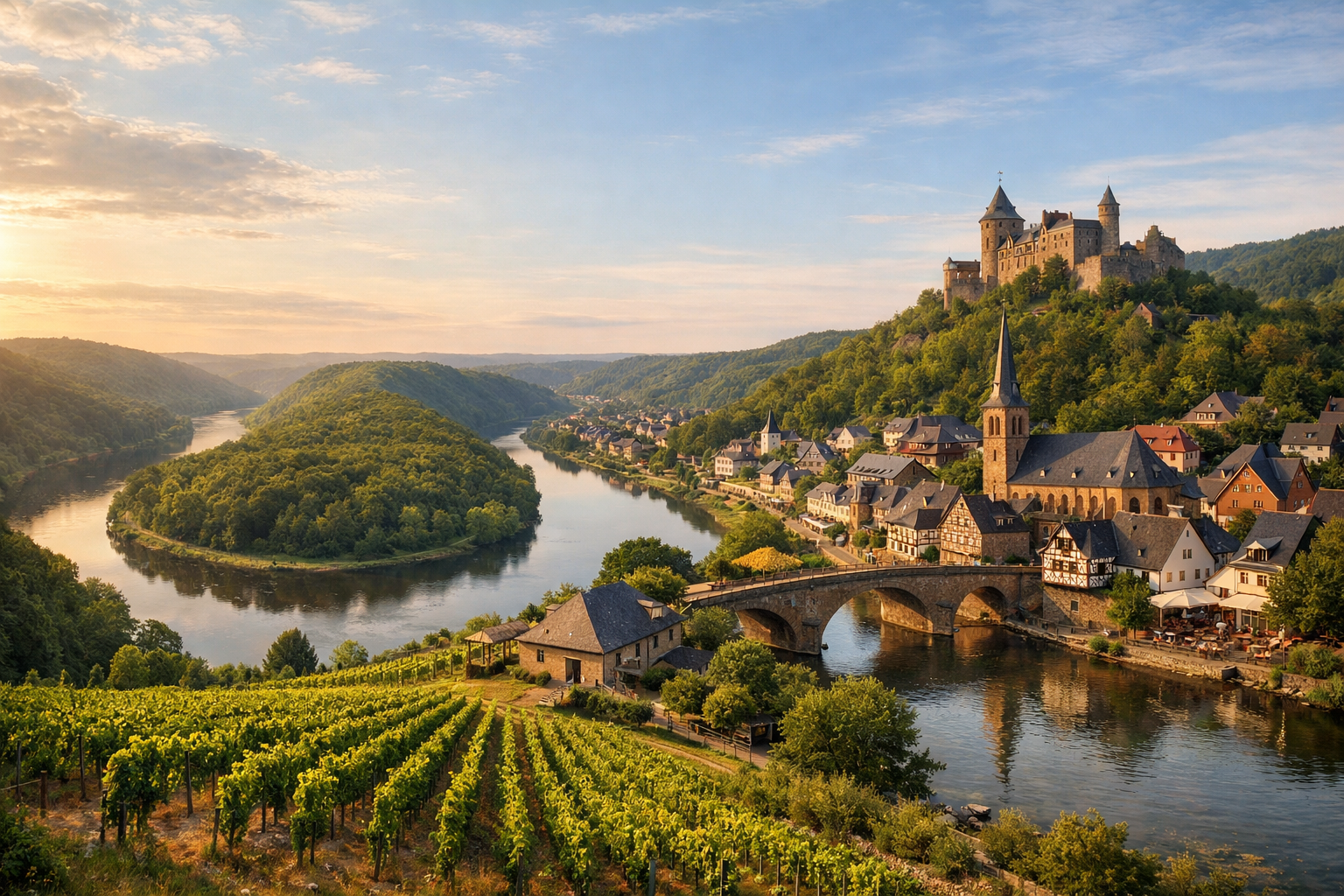
Discover Saar through its rich industrial heritage and bold regional flavors, from the lively streets of Saarbrücken to the striking Völklingen Ironworks and back again. This short gastronomic journey blends culture, history, and memorable cuisine in one of Germany’s most distinctive borderland regions.

🧭 DAY-BY-DAY ITINERARY

Ready-made country and city routes with daily plans, sights, transport and accommodation. Buy PDF guides for independent travel.

🧭 DAY-BY-DAY ITINERARY


Day 1 — Saarbrücken: baroque, St. Johanner Markt, and the gastronomic rhythm of the Saar capital

  • 🚶 Saarbrücken is an ideal base for a short gastronomic trip around Saar: a compact, lively, very “human-scale” city on the Saar River, where German solidity constantly intertwines with the French taste for life. Here you don’t need to spend half a day on exhausting transfers between districts: the historic center, riverbanks, markets, museums, and restaurants are close enough that the route feels not like a race, but like a pleasant, full walk. The city’s atmosphere is shaped by baroque facades, student energy, a soft borderland culture, and the region’s special love of good food: in Saar, they know how to turn lunch, a glass of wine, and an evening in a bistro into a complete event. It’s best to start the day in the St. Johanner Markt area — this is the heart of the old town, where cozy squares, cafés, and terraces create that very European rhythm people come here for: a slow breakfast, an unhurried walk, then a museum, then coffee again, an aperitif, and a long dinner.

  • 🚶 Continue the route through Saarbrücker Schloss and Schlossplatz — here you can feel the historical pulse of the region, which for centuries lived between the German and French worlds. The castle square and the surrounding urban fabric create a beautiful contrast with the gastronomic program: during the day you immerse yourself in history and architecture, and by evening you return to Saar’s main pleasures — wines, seasonal products, cuisine with a pronounced French influence, and attention to detail. For the first day, it’s convenient to combine a walking tour of the old center, a visit to Historisches Museum Saar, and a leisurely lunch in the center. After lunch, you can head to the Moderne Galerie if you want to add 19th–21st century art to the route, or leave that time for a more relaxed pace: coffee, delicacy shopping, a short rest at the hotel, and a lovely evening outing for dinner.

  • 🍽️ The day’s gastronomic focus is getting to know Saar cuisine through the restaurant scene in Saarbrücken itself. Seasonal menus, dishes using French technique, local Moselle and Saar wines, cheese plates, refined meat options, as well as more casual wine bars and bistros around the old town are especially appropriate here. If you want to make the evening truly special, it makes sense to reserve a table in advance at one of the city’s strong gastronomic addresses and allow at least 2–2.5 hours for dinner without rushing. This region is not about “eat quickly and run on” — it is about pleasure, conversation, textures, sauces, dessert, and a second glass of wine.

  • 💤 It makes perfect sense to spend the night in Saarbrücken: that way you don’t lose time changing base, and the second day can be devoted to industrial heritage and another gastronomic layer of the region.


Day 2 — Völklingen and green Saar: UNESCO industrial heritage, a park, and the region’s final taste

  • 🚆 Transfer: Saarbrücken → Völklingen by regional train usually takes about 15–20 minutes, plus 10–15 minutes on foot from the station to the Völklinger Hütte complex. This is one of the easiest outings from the regional capital: the trip is short, without tiring logistics, so the day feels full but not heavy.

  • 🚶 Weltkulturerbe Völklinger Hütte is one of the strongest and most unusual places in the entire region, and for a gastronomic tour it matters not only as a UNESCO site, but also as an emotional counterpoint. After cozy, intimate Saarbrücken, you enter a monumental world of steel, coke batteries, blast furnaces, bridges, stairways, and industrial volumes that literally change your sense of scale. This is not an “ordinary museum about a factory,” but a colossal monument to the industrial age, preserved almost like a fossilized time machine. Once production thundered here, and today within the space of the former metallurgical giant coexist labor history, exhibitions, powerful architectural drama, and a rare feeling of the physical presence of the past. Allow at least 2.5–3 hours for the visit, and it’s best to wear comfortable shoes: the area is large, the impressions build gradually, and the best way to truly feel the place is not to rush.

  • 🍽️ After the industrial part, a gastronomic pause works especially well: either lunch on site, or a return to Saarbrücken for a late lunch/early dinner. The second day can be shaped in a softer, greener way to balance the power of Völklinger Hütte with a walk in the Deutsch-Französischer Garten. This Franco-German garden is not just a park, but a beautiful symbol of the region’s border identity: there is no museum-like strictness here, but there is space, water, avenues, calm relief, and the feeling that Saar can be not only industrial, but also surprisingly lyrical. After a rich first half of the day, this is the ideal place to rest, have a light dessert, grab a takeaway coffee, or simply pause without a mandatory program.

  • 🚆 Transfer: Völklingen → Saarbrücken on the way back again takes about 15–20 minutes. If you want to finish the day in the Deutsch-Französischer Garten, it is more convenient to return to the city first and then use the Saarbahn, bus, or taxi to the park. For the final dinner, it makes sense to plan a calm evening in Saarbrücken without additional transfers.

  • 🍷 The finale of the route is a farewell to Saar through dinner in the region’s capital. The best scenario is to choose a restaurant focused on modern European cuisine, local products, and a good wine list rather than trying to cover too much. In two days, Saar reveals itself not through the number of places, but through the quality of impressions: what matters here are the contrasts between baroque and industry, Germany and France, dense history and very lively gastronomy. Such a short route works precisely because it is compact, realistic, and leaves you with a sense not of fatigue, but of flavor — in the most literal sense.

Flight tickets

eSIM for travel

Buy PDF guide

Buy PDF guide — 4.28 USD

PDF — 4.28 USD