
Buy PDF guide

Buy PDF guide — 10.71 USD

PDF — 10.71 USD

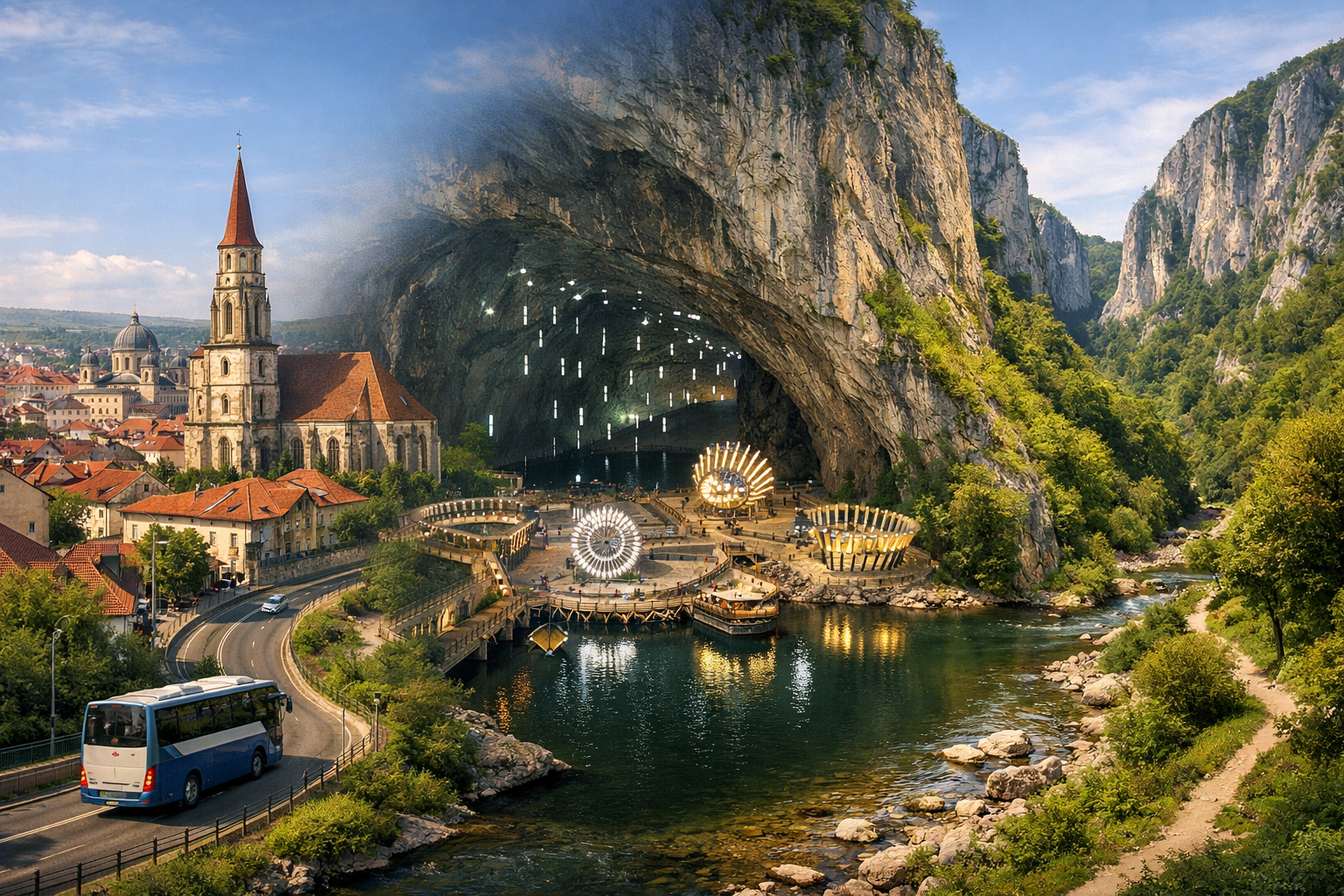
Romania, Cluj-Napoca and Turda Gorge. An affordable trip through the cultural capital of Transylvania, the Turda salt mine, and a natural gorge with bus transfers. Season: May - October.

Romania, Cluj-Napoca and Turda Gorge. An affordable trip through the cultural capital of Transylvania, the Turda salt mine, and a natural gorge with bus transfers. Season: May - October.

Discover Romania on an affordable getaway from vibrant Cluj-Napoca to the otherworldly Turda Salt Mine and the dramatic cliffs of Turda Gorge. With easy bus transfers and the best weather from May to October, this Transylvanian escape blends culture, history, and nature in one smooth trip.

🧭 DAY-BY-DAY ITINERARY

Ready-made country and city routes with daily plans, sights, transport and accommodation. Buy PDF guides for independent travel.

🧭 DAY-BY-DAY ITINERARY


Day 1 — Cluj-Napoca: the old center and the rhythm of Transylvania’s capital

  • 🚍 Arriving in Cluj-Napoca and heading to the center is easy to plan with the city bus A1E from Avram Iancu Airport: it is one of the most budget-friendly options and connects the terminal with key parts of the city. The ride to the central area usually takes about 25–35 minutes depending on traffic. An alternative is an official taxi or a ride-hailing app; from the airport to the center it most often takes around 15–20 minutes by car.

  • 🚶 Cluj-Napoca is often called the cultural capital of Transylvania, and you can feel it from the very first steps: baroque facades, university energy, cafés on the squares, and a lively urban rhythm come together here in a cohesive and remarkably pleasant cityscape. Start with Piața Unirii, the city’s main square, where the Gothic silhouette of St. Michael’s Church and the Bánffy Palace look especially striking. This place shows Cluj’s character well: at once historic, youthful, and very European in atmosphere. In the warm season the square is full of street life, and the narrow streets around it are perfect for unhurried walks without a strict schedule.

  • 🏛️ Then it is worth dedicating a few hours to the central quarters around Memorandumului, Napoca, and Eroilor streets. There is no need to rush here: Cluj reveals itself best not as a checklist of sights, but as a city of atmosphere. Along the way, notice the eclectic facades, university buildings, small courtyards, cafés, and bookshops. If you want to add panoramic views and a bit of light physical activity, you can head up to Cetățuia hill toward evening: it offers one of the most beautiful views over the city’s rooftops, towers, and green park lines.

  • 🌆 It makes sense to leave the evening free for rest after the journey: dinner in the center, a short walk along the embankments, and an early return to the hotel. This pace is especially good for a budget trip: you do not spend extra money on complicated logistics, but you still get to feel the city on the very first day without overloading yourself after the flight.


Day 2 — Cluj-Napoca: museums, the botanical garden, and green pauses

  • 🚶 It is best to devote the second day to Cluj’s cultural layer. Start with the Ethnographic Museum of Transylvania, one of the city’s most interesting museums for a first introduction to the region. Its exhibition helps you see Transylvania not just as a beautiful postcard, but as a place with deep rural, craft, and ritual traditions. The region’s layered character is felt especially clearly here, where different communities, ways of life, and cultural habits coexisted for centuries.

  • 🎨 After that, it makes sense to continue to the Cluj-Napoca Art Museum, housed in the baroque Bánffy Palace. Even if you are not planning a long museum day, the building alone is worth the visit: aristocratic architecture, grand interiors, and the feeling of the old city center create a very complete impression. The collection lets you see Romanian art in a broader national context and complements the day’s ethnographic part well.

  • 🌿 In the second half of the day, head to the Alexandru Borza Botanical Garden. After stone squares and city facades, it is the perfect pause: the garden is very picturesque, with old trees, greenhouses, themed sections, and the feeling of a quiet university space. From May to October it is especially lovely: everything works through the contrast of greenery, light, and calm, and a walk here helps restore your energy before the out-of-town trips of the following days.

  • 🌳 If you still have energy left, you can finish the day with a walk through Simion Bărnuțiu Central Park. It is one of the locals’ favorite urban spaces, where Cluj shows itself not as a museum city, but as a comfortable place for everyday life. This makes for a full but not exhausting day: all key points fit within the city’s logic and combine well on foot or with short bus rides.

Day 3 — Turda: Salina Turda salt mine and return to Cluj

  • 🚌 Traveling from Cluj-Napoca to Turda is easy by bus or minibus. Regular services operate on the route, and the journey itself usually takes about 45–60 minutes one way, depending on the departure point and road conditions. That makes Turda an excellent day trip without the need to change your base hotel.

  • ⛏️ The main goal of the day is Salina Turda, one of Romania’s most unusual attractions. Visitor entry is organized via Aleea Durgăului 7 in Turda. Inside, it is not just a former salt mine, but an impressive underground space where industrial history has turned into an almost fantastical tourist site. High mining chambers, salt walls, cool air, and dramatic lighting create the feeling that you are descending not into a museum, but into the set of a science-fiction film.

  • 🧂 The large underground halls, the Ferris wheel, the boating area, and the long descents that gradually reveal the scale of the mine are especially memorable. But amid all the spectacle, it is important not to forget the site’s historical meaning: salt extraction was one of the region’s most important resources for centuries, and places like this helped shape the economy of Transylvania. Allow at least 3 hours for the visit, and ideally half a day: there really is a lot to look at here, and rushing only spoils the impression.

  • 🧥 It is important to remember that inside it feels noticeably cooler than on the surface, even in summer, so a light sweater or windbreaker will come in very handy. After the visit, you can have a relaxed lunch in Turda and return to Cluj in the second half of the day. This format helps keep the budget under control: transport is relatively inexpensive, there is no need for separate overnight accommodation, and in terms of impressions it is one of the strongest days of the whole route.

Day 4 — Turda Gorge: nature, trails, and a bus-based format without a car

  • 🚌 It is best to plan the nature day as realistically as possible and without rushing. From Cluj-Napoca, you can reach the Turda Gorge area by public transport using bus M71 toward Petreștii de Jos, and then walk to the entrance area of the gorge. This option requires an early start and careful attention to the timetable, but it allows you to manage without renting a car. If you want more flexibility, you can first travel to Turda by intercity service and cover the final section by official taxi.

  • 🥾 Turda Gorge, known as Cheile Turzii, is one of the region’s most expressive natural locations: limestone walls, a narrow valley, trails along the water, small bridges, and sharp rock faces create a landscape you do not expect to see so close to a major city. It carries a real Carpathian energy, but in the compact format of a day trip. It is best to plan the route as a calm hike of several hours with mandatory pauses for views, photos, and rest.

  • 🌄 Spring, summer, and early autumn are the best times for such a trip: in May the gorge is especially fresh and green, in summer the long daylight hours give you extra time, and in September and October the walk becomes gentler in temperature and more beautiful in color. At the same time, it is important not to try to cover too much at once. For an affordable and comfortable journey, it is better to choose the main marked route, bring water, a snack, comfortable shoes, and keep enough time in reserve for the return trip.

  • ⚠️ In the Carpathians and in similar natural areas, you should walk only on marked routes, avoid scree slopes, and not go close to cliff edges for the sake of photos. If you encounter wild animals on the trail, keep your distance, do not feed them, and do not provoke them. After the walk, return to Cluj-Napoca by the same logical route and leave the evening free for a calm dinner: after a day in nature, the body responds especially well to a slow city rhythm.

Day 5 — Cluj-Napoca: ethnopark, final walks, and departure

  • 🌳 It is worth making the last day softer and free of long transfers. An excellent option is the Romulus Vuia National Ethnographic Park, located on the hilly outskirts of Cluj. It is an open space with traditional houses, wooden churches, and farm buildings from different parts of Transylvania, where you can especially clearly understand what everyday village life looked like before the era of mass urbanization. In good weather, the park feels almost cinematic: old wood, grassy slopes, wooden architecture, and silence create the atmosphere of a calm journey through time.

  • 🏘️ If on the first day you only briefly sensed Cluj, here the route comes to a beautiful conclusion: after the city squares, museums, the mine, and the gorge, it is the ethnopark that ties everything into one story about Transylvania — a region where urban culture, rural tradition, and natural relief have always existed side by side. It is convenient to allow 2–3 hours for the park, and then return to the center for last purchases, coffee, and a final walk.

  • 🧳 Before heading to the airport or railway station, it is better to leave a sufficient time buffer. To the airport, it is again convenient to use bus A1E or an official taxi. If your flight is very early or late, it is more comfortable to book a car through trusted apps or via the hotel desk/recommendation. For independent travel, Romania generally works well as long as you follow normal precautions: keep an eye on your personal belongings on transport and at stations, choose official taxis, and do not leave valuables unattended.

  • ✨ This 5-day route is good precisely because of its compactness: it does not try to spread across the whole country, but instead shows one region deeply and realistically. Cluj-Napoca gives you culture and city rhythm, Turda offers a dramatic underground world of salt, and Turda Gorge delivers the natural drama of Transylvania without expensive logistics or exhausting transfers.

Flight tickets

eSIM for travel

Buy PDF guide

Buy PDF guide — 10.71 USD

PDF — 10.71 USD