
Buy PDF guide

Buy PDF guide — 15.00 USD

PDF — 15.00 USD

Rotorua and thermal springs

Rotorua and thermal springs

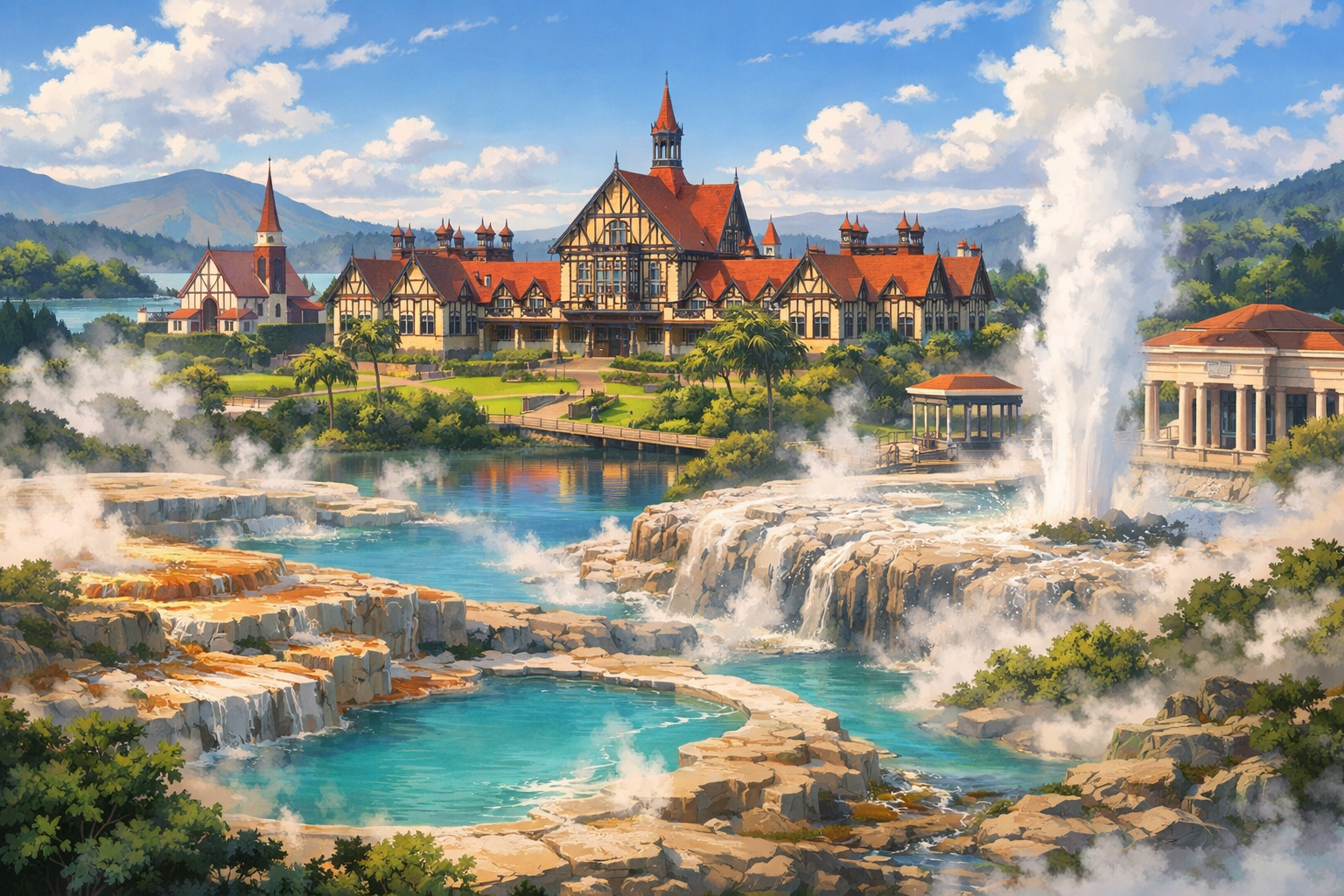
Rotorua invites you into a world of steaming thermal springs, dramatic geothermal landscapes, and deep natural calm. Settle into a gentle wellness rhythm as mineral-rich waters, misty valleys, and the earth’s quiet energy shape every moment.

🧭 DAY-BY-DAY ROUTE

Ready-made country and city routes with daily plans, sights, transport and accommodation. Buy PDF guides for independent travel.

🧭 DAY-BY-DAY ROUTE


Day 1 — Arrival in Rotorua + Government Gardens + easing into the rhythm

  • 🏁 After arriving at Rotorua Airport and a short transfer to the center, allow about 15–20 minutes to get to your hotel by taxi or shuttle. Today the goal is not to “see everything,” but to let your body adjust calmly: check-in, shower, light lunch, and an unhurried walk through Government Gardens.

  • 🌿 Government Gardens is the historic heart of the resort at the edge of Lake Rotorua. This is where the city’s old resort logic is felt especially beautifully: wide lawns, elegant paths, steam near the ground, the lake, pale facades, and the feeling that all of Rotorua was conceived as one large open-air sanatorium park.

  • 🧘 For the first evening, a short 40–60 minute promenade without extra strain is ideal. If you still have energy, sit by the water and simply get used to the city’s famous sulfur smell: in Rotorua it is part of the landscape, not a distraction from the experience.


Day 2 — Polynesian Spa + lakeside promenade: a day of deep relaxation

  • ♨️ Dedicate the morning to Rotorua’s main wellness spot — Polynesian Spa on Hinemoa Street. From most central hotels, the complex is a 5–15 minute walk away. It’s better to come in the first half of the day, when the atmosphere is quieter and it’s easier to settle into a calm rhythm.

  • 💧 Here the resort reveals itself precisely as a place of recovery: the mineral pools are fed by two natural springs, and the bathing ritual feels not like entertainment, but like an old ceremony of “taking the waters.” Warm mineral steam, lake views, the slow movement from one pool to another, and gentle heat in the muscles create a rare sense of inner quiet.

  • 🚶 After bathing, don’t plan any intense activities. The best combination for the day: 2–3 hours at Polynesian Spa, then a walk along the lake and an early evening. On a wellness itinerary, these are the days that bring the main cumulative effect: fewer events, more recovery.

Day 3 — Te Puia: geysers, mud pools, and cultural depth

  • 🌋 Today is a trip to Te Puia, one of the region’s most impressive geothermal complexes. From central Rotorua it usually takes 8–12 minutes by car or taxi; if you go by city bus, allow extra time for waiting. Plan at least half a day for the visit.

  • 🌫️ At Te Puia, the earth literally “breathes”: plumes of steam rise from cracks, clay bubbles in mud pools, and the landscape feels both primordial and theatrical at once. This is not just a beautiful place, but almost a textbook of living geology, where geothermal processes are visible without any explanation — in the smell, the sounds, the temperature of the air, and the texture of the earth itself.

  • 🪶 The Māori cultural dimension adds to the experience: carving, stories, craft traditions, and the feeling that this land has not only a natural voice, but a human one as well. After such a full day, leave the evening empty: dinner, shower, rest, and no second “itinerary” on top of the first.

Day 4 — Whakarewarewa: Living Māori Village + thermal trails

  • 🏘️ The fourth day is best devoted to Whakarewarewa — The Living Māori Village. From the central part of the city, it is usually a 10–15 minute drive. This is a very important difference from an “ordinary park”: here the geothermal environment is connected with a real living village, where history is not preserved in the past, but continues to breathe alongside guests.

  • ♨️ A walk through the village and along the trails gives a more intimate and human sense of Rotorua. Here it becomes especially clear that the hot earth is not just a tourist backdrop, but an environment of everyday life. Steam rises beside homes, the ground is warm, and stories about traditions sound convincing precisely because they are told in a place where this culture is truly rooted.

  • 🍃 In terms of effort, the day is moderate: walks, stops, photos, pauses. This is a good moment for “slow tourism” — not rushing between points, but allowing the place to reveal itself gradually. In the evening, it’s best to give your body a calm routine and go to bed early.

Day 5 — Redwoods Forest + Redwoods Treewalk: air, forest, and gentle activity

  • 🌲 After several thermal days, your body will appreciate a change in the type of activity. Today head to Redwoods, Whakarewarewa Forest. From central Rotorua to the entrance area on Long Mile Road, it’s about 5 minutes by car, around 20 minutes by bike, or up to an hour on foot if you want a long, calm walk.

  • 🌿 Red giants, humid forest air, soft light between the trunks, and long trails create a completely different kind of wellness — not through the warmth of water, but through breathing, walking, and visual quiet. It’s a wonderful contrast to the geothermal valleys: instead of steam and mineral pools — cool greenery, resin, birds, and the feeling that your lungs are working more deeply.

  • 🌉 If you want to add a vivid highlight, choose the Redwoods Treewalk — a suspended route among the trees. But don’t overload the day: forest + 1 main activity is more than enough. After 2–3 hours in the fresh air, return to the hotel for rest, tea, and recovery.

Day 6 — Bath House / Rotorua Museum exterior + Blue Baths + a second thermal relaxation session

  • 🏛️ The sixth day is best made architectural and resort-focused. Start with the Bath House in Government Gardens — this is the building that houses the Rotorua Museum, although the museum itself is currently closed for strengthening and redevelopment. Even from the outside, it is one of the city’s most photogenic and significant buildings: white facades, historic forms, and a sense of early resort elegance.

  • 💙 Then walk to the Blue Baths — another beautiful historic point in the resort ensemble. This whole area is great because it lets you see Rotorua not only as a “city of steam,” but as a thoughtfully designed spa resort of the early 20th century, where treatment, rest, walking, and architecture came together in a single ritual.

  • ♨️ In the second half of the day, it’s ideal to repeat the thermal experience — Polynesian Spa again or another gentle waterside relaxation format. A second soak on the sixth day is especially appropriate: by this point the body has already adapted to the rhythm of the trip, and relaxation feels deeper and calmer.

Day 7 — Final walk by Lake Rotorua + packing without rush

  • 🌅 Keep the last day light and beautiful. In the morning — a walk along the shore of Lake Rotorua and through Government Gardens to your favorite points on the route. No big transfers, no new mandatory “checkmarks,” just a calm farewell to the resort.

  • 🧳 If your flight is the same day, allow extra time for leaving the center for the airport: the drive itself usually takes about 15–20 minutes, but on a wellness trip it’s better to finish everything without haste. If your flight is later, you can add a short coffee break by the lake or another hour of unhurried walking through the center.

  • ✨ Rotorua is wonderful because its effect is not in one loud landmark, but in the combination of elements: hot mineral water, forest air, Māori cultural depth, gentle walking, and the ability not to overload each day. That is how the resort is remembered by the body, not only by photographs.

Flight tickets

eSIM for travel

Buy PDF guide

Buy PDF guide — 15.00 USD

PDF — 15.00 USD