
Buy PDF guide

Buy PDF guide — 6.43 USD

PDF — 6.43 USD

RHINELAND-PALATINATE - Palatinate: wine road and cozy towns

RHINELAND-PALATINATE - Palatinate: wine road and cozy towns

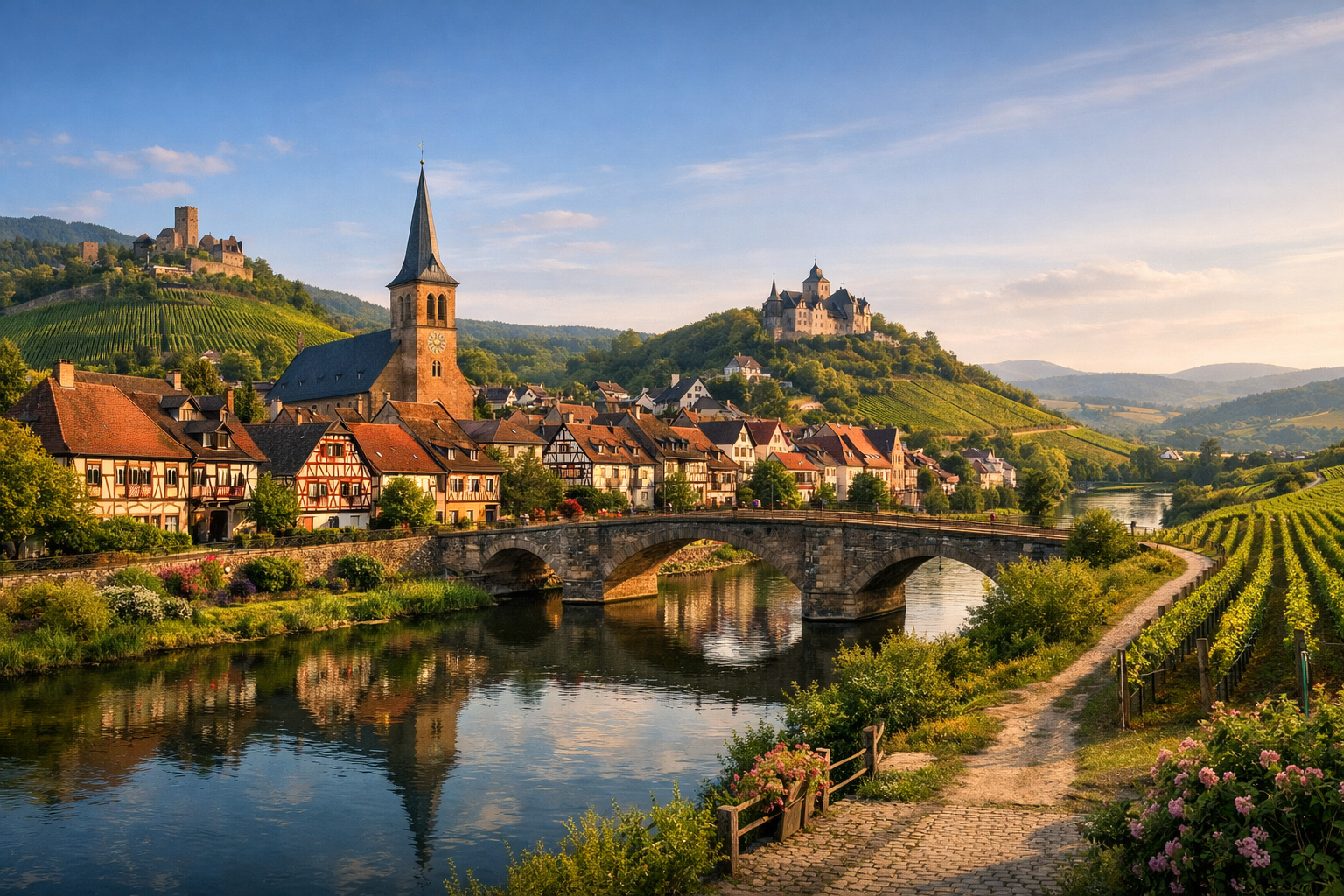
Rhineland-Palatinate’s Palatinate pairs sunlit vineyards with cozy towns full of half-timbered charm. Follow the Wine Road from historic Speyer through Neustadt and elegant Deidesheim to Landau, stopping for local vintages, lively market squares, and an easygoing southern German atmosphere.

🧭 DAY-BY-DAY ROUTE

Ready-made country and city routes with daily plans, sights, transport and accommodation. Buy PDF guides for independent travel.

🧭 DAY-BY-DAY ROUTE


Day 1 — Speyer: cathedral, old town, and Rhine atmosphere

  • 🚆 Arrival in Speyer. If you’re flying via Frankfurt am Main, the most convenient car-free option is usually a train to the Palatinate region with a transfer, followed by check-in and a short rest. For the day itself, it’s best to keep a relaxed pace: after the journey, Speyer is ideal for a gentle start because its historic center is compact, many sights are within walking distance, and the route is easy to put together without rushing.

  • 🚶 Speyer is one of those German cities where history feels not like a museum backdrop, but like the living fabric of the streets. Its main symbol remains the majestic Speyer Cathedral — one of Europe’s most important Romanesque monuments and a powerful vertical landmark that sets the rhythm for the whole city. As you approach it through the old quarters, you gradually enter a space where reddish sandstone, quiet squares, and neat facades create a feeling of grand, noble antiquity. Around the cathedral, it’s pleasant not just to take photos but to linger: walk across Domplatz, circle the garden side, feel the scale of the building, and sense that unusual mix of solemnity and calm so typical of Rhine cities.

  • 🚶 After the cathedral, devote a few hours to the historic center. Old Speyer doesn’t shout; it draws you in: cobbled streets, small wine bars, signs on old houses, peaceful inner courtyards, and the steady flow of local life make it very cozy. It’s a lovely place to wander without a strict goal — from square to square, peeking into pastry shops, bookstores, and gourmet stores. If you want to add a museum focus to the day, it makes sense to visit the Historisches Museum der Pfalz near Domplatz: it’s a great place to better understand the cultural context of the region, where wine, religious history, urban memory, and Palatine identity are especially tightly intertwined.

  • 🚶 Toward evening, you can move closer to the Rhine and the waterfront area near the technology museum and aquarium. This is a different Speyer — less medieval, more suited for strolling and family time. The air feels more open here, the space freer, and the pace gentler. It’s best to end the evening with dinner and Palatine wine: the first day shouldn’t be overloaded, because ahead lie the wine road, hills, castles, and transfers. The optimal plan is to check in early, walk 5–7 hours with breaks, and go to bed without a late-night rush.


Day 2 — Neustadt, Hambach, and Deidesheim: the heart of the German Wine Route

  • 🚆 Transfer: Speyer → Neustadt an der Weinstraße. By train, allow about 35–50 minutes depending on the connection and transfer; by car, the journey usually takes around 30–40 minutes. After arrival, it’s best to leave your things at your base and build the day around the region’s two key moods: democratic history and wine idyll.

  • 🚶 Neustadt an der Weinstraße is one of the most charming towns in the Palatinate, where wine culture can literally be felt in the urban fabric. Its old center with the market square, colorful facades, and typically southwest German lightness looks elegant without trying too hard. It’s a great place to start the morning with a slow walk through the Altstadt: look at the fountains, arches, and inner courtyards, stop for coffee, and catch that feeling of “cozy Europe” that draws so many people to wine regions. Neustadt has a very good balance: lively enough not to feel like a set piece, and calm enough not to tire you out.

  • 🚌 Bus 502 runs from Neustadt main station to Hambacher Schloss, and from the stop it’s a short uphill walk to the entrance. For the whole castle visit, it’s reasonable to allow 2–3 hours including transport, sightseeing, and a break for the views. If you’re driving, you can only get as far as the parking area, and then there’s still a short uphill walk.

  • 🚶 Hambach Castle is not just a beautiful silhouette above the vineyards, but a place with very strong meaning. It is here that you most clearly feel that the Palatinate is not only a land of wine and gastronomy, but also an important landscape of German political memory. The castle is associated with the Hambach Festival of 1832 and the ideas of freedom, civil rights, and democracy, so a visit here feels not like a formal item on the itinerary, but like a rare combination of panorama, history, and inner scale. The climb to the castle, the open views over the Rhine plain, the vineyard slopes, and the air of the Palatinate Forest make this one of the most expressive places on the whole route.

  • 🚆 Transfer: Neustadt → Deidesheim. By train, this is a short segment, usually about 10–15 minutes plus time to and from the station; by car, around 15–20 minutes. It’s best to plan Deidesheim for the second half of the day, when you want to shift from sightseeing mode to something more flavor-driven and atmospheric.

  • 🚶 Deidesheim is almost the perfect image of wine-country Palatinate: small, very well-kept, with a historic center where stone, wood, the wine theme, and gastronomy come together into a complete picture. Here, you don’t need to “see everything” — on the contrary, it’s more important to slow down. A walk along the central streets, a short visit to the Museum für Weinkultur, a glass of local Riesling or Spätburgunder, a leisurely dinner in one of the wine restaurants — and the day turns into a beautiful, very coherent story. This is one of those places where the atmosphere itself is as much a sight as any specific building.

Day 3 — Landau in der Pfalz and the southern part of the wine road

  • 🚆 Transfer: Neustadt an der Weinstraße → Landau in der Pfalz. By train, it’s most often about 20–30 minutes; by car, around 25–35 minutes depending on your starting point and traffic. This day works well as a calmer one: after a second day full of history and tasting stops, Landau makes a good finale with urban comfort and a gentle pace.

  • 🚶 Landau is often underestimated compared with the more famous wine villages, and unfairly so. It is a pleasant, bright, and lively town in the southern Palatinate, where the historic structure combines with a relaxed, almost resort-like rhythm. In the center, it’s easy to stroll along pedestrian streets, stop by cafés, notice traces of old fortifications, and simply enjoy the way the town is designed for everyday pleasure rather than tourist noise. If you want an urban anchor point, you can start with the Museum für Stadtgeschichte to see how Landau developed from its medieval layers into later urban life.

  • 🚶 Another advantage of Landau is its proximity to green areas and wine-country surroundings. If you don’t overload the day with museums, you can combine the center with a short walk through parks or a trip out to the vineyards in the southern part of the Deutsche Weinstraße. In this region, the mild climate is especially noticeable: there is more sun, more southern mood, and more of that relaxed gastronomic energy that makes the Palatinate special even among Germany’s other wine regions.

  • 🦁 If you’re traveling with children or simply want to change the pace, Zoo Landau is a good option. It’s a real and convenient in-town stop for an unhurried 1.5–2.5 hour visit without too much strain. If, however, you’d rather end the route in a more “grown-up” way, it’s better to leave time for a final lunch or early dinner with local wine, seasonal cuisine, and a calm walk before departure.

  • 🚗/🚆 It’s most convenient to plan your departure from Landau, or back via Neustadt/Speyer toward larger transport hubs. For a three-day route, this is a realistic, not exhausting finale: there are no big jumps across the map, the travel remains short, and the impressions come together into a coherent image of the Palatinate — as a region where wine, democratic history, old towns, and a soft southwestern aesthetic naturally complement one another.

Flight tickets

eSIM for travel

Buy PDF guide

Buy PDF guide — 6.43 USD

PDF — 6.43 USD