
Buy PDF guide

Buy PDF guide — 8.57 USD

PDF — 8.57 USD

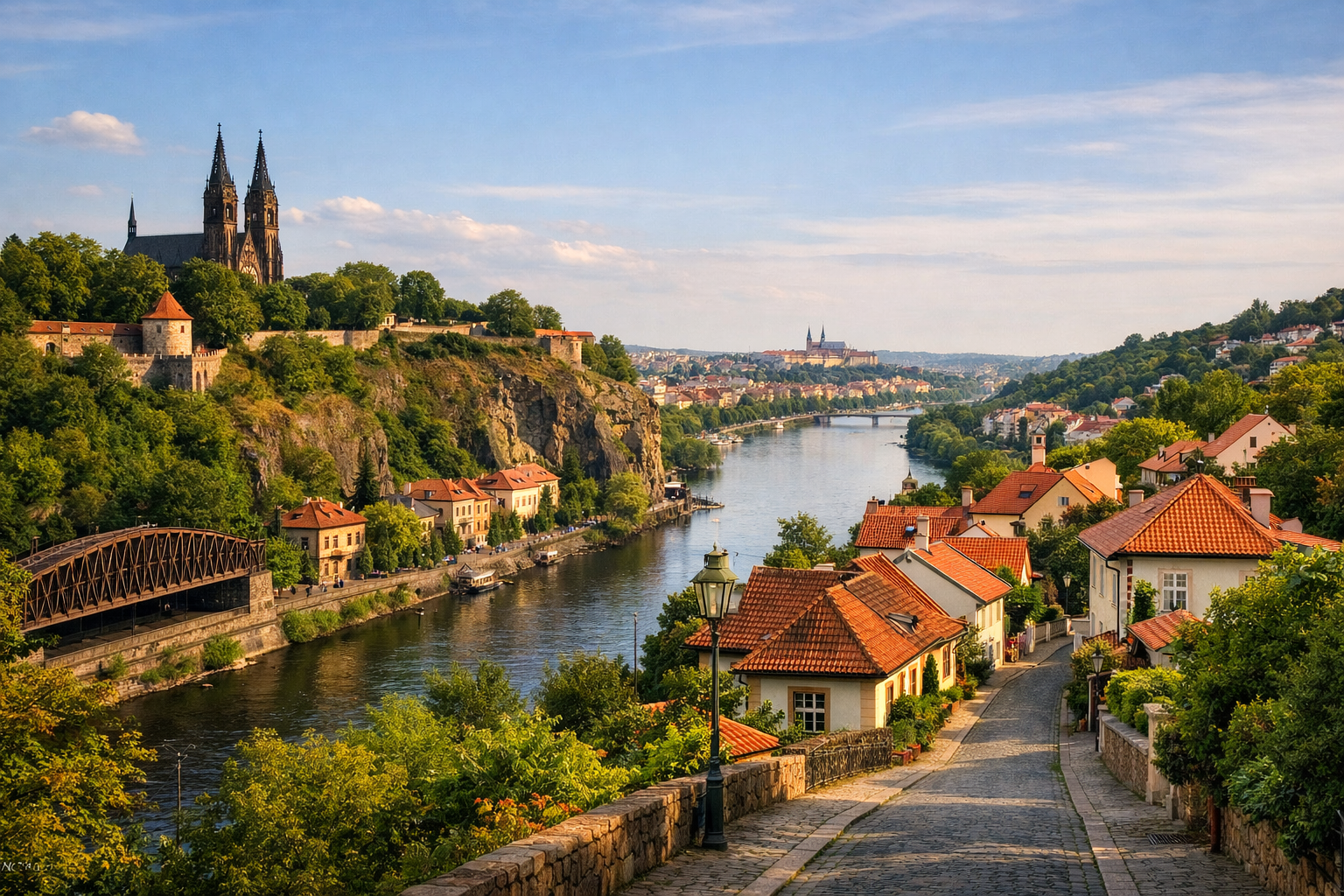
Prague Vyšehrad and quiet neighborhoods

Prague Vyšehrad and quiet neighborhoods

See a quieter side of Prague beyond the busy center, where Vyšehrad’s riverside views and old walls set a slower pace. Wander on through Vinohrady, Žižkov, and Letná for leafy streets, local cafes, and a more everyday feel of the city.

🧭 DAY-BY-DAY ROUTE

Ready-made country and city routes with daily plans, sights, transport and accommodation. Buy PDF guides for independent travel.

🧭 DAY-BY-DAY ROUTE


Day 1 — Prague: Old Town, Lesser Town, and an evening in Letná

  • 🚶 It’s best to dedicate the first day to getting to know classic Prague, but without an exhausting marathon through every postcard sight at once. Start at Old Town Square, where Gothic towers, pastel-colored facades, and the rhythm of an old European city create that very “Prague” effect people come here for. From here, it’s pleasant to stroll leisurely toward Charles Bridge, watching how the city gradually changes: grand facades give way to narrow passages, quiet courtyards, and small shops. Charles Bridge is especially beautiful in the morning, when the crowds are still smaller and you can calmly take in the statues, the smooth surface of the Vltava, and the view of Prague Castle in the distance. On the other side of the river, the route gently leads into Lesser Town — a district of Baroque palaces, gardens, and old streets, where it’s best not to rush and simply allow yourself to wander.

  • 🚶 After lunch, head not to the most obvious tourist peak, but toward Letná. From the central districts, it’s easy to get here by tram in 15–20 minutes, and then continue with a walk through Letenské sady. Letná is one of Prague’s most pleasant panoramic spots: the park is spacious, green, with long alleys, mature trees, and famous views over the Vltava and Prague’s bridges. Here the city opens up in a broad, cinematic way: red roofs, domes, towers, bends of the river, and the slow movement of trams below. It’s a perfect moment to exhale a little after the center, sit on a bench or in a park area, and then watch the sunset from the viewpoints near the Letná plateau. In the evening, the district is especially appealing because it feels local rather than purely touristic.

  • ☕ For a break, choose not the busiest places along the main tourist axes, but small cafés in Letná and on neighboring streets of Prague 7, where the atmosphere is noticeably calmer. Here it’s easy to find a more “local” pace: late breakfast, filter coffee, simple desserts, windows overlooking quiet streets, and a crowd of locals, students, designers, and young families. After a long flight or transfer, this kind of first day works perfectly: you’ll see the symbolic Prague, but end the day in a more relaxed and lively district, without the feeling that the whole route consists only of queues and obligatory stops.


Day 2 — Prague: Vyšehrad, the embankment, and a quiet evening nearby

  • 🚇 Vyšehrad is easy to reach by metro line C to Vyšehrad station, then walk about 8–12 minutes to the gates of the complex. It’s best to keep a slow pace for this day and not plan too many extra stops: Vyšehrad is not just “another fortress,” but a separate world on a cliff above the Vltava, where Prague becomes quieter, broader, and deeper. It is known for its magnificent views over the city, the Rotunda of St. Martin, the Basilica of Saints Peter and Paul, and the casemates, while the whole area feels like a mix of park, historic ensemble, and memorial space. It is especially pleasant to walk here without rushing: along the bastions, through shady sections, to viewpoints and old stone walls, where the air and pace already feel completely unlike the center.

  • 🚶 Start with the main panoramic points at the edge of the cliff: from here you can clearly see the bends of the Vltava, Prague’s bridges, the roofs of the New Town, and the distant landmarks of the center. Then continue to the Basilica of Saints Peter and Paul — a striking Neo-Gothic church that visually ties the whole Vyšehrad ensemble together. Nearby is the famous Slavín Cemetery — one of the most important memorial sites in the Czech Republic, where many outstanding cultural figures are buried. After that, be sure to walk to the Rotunda of St. Martin: this is a rare Romanesque monument, a small, almost intimate structure that amazingly preserves a sense of deep antiquity among the later fortifications and parks.

  • 🏰 The Vyšehrad casemates deserve special attention — the underground part of the fortress linked to the era of Baroque fortification. Inside, the route changes mood sharply: after light, grass, and panoramas, you find yourself in the cool, austere space of underground corridors, where the military history of the site is strongly felt. This is one of those places that makes Vyšehrad not just a beautiful park with a view, but a truly layered historical site. It is reasonable to allow 4–5 hours to explore the entire area with visits to the main sights, photo stops, and relaxed breaks.

  • 🚶 After Vyšehrad, you can descend to the riverside embankment and spend the second half of the day on a softer walk without a rigid program. A good idea is to stroll along the Vltava, choose a calm café away from the noisiest sections, and give yourself time to rest. This is exactly how this day works best: not as a checklist run, but as a deep introduction to one of Prague’s most atmospheric and underrated parts.

Day 3 — Prague: Vinohrady, Riegrovy sady, and Žižkov

  • 🚶 Dedicate the third day to districts where Prague is especially easy to feel as a city for living, not just for postcards. Vinohrady is one of the city’s most pleasant residential neighborhoods: elegant facades from the late 19th and early 20th centuries, broad streets, small squares, trees, cafés with an unhurried rhythm, and a very comfortable urban environment. It’s best to start the morning around Jiřího z Poděbrad, which is easy to reach on metro line A. Here you can allow yourself a slow start to the day: breakfast in a less touristy café, a walk among beautiful houses, and a sense of “everyday Prague” that is often lost in the center behind souvenir displays.

  • 🌿 Then head to Riegrovy sady — one of the parks most loved by locals. It is set on higher ground and offers very striking views of the city: red roofs, the towers of the historic center, and Prague’s lively relief open up especially widely from here. The park is great because it has open lawns, shady sections, and more intimate corners where you can calmly sit with a coffee or take a short rest. This is not a museum-like park, but a living urban one — with runners, families, dog walkers, students, and groups of friends. That’s why it balances the route perfectly after the more ceremonial historic zones.

  • 🚶 In the second half of the day, move on to Žižkov. On foot, you can get from the southern part of Vinohrady to the borders of Žižkov in about 15–25 minutes, depending on your starting point; alternatively, it’s a short tram ride. This district was long considered more working-class and informal, and that is exactly why it has so much character today. There is less polished grandeur here, but more graphic street lines, contrast, local venues, independent atmosphere, and real urban texture. If you want a viewpoint, it makes sense to go up to the Žižkov TV Tower, or choose a walk through less obvious streets with stops at small coffee shops and bars in the early evening.

  • ☕ It’s best to finish the day in Žižkov itself or at the edge of Vinohrady, where it’s easy to find places without the feel of a tourist conveyor belt. This is a great area for dinner at a more local pace: small bistros, wine bars, cafés in courtyards or on quiet streets. A day like this shows a different Prague — beautiful, stylish, green, yet still lively and not overly staged.

Day 4 — Prague: Letná, museum, parks, and a final panoramic day

  • 🚋 It makes sense to keep the final day light, panoramic, and centered around Prague 7. Start with Letná if the day before you only saw it at sunset: in the morning and daytime, the district opens up differently. In Letenské sady, it’s pleasant to walk a long curved route, stopping at viewpoints and watching how the city seems laid out before you in layers — bridges, the Vltava, the Old Town, the roofs of Lesser Town, hills, and landmarks on the horizon. It’s one of the best ways to see the structure of Prague as a whole. There’s no need to hurry here: Letná is best precisely for a slow rhythm, when between walking, coffee, and short stops you get the feeling of a complete journey.

  • 🏛️ If you want to add a cultural stop, the National Technical Museum next to Letná is ideal. It is a large and very worthwhile museum, located close to the park, so it’s easy to fit into the day without extra transfers. It is especially good because it doesn’t overload the route with “mandatory classics,” but offers a different slice of urban and national history — through transport, industry, science, and engineering. It’s worth allowing 1.5–2.5 hours for the museum depending on your interest, after which it’s pleasant to step outside again into the open urban landscape.

  • 🌿 In the second half of the day, you can continue the green theme and, if you wish, add another calm park — for example, Havlíčkovy sady in Vinohrady, if you want a more romantic and intimate atmosphere with pavilions, vineyard motifs, and views over the city. The trip from Letná here will take about 20–30 minutes by tram and metro with a short walking section. An alternative is to stay in Prague 7 and spend the day entirely without rushing, alternating between the park, coffee, small design-oriented streets, and final views.

  • ✨ It’s best to leave the last evening free of overload. Return to your favorite point on the route — the embankment, Letná, a quiet Vinohrady café, or an atmospheric spot in Žižkov. Prague is remembered especially well not only for its towers and bridges, but precisely for the combination of panoramas, green slopes, calm residential quarters, and unexpected places where the city sounds quieter. This kind of ending makes the four-day route feel complete: you will have seen not only the center, but also the Prague you truly want to return to.

Flight tickets

eSIM for travel

Buy PDF guide

Buy PDF guide — 8.57 USD

PDF — 8.57 USD