
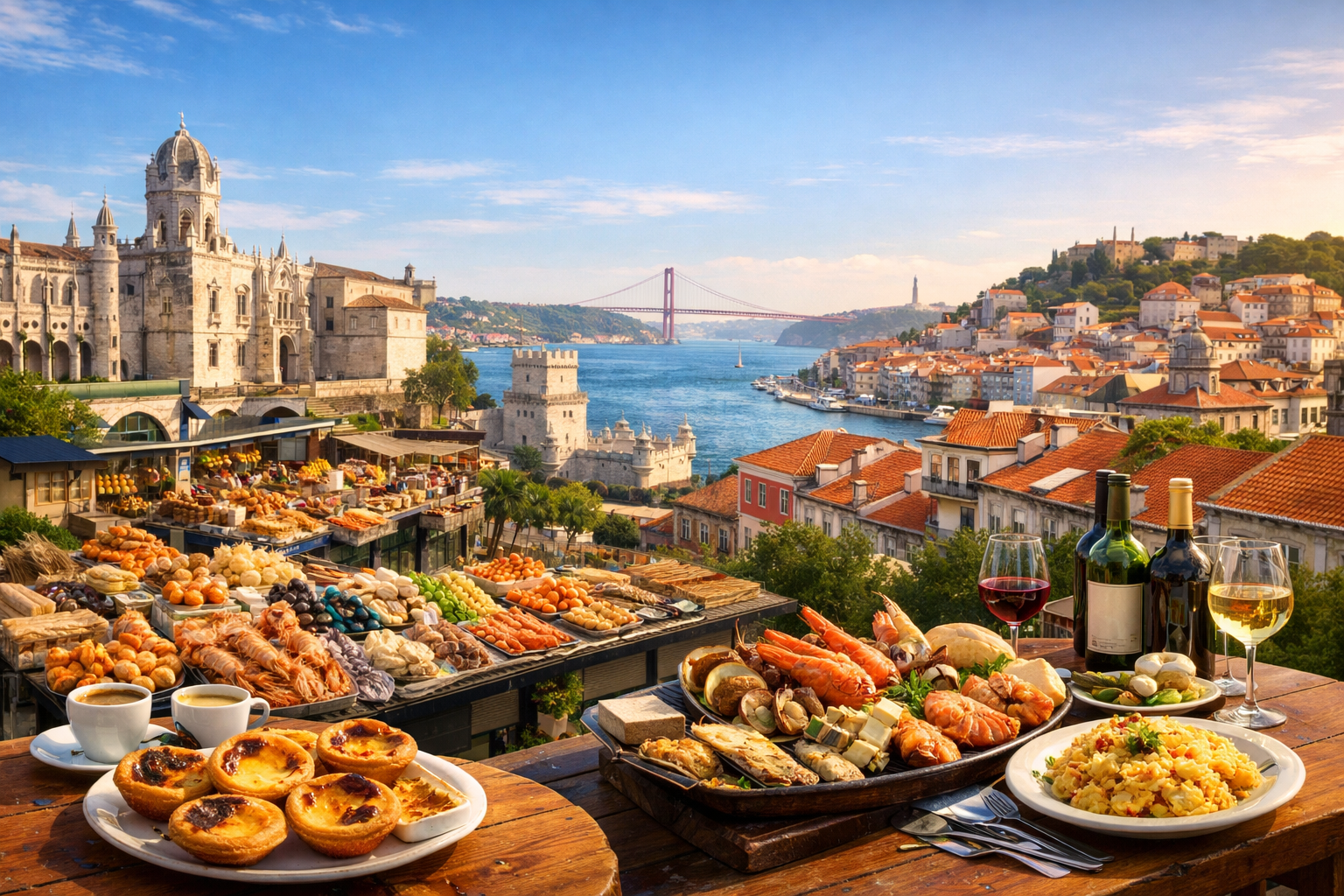
Day 1 — Lisbon: Belém, monastic sweets, and riverside gastronomy
🚶 Begin your gastronomic introduction to Lisbon in Belém — a district where Portuguese history, monastic heritage, and culinary memory literally stand door to door. It is here that you can see especially clearly how the Age of Discovery influenced the table: sugar, cinnamon, egg desserts, spices, cod, olive oil, and wine shaped the very cuisine that draws people here from all over the world. Belém is ideal for a relaxed first day: wide avenues, the Tagus waterfront, major museums, and iconic pastry shops let you move at an unhurried pace, take long coffee breaks, and avoid overloading the day with difficult logistics.
☕ Morning is best started at Pastéis de Belém — the legendary pastry shop next to Jerónimos Monastery. This is where the original pastéis de Belém have been baked since the 19th century according to a recipe tied to the monastic tradition. Plan to arrive as early in the morning as possible, while the flow of tour groups is still moderate: that makes it easier to get a table inside and calmly try a hot pastel de nata with cinnamon and powdered sugar, without turning the visit into a fight for a seat. For a first breakfast, it makes sense to order 2 pieces per person, an espresso or galão, and if you want to compare textures, pay attention to the crisp puff pastry and the warmer, creamier center. Those who avoid fish and seafood will find this stop especially comfortable: it is a safe sweet break; however, travelers with allergies to eggs, milk, or gluten should check the ingredients in advance.
🏛️ After breakfast, walk 5–10 minutes to Mosteiro dos Jerónimos and the Praça do Império Gardens. Even if you are not planning a long museum day, this part of the route helps explain why Belém is so closely tied to gastronomy: for centuries monasteries preserved recipes for egg-based desserts, and the river port made Lisbon an entry point for products, flavors, and trade routes from all over the world. Nearby, it is convenient to take a short pause for photos, water, and shade, then continue toward the waterfront. If you want to add a cultural block without overload, choose either a short visit to the monastery or Museu Nacional dos Coches — both are within reasonable walking distance of the day’s main gastronomic points.
🥗 For lunch, it makes sense to stay in Belém and choose a calm format with a river view — for example, the area around Doca do Bom Sucesso and the waterfront between Padrão dos Descobrimentos and MAAT. Here it is convenient to focus on fish and seafood dishes, but without overdoing it: a good first-day tactic is to order one bacalhau dish to share, just to get acquainted with the cooking style, and add a salad, vegetable side dish, or soup. If you do not eat fish, look on the menu for sopa de legumes, salads, rice dishes, grilled vegetables, or options with egg and cheese. For vegetarians, Lisbon today is much more convenient than stereotypes about the “country of cod” might suggest, but it is still better to ask in advance about meat-free options.
🍷 In the second half of the day, walk to MAAT and along the Tagus. This stretch is especially good for a gentle travel rhythm: after a substantial start to the day, it is pleasant to slow down here, look at the 25 de Abril Bridge, feel the river breeze, and give your body a pause before dinner. If you feel like an aperitif, choose a glass of vinho verde, a white from Vinho Regional Lisboa, or a light rosé at one of the hotel or waterfront bars. Do not overdo it: dinner in Lisbon is often late, and Portuguese portions are often more generous than travelers expect.
🚋 The day’s logistics are simple and realistic: from central Lisbon to Belém, it is convenient to take tram 15E, a train to Belém, or a taxi/ride-hailing service, and within the district most of the route can genuinely be done on foot. Distances between Pastéis de Belém, the monastery, gardens, museums, and the waterfront usually take 5–20 minutes to walk. This allows you not to rush and still save energy for the evening.
🍽️ For dinner, you can choose a restaurant evening in Belém or return to the center earlier and have a lighter dinner, leaving the main “showpiece” meal for Day 2. The optimal first-day scenario is not to stage a gastronomic marathon, but to end the evening with something local and understandable: grilled fish, arroz de marisco, caldo verde, or petiscos with a glass of white wine. If you have dietary restrictions, be sure to tell the staff in advance: the phrases sem glúten, sem lactose, sem marisco, sem carne, and sem peixe are very useful. Before bed, allow time for rest: after a flight and all the sweet/savory richness, Lisbon is especially pleasant at a calm pace.