
Buy PDF guide

Buy PDF guide — 12.85 USD

PDF — 12.85 USD

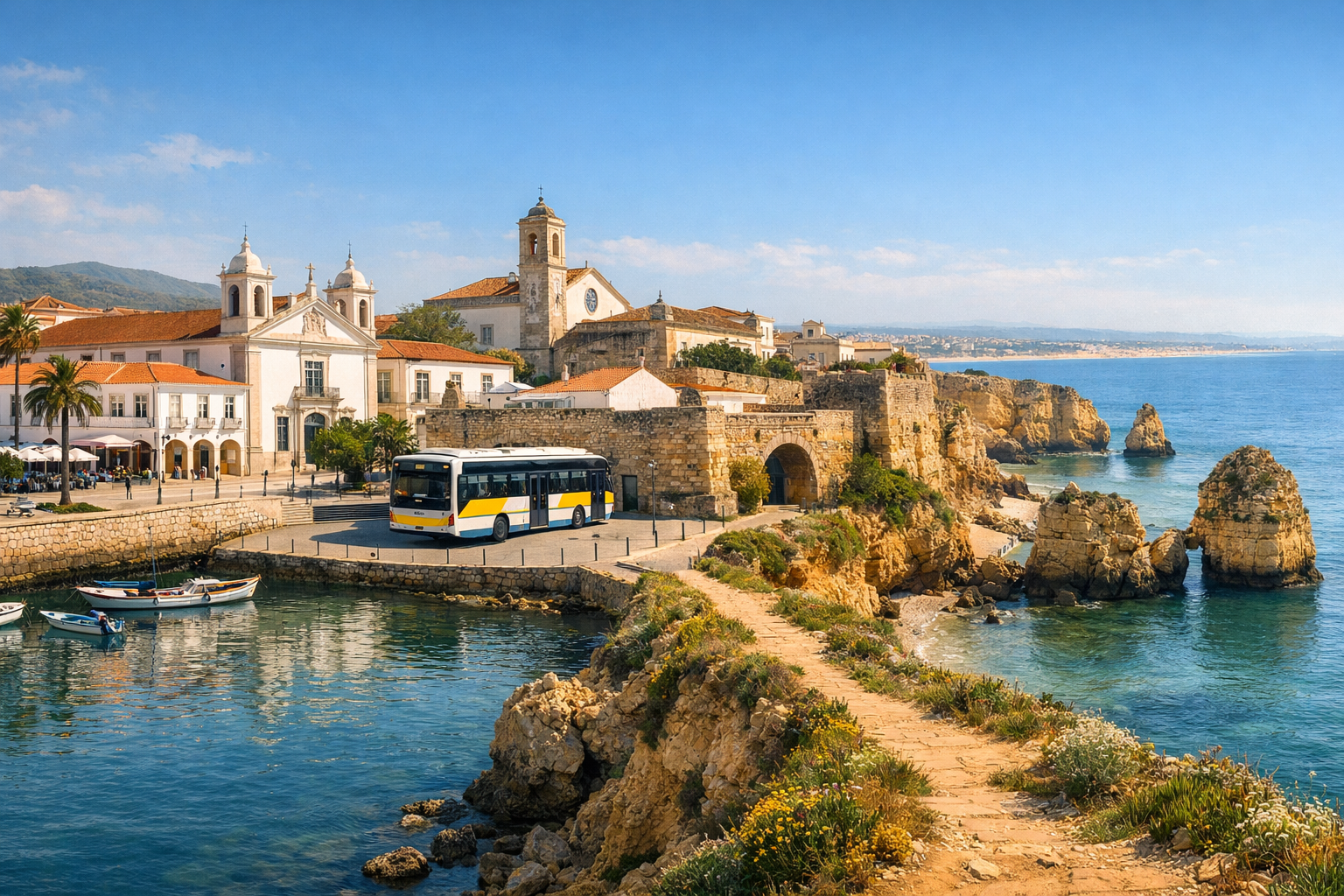
Portugal, Algarve. A budget itinerary through Lagos, Faro, and coastal trails with beaches, cliffs, and trips on regional buses.

Portugal, Algarve. A budget itinerary through Lagos, Faro, and coastal trails with beaches, cliffs, and trips on regional buses.

Explore the Algarve on a budget, from Faro’s laid-back old town to the golden beaches and sea-carved cliffs of Lagos. Follow coastal trails to Ponta da Piedade, hop between towns on easy regional buses, and soak up some of Portugal’s most spectacular shoreline without spending much.

🧭 DAY-BY-DAY ITINERARY

Ready-made country and city routes with daily plans, sights, transport and accommodation. Buy PDF guides for independent travel.

🧭 DAY-BY-DAY ITINERARY


Day 1 — Faro: old town, marina, and a calm start

  • 🚶 Faro is often underestimated and used only as an arrival point, but for a budget trip it is a very convenient and logical place to start. The compact center, proximity to stations, and the chance to spend almost the whole day on foot mean you do not need to waste extra money on day one. Start with a walk through Jardim Manuel Bivar and the waterfront by the marina: from here you get a soft, almost watercolor-like view of the Ria Formosa lagoon, boats, palm trees, and the pale facades of the old town. Then pass through Arco da Vila into Cidade Velha — the historic core of Faro, where you feel not resort bustle but a calm southern rhythm. Behind the fortified walls you will find cobbled streets, old houses, quiet courtyards, and the sense that the city is much deeper than it seems on the way from the airport.

  • 🏛️ If you want to add an inexpensive cultural stop, visit the Sé de Faro cathedral on Largo da Sé. Inside and around the square, the city’s layered history is especially easy to read: traces of the Middle Ages, rebuilding after earthquakes, and the Algarve’s typical blend of austerity and light. On a budget, it is better not to overload the day with paid sights: you can choose either the cathedral or simply focus on the old town walk, viewpoints, and an inexpensive dinner away from the most touristy terraces. For food, it is convenient to look for small tascas, bakeries, soup of the day, bifana, sandwiches, and set lunches in the range of about €8–15.

  • 💤 It is best to spend the night in Faro near the center and transport links, so you can leave for Lagos in the morning without rushing. This saves both money and energy: there is no need for an expensive transfer right after arrival, and the first day passes in a light adaptation mode.


Day 2 — Transfer Faro → Lagos: old town and beaches near the center

  • 🚆 Transfer: Faro → Lagos on the CP regional train along the Linha do Algarve. After the line upgrade in July 2026, trains in the Algarve run more conveniently, and direct electric services across the whole line improved regional connectivity. For the Faro — Lagos section, expect about 1h 45m–2h depending on the specific service and time of day. For a budget trip, this is one of the most sensible ways to travel between the cities: the train is usually predictable in timing, does not require extra baggage fees like a transfer, and lets you avoid depending on a rental car.

  • 🚶 After checking in in Lagos, devote the day to a gentle introduction to the city. The historic center is lively but not overwhelming: white walls, tiles, narrow streets, small squares, laundries, bakeries, and everyday city life coexist with an ocean-resort mood. The charm of Lagos for a budget traveler is that many of the best experiences here are free: you can simply walk toward the sea, look at the color of the water, descend to viewpoints, and buy no excursions at all while still feeling the essence of the place.

  • 🏖️ In the second half of the day, it is convenient to walk to Praia da Batata and then onward toward Praia dos Estudantes. These beaches are close to the center, so they require neither a taxi nor a separate bus day. The cliffs here already create that recognizable western Algarve landscape: golden-ochre bluffs, arches, small coves, and water that shifts from azure to deep green-blue depending on the sun and wind. If the sea is calm, this is a great day for the first swim; if it is windy, for a photo walk and relaxing on the cliffs. For dinner, it is better to look for inexpensive places away from the showiest streets: pizza, grill, menu do dia, fresh pastries, and soups help keep the daily budget under control.

Day 3 — Lagos: Ponta da Piedade, Dona Ana, and Camilo

  • 🚶 This day is the quintessence of the Algarve without unnecessary spending. From the center of Lagos, you can walk to Ponta da Piedade, making stops along the way at Praia Dona Ana and Praia do Camilo. Municipal Lagos materials describe Dona Ana as a beach reached by a walking trail between the town and Ponta da Piedade, which makes the route especially convenient: you are not just visiting separate spots, but experiencing one continuous coastal walk. Dona Ana beach is one of the most photogenic on the coast: a high staircase leads down into a narrow cove where ochre pillars and cliff walls seem to compress the bright water into a natural amphitheater. Early in the morning or closer to evening, it is especially beautiful here and noticeably less crowded.

  • 🚶 Continue to Praia do Camilo — a more intimate and very scenic spot with a long wooden staircase and characteristic limestone rock formations. This place is often seen as an “Algarve postcard,” but in person it is stronger precisely because of the scale: the sound of surf, the smell of salt, the shadows from the rocks, and the deep blue drops of water make the walk feel very cinematic. Farther on, the trail leads to Cape Ponta da Piedade — one of the region’s most famous natural symbols. Here the ocean has spent centuries carving arches, columns, grottoes, and thin stone tongues, making the entire cape look like a gigantic natural sculpture.

  • 💡 The budget tip for this day is simple: do not take a boat trip if your goal is to minimize expenses. The view from above is already magnificent, and the walking route gives a sense of space and relief that is often lost on short commercial tours. Bring water, a light snack, and a hat: there is little shade on the open coast. On the way back, you can return on foot to the center or, if fatigue has built up, use a local bus/taxi only for a short stretch. In this scenario, the total daily spending is usually mostly limited to food and, if you wish, one paid entry or a coffee.

Day 4 — Coastal trail: Luz → Ponta da Piedade → Lagos

  • 🚌 Today it is worth adding exactly the format that makes this route special while still staying budget-friendly: a regional bus to Praia da Luz, followed by a long walk back to Lagos. This section is linked to the development of coastal routes in the Lagos area; municipal materials indicate a stage of about 11 km between Burgau and Lagos via Praia da Luz and Ponta da Piedade. For a six-day itinerary, there is no point in walking the entire long stage from Burgau — it is more sensible to take a bus to Luz and do a more comfortable version of the walk without overloading the day.

  • 🚶 From Praia da Luz, the trail offers a different character of coastline than yesterday’s urban stretch. Here you feel the openness of the Atlantic more strongly: wind, exposed sections, a wilder shoreline, and beautiful changes in terrain. It is best to walk in the first half of the day, before it gets too hot. The route does not look technically difficult for a person in normal physical shape, but it is still not a city promenade: comfortable sneakers, enough water, sun protection, and readiness to walk at times on uneven ground are necessary. In return, you get one of the most expressive free experiences of the whole trip — the feeling that the cliffs and ocean are slowly unfolding before you like scenes.

  • 🏖️ Along the way, you can pause at viewpoints and, if you have the energy and sea conditions allow, descend to one of the coves closer to Lagos. The final approach to Ponta da Piedade is especially beautiful when, after a more deserted section, the familiar rock forms appear again and you seem to return to the city through natural gates. For the evening, a simple dinner and rest are ideal. This is the day when you should not try to “fit in” more museums or a night program: the true focus here is the trail itself, the light, the scent of the ocean, and the feeling of a day well spent walking.

Day 5 — Lagos: affordable culture, fortress, and free time by the sea

  • 🏛️ After two nature-filled days, it makes sense to make the route more relaxed and lighter in terms of effort. In the morning, you can visit Museu de Lagos Dr. José Formosinho and, if you wish, combine it with another museum site under a combined ticket. This is a good way to see not only the city’s beach façade but also its historical depth: archaeology, sacred art, regional memory, and urban context help explain why Lagos was an important point on the map of southern Portugal. The museum’s address is Rua General Alberto da Silveira 1, and the combined ticket for several museum venues usually looks reasonable even for a budget trip.

  • 🚶 After the museum, it makes sense to walk to Forte da Ponta da Bandeira by the water. This is a compact, very photogenic fortification point that is easy to include in a walking day without extra transfers. From here, it is pleasant to head back to the sea and spend the rest of the day as freely as possible: a beach near the center, a repeat visit to a favorite viewpoint, a leisurely lunch, laundry, rest at the hostel, a short sunset promenade. In a budget trip, such “semi-free” days are especially useful: they not only reduce costs but also provide an energy reserve so the route does not turn into a race.

  • 🍽️ If you want to end your time in Lagos nicely but inexpensively, choose simple Portuguese everyday food: grilled fish of the day in a modest place, pão com chouriço, soup, salad, bakery breakfast, or a takeaway picnic at a viewpoint. A realistic food budget for an economical but comfortable style is about €20–35 per day per person without alcohol, if you avoid the most touristy first-line restaurants.

Day 6 — Return to Faro: Ria Formosa and flight/night near transport

  • 🚆 Transfer: Lagos → Faro on the CP regional train. Plan your departure with extra time, especially if you have a flight the same day: even with improved rail service, it is safer to leave a buffer for possible schedule changes, heat, fatigue, and the trip from the station to the airport. As of July 2026, the Algarve railway line operates more conveniently after electrification, but on the day of departure it is still best to check the current service in the morning.

  • 🌿 If your flight is late or you still have half a day, spend it in Faro gently and inexpensively — by the Ria Formosa. This natural park is known for its lagoons, channels, salt marshes, islands, and birds, and even without an expensive boat excursion it gives a very strong sense of place. A walk along the waterfront, a visit to the waterside area, or a short stop at the Centro Ciência Viva do Algarve is enough if you want a light and inexpensive educational point before the road. Such a finale balances the trip well: after the cliffs of western Algarve, you see a calmer, lagoon-like, almost meditative side of the region.

  • ✈️ Faro Airport is conveniently reached by public transport; the airport lists city bus lines 14 and 16, as well as the Aerobus Get On / VAMUS service for destinations across the Algarve. If your luggage is heavy, your flight is early, or your arrival/departure time is inconvenient, you can consider a taxi, Uber/Bolt, or a pre-booked transfer. But for a truly budget scenario, public transport from central Faro remains the most economical option.

Flight tickets

eSIM for travel

Buy PDF guide

Buy PDF guide — 12.85 USD

PDF — 12.85 USD