
Buy PDF guide

Buy PDF guide — 6.43 USD

PDF — 6.43 USD

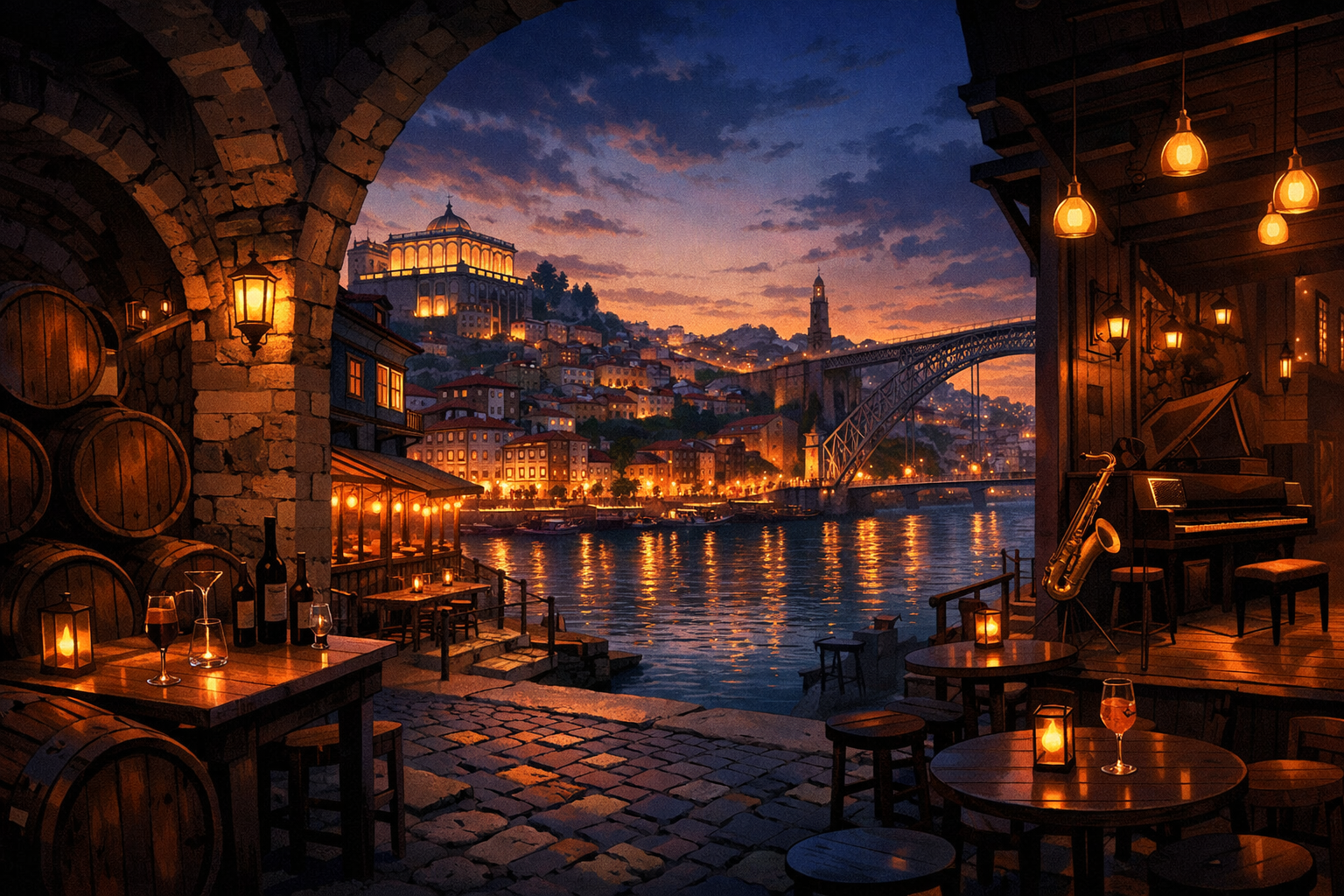
Porto, (entertainment) — wine cellars, pubs, jazz bars, waterfront

Porto, (entertainment) — wine cellars, pubs, jazz bars, waterfront

Porto invites you into a lively rhythm of riverfront strolls, late-night jazz, and cozy pubs tucked beneath old stone facades. Cross to Vila Nova de Gaia for famous wine cellars, then follow the breeze out to Foz do Douro, where the waterfront opens into sea views and sunset drinks.

🧭 DAY-BY-DAY ITINERARY

Ready-made country and city routes with daily plans, sights, transport and accommodation. Buy PDF guides for independent travel.

🧭 DAY-BY-DAY ITINERARY


Day 1 — Porto: Ribeira, the waterfront, and Gaia’s wine cellars

  • 🚶 Begin your introduction to Porto in the Ribeira district — the most cinematic and emotionally vivid part of the city, where stone facades, narrow medieval passageways, laundry on balconies, and the endless play of light on the water create the feeling that you have stepped into a living postcard. This is the historic heart of Porto, facing the Douro, from where boats and trading cargoes departed for centuries, while city life itself was built around the river, warehouses, customs, and the wine trade. By day, Ribeira feels almost theatrical: yellow, ochre, and terracotta houses cascade down toward the Cais da Ribeira waterfront, street musicians fill the space with soft echoes, and across the river you can already see the rows of famous wine houses of Vila Nova de Gaia. Allow 1.5–2 hours for a relaxed walk along the waterfront, photo stops, and a light coffee break.

  • 🚶 Then head up or walk toward the Dom Luís I Bridge and cross the river to Vila Nova de Gaia. On foot, it is usually 10–15 minutes from Ribeira to the nearest cellars by the bridge’s lower level, and the crossing itself offers one of the best city views: on the right — the red roofs of old Porto, on the left — wine warehouses and the Gaia waterfront. This is exactly where port wine was matured and shipped, making the region world-famous. For your first tasting, it is convenient to choose cellars by the water, for example Cálem, where the visit format is usually well suited to those who want to combine the museum part, an introduction to aging traditions, and a tasting without extra logistics. Set aside 1–1.5 hours for the tour and tasting, and then another 20–30 minutes to relax by the waterfront.

  • 🍷 In the second half of the day, go deeper into the world of port wine and head up to more panoramic cellars, for example Graham’s Lodge. A taxi or TVDE ride from the Gaia waterfront usually takes about 10 minutes; on foot it is noticeably longer and uphill, so for comfort it is better to use a car. Graham’s is especially appealing because wine history here is combined with a sense of space: old warehouses, rows of barrels, the aroma of wood and sweet wine, and then a wide view of Porto from above. This is not just a tasting, but almost a ritual of slowing down. Plan about 2 hours for the visit, the ride, and a peaceful break with the view.

  • 🌅 Toward evening, return to the Gaia Riverside waterfront and take a long walk along the Douro. This is an essential part of the itinerary: it is beautiful not only for photographs, but for the city’s rhythm itself. Boats sway on the water, amber port glimmers in glasses, bridges gradually light up, and Porto on the opposite bank becomes even more textured. It is at this time that you especially clearly feel why this city is so loved for its atmosphere. Leave 2–3 hours for the walk, dinner, and an unhurried pause.

  • 🍺 End the evening with lively urban leisure: first in a classic pub in central Porto, and then — if you wish — in an intimate jazz bar. From the Gaia waterfront to the central districts of Porto, a taxi usually takes 10–15 minutes; by metro with a transfer or on foot across the bridge, it takes longer. For a pub, you can use the area around Aliados / Clérigos as a guide, where it is easy to start the evening with craft beer or a stout in a more informal setting. After that, if you want music, move on to the jazz part of the program: late-night Porto is especially good in small clubs where the stage is almost at arm’s length. The entire evening block is convenient to plan for 3–4 hours.


Day 2 — Porto: historic center, museums, pubs, and jazz

  • 🚶 Dedicate the morning to Porto’s historic center, but without overload: this city reveals itself not through racing through a checklist, but through a sequence of atmospheric layers. Start in the area around São Bento, Rua das Flores, and the square by Igreja dos Clérigos. Here Porto is especially decorative: granite facades, baroque churches, narrow rising streets, old signs and shop windows where modern city life exists almost without conflict with history. From São Bento station to Clérigos and back, with detours through neighboring little streets, it is easy to walk in 1.5–2 hours.

  • 🏛️ During the day, add a cultural highlight and visit one of the city’s key museums — Museu Nacional Soares dos Reis. It is a good choice for an itinerary in the style of “entertainment + substance,” because the museum gives a sense of the depth of Portuguese artistic tradition and at the same time serves as a quiet contrast after the noisy waterfront. Inside are sculpture, painting, decorative arts, and an atmosphere suited to calm contemplation. For the museum visit, allow about 1–1.5 hours, plus 15–20 minutes for the trip from the center.

  • 🍷 After the museum, it makes sense to continue the wine theme from a different angle — not as an overview of cellars, but as a more urban, gourmet experience. Museu do Vinho do Porto or a wine bar / tasting space in the historic center and waterfront area would work well. If you choose the wine museum specifically, it will be a good way to tie together everything you saw the day before: the Douro, Gaia’s warehouses, the city’s export history, and the culture of port wine as one of Porto’s most important symbols. Including travel and rest time, plan roughly 1.5 hours.

  • 🍺 In the evening, move on to the pub section that is essential for this itinerary. The best scenario is not to stay in one place, but to do a short pub crawl through the center: one more traditional pub, then a second spot with a livelier, more urban energy. Distances between venues in central Porto are usually 5–15 minutes on foot, which makes the format especially convenient. Pubs here are valued not only for drinks, but also for the evening urban fabric itself: conversations on sidewalks, soft noise, light from the windows of old buildings, the feeling that the whole center has turned into one large open-air living room.

  • 🎷 The final highlight of the day is a jazz bar. For a full sense of Porto after sunset, Hot Five Jazz & Blues Club is a great choice: intimate, musically rich, with very close contact with the stage and a distinctive club atmosphere. Keep in mind that from the center it is more convenient to get to the club’s area by taxi/TVDE in about 10–15 minutes, especially late in the evening. Such an ending makes the second day feel especially complete: from granite, history, and museum quiet — to bar warmth and live jazz. For the evening program, including travel, the concert, and the return, allow 4–5 hours.

Day 3 — Foz do Douro, the oceanfront promenade, and a relaxed finale

  • 🌊 Dedicate the third day to a different side of Porto — more spacious, maritime, and relaxed. From the center, Foz do Douro is easy to reach by historic tram, STCP bus, or taxi/TVDE; by car the trip usually takes about 20–25 minutes, by public transport about 30–45 minutes depending on your starting point. Here the Douro meets the Atlantic, and the city changes its tone: instead of dense historic development, you get open air, long promenade lines, stone breakwaters, seagulls, ocean wind, and a special northern Portuguese light. It is the ideal place to balance out the first two days filled with wine and nightlife.

  • 🚶 Start with a walk along the waterfront by the mouth of the Douro and then farther along the ocean — from the area of Castelo do Queijo or Pergola da Foz to quieter stretches by the beaches. This is not a “sight” in the narrow sense, but a large stage of city life: runners, families, surfers, local cafés, dogs on leashes, the sound of surf, and an endless horizon line. It is worth not sparing time for such a walk: 2–3 hours pass almost unnoticed, especially if you include a coffee break or a late breakfast with a view of the water.

  • 🌿 During the day, you can add a calm cultural-and-nature block — Jardim Botânico do Porto or Serralves, if you want a bit more greenery and architecture. It is a good way to give your body a break after two active days. The botanical garden is especially pleasant as a place for slow wandering: formal gardens, old camellias, greenhouses, quiet, and the feeling that the city has suddenly dissolved somewhere behind a wall of greenery. Including travel and rest, it is convenient to allow 1.5–2.5 hours for this block.

  • 🍷 In the second half of the day, you can add a final wine touch without overloading the schedule: choose one last tasting in the city or return to the Gaia area for a river view and a glass of tawny at sunset. If you want an impressive ending, a panoramic point overlooking Porto is especially good — it brings together the whole impression of the trip: the old city, bridges, the river trading landscape, and the wine identity of the region. From Foz to Gaia, a taxi usually takes 20–25 minutes.

  • 🎶 The last evening can be built more gently than the previous ones: an early aperitif, dinner by the water or in the center, and then a choice between another jazz performance, a lounge bar, or a final pub. If you want a slightly more creative and alternative atmosphere, it is worth looking at venues in the style of Maus Hábitos, where an evening in Porto opens up not only through drinks, but also through cultural life, music, and a sense of urban freedom. This way, the trip ends not with a noisy climax, but with a beautiful, mature aftertaste — exactly the way Porto should be remembered.

Flight tickets

eSIM for travel

Buy PDF guide

Buy PDF guide — 6.43 USD

PDF — 6.43 USD