
Buy PDF guide

Buy PDF guide — 8.57 USD

PDF — 8.57 USD

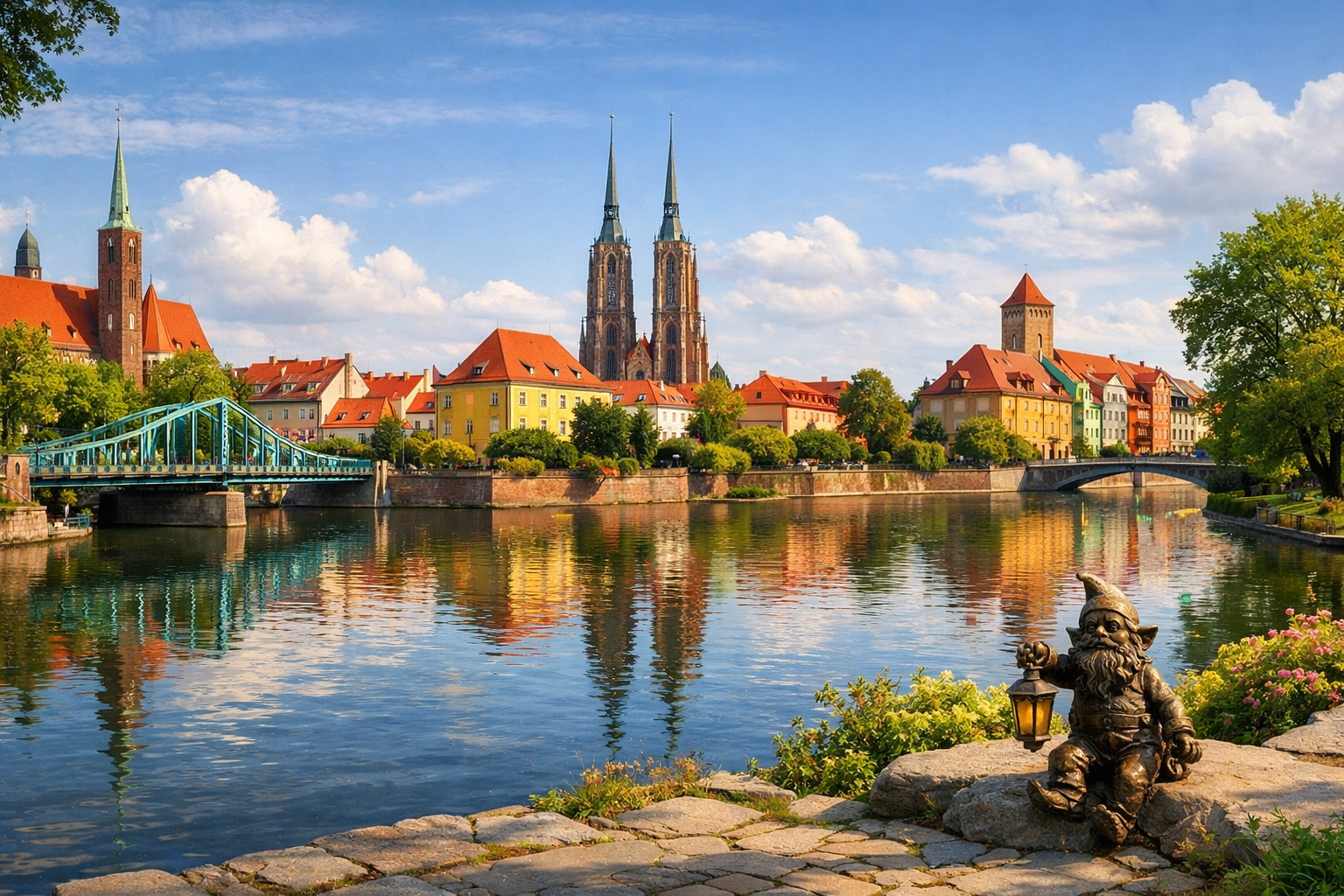
Poland, Wrocław. An affordable city break among islands, bridges, colorful houses, parks, and the famous city gnomes. Season: April - October.

Poland, Wrocław. An affordable city break among islands, bridges, colorful houses, parks, and the famous city gnomes. Season: April - October.

Wrocław is a charming and affordable city break, where islands, bridges, and colorful facades create a lively waterside atmosphere. From April to October, its leafy parks, café-lined squares, and famous little gnomes make four days here feel playful, relaxed, and full of discovery.

🧭 DAY-BY-DAY ROUTE

Ready-made country and city routes with daily plans, sights, transport and accommodation. Buy PDF guides for independent travel.

🧭 DAY-BY-DAY ROUTE


Day 1 — Old Town: Market Square, Town Hall, dwarfs, and an evening by the waterfront

  • 🚶 Start your introduction to Wrocław at Market Square — one of the most beautiful and lively urban centers in Poland. It is especially easy here to feel the city’s character: the facades of the houses seem to compete in shades, details, and ornamentation, café terraces buzz beneath the windows, and above it all rises the Gothic Town Hall — one of the city’s main architectural gems. Wrocław is often called the city of bridges, islands, and dwarfs, and you can feel this literally at every step from the very first day: between the old quarters, alleys open up leading to the water, and tiny bronze figures are hidden by houses, lanterns, and squares, turning into a citywide game for adults and children alike. A walk through the center is especially enjoyable without rushing: it is better not to try to “tick off” every point at once, but to give yourself time to look at the details — mascarons, windows, arches, inner courtyards, and the lively street scene.

  • 🚶 From Market Square, it is easy to walk to the Old Shambles, the university quarter, and then toward the embankments of the Oder. Walking distances within the center are short and comfortable: from Rynek to the surroundings of the University of Wrocław it is usually 10–15 minutes, and the walk to the island area takes about 20–25 minutes at a relaxed pace with photo stops. Along the way, it is the perfect chance to hunt for the famous city dwarfs — there are already many of them in Wrocław, and searching for the figures turns even an ordinary walk into a little quest. In the evening, it is worth heading to the river and one of the central bridges: the water reflects towers, domes, and colorful houses, and the city itself becomes softer, more romantic, and a little more intimate. For a budget trip, this is almost the perfect first day: maximum impressions, minimum transport costs.


Day 2 — Ostrów Tumski: cathedral island, bridges, botanical garden, and panoramas

  • 🚶 Dedicate the second day to the most atmospheric historic part of Wrocław — Ostrów Tumski. This is where the city’s history began, and today the place feels completely different from the busy center: there is more quiet, greenery, church towers, stone, and open space. The walk from the Market Square area usually takes about 20–25 minutes, so the route is easy to do without transport. Along the way, you cross bridges and gradually enter a completely different rhythm of the city — less commercial, more contemplative. The main impressions here are created not only by individual landmarks, but by the environment itself: narrow streets, lanterns, river views, old church facades, and the feeling that modern Wrocław steps slightly back, allowing centuries of history to come forward.

  • 🚶 Be sure to walk across Tumski Bridge and give yourself time for the cathedral part of the island, then continue your walk to the Botanical Garden of the University of Wrocław. In the April–October season, this is an especially successful combination: after the stone and spiritual architecture of Ostrów Tumski, the garden offers a gentle pause, shade, flowers, ponds, and a sense of rest without a long trip out of the city. After the garden, you can leisurely head toward the embankment and the areas near the National Museum and the Racławice Panorama. The whole day remains very realistic in terms of effort: lots of beautiful walking, short distances between points, and enough time for coffee, a rest on a bench, and evening views of the water.

Day 3 — Water, islands, and modern Wrocław: Hydropolis, embankments, Zoo, and Centennial Hall

  • 🚋 The third day is best built around the more modern and spacious part of the city. From the center, the easiest way to reach Hydropolis is usually by tram with one short walking section; the journey itself often takes about 15–25 minutes depending on your starting point and transport waiting time. Hydropolis is one of Wrocław’s most successful modern attractions for a city break: it is not a dry technical museum, but an impressively designed space about water as an element, a resource, and a cultural phenomenon. The exhibition is housed in a historic reservoir, and the contrast between the industrial shell and the multimedia presentation makes the visit memorable. After the old center and the cathedral island, such a day shows another face of Wrocław perfectly — modern, intellectual, and well adapted to slow tourism.

  • 🚶 After Hydropolis, you can walk toward the Zoo and Afrykarium, and then on to Centennial Hall and the adjacent green spaces. This district is good because it combines water, parks, broad avenues, and large urban sites between which it is pleasant to move without the constant bustle of the center. If you do not want to overload the day, you can choose either a longer visit to the zoo or a walking version focused on Centennial Hall, the nearby lawns, and the Japanese Garden. Transfers between points usually take 10–20 minutes, and it is sensible to allow almost a full day for the whole area with breaks. In the evening, return to the center by tram — it is quick, inexpensive, and convenient.

Day 4 — Slow Wrocław: the Four Denominations District, parks, viewpoints, and a flexible finale

  • 🚶 It is best to make the last day lighter and more “airy,” without racing through a checklist. Start it in the Four Denominations District and on Włodkowica Street — this is one of the most pleasant quarters in Wrocław for a walk, where historic buildings, cafés, calm city streets, and cultural layering come together into a very European, lively, yet not overly noisy space. Then you can head to Old Town Park or return through the center to favorite places you wanted to see once more. This city works especially well for a repeat walk format: in the morning and in the evening, the same bridge, facade, or courtyard feels completely different.

  • 🚶 Depending on the pace of the trip, you can add a museum, a short shopping stop, a visit to the National Museum, or one more dwarf hunt in the center to the finale. If your flight is late, leave time for a calm lunch and the journey to the airport; if you are leaving by train, it is convenient to finish the day without long transfers, saving energy and avoiding the risk of being late. Such a fourth day is especially good for a budget trip: it does not require expensive activities, but lets you close the route beautifully and once again absorb the atmosphere of Wrocław — a city of islands, bridges, water, parks, and little bronze characters that unexpectedly make an urban holiday warmer and more human.

Flight tickets

eSIM for travel

Buy PDF guide

Buy PDF guide — 8.57 USD

PDF — 8.57 USD