
Buy PDF guide

Buy PDF guide — 8.57 USD

PDF — 8.57 USD

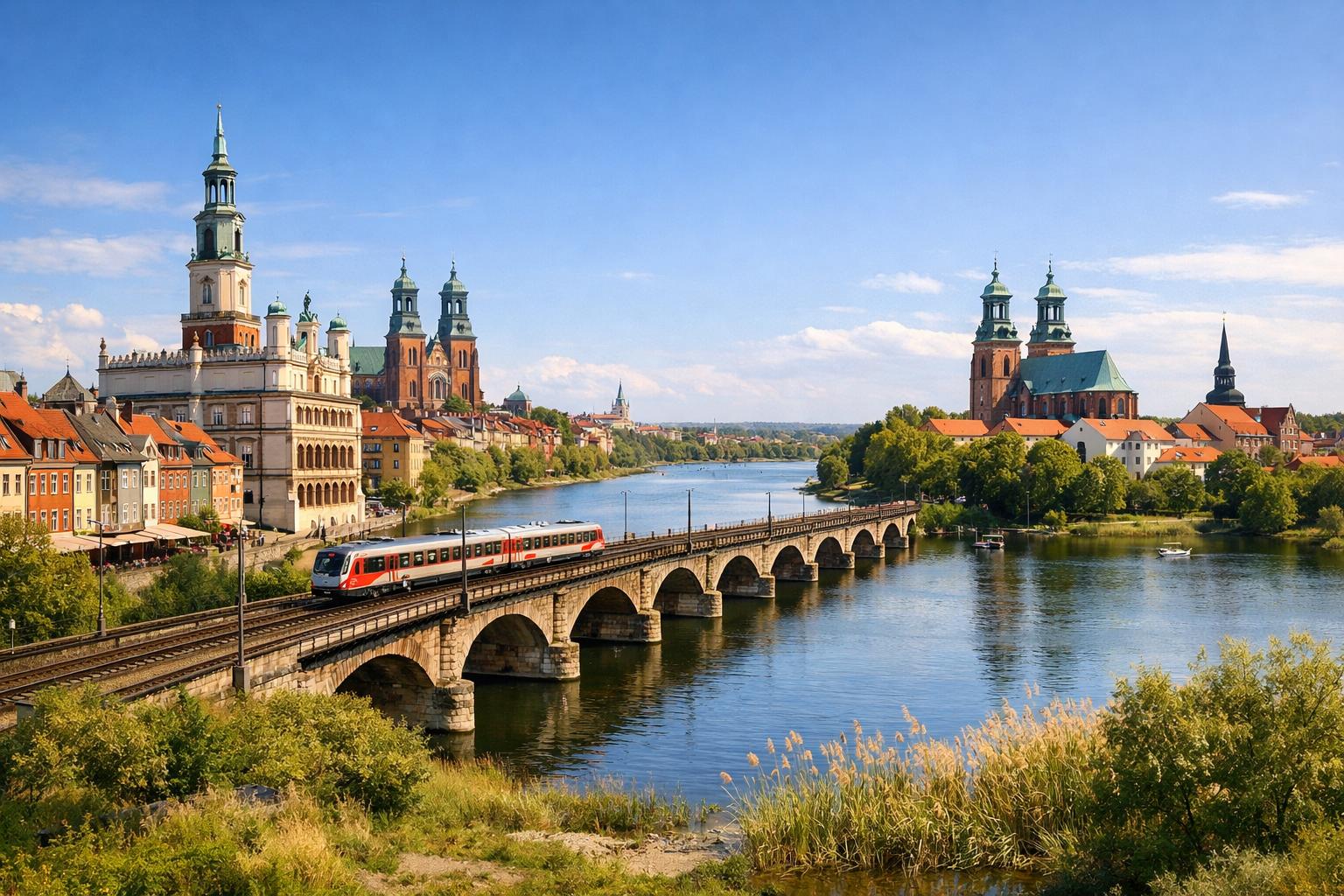
Poland, Poznań and Gniezno. A budget trip through the historic cities of Greater Poland with town halls, cathedrals, lakes, and convenient train transfers. Season: April - October.

Poland, Poznań and Gniezno. A budget trip through the historic cities of Greater Poland with town halls, cathedrals, lakes, and convenient train transfers. Season: April - October.

Discover the heart of Greater Poland on a budget-friendly trip from Poznań to Gniezno and back, where colorful town halls, grand cathedrals, and centuries of history unfold between easy train rides. From lively market squares to peaceful lakeside views, this April-to-October escape blends culture, charm, and effortless travel.

🧭 DAY-BY-DAY ROUTE

Ready-made country and city routes with daily plans, sights, transport and accommodation. Buy PDF guides for independent travel.

🧭 DAY-BY-DAY ROUTE


Day 1 — Poznań: Old Market Square, Town Hall, and the royal-imperial center

  • 🚶 Start your journey in the heart of Poznań — the Old Market Square, one of the most beautiful market spaces in Poland. This is not just a postcard scene of colorful facades, but a living historical stage where the city’s medieval layout meets Renaissance elegance. The main star of the square is the famous Town Hall, one of Poznań’s most important symbols. Its graceful facade, arcades, and tower are a reminder that for centuries the city was a major trade and political center of Greater Poland. Around the square stretch old townhouses, fountains, former market rows, and cozy streets that are especially pleasant to wander without rushing, taking in stucco details, coats of arms, signs, and the shift in urban atmosphere from morning quiet to evening liveliness.

  • 🏛️ Stop by the Museum of the History of the City of Poznań in the Town Hall building, address: Stary Rynek 1, 61-768 Poznań. Even if you are not planning a long museum visit, the location itself is valuable because it lets you literally step inside the city’s main symbol and see how the past of this merchant and administrative center is woven into modern life. After the museum, it is worth walking through the neighboring streets of the old town, where Renaissance, Baroque, and later urban architecture create a very cohesive and photogenic setting.

  • 🚶 In the second half of the day, it makes sense to continue along the Royal-Imperial Route toward the Castle District. Here Poznań reveals itself not as a medieval trading city, but as an important center of later European history. The Imperial Castle, address: ul. Św. Marcin 80/82, 61-809 Poznań, makes a strong impression with its monumentality and an appearance unusual for Poland. Today it is a cultural center, but its architecture still carries the feeling of an era of political ambitions, grand ceremonies, and the region’s complex history.

  • ☕ It is best to leave the evening for a leisurely walk along Święty Marcin Street and around Wolności Square. This is a good day without overload: everything is compact, there are many places for inexpensive food, and most movement is on foot. For a budget format, it is convenient to stay in a hotel near the center and after dinner simply walk through the illuminated old town. On the first day, it is better not to plan too many museums — give yourself time to settle into the rhythm of the trip and recover from the journey.


Day 2 — Poznań: Cathedral Island, the cathedral, and Lake Malta

  • 🚶 Dedicate the morning to the oldest part of Poznań — Ostrów Tumski, the island core of Polish statehood. Here the city feels completely different: less noise, more space, brick, water, and church silhouettes. It is here that you especially clearly understand why Greater Poland is considered the cradle of Polish history. The main point is the Poznań Cathedral of Saints Peter and Paul, address: Ostrów Tumski 17, 61-109 Poznań. This is one of the oldest cathedrals in the country, a place connected with the early Piasts, the first rulers of Poland, and the atmosphere of an early medieval state.

  • 🏛️ After the cathedral, it is a great idea to visit the interactive center Brama Poznania, address: ul. Gdańska 2, 61-123 Poznań. This is a modern museum and exhibition space that helps you understand Cathedral Island not as a collection of ancient walls, but as a living historical landscape. The exhibition focuses on the origins of the city, Christianization, archaeology, the development of the island, and the role of Poznań in shaping Polish identity. For a short route, this is an especially useful stop: in one visit you get solid context for the whole trip.

  • 🚋 After lunch, head to Lake Malta — a contrasting, lighter, and more walkable area that perfectly balances the history-filled first half of the day. Malta is not only a lake, but also a large leisure zone with promenades, green paths, sports infrastructure, and beautiful views over the water. In the April–October season, it is especially pleasant to walk here: you can stroll along the shore, sit by the water, enjoy a long photogenic promenade, or, if the seasonal service is running, take a ride on the Maltanka narrow-gauge park railway along the northern bank.

  • 💤 This day is arranged so you do not get overtired: history and architecture in the morning, a calm museum block during the day, and rest by the water in the evening. If you like, you can finish the day with an early dinner in the center and go to bed earlier, because the next day brings a very convenient, but still full-fledged, train trip to Gniezno.

Day 3 — Gniezno: cathedral, royal route, and old town

  • 🚆 Transfer: Poznań → Gniezno by regional or interregional train — usually about 35–50 minutes depending on the service. This is one of the most comfortable and realistic day trips from Poznań: no tiring transfer, clear logistics, and the opportunity to spend the day in one of Poland’s most important historic cities.

  • 🚶 Gniezno is an almost symbolic place for Polish history. Unlike larger and more dynamic Poznań, the atmosphere here is more intimate, quieter, and more ancient in mood. Start with Gniezno Cathedral, address: ul. Kolegiaty 2, 62-200 Gniezno. This is one of the country’s main shrines and a place where you can especially feel the weight of the early Polish monarchy. The cathedral rises above the city like a stone chronicle: austere, solemn, and very cohesive in impression. Special attention should be paid to the famous Gniezno Doors — an outstanding work of medieval art connected with the cult of Saint Adalbert and the early Christian history of Poland.

  • 🏛️ Then head to Muzeum Początków Państwa Polskiego w Gnieźnie, address: ul. Kostrzewskiego 1, 62-200 Gniezno. For a trip through Greater Poland, this is practically the ideal museum: it does not just display artifacts, but helps bring together the story of the origins of Polish statehood, early medieval centers of power, archaeological discoveries, and the role of Gniezno as one of the key hubs in the first centuries of Polish history. Even for those who do not usually enjoy long museum visits, it is easy to stay engaged here, because the topic is directly connected with what you have already seen in the streets and in the cathedral.

  • 🚶 After the museum, leave time for a walk through the old town and along the Royal Route. Gniezno’s old town does not impress with its size, but wins you over with its atmosphere: this is a city that reveals itself best step by step. Tumska Street, the market square, old facades, details of the urban environment, small squares, and symbolic references to the first Polish kings create a very cohesive impression. It is pleasant here not only to look around, but also to slow down: stop for coffee, climb to a viewpoint, calmly walk from the cathedral to the market square, and simply feel the rhythm of the old historic center.

  • 🌙 It is convenient to stay overnight in Gniezno: this makes the route less hectic and lets you see the city in the evening, when the area around the cathedral and the old streets becomes especially calm. For a budget trip, this is also sensible: there is no need to rush for the last convenient train, and the next day can start without an early wake-up.

Day 4 — Gniezno → Poznań: final walk and a calm end to the route

  • 🚶 In the morning in Gniezno, leave time for a short, quiet walk without a strict checklist. These are often the hours when historic cities show their best character: empty or almost empty streets, soft light on brick facades, the bell-tower silhouette of the cathedral, the unhurried opening of cafes, and the feeling that the city belongs to you. If the day before you focused on the main sights, today you can soak up the atmosphere — walk through the old center again, take the last photos, and visit the Archdiocesan Museum in Gniezno, address: ul. Kolegiaty 2, 62-200 Gniezno, if you want to complement the experience with sacred art and church history.

  • 🚆 Transfer: Gniezno → Poznań — usually about 35–50 minutes by train. Thanks to frequent rail service, this return does not feel like a tiring transfer, but rather a convenient connection within a compact regional route.

  • 🌳 After returning to Poznań, do not overload the final day with new major sights. A good idea is to spend a few hours in Park Cytadela, address: al. Armii Poznań, 61-663 Poznań. This is a large city park where history, open space, and relaxation coexist very naturally. After busy days filled with cathedrals, museums, and old streets, the Citadel gives what short routes often lack — air, greenery, and a pause. Here you can simply walk, sit on the grass, look out over city panoramas, and finish the trip without rushing.

  • ✈️ If your flight departs from Poznań-Ławica Airport on the same day, allow extra time for the journey and check-in. The airport is about 7 km from the center, and public transport and taxis make it easy to get there without complicated logistics. The whole route is intentionally designed as a compact, budget-friendly, and realistic trip through the two most important historic cities of Greater Poland — with town halls, cathedrals, a lake, green areas, and convenient rail transfers.

Flight tickets

eSIM for travel

Buy PDF guide

Buy PDF guide — 8.57 USD

PDF — 8.57 USD