
Buy PDF guide

Buy PDF guide — 6.43 USD

PDF — 6.43 USD

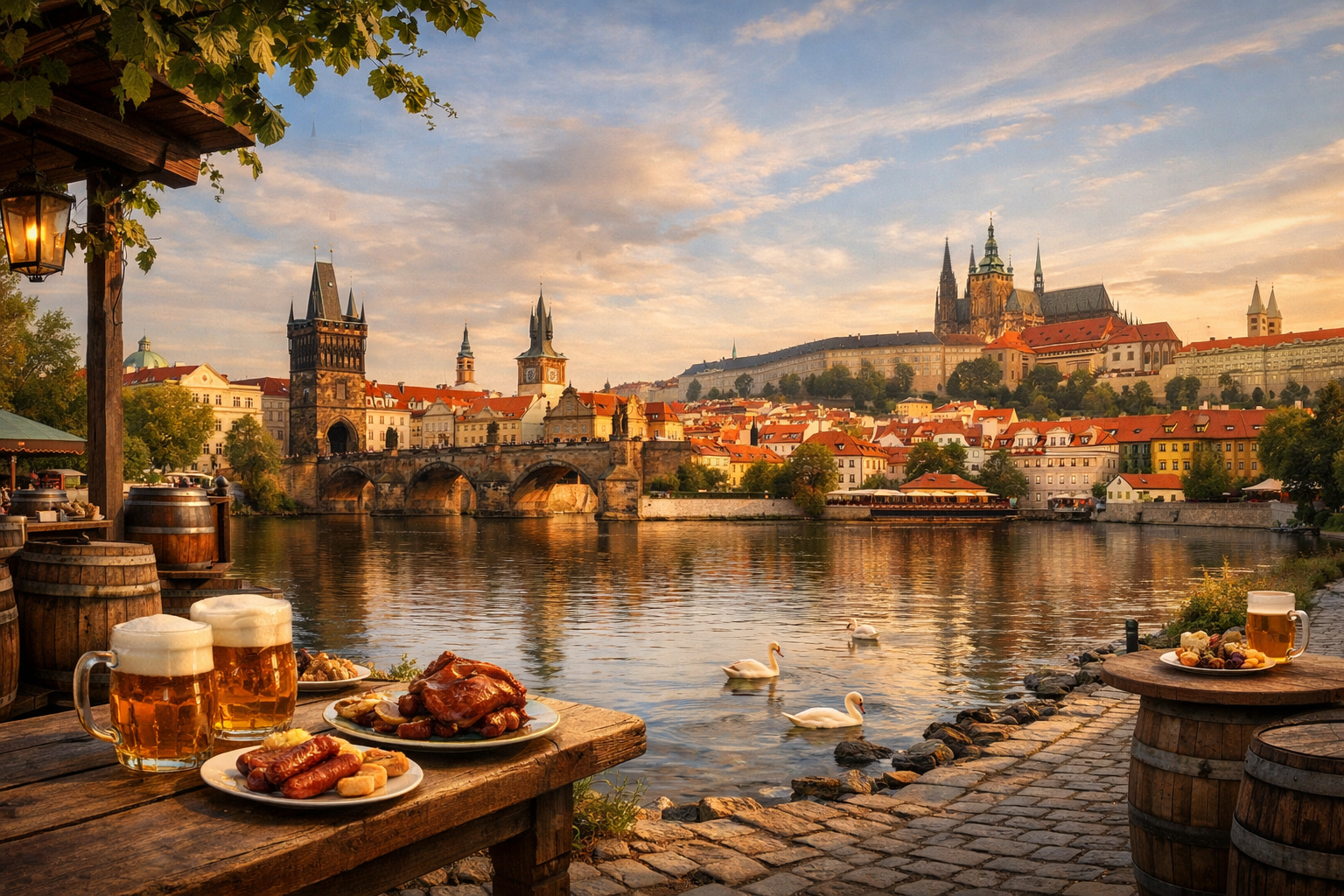
Beer and gastronomic tour of Prague

Beer and gastronomic tour of Prague

Discover Prague through its flavors, from the timeless streets of Staré Město to the lively corners of Nové Město and the elegant cafés and beer halls of Vinohrady. This tasty journey blends Czech classics, local brews, and the city’s rich atmosphere into one unforgettable tour.

🧭 DAY-BY-DAY ROUTE

Ready-made country and city routes with daily plans, sights, transport and accommodation. Buy PDF guides for independent travel.

🧭 DAY-BY-DAY ROUTE


Day 1 — Staré Město: beer classics, market, and historic center

  • 🚶 Start your introduction to Prague in Staré Město — a district where Gothic towers, Baroque facades, and cobbled lanes create an almost theatrical backdrop for the main Czech ritual: a slow walk from square to beer hall and from beer hall to dessert. The Old Town here does not feel like a museum postcard: it is alive, noisy, and scented with fresh pastries, malt, roasted meat, and coffee. In the morning, it is worth walking through Old Town Square, heading toward the Church of Our Lady before Týn, then turning into the narrower streets around Celetná and Havelská — there you feel the texture of old Prague best: stone arches, little shops, inner courtyards, and old houses under which trade flourished and beer foam flowed for centuries.

  • 🛍️ For a gastronomic start, stop by Havelské tržiště, the oldest operating market in central Prague. Today it is not only a tourist spot but also a convenient place to feel the city’s rhythm: fruit, sweets, souvenirs, seasonal products, and street snacks create a great backdrop before a long walking day. From here, it is easy to make a short coffee stop and try your first trdelník — it is often sold right in front of passersby, as the dough is wrapped around a spit, roasted to a caramel crust, and sprinkled with sugar and cinnamon. It is not Prague’s oldest dessert, but for an urban food route it works perfectly: sweet, aromatic, and very much in the spirit of the “Old Europe street” mood.

  • 🍺 The main beer part of the day is a tasting walk through the historic Czech beer halls of Staré Město. Focus specifically on lagers: in Prague they should be drunk slowly, comparing the softness of the malt, the herbal bitterness of Saaz hops, the density of the foam, and how the same beer style reveals itself differently from one venue to another. For your first full lunch, choose classic Czech dishes: goulash with dumplings, fried sausage with beer, or a rich soup. After lunch, continue your walk toward Charles Bridge and the embankment, then return to the center to spend the evening in one of the old beer halls, where dark wood, heavy tables, copper details, and waiters moving with confident speed create exactly the atmosphere people come to Prague for.

  • 🥘 On this day, it is especially fitting to try goulash — thick, spiced, with a rich meat sauce, which in Czechia is served as if it were not just a dish but part of the national character. If you still have energy, end the evening with a short walk through the illuminated streets of the Old Town: after sunset, Prague becomes deeper and more cinematic, and the windows of beer halls and pastry shops begin to practically pull you inside. In terms of timing, the route is realistic: walking between the main points of Staré Město usually takes 5–20 minutes, so the day feels full but without transport fatigue.


Day 2 — Nové Město: U Fleků, lagers, svíčková, and Prague’s museum layer

  • 🚶 Dedicate the second day to Nové Město — a district where Prague already looks less medieval and more urban, broad, and rhythmic. This is the territory of grand avenues, historic passageways, theaters, squares, and legendary gastronomic addresses. It is convenient to start around Wenceslas Square and the National Museum: even if you are not planning a long visit inside, the very axis of the square helps you feel how Prague transformed from a royal city into a modern European capital. The architecture here is stately, the streets are more spacious, and there is more local urban life around — offices, bakeries, trams, bars, and the flow of business life.

  • 🏛️ After a short museum stop or a walk around Wenceslas Square, head toward Křemencova Street, where one of Prague’s most famous beer destinations is located — the U Fleků brewery and restaurant. This place matters not only as a tourist symbol but also as a living fragment of the city’s beer history. Here it is especially interesting to feel the difference between simply “stopping for a beer” and finding yourself in a space where brewing itself is built into the atmosphere: vaulted halls, antique interiors, music, the noise of groups, trays of mugs, and a sense of uninterrupted tradition. If possible, you can complement the visit with the small beer museum on site.

  • 🍺 In gastronomic terms, this is the best day for a thoughtful lager tasting and getting to know Czech beer culture in a deeper format. For lunch, order svíčková — one of the most recognizable Czech specialties: tender beef in a velvety creamy vegetable sauce, usually with dumplings, sometimes with a lingonberry accent and a spoonful of cream. The dish feels homestyle, festive, and a little old-fashioned — and that is exactly what makes it so appealing. If you want a fuller beer note, it makes sense to add another stop closer to evening at a mini-brewery or beer house in Nové Město to compare different serving styles, the body of the drink, and the character of the cuisine.

  • 🥨 In the second half of the day, the combination of “a short cultural pause + evening gastronomy” works very well: you can visit the Museum of Communism or stroll through the passageways and streets around Národní třída, and then move on to a leisurely dinner. For a snack between locations, trdelník or traditional pastries from a local bakery will work again. Logistically, the day is also very convenient: from Wenceslas Square to U Fleků, the trip by tram or metro with a short walking section usually takes about 15–20 minutes, and within Nové Město itself many points are connected by 10–15 minute walks. It is best not to rush the evening here: the district opens up beautifully in the lights, when trams ring at intersections and the beer halls fill with conversation and the heat of the kitchen.

Day 3 — Vinohrady: mini-breweries, parks, markets, and pork knuckle

  • 🚶 Set aside the final day for Vinohrady — a district that often makes people fall in love with it even more than the postcard center. There is less medieval scenery here and more beautiful urban everyday life: broad streets, Art Nouveau and Neo-Renaissance buildings, tram lines, cafés, local bakeries, wine bars, parks on the slopes, and the feeling that Prague belongs not only to travelers but also to those who live here. Start the morning around Jiřího z Poděbrad, where it is easy to combine a gastronomic walk through the neighborhood with the market and a coffee break. The atmosphere here is more local, relaxed, and refined, and the district is perfect for the last day, when you want less rushing and more flavor.

  • 🛍️ For a gastronomic walk through Vinohrady, look for farmers’ and neighborhood market spots around Jiřího z Poděbrad Square and the adjacent streets. It is a great way to see another Prague — not ceremonial, but everyday: people buy cheese, pastries, seasonal vegetables, flowers, and take coffee to go. After the market, head toward Riegrovy sady and then, if you are in the mood for a longer walk, to Havlíčkovy sady (Grébovka). These green spaces matter here not as a formal “park on the route,” but as a pause between gastronomic scenes: Riegrovy sady offers beautiful views over the city, while Grébovka surprises with an almost Italian mood — vineyards, pavilions, terraces, and a romantic grotto.

  • 🍺 Vinohrady is ideal for a final meeting with Prague’s mini-breweries and the more modern beer scene. It is a great place to end the tour not with museum formality, but with living local culture: order a pale lager, compare it with what you tried in the historic beer halls of the center, and feel how the same Czech beer code sounds different in a district with a more local character. For lunch or an early dinner, be sure to plan for koleno — the famous roasted pork knuckle, which in Prague is often served with mustard, horseradish, pickled vegetables, and bread. It is a powerful, generous, almost festive dish that works especially well at the end of a beer route.

  • 🥘 If you want to make the final note even more expressive, add either a second mini-brewery in the evening or a calm dinner in a Vinohrady restaurant with views of neighborhood life and trams. The day is easy to put together without rushing: transfers between Vinohrady and the center on metro line A or C, as well as by tram, take about 10–20 minutes, and within the district many points are naturally explored on foot. This day should leave the feeling not of “ticking a box,” but of a beautiful aftertaste: Prague as a city of lager, hearty cuisine, old beer traditions, and surprisingly cozy residential neighborhoods.

Flight tickets

eSIM for travel

Buy PDF guide

Buy PDF guide — 6.43 USD

PDF — 6.43 USD