
Buy PDF guide

Buy PDF guide — 25.71 USD

PDF — 25.71 USD

PRISON ISLAND AND SWAHILI FORTS

PRISON ISLAND AND SWAHILI FORTS

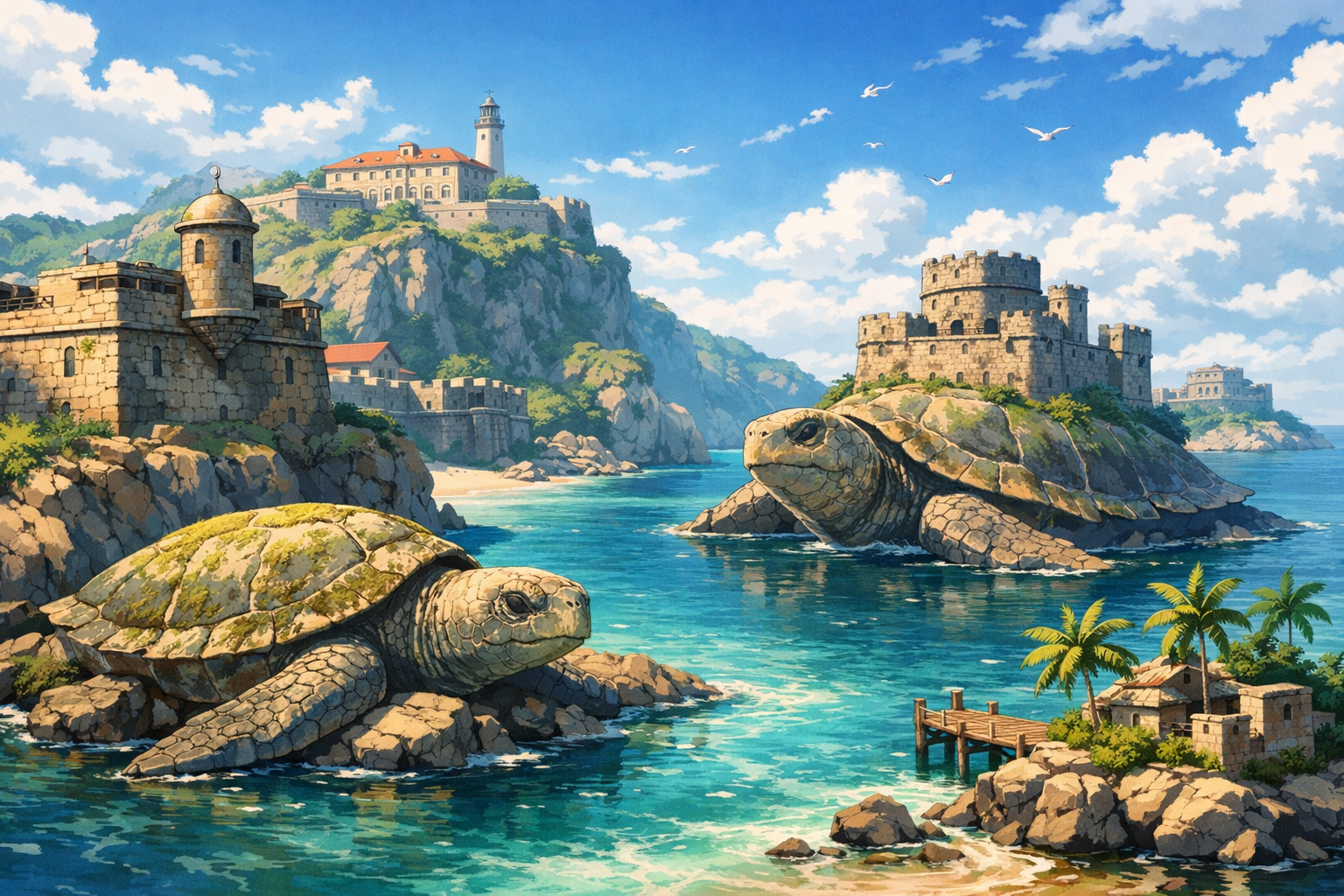
Sail the Swahili coast from Dar es Salaam to Zanzibar’s Stone Town, where spice-scented alleys meet coral forts, giant tortoises bask on Prison Island, and Chumbe’s reef shimmers beneath your fins. Trace the old trade routes through Bagamoyo to Kilwa’s haunting UNESCO ruins, then drift back to Dar with dhow-dotted horizons and Indian Ocean sunsets.

🧭 DAY-BY-DAY ITINERARY

Ready-made country and city routes with daily plans, sights, transport and accommodation. Buy PDF guides for independent travel.

🧭 DAY-BY-DAY ITINERARY


Day 1 — Dar es Salaam: an “entry point” into the coast’s history

  • 🚶 Arrival in Dar es Salaam (DAR). After check-in — get acquainted with the city’s colonial core: Old Boma (a historic building from 1866–1867, now a center of architectural heritage) and the Sokoine waterfront. At the National Museum and House of Culture on Shaaban Robert St. it’s convenient to build an overall context for the pre-Islamic, Arab-Omani, and German-British periods. Pay attention to the exhibits on caravan routes and links with Zanzibar — they will “anchor” the following days to the real history of the coast.


Day 2 — Ferry to Zanzibar: Stone Town as a “stone book”

  • ⛴️ Transfer DAR → Zanzibar (Stone Town) by high-speed ferry: 07:00 / 09:30 / 12:30 / 15:30; travel time ≈ 1h 40m–2h. Upon arrival — check-in and a leisurely walk through the UNESCO-center labyrinths: coral stone, carved doors, Arab-Indian facades, British additions. Sunset — at Forodhani.

Day 3 — Prison Island (Changu): giant tortoises and quarantine buildings

  • 🛶 Morning boat departure from Forodhani/Malindi: 20–30 minutes to Changu. On the island — the reserve of Aldabra giant tortoises (century-old “locals” with age tags), ruins of the late-19th-century prison-quarantine complex, shallow reefs. Walk a loop: jetty → tortoise enclosures → brick buildings and courtyards → beach and snorkeling. Return to Stone Town in the second half of the day.
  • 🌙 In the evening — a “pair” of symbols: the Old Fort (Ngome Kongwe) on Mizingani Road and the neighboring facade of the House of Wonders (an iconic building of modernity on the Swahili seafront). The fort’s stage offers a rare angle on the fortifications and the city’s rhythm.

Day 4 — Stone Town: palaces and “heavy” pages

  • 🚶 Morning at the Palace Museum (Beit el-Sahel / People’s Palace): halls of the sultan’s dynasty, objects, reception layouts — to see how power “drew” the city. Then — the Old Dispensary on the waterfront (the Indian-overseas decorative layer and restorations). After that — the Anglican Cathedral Christ Church on the site of the former slave market: the crypt, memorial, heavy but necessary explanations of context.

Day 5 — Chumbe: the 1904 lighthouse and “reef archaeology”

  • 🛥️ Day trip to Chumbe Island (a private marine park): the historic 1904 lighthouse, former service buildings, a trail through a rare coastal forest and a benchmark coral reef. This is a “living laboratory” of ecology and marine navigation: lighthouse architecture plus underwater “cities” of coral massifs.

Day 6 — North Zanzibar: shores and landmarks

  • 🚐 A walking-and-driving day in the north (as energy allows): viewpoints at Nungwi Cape, coastal landmarks with old lighthouses (e.g., Ras Nungwi, 1881 — from afar), dhow boatyards. The focus is the chain “landscape → seafaring → trade” that gave life to Swahili towns.

Day 7 — To the mainland: Dar es Salaam → Bagamoyo

  • ⛴️ Morning ferry to Dar es Salaam, then a drive to Bagamoyo (≈ 65–75 km north of Dar es Salaam, 1.5–2h with traffic). In the evening — an “entry” into the old port town: the waterfront, sandy lanes, shadows of colonial facades.

Day 8 — Bagamoyo: Kaole, mission, fort

  • 🚶 Morning — Kaole Ruins (13th–16th centuries): coral mosques, necropolises, vaulted passages and the porous stone from which the coast’s towns grew. Next — the Catholic mission and museum (stories of liberation and missionary schools), in the afternoon — the Old Fort (the Omani-German stage of port administration). Bagamoyo reads the whole “layer cake”: from early Swahili to the modern era.

Day 9 — Long drive: Bagamoyo → Kilwa Masoko

  • 🚌 Drive along the coast to Kilwa Masoko (≈ 300–320 km; 5–6h depending on road conditions). Check-in, rest by the water. Get in the mood for tomorrow’s “medieval capital.”

Day 10 — Kilwa Kisiwani (UNESCO): a coral megacity

  • 🛶 Morning — permits/arrangements at the visitor center in Masoko, boat to Kilwa Kisiwani. Route: the Great Mosque (one of the oldest congregational mosques on the coast), the palace complex Husuni Kubwa (grand terraces and cisterns) and the Gereza fortifications. This is the culmination of coral architecture and Swahili trading power (9th–16th centuries). Return at sunset.

Day 11 — Songo Mnara or a coastal day

  • 🛶/🚶 Depending on weather and energy: trip to Songo Mnara (the second “pole” of the UNESCO complex: city quarters, courtyards, a mosque, “readable” through its layout), or a coastal day in Masoko with a debrief of what you’ve seen: how coral stone, tides, and seafaring shaped urbanism.

Day 12 — Return to Dar es Salaam: the final chord

  • 🚌 Transfer Kilwa Masoko → Dar es Salaam (5–6 h). Evening stop — the Botanical Garden and the Kivukoni waterfront. We tie the tour’s line together: forts and palaces of Zanzibar ↔ caravan-and-port hubs of Bagamoyo ↔ the global port of Kilwa. The “stone” history of the Indian Ocean comes together into a single pattern.

Flight tickets

eSIM for travel

Buy PDF guide

Buy PDF guide — 25.71 USD

PDF — 25.71 USD