
Buy PDF guide

Buy PDF guide — 10.71 USD

PDF — 10.71 USD

New Orleans — jazz, Creole cuisine, and festivals

New Orleans — jazz, Creole cuisine, and festivals

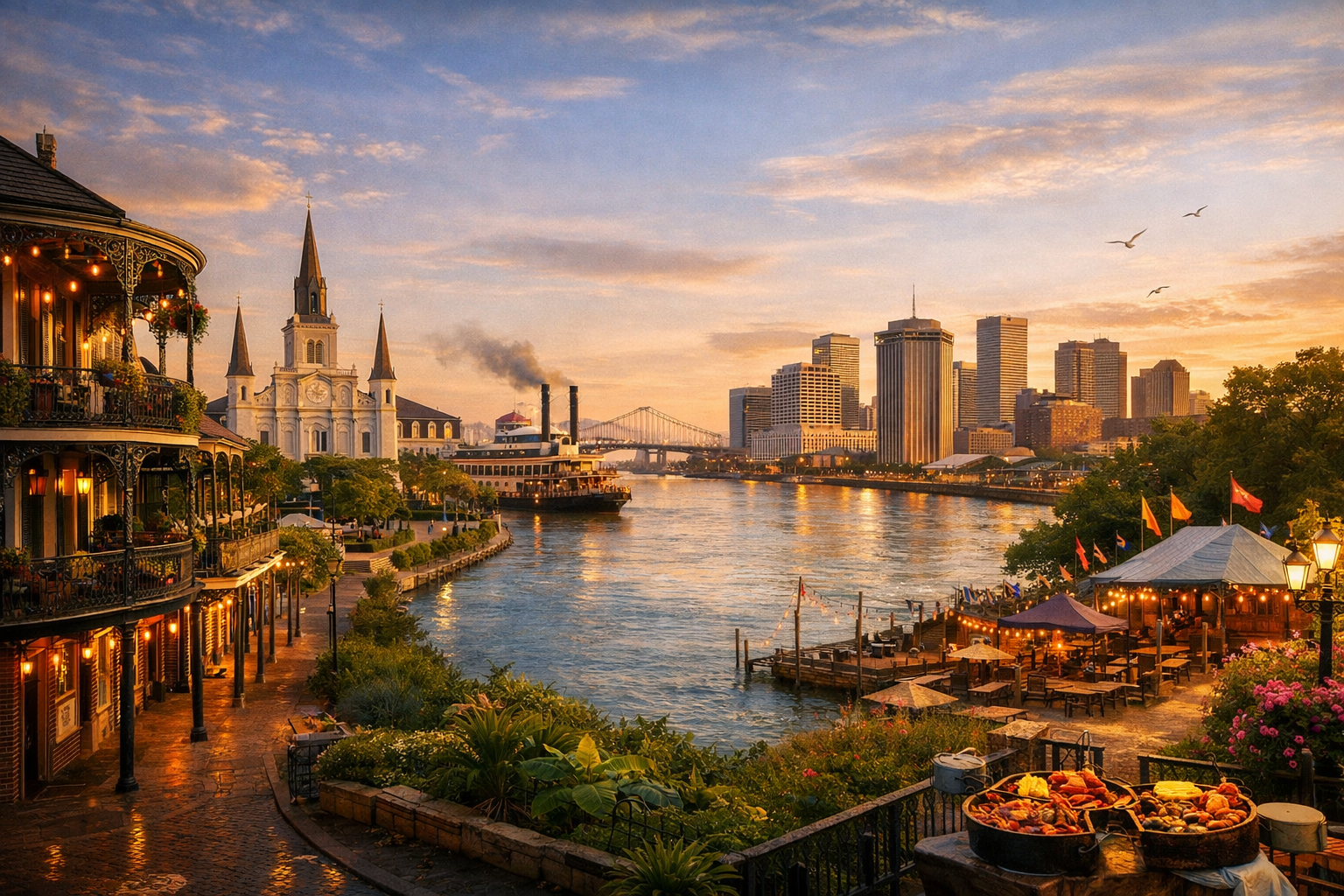
New Orleans moves to the rhythm of jazz, where Creole flavors, wrought-iron balconies, and street parades fill the city with life. Wander from the French Quarter through the Warehouse District and Tremé to the Garden District and City Park, and every neighborhood tells its own vibrant story.

🧭 DAY-BY-DAY ITINERARY

Ready-made country and city routes with daily plans, sights, transport and accommodation. Buy PDF guides for independent travel.

🧭 DAY-BY-DAY ITINERARY


Day 1 — New Orleans: the French Quarter, Jackson Square, and your first live jazz

  • 🚶 Start your trip with the city’s most recognizable layer — French Quarter. It’s best to spend the morning at an easy pace: head to Jackson Square, see the facade of St. Louis Cathedral, and walk along Chartres Street and Royal Street, where New Orleans immediately reveals itself as a blend of old Southern charm, Caribbean echoes, and street-musical freedom. This day works best with a gentle rhythm and no rush: after your flight and hotel check-in, give yourself 1.5–2 hours to rest, then go out for a 3–4 hour walk with short stops for coffee, beignets, or a light Creole lunch. It’s only a 5–10 minute walk from the square to the Mississippi riverfront, so it makes sense to add Moon Walk and river views — this is where you really feel the city’s portside, humid, vibrant character. In the evening, don’t overload the plan with long transfers: finish the day within the quarter, for example with a concert at Preservation Hall or another intimate jazz set nearby. That’s the right first chord of New Orleans — not to “see everything,” but to enter its rhythm.


Day 2 — New Orleans: Creole food, the Warehouse District, and cocktail history

  • 🚶 Dedicate the second day to a mix of cuisine and urban history. In the morning, walk from Canal Street toward the Warehouse District: compared with the French Quarter, this area has wider streets, former warehouses, galleries, and a more “modern” New Orleans feel. From the center of the quarter to The National WWII Museum or Sazerac House, a taxi/rideshare usually takes 10–15 minutes, while walking between places within the district takes about 10–20 minutes. A good format for the day is a late breakfast or early lunch with Creole and Cajun dishes, then a museum visit or the tasting-and-exhibition format at Sazerac House, followed by a mandatory 1–1.5 hour rest break. In New Orleans, the heat and humidity tire you out quickly, so it’s better to alternate busy blocks with pauses. In the evening, head back closer to the center and plan dinner as a separate event: this is the place to try gumbo, jambalaya, étouffée, charbroiled oysters, or more “homestyle” Creole classics. If your trip falls during festival season, this is also a convenient day to fit in an evening venue at French Quarter Festival, Jazz Fest, or another music event without disrupting the overall logic of the route.

Day 3 — New Orleans: Tremé, Congo Square, and the city’s jazz memory

  • 🚶 It’s best to make this day more cultural and more rooted. Start in Tremé — one of the most important historic African American neighborhoods in the United States and a key place for understanding the origins of New Orleans jazz. From the French Quarter, it’s about a 10-minute taxi ride, or roughly a 15–20 minute walk to Louis Armstrong Park. Here, the route should be less about the number of sights and more about atmosphere and context: Louis Armstrong Park, Congo Square, New Orleans Jazz Museum, or similar places help you piece together the city’s musical DNA — from street tradition and brass bands to the figure of Louis Armstrong. After the museum block, take a long lunch and rest break of at least 1.5 hours, and by evening return to Frenchmen Street or another live music area, where New Orleans is no longer museum-like but present-day — loud, warm, a little chaotic, and deeply musical. It’s best to keep the evening flexible here: visiting 2–3 clubs or bars with short sets feels much more natural than booking an overly rigid schedule.

Day 4 — New Orleans: Garden District, St. Charles Avenue, and slow Southern elegance

  • 🚶 After several busy days, it helps to change the mood and see a more “airy” side of New Orleans. Hop on the historic St. Charles Streetcar and head to the Garden District: the ride itself is already part of the experience. From Canal Street to the area, people usually allow about 25–35 minutes by streetcar, plus a little waiting time. Here the city changes: instead of dense tourist energy, you get shady streets, live oaks, mansions, wrought-iron fences, verandas, and a sense of old Southern prosperity. The best format is a long 2–3 hour walk at an easy pace with a coffee or brunch break, without trying to “tick off” every famous villa. You can add Lafayette Cemetery No. 1 as an outside stop depending on circumstances and access rules, then move on to Magazine Street for shops, bakeries, and more local food. It’s best to keep the evening calm: an early dinner, rest at the hotel, and if you still have energy, a short outing for music without an all-night marathon.

Day 5 — New Orleans: City Park, NOMA, a festival finale, and a farewell evening

  • 🚶 The final day works well if built around City Park — a large green space that gives you a break from the dense center and lets you finish the trip not in a rush, but with a beautiful, full picture of the city. From the French Quarter or CBD, it usually takes 15–20 minutes by car to reach the park; by public transport, plus waiting time, it takes longer, so it’s easier to go in the morning without strict timing. Start with the New Orleans Museum of Art and Besthoff Sculpture Garden, then leave time simply to walk among the paths, water, and shaded corners of the park. This is an ideal day for a gentle rhythm: 2–3 hours for art and the park, then a long lunch and rest before your final outing into the city. If the dates line up, this is an especially good day to add a festival program: in spring — venues of French Quarter Festival or Jazz Fest, in summer — Satchmo SummerFest, and at other times — local music and food events. For farewell, return to the river or the French Quarter, arrange one last dinner with Creole flavors, and leave time simply to listen to the city: in New Orleans, the finale works best not as “one more checkmark,” but as one last live jazz set, humid evening air, and the feeling that the city is playing the theme through to the end.

Flight tickets

eSIM for travel

Buy PDF guide

Buy PDF guide — 10.71 USD

PDF — 10.71 USD