
Buy PDF guide

Buy PDF guide — 10.71 USD

PDF — 10.71 USD

Norway

Norway

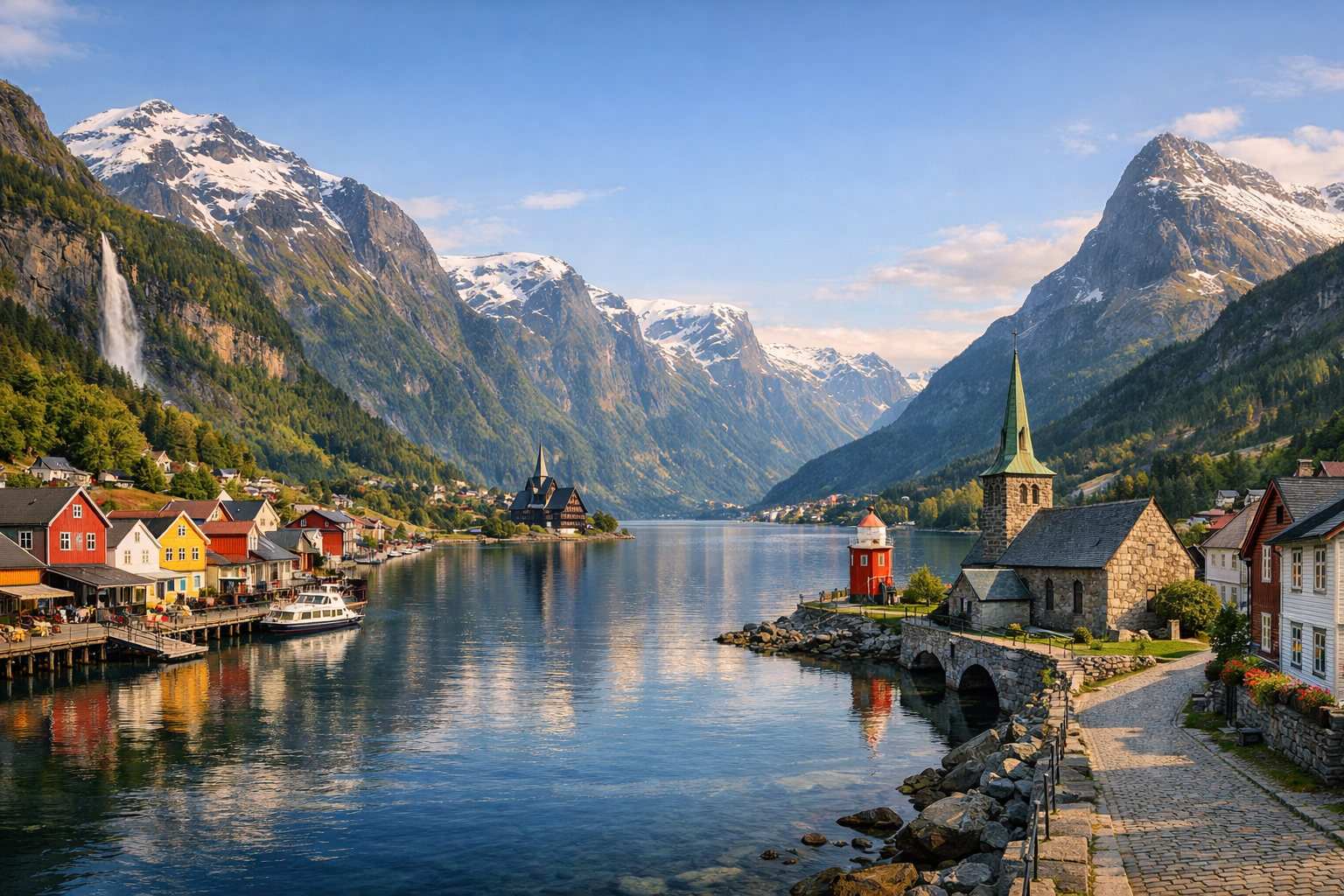
Norway sweeps you from Oslo’s stylish waterfront and Nordic cool to Bergen’s colorful harbor and gateway-to-the-fjords charm. Between them, dramatic mountains, deep blue waters, and storybook scenery make every mile feel unforgettable.

🧭 DAY-BY-DAY ITINERARY

Ready-made country and city routes with daily plans, sights, transport and accommodation. Buy PDF guides for independent travel.

🧭 DAY-BY-DAY ITINERARY


Day 1 — Oslo: Karl Johan, the Opera House, and Bjørvika

  • 🚶 The first day is best devoted to a gentle introduction to Oslo — a capital that manages to be at once sternly northern, maritime, modern, and unexpectedly cozy. Start with a walk along Karl Johans gate, the city’s main avenue, where classical facades, street musicians, cafés, and shop windows create the feeling of a lively but not overwhelming center. From here it feels natural to continue to the Bjørvika district — the city’s new showcase, built up by the water on the site of a former port area. The main highlight here is the Norwegian Opera House, like a block of ice slowly sliding into the fjord. You can walk up its sloping white roof: from the top there are beautiful views of the harbor, the Barcode district, and the glass facades of the new Oslo. Just a few minutes away rises the MUNCH museum, and even if you do not go inside on the first day, its tower already sets the mood for the area. This route works well after a flight: no rush, short walks between stops, plenty of opportunities to sit by the water, and a gradual way to fall into the rhythm of a country where space, light, and air are almost as important as museums and monuments.


Day 2 — Oslo: Vigeland Park and museum Oslo

  • 🚶 The morning of the second day is worth spending in Vigelandsparken — one of the most unusual sculpture parks in Europe, where art exists not in the format of “went in, looked around, left,” but is dissolved into the landscape, avenues, water, and the movement of people. This place makes a strong impression precisely because of its scale: hundreds of sculptures by Gustav Vigeland, from almost intimate scenes to the monumental Monolith, tell the story of human life without unnecessary pathos — about childhood, closeness, struggle, old age, tenderness, and stubbornness. After your walk, it makes sense to visit the nearby Vigeland Museum itself to see the workshop and understand how that unified artistic world is born from ideas, plaster, and labor. In the second half of the day, you can shift toward the waterfront and one of the city’s main museums — for example, the National Museum, where Norwegian art, design, and architecture come together especially well. The day turns out full but comfortable: park pauses alternate with museums, and the pace can easily be adjusted depending on the weather and your energy level.

Day 3 — Oslo → Bergen: scenic transfer and an evening at Bryggen

  • 🚆 Transfer: Oslo → Bergen by train on the Bergen Line — approximately 6 hr 30 min–7 hr. This is one of the most beautiful railway routes in Northern Europe, so it is better to plan your departure in the morning and treat the journey as part of the trip rather than as lost time.

  • 🚶 The trip between Oslo and Bergen is almost an attraction in its own right: the train leaves the rhythm of the capital behind and heads toward mountain plateaus, lakes, snowy stretches, and harsh, almost cinematic nature. After arriving in Bergen, it is wise not to overload the day with museums, but instead to go for a calm evening walk along the Vågen waterfront and through the Bryggen quarter. This is where Bergen reveals itself most vividly: the narrow, colorful wooden facades of the Hanseatic quarter stand so densely and so picturesquely that they seem like theater scenery, although in front of you is a real historic urban organism. In the evening, when the tourist flow thins out, Bryggen is especially beautiful: the wooden passageways grow darker, lanterns reflect in the harbor water, and the air smells of sea, rain, and old timber. It is the perfect time for an unhurried walk without a long program — simply to feel the city’s port character, shaped for centuries by trade, fish, northern winds, and constant contact with the sea.

Day 4 — Bergen: Fløyen, the old center, and Bergenhus Fortress

  • 🚶 This day is best started with Fløibanen — the famous funicular that climbs from the city center to Mount Fløyen in just a few minutes. The ascent is short but striking: roofs, the bay, masts, winding streets, and distant hills gradually come together into the very postcard image that makes so many people dream of Bergen. At the top, there is no need to plan a long hike; a leisurely walk around the viewpoints and forest trails is enough to feel how closely city and nature coexist in Norway. After descending, continue on foot through the old center to Bergenhus Festning — one of the oldest and best-preserved fortresses in the country. Here the city’s layered character is especially tangible: medieval history, royal past, defensive walls, towers, and open spaces by the water. Inside the complex, it is worth paying attention to Håkonshallen and Rosenkrantz Tower — these are not just old buildings, but a rare opportunity to literally walk through the stone history of Norway’s western coast. The day turns out very well balanced: a little height, a little panorama, a little history, and lots of beautiful urban texture.

Day 5 — Bergen: KODE, Troldhaugen, and a calm finale

  • 🚆 It is most convenient to get to the Troldhaugen museum estate from central Bergen by public transport with one transfer or by taxi; you should usually allow about 30–40 minutes each way depending on the service and waiting time.

  • 🚶 The final day works best when built around art and Bergen’s more intimate, lyrical side. In the morning, you can start with one of the KODE museums in the center — this museum complex is especially good because it lets you see not only Norwegian painting and design, but also feel the cultural scale of the city, which at first glance seems compact and provincial, but in reality is very rich in artistic life. Then it is worth heading to Troldhaugen — Edvard Grieg’s house museum. This place has a completely different mood from the busy waterfront: everything here rests on silence, greenery, water, and the sense of the composer’s personal presence. The estate stands above a lake, paths lead through the garden toward a carefully composed landscape, and the visit gives the rare feeling that you have looked not just into a museum, but into the private world of a person who heard music in nature. Ending the trip in this rhythm is especially successful: instead of racing after “one more box to tick,” it offers a calm conclusion in which Norway is remembered not only for its fjords and postcard views, but also for its culture, light, silence, and very careful attitude toward space.

Flight tickets

eSIM for travel

Buy PDF guide

Buy PDF guide — 10.71 USD

PDF — 10.71 USD