
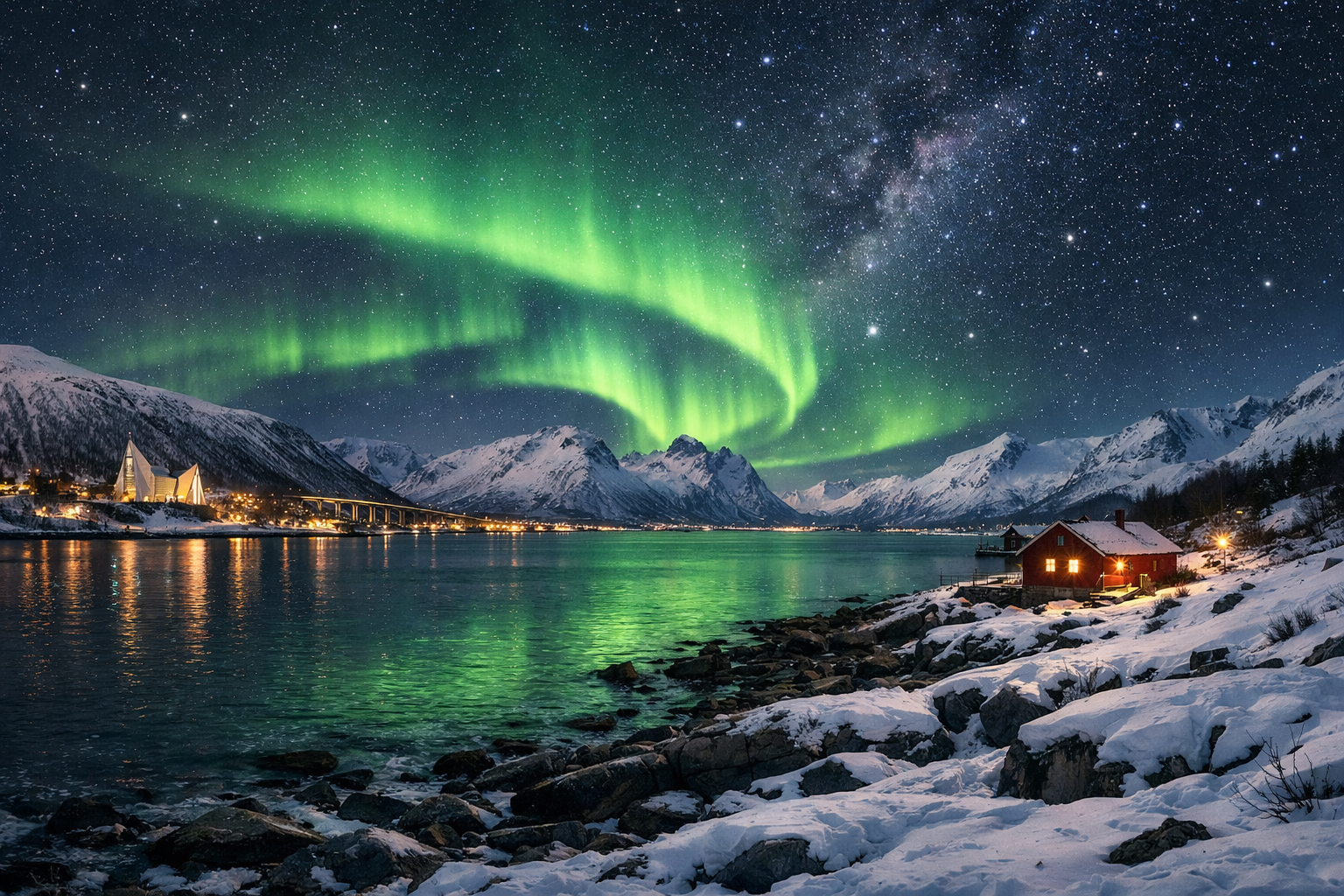
Day 1 — Tromsø: a gentle entry into the Arctic and the first evening of observation
✈️ After arriving in Tromsø, it’s best not to plan heroic activities: in winter, much here depends on cloud cover, wind, road conditions, and your adaptation to the cold, polar night, or the short daylight hours. The best base for the first nights is central Tromsø or the waterfront area, so you can get through the first evening without long transfers, check the cloud and aurora forecast, have a calm dinner, and head out on your first aurora “hunt” well rested. The city itself is beautiful and compact, but it is not ideal for observations because of streetlights, shop windows, cars, and reflected light from the snow, so the main idea of this trip is to use Tromsø as a convenient starting point and go closer to the coast and fjords for real darkness.
🚶 During the day, it’s worth taking an unhurried walk along the waterfront and central streets to feel the city’s northern rhythm: here, the sea, mountains, and winter light constantly change the mood of the space. Even a short walk around the harbor makes it clear why Tromsø is considered one of the strongest bases for Arctic outings: the city lies far to the north, yet remains lively, comfortable, and well developed for tourism. On the first day, it helps to keep the plan flexible: if after the journey all you want is quiet, limit yourself to a walk, a hot dinner, and an early rest before the evening outing.
🌌 It’s best to devote the first evening to a careful introduction to dark locations west of the city. The most sensible format is an organized northern-lights outing or a short self-guided route by taxi or rental car to less light-polluted stretches of coast, where there is an open horizon and less city glow. It is important to remember: the northern lights are a probabilistic natural phenomenon, not a show on a schedule. Even with high solar activity, cloud cover can completely block the sky, while with moderate activity you may see beautiful green arcs if the sky suddenly clears. Plan observation as a window of opportunity, not a guaranteed result.
🌙 The best season for such a route is roughly from late September to late March, and for a combination of deep twilight, winter scenery, snow, strong tourist infrastructure, and convenient evening outings, November, February, and March are especially good. If dark skies for stars and aurora photography are important to you, it is best to choose dates closer to the new moon or at least phases with a less bright Moon: a full Moon beautifully lights up the mountains and shore, but it noticeably brightens the snow and reduces the contrast of faint stars and delicate auroral structures. At the same time, even a bright Moon does not cancel the possibility of seeing a strong aurora — it only changes the visual character of the observation.