
Buy PDF guide

Buy PDF guide — 10.71 USD

PDF — 10.71 USD

LOWER SAXONY - East Frisian Islands

LOWER SAXONY - East Frisian Islands

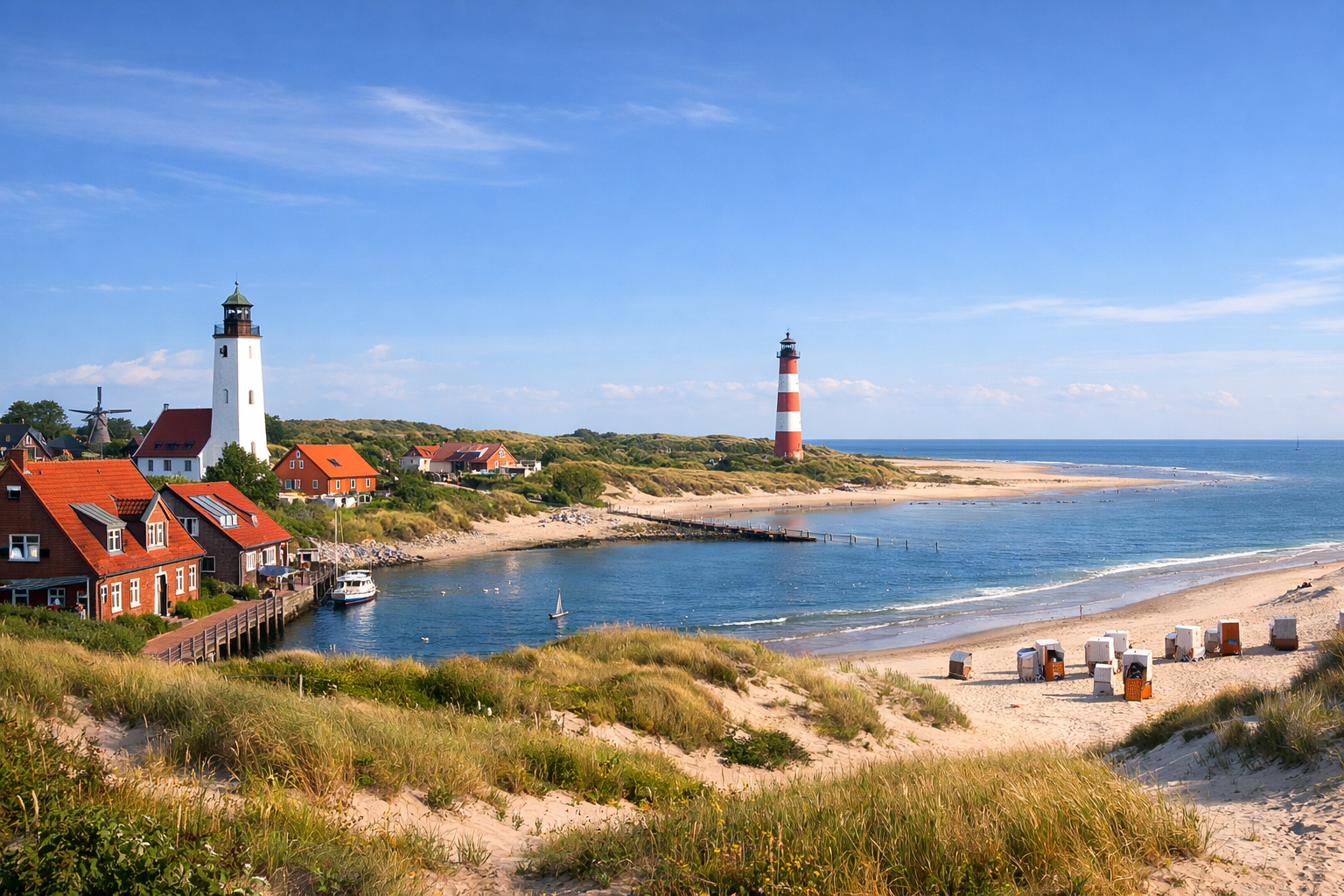
Drift across the East Frisian Islands, where ferries glide from Norddeich Mole to windswept shores, dune paths, and long sandy beaches. From lively Norderney to the quiet charm of Langeoog and the wide-open beauty of Borkum, Lower Saxony’s island world feels both refreshing and wonderfully remote.

🧭 DAY-BY-DAY ITINERARY

Ready-made country and city routes with daily plans, sights, transport and accommodation. Buy PDF guides for independent travel.

🧭 DAY-BY-DAY ITINERARY


Day 1 — Norderney: first introduction to the island, Weststrand and Kurplatz

  • 🚆 Transfer: mainland → Norderney. The most convenient route logic is to take the train to Norddeich Mole, then transfer to the ferry to Norderney. The regular ferry takes about 50–60 minutes, and the fast electric catamaran on the Norddeich–Norderney route can get you there in under 30 minutes in season; after arrival, allow another 10–20 minutes for a relaxed disembarkation, luggage, and the walk to your hotel. This is a realistic and not tiring start for a five-day island tour.

  • 🚶 Norderney is one of the most elegant yet lively East Frisian Islands: you can feel the legacy of an old German seaside resort here, but without a frozen museum atmosphere. Start your day in the Kurplatz and Conversationshaus area — this is where the island’s spa-resort history is felt especially well, where sea air, an unhurried rhythm, and a wide open sky become part of the architecture and everyday life. Broad promenade lines, light-colored facades, the North Sea wind, and the constant movement of clouds create the feeling that you’ve arrived in a place where people came for centuries not just to relax, but quite literally to “breathe better.” Then head to Weststrand — Norderney’s western beach. This is not just a strip of sand by the water, but a whole stage for the North Sea landscape: a long shoreline, even light, a cool palette of dunes and sea, wooden boardwalks, beach baskets, and that rare kind of beauty built not on exoticism, but on space, wind, and the freedom of the horizon. It’s best not to overload the first day here: after the transfer, leave time for rest, a late lunch, a walk at a comfortable pace, and an early evening by the sea.


Day 2 — Norderney: dunes, Cape lighthouse, and the Wadden Sea National Park

  • 🚶 The second day on Norderney is best devoted to its natural side — the one many people fall in love with even more than the town promenade. In the morning, head toward the dune landscapes and Cape Norderney lighthouse. The island’s inner relief opens up especially beautifully here: sandy hills, grasses, protected paths, and the feeling that each turn reveals a new version of the same northern landscape. Unlike the dramatic rocky coasts of southern Europe, the beauty here is quiet and very mature: it does not overwhelm you, but gradually draws you into a state of rare inner calm. The road to the lighthouse and walks in the surrounding area are well suited for 3–5 hours of an unhurried day with pauses for coffee, photos, and simply stopping for the view.

  • 🏛️ In the second half of the day, it makes sense to visit Nationalpark-Haus Norderney and/or Museum Nordseeheilbad Norderney. This helps you see the island more deeply: not only as a beach resort, but also as part of the vast ecosystem of the Lower Saxony Wadden Sea, included in a UNESCO-protected natural area. It becomes especially clear here that the East Frisian Islands are not just a set of resort points, but a delicate boundary between land, tides, bird migrations, dunes, and human life by the sea. It’s best to leave the evening free: dinner in the center, a walk along the promenade, and an early rest before the inter-island transfer.

Day 3 — Langeoog: a car-free island, Inselbahn, village, and dunes

  • 🚆 Transfer: Norderney → mainland → Langeoog. There is usually no direct regular inter-island ferry between these islands, so the realistic route goes via the mainland: ferry Norderney → Norddeich, then train/car to Bensersiel, then ferry to Langeoog and the island railway from the harbor to the island’s central station. Taking connections, waiting times, and a relaxed pace into account, it is reasonable to allow about 4.5–6 hours for this transfer, so the day is best planned without overload.

  • 🚶 Langeoog greets you with a completely different character. If Norderney feels like a resort island with a slightly more refined social atmosphere, Langeoog gives the impression of a gentle, green, almost intimate island where silence is not a bonus, but the basis of the whole atmosphere. A car-free island, arrival via the Inselbahn already becomes a beautiful ritual in itself: the ride from the harbor to the center seems to switch the traveler from mainland mode into island mode. After check-in, devote the rest of the day to the village, the main streets, and a walk out toward the dunes. Everything here encourages slow movement — bicycles, walking routes, low-rise buildings, pale sand, the smell of sea grass. Langeoog does not try to impress with scale; its strength lies in harmony. Even a short walk to the viewpoints or toward the beach quickly gives a sense of complete reset. In the evening, it is especially pleasant to walk to the water or simply sit in the quiet center, where what you hear is not traffic, but the wind.

Day 4 — Langeoog: Wasserturm, Seemannshus, beach, and a long walk into nature

  • 🚶 Today you can experience Langeoog in its best rhythm — unhurried, yet full. Start with the island’s symbol, the Wasserturm water tower, which has long become not just an engineering structure, but a visual marker of the island skyline. Then head to Heimatmuseum Seemannshus — an old fisherman’s house where the history of Langeoog unfolds through everyday life, seafaring, family traditions, and the real materiality of former island life. This is a very successful cultural stop in the middle of a nature route: after wind, sand, and open space, it is especially interesting to see how people lived for centuries in this fragile environment between sea and land.

  • 🚶 After the museum, devote a few hours to the beach and a nature walk. Langeoog’s beaches are wide, pale, and surprisingly photogenic precisely because of their restraint: there is no visual noise here, but there is a horizon, lines of sand, low dunes, and that special northern light that makes even a simple walk feel almost meditative. If the weather allows, it makes sense to take a longer route toward the quieter natural areas, stopping to rest along the way. On an island like this, what matters is not racing between points, but the ability to give yourself time for space. A good plan for this day is: 1–2 short cultural sights, then 4–5 hours of open nature, beach, reading, coffee, and rest.

Day 5 — Borkum: open-sea character, old lighthouse, Dykhus museum, and a finale by the sea

  • 🚆 Transfer: Langeoog → mainland → Borkum. This is the longest logistics day of the tour. The realistic route again goes via the mainland: ferry Langeoog → Bensersiel, then a land segment along the East Frisian coast to Eemshaven or Emden depending on the selected sailing, then ferry to Borkum. For the whole journey with connections and waiting times, it is reasonable to allow 6–8 hours. Therefore, this day should be planned as an overview-and-finale day, without too many sights.

  • 🚶 Borkum feels different from the previous two islands. It lies farther out at sea and is perceived as more “truly open North Sea”: here the sense of space is stronger, the open-sea character more pronounced, and the overall atmosphere feels slightly harsher and freer. If your arrival time allows, walk to the old lighthouse area Alter Leuchtturm and to Heimatmuseum Dykhus. The museum is especially good because it shows the island not as a postcard, but as a place of real life, struggle against wind, water, and isolation; the famous whale skeleton inside makes the impression almost theatrical. Then leave time for a final walk by the sea: Borkum knows how to put a beautiful full stop to a journey. Its broad beaches, wind, deeper marine perspective, and sense of the edge of land make the finale not glossy, but powerful and memorable. If you are flying out or leaving the next day, it is best to keep this evening calm: a good dinner, an early night, and a slow farewell to the islands.

Flight tickets

eSIM for travel

Buy PDF guide

Buy PDF guide — 10.71 USD

PDF — 10.71 USD