
Buy PDF guide

Buy PDF guide — 21.42 USD

PDF — 21.42 USD

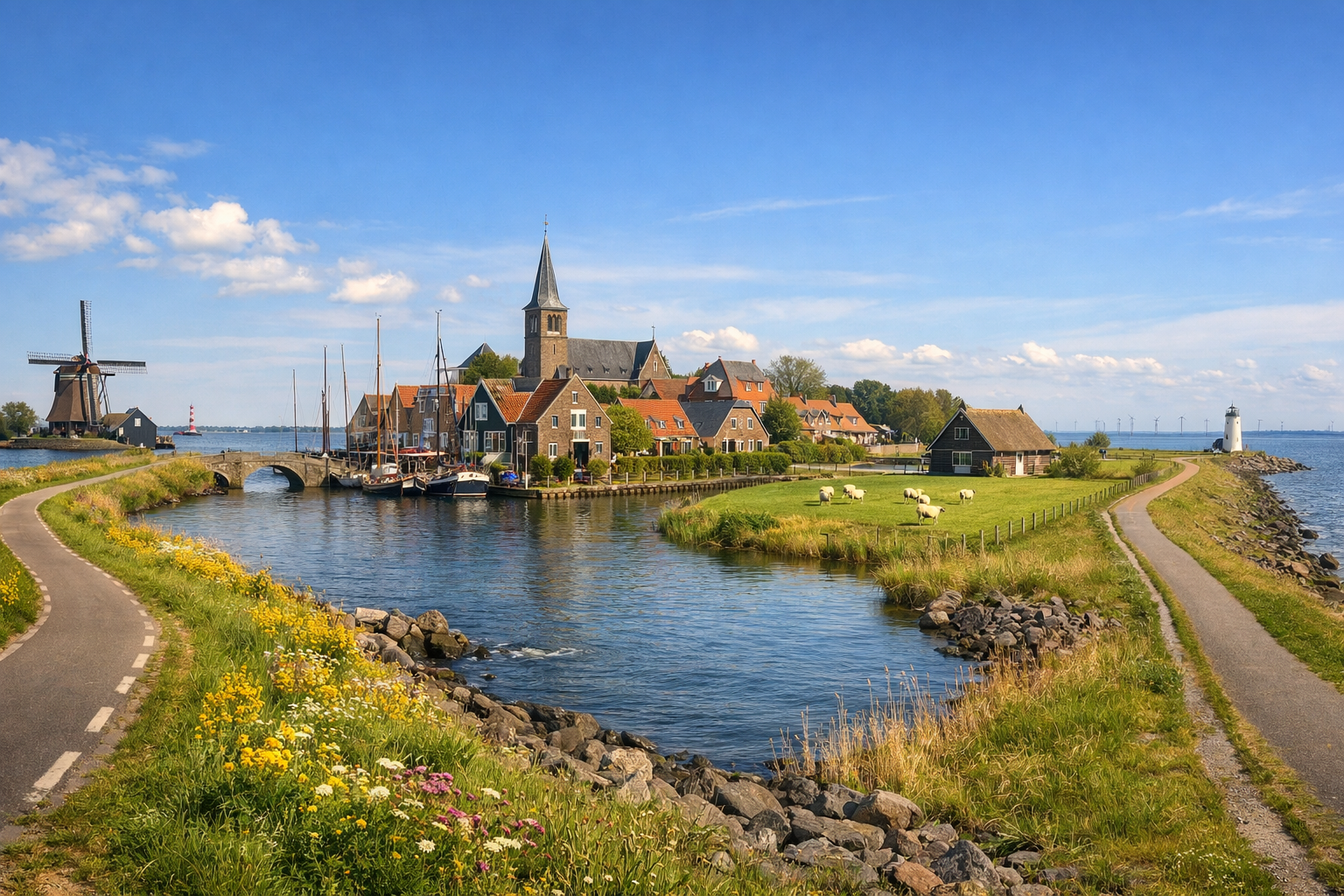
The Netherlands. Cycling tour along the Zuiderzeeroute: a circular journey around Lake IJsselmeer and the former Zuiderzee bay. Difficulty: easy or moderate. Season: April - September.

The Netherlands. Cycling tour along the Zuiderzeeroute: a circular journey around Lake IJsselmeer and the former Zuiderzee bay. Difficulty: easy or moderate. Season: April - September.

Discover the Netherlands at an easy, unhurried pace on the Zuiderzeeroute, a circular ride around Lake IJsselmeer and the shores of the former Zuiderzee. From Amsterdam through historic harbor towns like Hoorn, Enkhuizen, Kampen and Harderwijk, this April-to-September journey blends wide skies, waterside paths and classic Dutch scenery.

🚲 ROUTE BY DAY

Ready-made country and city routes with daily plans, sights, transport and accommodation. Buy PDF guides for independent travel.

🚲 ROUTE BY DAY


Day 1 — Amsterdam → Monnickendam → Volendam

  • 🚲 Start from Amsterdam and ease into the ride through the northern part of the city toward rural Waterland. Finish in Volendam. Approximately 32–38 km, 2.5–3.5 hours of actual riding time, with only a symbolic elevation gain of about 20–40 m. Surface: almost entirely asphalt cycle paths, dikes, quiet local roads, and short urban sections. Difficulty: easy. Main stops along the way: the village of Broek in Waterland with its canals and wooden houses, Monnickendam harbor, and the Volendam waterfront. It is convenient to refill water and buy food in Amsterdam-Noord, Monnickendam, and at the finish in Volendam; cafés and supermarkets appear regularly, but on the dikes between villages it is better to carry at least one full bottle. Staying overnight in Volendam or near the port is the most logical option. Road nuances: leaving Amsterdam requires attention because of dense urban bike traffic, but after that the route becomes very calm; on open polders, a headwind can noticeably slow you down even on a short day. The day is realistic for an average cycle tourist because it is a short and safe opening stage without hard transfers, ideal for getting used to the Dutch rhythm and adjusting the bike.


Day 2 — Volendam → Marken → Hoorn

  • 🚲 In the morning, a short ride from Volendam to Marken along dikes and separate cycle paths, then continue around Markermeer toward Hoorn. Approximately 48–58 km, 3.5–4.5 hours of actual riding time, elevation gain about 30–60 m. Surface: quality asphalt, waterfronts, protected bike lanes, and quiet rural roads. Difficulty: easy/moderate — not because of the terrain, but because of the distance and wind. Main stops: the Marken peninsula with its wooden buildings, Edam as a convenient coffee break, and the historic center of Hoorn. Water and food are easy to replenish in Volendam, Marken, Edam, and before entering Hoorn. It is best to stay overnight in central Hoorn near the station or the harbor. Road nuances: if desired, you can shorten the early section with the Volendam–Marken ferry, which takes bicycles for an extra fee, but for a classic cycle tour it is nicer to ride under your own power; the open dikes have almost no shade, so in hot weather it is better to start early. The day is realistic because the route is very flat, the infrastructure is excellent, and larger towns come at convenient intervals.

Day 3 — Hoorn → Medemblik → Enkhuizen

  • 🚲 One of the most beautiful historic days through the old ports of West Friesland. Start in Hoorn, finish in Enkhuizen. Approximately 42–50 km, 3–4 hours of actual riding time, minimal elevation gain — about 20–50 m. Surface mainly consists of asphalt cycle paths and rural roads, with some cobblestones in historic centers. Difficulty: easy. Main stops: Medemblik harbor, the section along the water by IJsselmeer, and an evening walk through old Enkhuizen. There are almost no problems with water and food: Hoorn, Medemblik, and Enkhuizen offer a full range of shops, bakeries, and terraces; between them it is useful to carry a quick snack because the intermediate villages are compact. It is better to stay overnight in Enkhuizen in the old town or closer to the station. Road nuances: in the centers of old towns, narrow streets and pedestrians are possible, so it is sensible to reduce speed there; in windy weather the final coastal stretch to Enkhuizen may feel longer than it looks on the map. The day is realistic for an ordinary traveler because the distance is moderate, there are many places for breaks, and the whole route runs through very bike-friendly terrain.

Day 4 — Enkhuizen: city loop and Zuiderzeemuseum

  • 🚲 A short recovery day without changing base: start and finish in Enkhuizen. Approximately 22–30 km, 1.5–2.5 hours of actual riding time, with almost zero elevation gain. Surface: urban asphalt, cycle paths along the ramparts, short rides out to nearby polders and the harbor. Difficulty: easy. Main stops: the Zuiderzeemuseum, the port area, the city fortifications, and the old gate. Water and food are easy to get in the city center; at the VVV in Enkhuizen there is tourist information, luggage storage during opening hours, and even the possibility to charge an e-bike near the entrance. Overnight stay is in the same place, in Enkhuizen. Road nuances: this day is intentionally short so you can visit the museum calmly and not rush; the museum ferry runs from the area behind the VVV opposite the station, so you can safely leave the bike at a city parking area or hotel storage and continue on foot. The day is realistic because it gives the body a rest before the long crossing over the water and does not overload the program.

Day 5 — Enkhuizen → Lelystad → Lemmer

  • 🚲 A long but very logical stage via Houtribdijk and the eastern part of Markermeer/IJsselmeer. Start from Enkhuizen, finish in Lemmer. Approximately 60–68 km, 4.5–5.5 hours of actual riding time, elevation gain 20–60 m. Surface mainly consists of asphalt cycle paths, dikes, and quiet roads in Flevoland. Difficulty: moderate. Main stops: the Houtribdijk dike with wide water panoramas, the Lelystad waterfront, and the final approach to Lemmer with Frisian canals. It is best to refill water and food before leaving Enkhuizen and in Lelystad; between major points the open sections are long, and in windy weather they require more water. The best overnight stop is in Lemmer, where it is easy to stroll through the center and have dinner by the water. Road nuances: the route is almost completely flat, but the wind on the long dike can sometimes make the day noticeably harder than the numbers suggest; there is little shade, so in the hot season it is worth carrying 2 bottles and a snack. For an ordinary cycle tourist, the day is realistic precisely because there is almost no relief, the surface is good, and if necessary you can take a long break in Lelystad.

Day 6 — Lemmer → Urk → Kampen

  • 🚲 Transfer from Friesland to Overijssel through the former island of Urk and wide polders. Start in Lemmer, finish in Kampen. Approximately 52–62 km, 4–5 hours of actual riding time, elevation gain 20–50 m. Surface: asphalt, long dike cycle paths, and separate sections on quiet rural roads. Difficulty: moderate. Main stops: central Lemmer, Urk harbor, and historic Kampen on the IJssel. Water and food are easy to pick up in Lemmer, Urk, and then again in Kampen; on the polders after Urk, services are less frequent, so it is better to plan lunch in Urk itself. Overnight stay: the old center of Kampen or the area near the station. Road nuances: the open sections between Urk and Kampen are beautiful but wind-dependent; after rain, it feels colder by the water than in town. The day is realistic thanks to the flat profile and the clear logic of the stage: a major stop in Urk divides the distance into two convenient halves.

Day 7 — Kampen → Elburg → Harderwijk

  • 🚲 A very pleasant day along the shores and through old towns. Start from Kampen, finish in Harderwijk. Approximately 45–55 km, 3.5–4.5 hours of actual riding time, elevation gain 20–60 m. Surface: asphalt cycle paths, waterfronts, and in places short stretches of old paving in town centers. Difficulty: easy/moderate. Main stops: fortified Elburg, sections with views of the Veluwerandmeren, and the old center of Harderwijk. Food and water are easy to get in Kampen, Elburg, and at the finish; in summer there may be beach pavilions and kiosks along the coastal sections, but it is better not to rely on them as the only source. It is best to stay overnight in Harderwijk near the old port or the station. Road nuances: there are many tourists in historic centers, especially on weekends; in places you have to ride more slowly. The day is realistic for an ordinary traveler because after the longer stages it offers comfortable mileage and many cultural stops.

Day 8 — Harderwijk → Nijkerkernauw → Spakenburg

  • 🚲 A transition along the southern shores of the former Zuiderzee through wetland landscapes and yacht marinas. Start in Harderwijk, finish in Spakenburg. Approximately 38–48 km, 3–4 hours of actual riding time, elevation gain about 20–50 m. Surface: asphalt cycle paths, quiet roads, and some separate waterfront sections. Difficulty: easy. Main stops: coastal views at Harderwijkse/Veluwerandmeren, the Nijkerkernauw area, and old fishing Spakenburg. Water and food are easy to get in Harderwijk and Nijkerk; in the holiday-home and marina areas between them, services can be seasonal. Overnight stay: in Spakenburg or near Bunschoten. Road nuances: this is a calm day, but because of the wind by the water and the lack of shade in summer, it is better not to set out at noon; around the marinas there is a lot of leisure traffic. The day is realistic because the distance is short, the surface is good, and there is time left for rest by the water.

Day 9 — Spakenburg → Huizen → Muiden

  • 🚲 One of the coziest days on the southern arc of the route. Start in Spakenburg, finish in Muiden. Approximately 40–50 km, 3–4 hours of actual riding time, elevation gain 25–60 m. Surface: quality asphalt, urban cycle paths, quiet coastal roads, and short park sections. Difficulty: easy/moderate. Main stops: Huizen harbor, panoramas of Gooimeer, and Muiderslot Castle. Water and food are easy to replenish in Huizen, Naarden, or Muiden; this is already a densely populated area, so there are many services. Staying overnight in Muiden is the logical choice so you can return to Amsterdam in the morning without rushing. Road nuances: the closer you get to Amsterdam, the more local bike traffic there is; near Muiderslot and in the center of Muiden there can be many pedestrians, so it is better to ride calmly and not leave the bicycle without a good lock. The day is realistic for an ordinary tourist because the route runs through an inhabited and safe area with frequent places to rest.

Day 10 — Muiden → Amsterdam

  • 🚲 The final approach into the capital along convenient cycling corridors through the eastern districts and the green edges of the city. Start in Muiden, finish in Amsterdam. Approximately 20–28 km, 1.5–2.5 hours of actual riding time, minimal elevation gain — about 20–40 m. Surface: separate cycle paths, urban asphalt, park and waterfront sections. Difficulty: easy. Main stops: if desired, Muiderslot in the morning, Diemerpark, Oosterdok, or the center of Amsterdam as the ceremonial finish. Water and food are available almost constantly, but it is better not to enter the city at peak time so you can navigate calmly. Overnight stay: in Amsterdam, if you plan to spend another day in the city, or near the station/eastern part for convenient departure. Road nuances: the city bike lanes are very good, but busy; you need to hold your line, avoid sudden stops, and signal maneuvers in advance. The day is realistic because it is a short final stage that leaves time to return a rental bike, pack luggage, and rest.

Flight tickets

eSIM for travel

Buy PDF guide

Buy PDF guide — 21.42 USD

PDF — 21.42 USD