
Buy PDF guide

Buy PDF guide — 6.43 USD

PDF — 6.43 USD

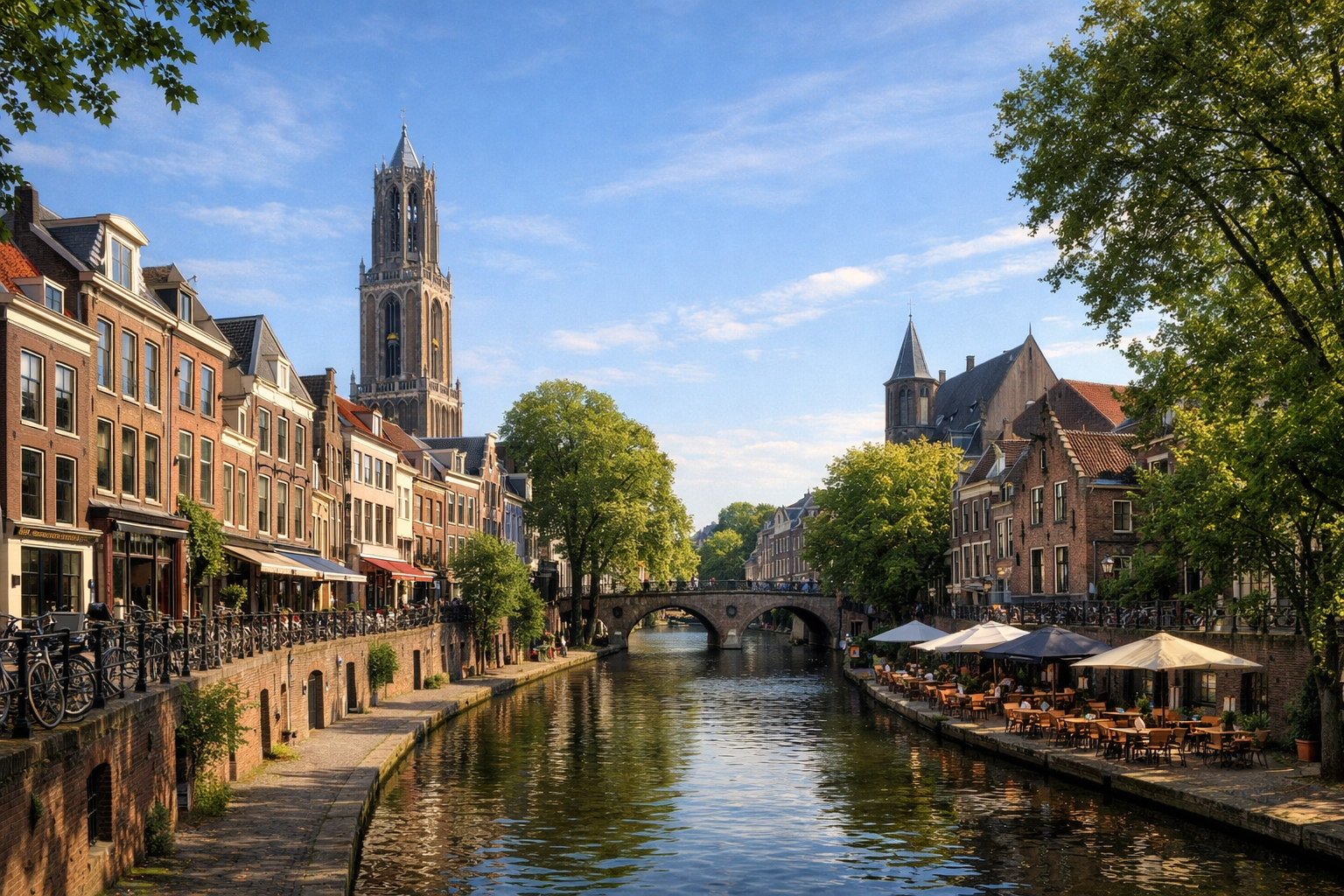
Netherlands, Utrecht. A calmer alternative to Amsterdam with canals, a historic center, cycling routes, and cafés by the water.

Netherlands, Utrecht. A calmer alternative to Amsterdam with canals, a historic center, cycling routes, and cafés by the water.

Utrecht offers all the charm of the Netherlands in a calmer, more relaxed setting than Amsterdam. Spend a few days wandering its historic center, cycling along quiet canals, and settling into waterside cafés as the city moves at an easy, inviting pace.

🧭 DAY-BY-DAY ITINERARY

Ready-made country and city routes with daily plans, sights, transport and accommodation. Buy PDF guides for independent travel.

🧭 DAY-BY-DAY ITINERARY


Day 1 — Historic Utrecht center: Domplein, Oudegracht, and an evening by the water

  • 🚆 If you arrive by train, start your route at Utrecht Centraal — the country’s largest railway hub and a very convenient gateway into the city. From the station to the old center is about a 10–15 minute walk, so in a budget-friendly format you usually won’t need a taxi here. After check-in, head out light toward Domplein: the route goes through lively but not exhausting city streets, where the modern shopping area quickly gives way to medieval Utrecht.

  • 🚶 Domplein and the area around Dom Tower are the heart of old Utrecht, the place where you can most clearly feel why the city is considered a calmer and more “human-scale” alternative to Amsterdam. There isn’t the same tourist overload here, but there is a strong historic atmosphere: old facades, stone squares, church silhouettes, and a city rhythm that seems to invite you not to rush, but to slow down. The main landmark is the Dom Tower, Utrecht’s most recognizable symbol. Even if you don’t go up, the quarter around the tower is perfect for a first introduction: you can walk across Domplein, look at the historic buildings, peek into the quiet lanes of the university quarter, and feel how history here is literally built into everyday urban life.

  • 💶 To save money on the first day, it makes sense to choose a free program with one paid highlight if you want. If you’d like a panorama and a symbolic introduction to the city, you can buy a ticket to climb the Dom Tower. It’s not the cheapest attraction, so in a truly budget version of the route it remains an option rather than a must. A cheaper alternative is simply to spend more time in the historic center and on the quays, where the best impressions often cost nothing at all.

  • 🚶 Then head down to Oudegracht — the famous old canal that creates that distinctive “Utrecht” character. Unlike Amsterdam, the two-level quays here are especially striking, with former warehouse vaults and steps leading right down to the water. Today, these old cellars and the canal edge are home to cafés, small bars, local spots, and terraces. A walk along Oudegracht is not just moving from one point to another, but a full attraction in itself: bridges, reflections of old houses in the water, boats, bicycles, the quiet of side streets, and the feeling that the city lives beside the canal rather than merely “showing” it to tourists.

  • 🍽️ A budget lunch or early dinner is best planned as a simple lunch, soup, sandwich, pastry, or daytime menu around the center and Neude. A rough budget food guide: a quick breakfast from a bakery or supermarket — about €4–8, an inexpensive lunch — around €8–15, a simple dinner without alcohol — about €12–20. To avoid inflating your budget, it’s smart to buy water at a supermarket, combine one café visit a day with snacks, and not aim to dine at the most “Instagrammable” canal-side places at peak time.

  • 🌆 Toward evening, it’s especially pleasant to walk part of Oudegracht again, but this time without the daytime bustle: warm light, reflections in the water, and the soft murmur of terrace life make Utrecht feel wonderfully cozy. If you still have energy, you can add a short budget walk around Neude and the surrounding streets — a good way to feel the city as lively, young, and student-oriented. It’s best to end the day calmly: tomorrow brings a museum-and-walk program, and it’s exactly this relaxed pace that makes the three-day format realistic.


Day 2 — Museum Utrecht and quiet green quarters: Centraal Museum, the museum quarter, and Sonnenborgh

  • 🚶 The second day is best devoted to a compact museum route that doesn’t require expensive transfers and works well on foot. Start with Museumkwartier — one of the most pleasant parts of the center, where old streets, former monastery buildings, small squares, and canals create a calmer, almost intimate atmosphere. It’s easy to combine culture and rest here: there are no exhausting walks between points, and after almost every museum you can pause in a small square, by the water, or at an inexpensive café.

  • 🏛️ Centraal Museum is one of the strongest yet most accessible museums for a first introduction to Utrecht. It is housed in a former medieval monastery, and that alone gives the visit a special character: inside, you feel not only the logic of the exhibitions, but also the architectural memory of the place. The collections relate to art, the history of Utrecht, design, and local culture, so the museum works well as “context”: after it, Utrecht starts to feel not just like a pretty canal city, but like an important cultural center with its own visual tradition. On a budget trip, it makes sense to choose one main museum for the day, and Centraal Museum is one of the best candidates.

  • 🚶 After the museum, don’t rush. The area around Agnietenstraat and Lange Nieuwstraat is excellent for a leisurely walk. This is Utrecht without unnecessary theatrics: quiet facades, neat windows, bicycles by the walls, small courtyards, and the feeling of a city where the historic environment is not frozen, but still alive. On the way, you can make an outside stop at Universiteitsmuseum Utrecht or choose it as a more family-friendly and science-oriented alternative if you want less classical art and more interactivity.

  • 🌿 Next, head to Sonnenborgh — a museum and historic observatory. It’s a great stop for those who want to see not only postcard views of canals in Utrecht, but another layer of the city: scientific, observant, and slightly romantic. The site is located in old fortifications, and the combination of greenery, old walls, and an astronomical theme makes it especially memorable. Even if you don’t go inside, the walk there is already pleasant; if you do visit, the day gains a beautiful contrast between art, history, and science.

  • 🍽️ For budget dining today, the format “one paid museum + economical food” works especially well. Grab breakfast at a supermarket or bakery, choose soup, salad, a sandwich, or an inexpensive Asian/Middle Eastern place in the center for lunch, and in the evening you can have a calm dinner by the water without necessarily sitting on the most expensive terraces. A realistic food budget for the day with a frugal approach is about €18–35 per person.

  • 🌙 If you still have time and energy, end the day with another canal walk or a short visit to an area with a more local feel — without chasing the number of places. In Utrecht, one rule works especially well: it’s better to see less, but allow yourself to sit by the water, walk through the evening streets, and feel the city in its natural rhythm. That is exactly what distinguishes a successful relaxed trip from a “whirlwind sightseeing dash.”

Day 3 — Cycling Utrecht: park, Rietveld Schröder House, and a final canal walk

  • 🚲 The third day is best devoted to the one thing without which the Netherlands doesn’t feel complete — the bicycle. In a budget version, you don’t have to rent one for all the days: it’s more economical to rent a bike only for one full day, if the weather allows and you feel confident in city traffic. Utrecht is very well suited to this format: distances are moderate, the terrain is generally convenient, and cycling culture is a natural part of urban life here. Before setting out, be sure to check the forecast, the condition of the road surface after rain, and any temporary restrictions on streets or near sights.

  • 🌳 Start the morning with a leisurely route through calmer neighborhoods toward Wilhelminapark or through the green stretches of the old city ramparts and park areas around the center. This gives a completely different impression of the city: not the tourist facade, but a residential, cultured, morning Utrecht, where people cycle to work, drink coffee on the go, walk their dogs, and quietly ride along the water and trees. If you don’t want to rent a bicycle, you can do this day partly on foot and partly by bus.

  • 🏠 The day’s main architectural highlight is the Rietveld Schröder House, one of the best-known modernist houses in the Netherlands. It lies east of the center, near the Wilhelminapark area, and fits best into a cycling or bus day. The house looks like a manifesto from another era: light planes, graphic lines, carefully considered geometry, and the feeling that the space has been assembled like an intellectual construction. It is a strong contrast to the medieval center, and that is exactly why the visit works so well on a short route: in three days, you see Utrecht both as an old canal city and as a place of modern architectural thought.

  • 💶 Important: a visit to the Rietveld Schröder House is usually planned in advance, because entry is organized by tickets and time slots. If your budget is very tight, you can limit yourself to seeing the exterior and walking in the park, and spend the money you save on a canal boat trip or a more comfortable dinner. But if you want one “special” paid attraction outside the classic center, this house is an excellent choice.

  • 🛶 In the second half of the day, return to the center and, if your budget allows, add a short canal boat ride. It’s not essential, but it’s a very striking finale to the trip: from the water, Utrecht opens up differently, especially its old quays, bridges, vaulted cellars, and the gentle rhythm of life by the water. If you want to save as much as possible, replace the cruise with a long walk along Oudegracht and the side canals — visually, it’s still a very rich experience.

  • 🎒 End the trip without rushing: allow time to return the bicycle, pack your things, grab a quick snack, and make your way to Utrecht Centraal. For train departure, it’s sensible to be at the station 15–20 minutes in advance, especially if you’re buying a ticket from a machine for the first time. Overall, a three-day Utrecht itinerary turns out very well balanced: few tiring transfers, plenty of walking and cycling segments, clear costs, and the feeling that you truly lived the city rather than just ticking off points on a map.

Flight tickets

eSIM for travel

Buy PDF guide

Buy PDF guide — 6.43 USD

PDF — 6.43 USD