
Buy PDF guide

Buy PDF guide — 6.43 USD

PDF — 6.43 USD

Museum Toronto

Museum Toronto

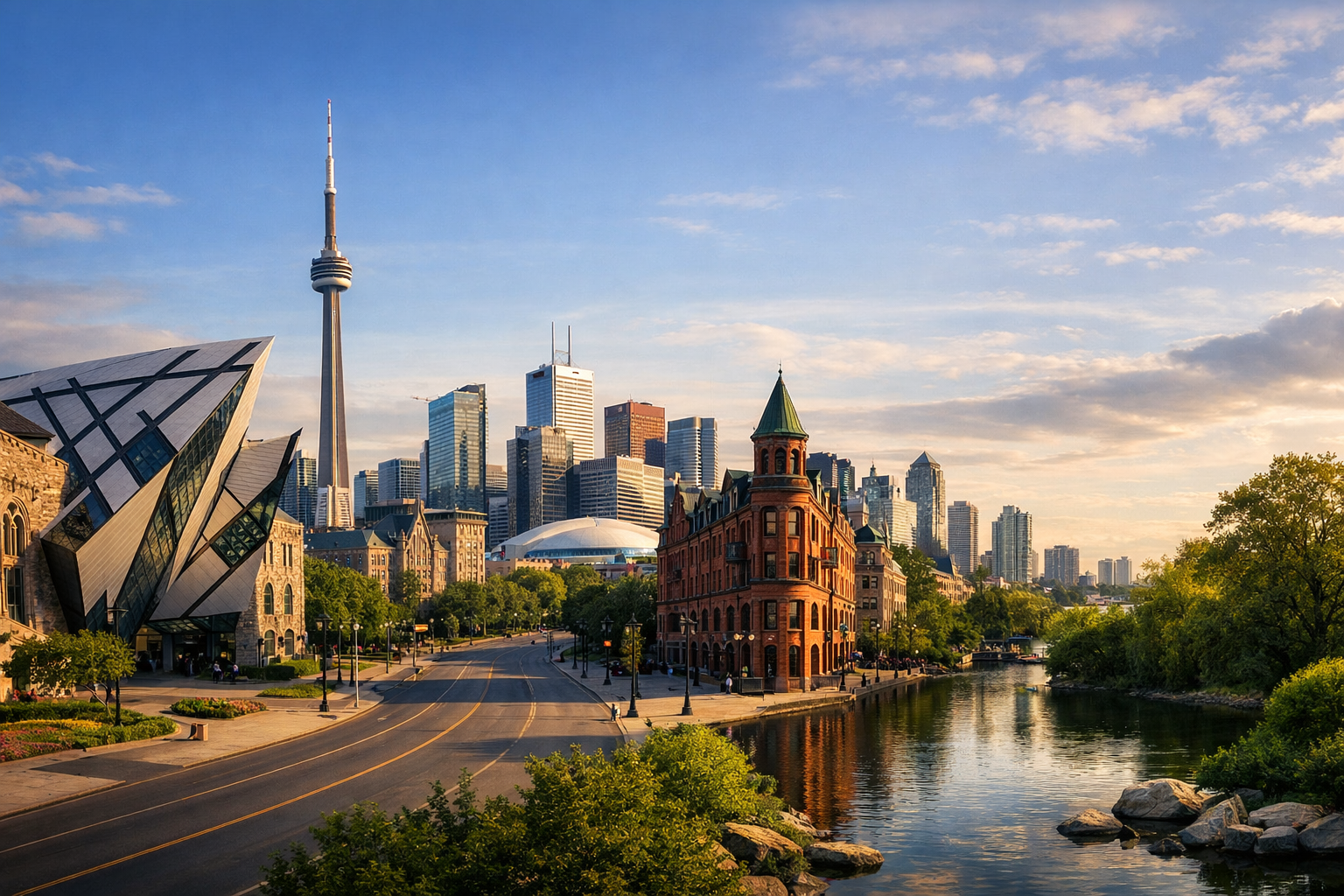
Museum Toronto blends grand institutions with leafy streets and elegant city charm. Wander from Yorkville and Queen’s Park past The Grange into Downtown West, where art, history, and everyday Toronto energy flow together.

🧭 DAY-BY-DAY ROUTE

Ready-made country and city routes with daily plans, sights, transport and accommodation. Buy PDF guides for independent travel.

🧭 DAY-BY-DAY ROUTE


Day 1 — Yorkville, Royal Ontario Museum, and the Queen’s Park cultural corridor

  • 🚶 It’s best to devote the first day to Toronto’s most “museum-like” heart — the Yorkville district and the axis along Queen’s Park. If you arrive in the morning at Pearson Airport, the most convenient option is UP Express to Union Station, then the TTC subway to Museum or St. George: in total, including transfers, it usually takes about 45–60 minutes to reach the museum district, and outside rush hour it is often even faster than going by car. After check-in, leave your bags and start the route without rushing: this area really suits a slow pace, when shop windows, university facades, and museum architecture come together into a complete first impression of the city.

  • 🏛️ The main point of the day is the Royal Ontario Museum, 100 Queen’s Park, Toronto, ON M5S 2C6. This is one of those museums where you shouldn’t try to “see everything”: it’s better to set aside 2.5–3.5 hours and choose a few strong directions — natural history, world cultures, ancient civilizations, or major temporary exhibitions. The building itself works as a visual manifesto of modern Toronto: the historic mass of the museum and the sharp geometry of the Michael Lee-Chin Crystal create a very recognizable urban image. After the intense galleries, take a break for coffee or a short rest at Queen’s Park — the park is literally next door, and it’s the right pause before continuing the day.

  • 👞 After ROM, it makes sense to move on to two more compact but very distinctive nearby museums. First, the Bata Shoe Museum, 327 Bloor Street West, Toronto, ON M5S 1W7: a surprisingly engaging place even for those who are usually indifferent to fashion. Here, shoes become a story about status, craftsmanship, culture, technology, and human habits. Then — the Gardiner Museum, 111 Queen’s Park, Toronto, ON M5S 2C7. This is a more intimate experience: ceramics here are read not as a “decorative add-on,” but as a full language of form, material, and history. The walks between these three museums are short — about 5–12 minutes on foot — so the day remains realistic without transport overload.

  • 🌆 It’s best to end the evening in Yorkville: here Toronto becomes more elegant, refined, and relaxed. Walk along Bloor Street and the district’s smaller streets, where expensive boutiques stand next to quiet inner corners, terraces, and hotels with beautiful lobbies. If after the museums you want not another stop but simply atmosphere, this is the ideal area for a slow dinner and a short evening walk. On the first day, it’s important not to overload yourself: even with an early arrival, it makes sense to leave 1–1.5 hours for rest so that the second day doesn’t feel too packed.


Day 2 — AGO, Grange Park, and the historic-artistic downtown center

  • 🚶 Build the second day around the Art Gallery of Ontario — this is already a different cultural rhythm, not encyclopedic like ROM, but more artistic and spatial. From Yorkville, it’s convenient to get here by subway and a short streetcar/walk segment in about 20–30 minutes, or by taxi in 15–25 minutes depending on traffic. Don’t start too early: after the first busy museum day, it’s better to allow for a calm breakfast and head out around 10:00–10:30.

  • 🖼️ The main stop is the Art Gallery of Ontario, 317 Dundas Street West, Toronto, ON M5T 1G4. You should allow at least 3 hours for the gallery, and if you love painting, Canadian art, and large museum spaces — all 4. AGO is interesting not only for its collection, but also for the feeling of the route inside: light, wood, large volumes, and transitions between galleries create a sense of gradual immersion for the visitor, rather than just a set of exhibits. This is a museum where it is enjoyable to look not only at the paintings, but also at the very way the space leads you through eras and themes.

  • 🌿 After AGO, take a mandatory pause in Grange Park, located right next door. It’s a very successful urban contrast: after large galleries — open sky, benches, lawns, local residents, children, office workers on lunch break, and an almost imperceptible return to the rhythm of the street. It’s easy to spend 30–45 minutes here without feeling that you are “wasting time”: on the contrary, the park helps you avoid burnout and take in the second half of the day with a fresh mind.

  • 🏛️ Next, you can choose a gentle continuation without too many admission tickets: walk around The Grange area and toward University Avenue, noticing the architectural details of downtown, or add one more cultural stop if you have the energy. If you want a modern contrast after the classical museum galleries, you can save energy for an evening outing toward the Entertainment District — this is a more urban, dynamic Toronto, where the cultural program naturally flows into restaurants, lights, and lively streets. It’s important to leave at least 1 hour for rest at the hotel during the day or before dinner: the second day is usually the most packed in terms of impressions.

Day 3 — contemporary art, the western center, and a calm finale to the route

  • 🚶 It’s best to make the third day a little more relaxed in pace so that the trip does not turn into a museum marathon. The optimal idea is to head to the Museum of Contemporary Art Toronto, 158 Sterling Rd, Toronto, ON M6R 2B7. It’s convenient to get there from downtown via UP Express to Bloor Station, then walk about 10 minutes; from Union this usually takes around 20–30 minutes, from the Yorkville area — about 25–35 minutes with transfers. This is a good example of how Toronto knows how to combine a cultural program with former industrial areas that have been given new life.

  • 🎨 MOCA Toronto is no longer classical museum Toronto, but a more experimental one, open to new media, installations, and changing exhibitions. A visit here should be seen as a change of perspective: after ROM and AGO, you will see a city that speaks not in the language of collections forever, but in the language of the present moment. The surrounding district also matters: a former industrial environment, brick, the iron logic of space, and new creative spots create a special atmosphere in which contemporary art looks natural rather than “imposed from above.”

  • ☕ After the museum, don’t rush back. Leave time for coffee, a late lunch, and a calm walk around Junction Triangle / Dundas West. It is in moments like these that Toronto reveals itself especially well: not as a set of must-see attractions, but as a city of convenient neighborhoods, different rhythms, and a very lively local environment. If your flight is in the evening or the next day, it’s better to return downtown without rushing and leave 1.5–2 hours for packing and rest.

  • 🌇 The finale of the route can be spent downtown again — either in Yorkville, if you want a beautiful and calm ending, or near Union Station and downtown, if airport logistics are more convenient. For the transfer back to Pearson, it is convenient to use UP Express: from Union to the airport the train takes about 25–28 minutes, and with the trip to the station and time to board, it is reasonable to allow about 60–90 minutes from downtown to the terminal. Such an ending makes the three-day route feel complete: from great museum classics — to an urban pause — and then onward to contemporary art and a gentle return to the road.

Flight tickets

eSIM for travel

Buy PDF guide

Buy PDF guide — 6.43 USD

PDF — 6.43 USD