
Buy PDF guide

Buy PDF guide — 6.43 USD

PDF — 6.43 USD

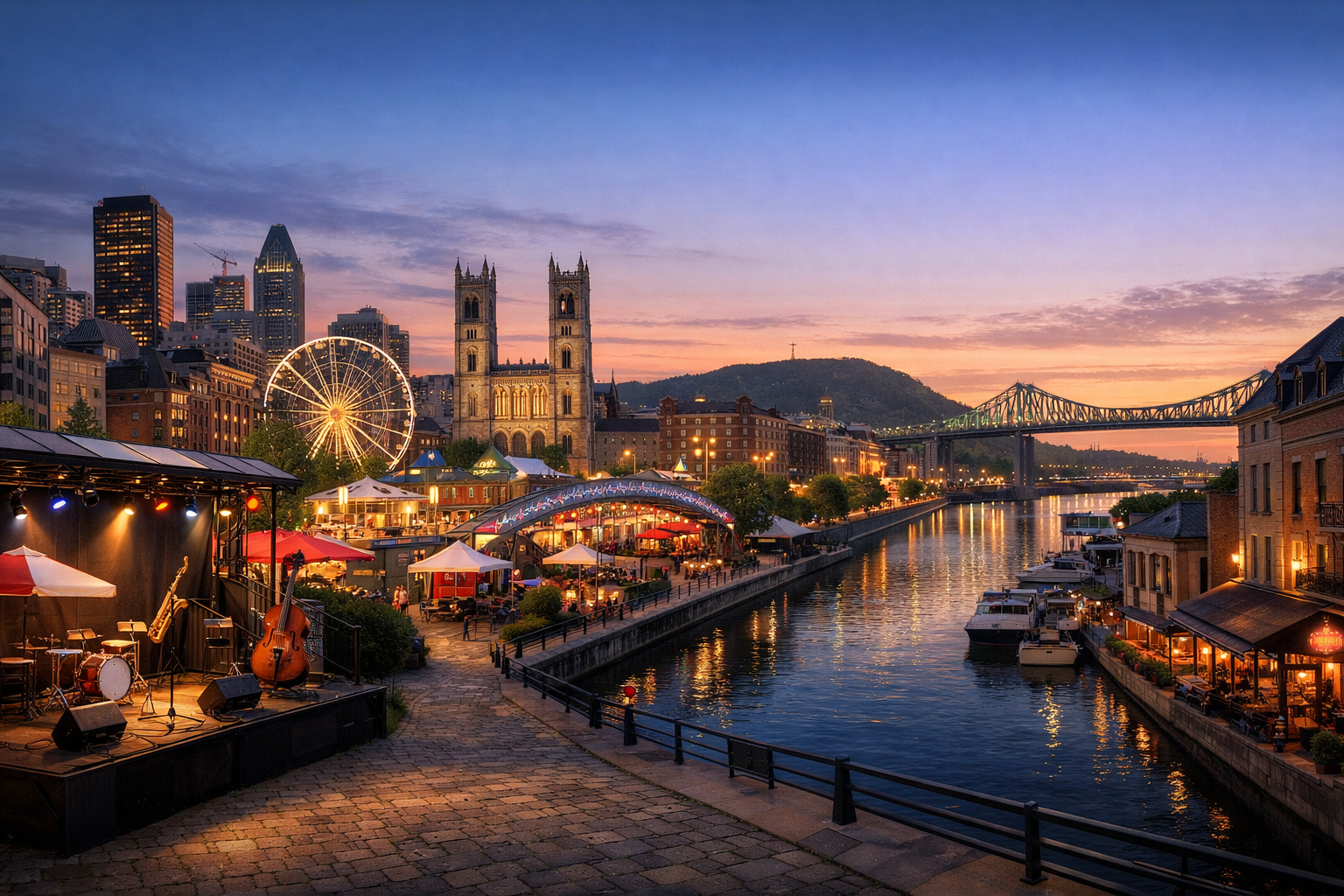
Montreal festival - jazz music street culture

Montreal festival - jazz music street culture

Feel the pulse of Montréal through jazz-filled nights, colorful street culture, and a creative energy that spills from the Quartier des Spectacles into every corner of the city. Wander the artsy Plateau, soak up the charm of Vieux-Montréal, and end by the open skies of Parc Jean-Drapeau.

🧭 DAY-BY-DAY ITINERARY

Ready-made country and city routes with daily plans, sights, transport and accommodation. Buy PDF guides for independent travel.

🧭 DAY-BY-DAY ITINERARY


Day 1 — Montreal: jazz downtown, Quartier des Spectacles and Place des Arts

  • 🚶 It’s best to devote the first day to Montreal’s very own “performing heart” — Quartier des Spectacles. This is a district where the festival energy is literally felt in the air: squares, light installations, concert venues, theaters, open-air stages, and the constant flow of people create the feeling of one big urban celebration. Start the morning calmly: check in to your hotel, take a short rest after the trip, have a late breakfast, then head out toward Place des Arts and Sainte-Catherine Ouest. This is where the scale of summer in Montreal is felt especially well: during the day the area seems open and light, and by evening it turns into a pulsating cultural zone. If your trip falls during the Festival International de Jazz de Montréal, it makes sense to plan the main part of the day around the festival core itself — the open spaces, Maison du Festival, and the surroundings of Place des Arts. Even without a packed concert schedule, the district works as a destination in its own right: music, streams of people, city lights, and the atmosphere of a living center. After lunch, take a break for 1–1.5 hours so as not to overload the first day, then return to the area in the evening for a walk and live performances. Timing here is very convenient: from most central hotels it’s a 10–20 minute walk to Place des Arts, distances within the district are short, and getting between rest spots, stages, and cafés usually takes 5–15 minutes. It’s best to keep the end of the day flexible: dinner near the festival venues, then a leisurely walk through the illuminated downtown.


Day 2 — Montreal: Plateau-Mont-Royal, Saint-Laurent Boulevard, MURAL and urban street culture

  • 🎨 The second day is about a different side of Montreal: freer, more visual, youthful, and street-oriented. Don’t start too early, so you keep the rhythm after the evening festival program: setting out around 10:00–10:30 will feel perfectly natural here. From downtown, it’s easy to reach Plateau-Mont-Royal and Saint-Laurent Boulevard by metro and on foot, usually 20–30 minutes including entering the metro and a short walk. The main idea of the day is to stroll along the Saint-Laurent axis, where Montreal’s street culture reveals itself especially vividly: murals, independent cafés, shops, local bars, and a mix of French and North American urban aesthetics. If your dates coincide with the MURAL festival, this is the day to keep as open as possible and not overload with museums: the festival lives not only through the works on the walls, but also through the street atmosphere, musical interludes, crowds, rhythm, and the feeling of a great artistic corridor under the open sky. Along the way, it’s wise to plan stops for coffee, photo pauses, and rest in the shade — a walking route around the area easily takes 4–6 hours if you move at an unhurried pace. After the main walk, you can head up toward Mount Royal Park or limit yourself to viewpoints on the approaches to the hill if you want to save your energy. In the evening, return downtown again or stay for dinner in the Plateau: it’s one of the best parts of the city for feeling Montreal not as a postcard, but as something alive, creative, and very contemporary.

Day 3 — Montreal: Vieux-Montréal, Pointe-à-Callière and relaxing by the water in Parc Jean-Drapeau

  • 🌊 It makes sense to shape the third day in a softer, more cinematic way: first the historical layer of the city, then water, open space, and a final panorama. In the morning, head to Vieux-Montréal — Old Montreal, where stone facades, cobbled streets, and the slow rhythm of walking sharply contrast with the festival center of the previous days. From a central hotel to Place Royale or Pointe-à-Callière it usually takes 10–20 minutes by taxi or 15–25 minutes by metro/on foot, depending on your starting point. Begin with the archaeological and historical context at Pointe-à-Callière, then simply walk through the blocks of the old city without rushing: what matters here is not only the checklist of places, but the very texture of the space — arches, old warehouses, river views, terraces, and the feeling of a North American city with a deep French past. After lunch, it’s worth taking a pause and moving on to Parc Jean-Drapeau: the metro ride usually takes about 20–30 minutes. It’s an excellent final chord for a short itinerary: after the dense urban environment, the park gives you air, water, wide vistas, and the sense of ending the trip not in a rush, but on a deep breath. If you still have energy, you can add the Biodôme in the Olympic Park area as an alternative to Parc Jean-Drapeau, but for a three-day tour it’s better not to try to cover too much. In the evening — a calm dinner, one short final loop along the waterfront or downtown, and an early return to the hotel before departure.

Flight tickets

eSIM for travel

Buy PDF guide

Buy PDF guide — 6.43 USD

PDF — 6.43 USD