
Buy PDF guide

Buy PDF guide — 4.28 USD

PDF — 4.28 USD

MECKLENBURG-WESTERN POMERANIA - Stralsund and the Baltic Coast

MECKLENBURG-WESTERN POMERANIA - Stralsund and the Baltic Coast

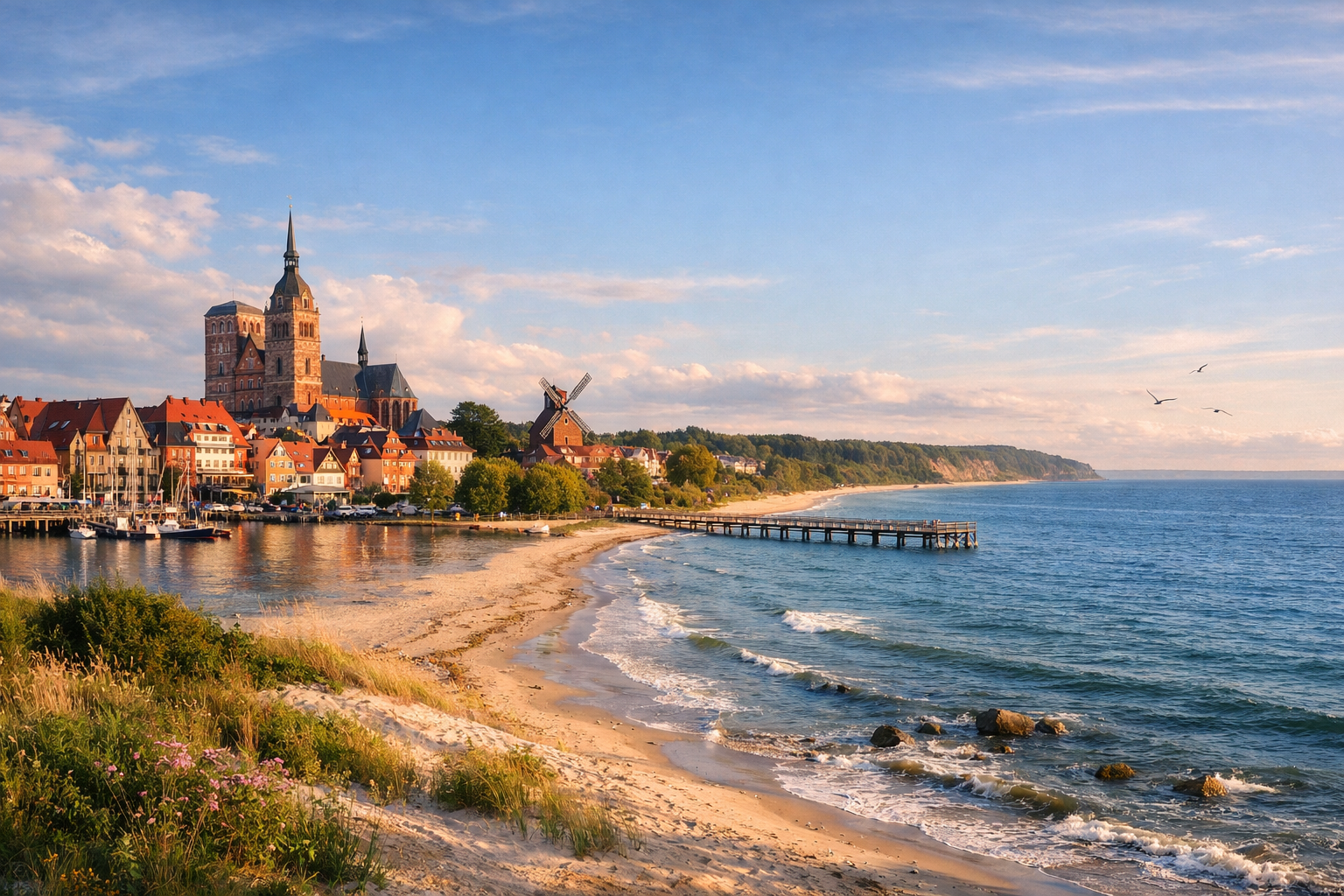
Stralsund and the Baltic Coast blend Hanseatic charm with sea-bright island escapes. Wander from Stralsund’s gabled old town to the elegant shores of Binz on Rügen, then return with the Baltic breeze and wide horizon still in your mind.

🧭 DAY-BY-DAY ITINERARY

Ready-made country and city routes with daily plans, sights, transport and accommodation. Buy PDF guides for independent travel.

🧭 DAY-BY-DAY ITINERARY


Day 1 — Stralsund: old Hanseatic town, harbor, and maritime museums

  • 🚶 Stralsund is one of the most atmospheric towns in northern Germany, where Brick Gothic architecture, the salty wind from the Strelasund strait, and the silhouettes of towers create the rare feeling that the Baltic is not just nearby, but literally defines the character of the place. The historic city center is included on the UNESCO World Heritage list, and a walk through it feels like a journey into the old Hanseatic world: narrow streets, merchant-house gables, church spires, and spacious market squares come together in an almost theatrical setting, while the town still feels alive rather than museum-like. It is convenient to start the day around Alter Markt and St. Nicholas Church: this is the heart of Stralsund, where you can especially feel the medieval scale and northern dignity of the town. It is worth not rushing here and giving yourself 1.5–2 hours for a relaxed walk with a short coffee stop, because Stralsund reveals itself best not in checklist mode, but in the rhythm of slowly noticing the details — brickwork, signs, arches, inner courtyards, and unexpected passages leading to the water.

  • 🏛️ Next, it makes perfect sense to head to OZEANEUM — this is Stralsund’s main modern attraction and the place where the maritime theme gets a striking, almost cinematic continuation. The museum stands right by the water on Hafenstraße and is dedicated to the underwater world of the Baltic Sea, the North Sea, and the North Atlantic. Huge aquariums, soft semi-darkness, and the slow movement of schools of fish, jellyfish, and large sea creatures create not just a visit, but an almost meditative immersion. Particularly memorable are the giant whale models seemingly suspended from the ceiling and the overall scale of the exhibition: the museum can easily fill 2.5–3.5 hours without becoming tiring, especially if you move through it at an unhurried pace. It is an ideal stop for the middle of the day when you want to combine a strong visual experience with a break from walking around town.

  • 🍽️ After the museum, take a break in the port area: Stralsund harbor is one of the best places for a late lunch or early dinner. It is pleasant simply to walk along the water, look at the yachts, bridges, old warehouse buildings, and the view toward the island of Rügen. If you still have energy, add the museum ship Gorch Fock I to the route — a historic sailing training vessel moored by the waterfront. In the evening it is especially photogenic: the masts sketch lines across the sky, and the town behind the stern begins to glow softly. It is best to allow another 1.5–2 hours for this part, including rest, dinner, and a short break at the hotel.

  • 🏛️ If you want a cultural end to the day without rushing, you can add either the MEERESMUSEUM in the former St. Catherine’s monastery complex or the STRALSUND MUSEUM, depending on your timing and energy level. But even without a second museum, the day will already feel very full: the combination of the old town, maritime architecture, and a strong museum component makes Stralsund one of the most underrated towns on Germany’s Baltic coast. Staying overnight in Stralsund is especially convenient because the next day you can easily and realistically make an excursion to the Rügen coast from here without changing your base or dealing with stressful logistics.


Day 2 — Rügen: Binz, the Baltic promenade, and the island’s forest classic

  • 🚆 Transfer: Stralsund → Binz by regional train via the island of Rügen — usually about 45–60 minutes depending on the specific service. It is a short and very scenic ride: the train crosses the link to the island, and as you get closer to the sea, the landscape becomes increasingly resort-like and airy.

  • 🚶 Binz is the most elegant seaside resort on Rügen, a place where white resort architecture, a long promenade, pale sand, and the calm, almost sanatorium-like beauty of the Baltic come together into a very coherent impression. Unlike the more “urban” Stralsund, everything here is built around rest, the horizon, and a sense of space. It is best to start with the beach promenade and the pier: morning or daytime light makes the sea silvery, the villa facades almost porcelain-like, and a walk along the Strandpromenade quickly shifts you into vacation mode. It feels good here simply to walk without a goal, breathe in the sea air, admire the historic hotels in Bäderarchitektur style, and let the day slow down.

  • 🌲 After the first part of the walk, it is worth adding some nature and relief: one of the best options is to go up to Jagdschloss Granitz, the hunting lodge in the Granitz forest. You can get there by a combination of walking, local transport, or the legendary narrow-gauge railway Rasender Roland with a stop at Jagdschloß. This old steam train is itself part of the experience: it moves slowly, almost nostalgically, through forests and resort stations, reminding you that on Rügen, relaxation has traditionally been linked not with rushing, but with enjoying the journey. The castle itself, standing among beech woods, provides a beautiful contrast to the seaside day: instead of an open horizon, there is silence, greenery, towers, and romantic Prussian history. It is reasonable to allow 4–5 hours for the Binz + Granitz segment, including a lunch break.

  • ☕ In the second half of the day, it is better to return to the sea and leave yourself time without a packed program: coffee and dessert on the promenade, a short barefoot walk onto the beach, a slow stroll by the water, or simply resting on a bench with a view of the Baltic. This is an important part of the route, because a two-day trip in a region like this should not only show places, but also let you feel the coast. The return to Stralsund in the evening on the same regional train usually takes less than an hour, so the day remains comfortable and free of exhausting transfers.

  • 🚆 Return: Binz → Stralsund — usually about 45–60 minutes. If you want to make the day especially cinematic, plan the return closer to evening: the low light over the water and bridges makes the trip back from the island very beautiful and brings the route to a gentle close without overload.

Flight tickets

eSIM for travel

Buy PDF guide

Buy PDF guide — 4.28 USD

PDF — 4.28 USD