
Buy PDF guide

Buy PDF guide — 8.57 USD

PDF — 8.57 USD

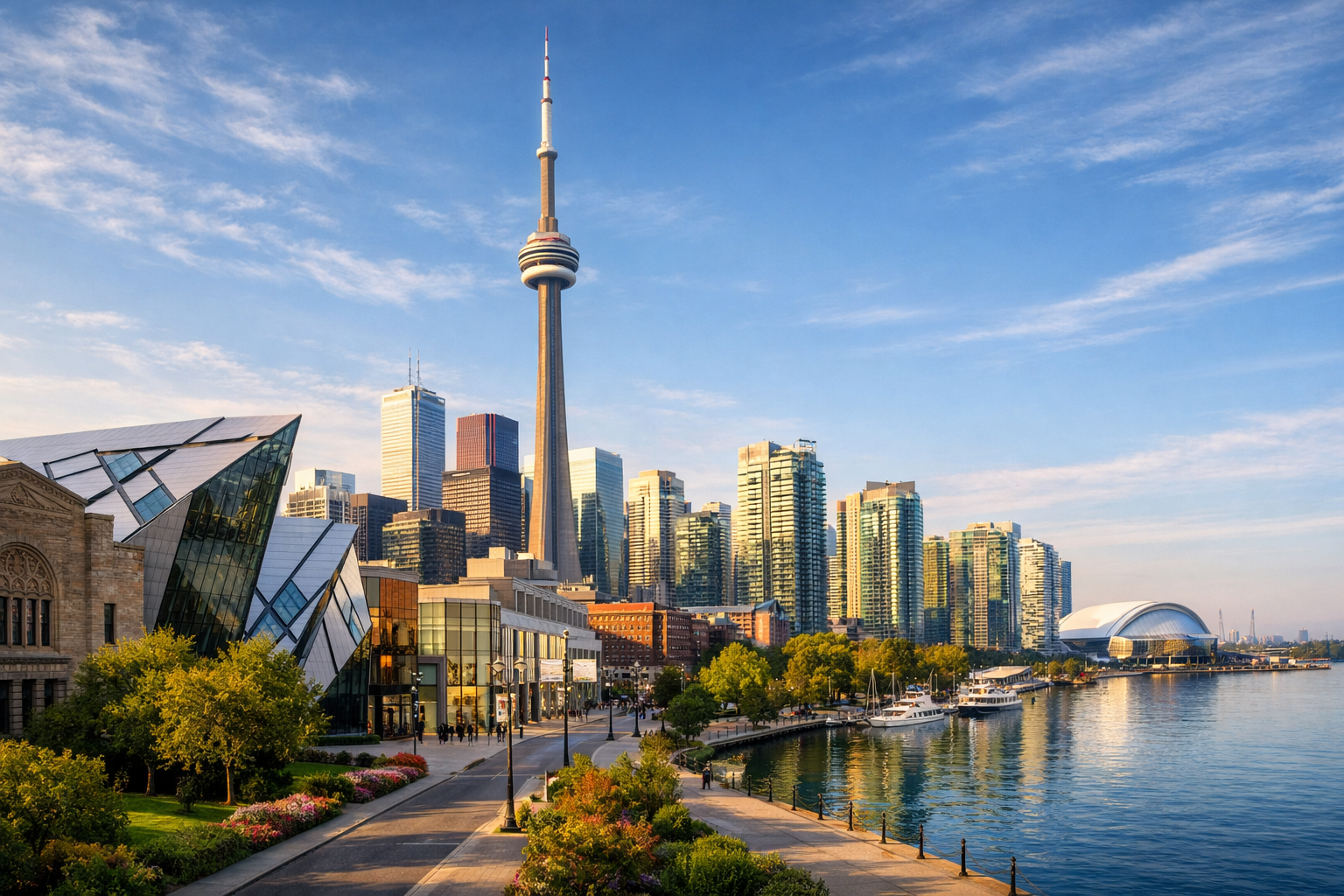
Classic Toronto - skyscrapers - CN Tower - museums - shopping.

Classic Toronto - skyscrapers - CN Tower - museums - shopping.

Discover classic Toronto through soaring skyscrapers, the iconic CN Tower, and world-class museums in the heart of downtown. From the buzz of the Entertainment District to the chic shops of Yorkville, with stops at storybook Casa Loma and the breezy Harbourfront, the city blends culture, style, and skyline views effortlessly.

🧭 DAY-BY-DAY ITINERARY

Ready-made country and city routes with daily plans, sights, transport and accommodation. Buy PDF guides for independent travel.

🧭 DAY-BY-DAY ITINERARY


Day 1 — Downtown Toronto: Union Station, CN Tower, Harbourfront

  • 🚶 The first day is best devoted to that very “postcard-perfect” Toronto people come here for: the glass towers of downtown, wide-open views by Lake Ontario, and the famous vertical line of the CN Tower. If you are arriving at Pearson Airport, the most direct and straightforward way to get downtown is the UP Express to Union Station; the ride itself takes about 28 minutes, and from there most central hotels are a 10–15 minute walk away or a short taxi ride. After check-in, leave yourself a little time to catch your breath and start your walk around Front Street and Union Station: from here the city reveals itself as businesslike, very organized, and at the same time surprisingly convenient for walking. Then head toward the CN Tower and the area around Rogers Centre and Ripley’s Aquarium — this is the zone where architecture, tourist energy, and urban scale come together into one very cohesive image. Allow at least 1.5–2 hours for going up the tower and taking a relaxed look around, especially if you do not want to rush and would like to wait for beautiful light. In the second half of the day, it makes sense to go down to Harbourfront: the walk from the CN Tower to the waterfront usually takes about 15–20 minutes on foot. Here the rhythm changes sharply: less business density, more air, water, yachts, boardwalks, and the feeling of a big North American lakeside city. It is best to end the day with dinner downtown or by the water without overloading the schedule — after a flight and check-in, Toronto is better to “absorb” than to try to tick off every point at once.


Day 2 — Culture and shopping: ROM, Gardiner Museum, Yorkville, Bloor Street

  • 🏛️ The second day is devoted to a more “polished” and cultural Toronto — the area around Queen’s Park and Yorkville. In the morning, head to the Royal Ontario Museum: it is one of the city’s main museums, and it works very well as an introduction not only to Canada, but also to how Toronto sees itself as a global cultural center. It is comfortable to allow 2–3 hours for the museum without trying to see everything at once. Right nearby, it is easy to add the Gardiner Museum or, if you want a more unusual route, walk about 8–10 minutes to the Bata Shoe Museum. After the museum block, take a break for coffee or a late lunch and switch over to Yorkville — a district of boutiques, galleries, expensive shop windows, and very “well-composed” urban beauty. It is here that you feel another layer of Toronto: not businesslike and not tourist-iconic, but prestigious, comfortable, with a light European touch. Bloor Street West is ideal for shopping in the classic format: flagship stores, designer brands, quality department stores, and beautiful facades. If you get tired, the day breaks easily into short segments: from museum to shopping, from shopping to coffee, from coffee to a calm evening walk. In terms of timing, this is one of the most convenient days of the route: within the area, most transfers are on foot, 5–15 minutes between points, without any feeling of a race.

Day 3 — Art and the city’s pulse: AGO, Chinatown, Eaton Centre, Nathan Phillips Square

  • 🎨 On the third day, Toronto is worth seeing as a living, layered metropolis where museums, street energy, and shopping exist almost in the same frame. Start with the Art Gallery of Ontario — it is one of the country’s key art museums and a very successful entry point into the city’s cultural scene. It is usually comfortable to allow 2 hours for the visit, after which it is worth taking an unhurried walk around the surrounding area: Chinatown and Kensington Market fit in well here as a contrast to the museum’s restraint. Even if you do not plan a major food stop, the transition through the streets itself lets you feel Toronto as more everyday, noisy, and human. Then it is convenient to move toward Dundas Square and CF Toronto Eaton Centre: on foot from AGO to Eaton Centre, the walk usually takes about 20–25 minutes, and by streetcar or a short TTC ride it is faster. Eaton Centre is shopping in a more large-scale urban format: major brands, lots of movement, lots of people, and the feeling that you are in the most high-strung node of downtown. Nearby are Nathan Phillips Square and Toronto City Hall — a good place to catch your breath, take photos, and see how the modern cityscape connects with the official face of the metropolis. In the evening, you can return to the Entertainment District or Financial District for dinner: the trip from the Eaton Centre area to this part of downtown usually takes 10–20 minutes depending on your mode of transport.

Day 4 — Casa Loma and final Toronto: castle, panoramas, a calm finale

  • 🏰 It is best to make the last day a little freer and more cinematic. In the morning, head to Casa Loma — this is one of Toronto’s most recognizable historic landmarks and a rare case when the city of skyscrapers suddenly opens up through the romanticized architecture of the early 20th century. From downtown, the most convenient way to get there is by TTC with a subway transfer; from Union Station to the Casa Loma area it usually takes about 25–35 minutes depending on pace and transfers, plus a short uphill walk. The castle itself, the interiors, the towers, and the city views create a completely different mood: not an ultra-modern skyline, but a more theatrical, almost European image of Toronto. Allow 1.5–2 hours for the visit and be sure to leave time for a calm walk around the area. After that, you can return downtown and spend your final hours however you enjoyed the trip most: pick up a few last purchases at Eaton Centre or Yorkville, take another walk along Harbourfront, have lunch with a view, or simply do one last loop around Union Station and Front Street. This kind of finale works best: without rushing, with the city’s rhythm already familiar, when Toronto is perceived not as a set of points but as a cohesive, convenient, and very photogenic metropolis.

Flight tickets

eSIM for travel

Buy PDF guide

Buy PDF guide — 8.57 USD

PDF — 8.57 USD