
Buy PDF guide

Buy PDF guide — 29.99 USD

PDF — 29.99 USD

Cambridge and Harvard

Cambridge and Harvard

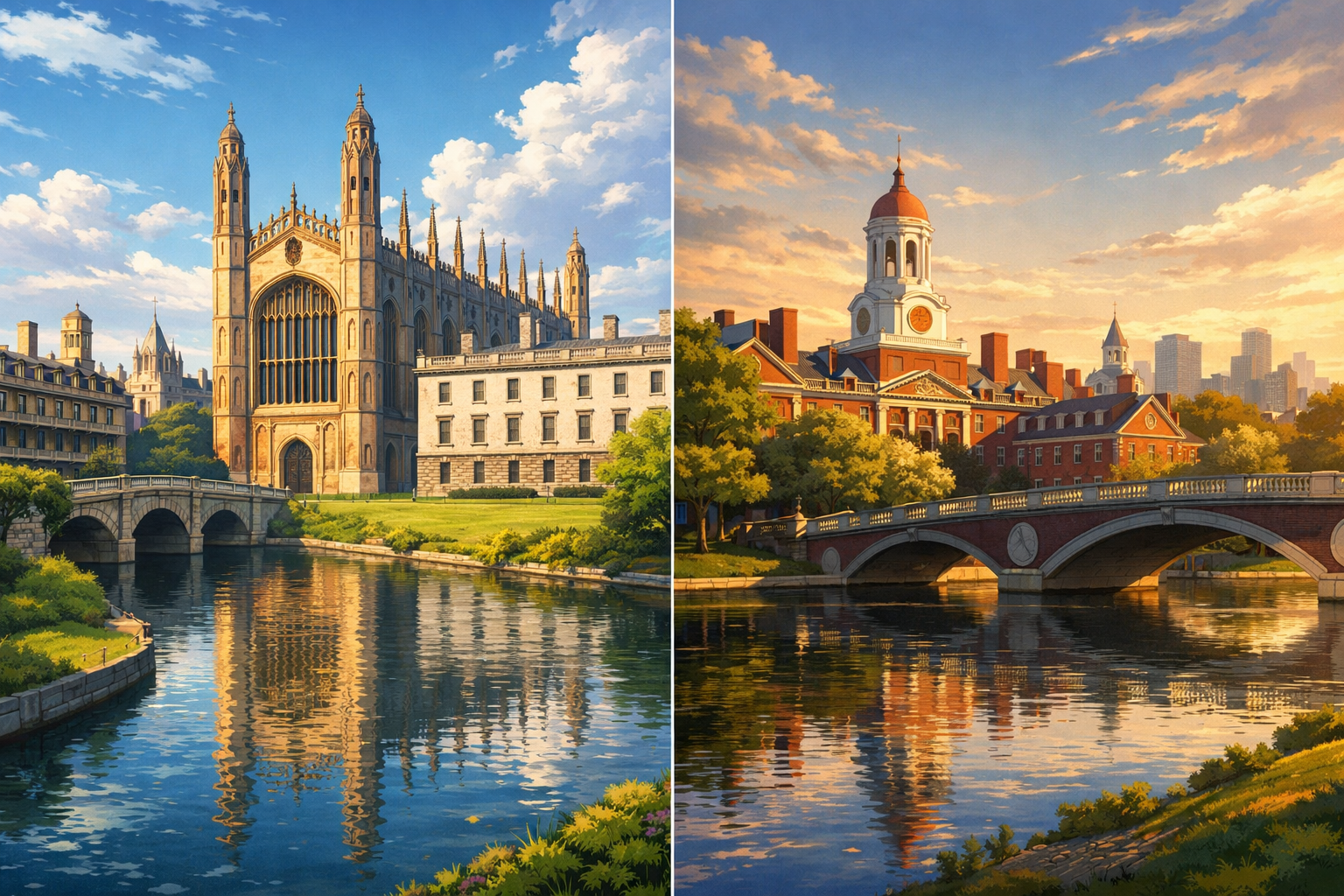
Cambridge and Harvard blend ivy-covered tradition with a creative, fast-moving energy. Wander from the buzz of Harvard Square through historic streets and on to the Charles River, where bookshops, cafés, and bold ideas shape the city at every turn.

🧭 DAY-BY-DAY ITINERARY

Ready-made country and city routes with daily plans, sights, transport and accommodation. Buy PDF guides for independent travel.

🧭 DAY-BY-DAY ITINERARY


Day 1 — Arrival, Harvard Square, and a gentle introduction to the area

  • 🚶 After your flight, it’s best not to overload the first day: get to Cambridge, check in, and leave 2–3 hours for a relaxed walk around Harvard Square. From Boston Logan Airport to Harvard, the most convenient route is usually the Silver Line to South Station, then a transfer to the Red Line toward Alewife and getting off at Harvard; with transfers included, it’s reasonable to allow about 50–70 minutes for the trip. After checking in, stroll around the square, take a look at the entrances to Harvard Yard, and get a feel for the rhythm of this student district, where academic seriousness unexpectedly sits alongside bookstores, cafés, and a very lively street atmosphere. It’s best to end the evening early: a light dinner, a short loop along Massachusetts Avenue, and some rest after the flight.


Day 2 — Harvard Yard and the official historical layer of Harvard

  • 🚶 Dedicate this day to the very heart of university Cambridge — Harvard Yard. Start at Smith Campus Center and the Visitor Center, then slowly walk through the gates toward the old courtyards, library facades, and open campus spaces. What matters here is not only the set of buildings, but the atmosphere itself: red brick, trees, lawns, towers, and a very recognizable sense of intellectual history that seems to be present in the air itself. Allow 2–3 unhurried hours for a walk through the Yard and nearby streets. After lunch, you can walk along Quincy Street and return to Harvard Square, leaving the second half of the day for relaxing in a café or bookstore — Harvard is best experienced at a slow pace rather than in checklist mode.

Day 3 — Harvard Art Museums and the blocks around Quincy Street

  • 🚶 Today it makes sense to focus on the district’s artistic and architectural layer. Start with the Harvard Art Museums: this is one of those museums where not only the collections are interesting, but also the space itself, where light, glass, old buildings, and modern museum logic work together. Allow at least 2 hours for the visit, and if you love painting and graphic art, all 3. After the museum, walk along Quincy Street and the surrounding university buildings: the area may seem strict, but on closer look it is very textured — the passages between buildings, staircases, courtyards, and unexpected perspectives are all beautiful here. In the evening, you can return to Harvard Square with fresh eyes: after the museum, the city begins to read as subtler, calmer, and deeper.

Day 4 — Harvard’s museums of science and culture: Natural History and Peabody

  • 🚶 A day for a fuller museum block. In the morning, head to the Harvard Museum of Natural History on Oxford Street: the museum works well even for those who do not usually build trips around natural history, because there are many visually striking halls and a very accessible presentation. Nearby, it is convenient to pair the visit with the Peabody Museum of Archaeology & Ethnology on Divinity Avenue — that way the day feels coherent and free from extra transport hassle. For both museums together, it’s worth allowing about 4–5 hours with a break for coffee or lunch. It’s important not to try to rush through them too quickly: this is exactly the case where it’s better to see less, but attentively. It’s best to keep the evening free after such a day — return to the hotel, rest, and let the impressions settle.

Day 5 — Brattle Street, Longfellow House, and Cambridge’s old “aristocratic” line

  • 🚶 After the university courtyards, switch to a more residential and historically elegant side of Cambridge. Walk along Brattle Street — it is one of the most beautiful streets in the area, where large houses, greenery, a soft rhythm, and an almost suburban quiet create a completely different mood. The main point of the day is Longfellow House–Washington’s Headquarters: a place where early American history, the Revolutionary story, and literary memory come together. Even if you do not plan the day around a tour inside, simply approaching the house and its surroundings gives a very strong impression. Then continue slowly along the street, stopping for photos and short rests on benches or in garden areas along the way. This is not a noisy day, but a day of beautiful, intimate Cambridge.

Day 6 — Cambridge Common, rest, and a “pause without overload”

  • 🚶 It makes sense to make the sixth day lighter in pace. Start with Cambridge Common — an open green space near Harvard, where it feels good to simply exhale after several busy days. From here, it’s easy to head back to Harvard Square, but without a rigid plan: a late breakfast, a calm walk, shopping for books or small souvenirs, observing city life. If the previous day was full of museums and architecture, this kind of lighter day works especially well. You can also take a short walk toward Harvard Book Store and the neighboring streets, and leave the second half of the day for rest at the hotel. On a long trip, days like this matter no less than the main sights: they are exactly what keeps you from getting tired of the itinerary and helps preserve your interest in the city.

Day 7 — Mount Auburn Cemetery and a landscape walk

  • 🚶 Today it’s worth stepping beyond the usual tourist core and dedicating several hours to Mount Auburn Cemetery — one of the most beautiful landscaped spaces in the region. Despite its status as a cemetery, it is not a gloomy place, but a very thoughtfully designed park-like area with paths, trees, varied terrain, quiet, and a special sense of historical depth. It’s best to go there without rushing, allowing half a day: a route through the avenues easily stretches to 3–4 hours. This is an excellent day for visual rest and a change of scale — from the city’s academic environment to a landscape where Cambridge feels like part of old New England. By evening, return to the Harvard area without a packed program.

Day 8 — Central Square: a livelier, more urban, and more modern Cambridge

  • 🚶 After “classic” Harvard, it’s useful to see a different side of the city’s character. From Harvard to Central Square, the Red Line takes only about 3–5 minutes, while walking takes roughly 25–30 minutes — making the day very flexible. Central Square is louder, more musical, and more mixed in audience and rhythm: here you feel everyday urban Cambridge more strongly, rather than only the university facade. Walk along Massachusetts Avenue, take a look at local spots, window graphics, the street environment, and the difference in tone between Harvard and Central Square. The day does not need to be packed with points: just walk, stop for coffee, have lunch off schedule, and watch how the city changes literally over one subway stop.

Day 9 — Kendall/MIT and the city’s technological landscape

  • 🚶 Dedicate the ninth day to the Kendall/MIT area — this is a different Cambridge, linked with science, technology, startups, and a more modern urban skyline. From Harvard to Kendall/MIT on the Red Line is usually about 8–10 minutes, not counting the wait for the train. Start with a walk along Main Street and the surroundings of the MIT campus: glass, office volumes, research buildings, and a lively business environment create a sharp but very interesting contrast with Harvard. Then visit the MIT Museum — a space where technology, engineering, and playful imagination work especially well, even if you do not consider yourself a “tech person.” It’s convenient to allow most of the day for the museum and a walk around the area, and spend the evening by the river or return on the Red Line to the calmer Harvard Square.

Day 10 — Charles River, riverfronts, and views of Boston

  • 🚶 After several days of campuses and streets, switch to the water. The Charles River riverfronts are one of the best ways to feel the connection between Cambridge and Boston: from here, beautiful panoramas open up, and the route along the river itself works as a long, slow walk without museum overload. You can start from the Harvard area or closer to MIT — depending on your mood and which stretch you want to walk. This kind of walk can easily take 2–4 hours, especially if you stop for photos, takeaway coffee, or simply to look at the water, bridges, and boats. It’s a good day for restoring your rhythm: fewer obligatory points, more air, and more sense of space.

Day 11 — Free day: revisit favorite places or take a half-day trip to Boston

  • 🚶 One of the days should definitely be kept flexible. If Cambridge already feels familiar, return to your favorite area — Harvard Yard in the morning, Brattle Street in the afternoon, or Kendall in the evening. An alternative is to make a short trip into Boston: from Harvard Square to Park Street or Downtown Crossing on the Red Line is usually about 15–20 minutes, so the city is very close and does not require complicated logistics. But even if you decide not to go anywhere, a free day works excellently here: you can have a slow breakfast, revisit a museum you wanted to return to, or simply live through the day without tourist haste. In a 14-day itinerary, that kind of freedom is especially valuable.

Day 12 — Harvard Square in greater depth: bookstores, courtyards, everyday university life

  • 🚶 This day is not about “new” landmark sights, but about experiencing the area more attentively. Focus on Harvard Square and the neighboring streets: visit bookstores, sit in a café longer than usual, and walk the same routes at a different time of day. The Harvard surroundings reveal themselves well through repetition — once you are no longer rushing to see the main highlights, details begin to stand out: passages between buildings, staircases, signs, the student flow, the rhythm of a lecture day. If you like, you can include a short repeat stop at the Harvard Art Museums or walk once more toward Cambridge Common. This is a day of small discoveries and a very calm pace.

Day 13 — Final cultural accent: choose between a museum, a garden, and a walk

  • 🚶 The penultimate day is convenient to use as a final adjustment to the itinerary. If you still want art, return to the Harvard Art Museums; if you want science, choose the MIT Museum; if you need visual calm, head again toward Mount Auburn Cemetery or a long walk along Brattle Street. The important thing is not to try to add too much: by the end of the trip, one expressive impression works better than three rushed ones. Leave enough time for lunch, rest, and buying the last small things. A day like this creates a beautiful soft ending rather than the feeling of racing after the remaining program.

Day 14 — Final loop: Harvard Square, farewell to the city, and departure

  • 🚶 On the last day, leave only the lightest possible plan. A short loop around Harvard Square, one last look at Harvard Yard, coffee to go, a few calm photos, and a departure without fuss — that is the best ending for this itinerary. From the Harvard area to the airport by public transport, it is again usually reasonable to allow about 50–70 minutes, and if you go by taxi or app-based ride, the time depends on traffic and is often around 25–45 minutes. The point of the ending here is not one more obligatory stop, but the feeling of the city: smart, beautiful, compact, very walkable, and surprisingly rich for such an intimate scale.

Flight tickets

eSIM for travel

Buy PDF guide

Buy PDF guide — 29.99 USD

PDF — 29.99 USD