
Buy PDF guide

Buy PDF guide — 6.43 USD

PDF — 6.43 USD

Kalamata - City tour with the sea: old town, beach, olive cuisine

Kalamata - City tour with the sea: old town, beach, olive cuisine

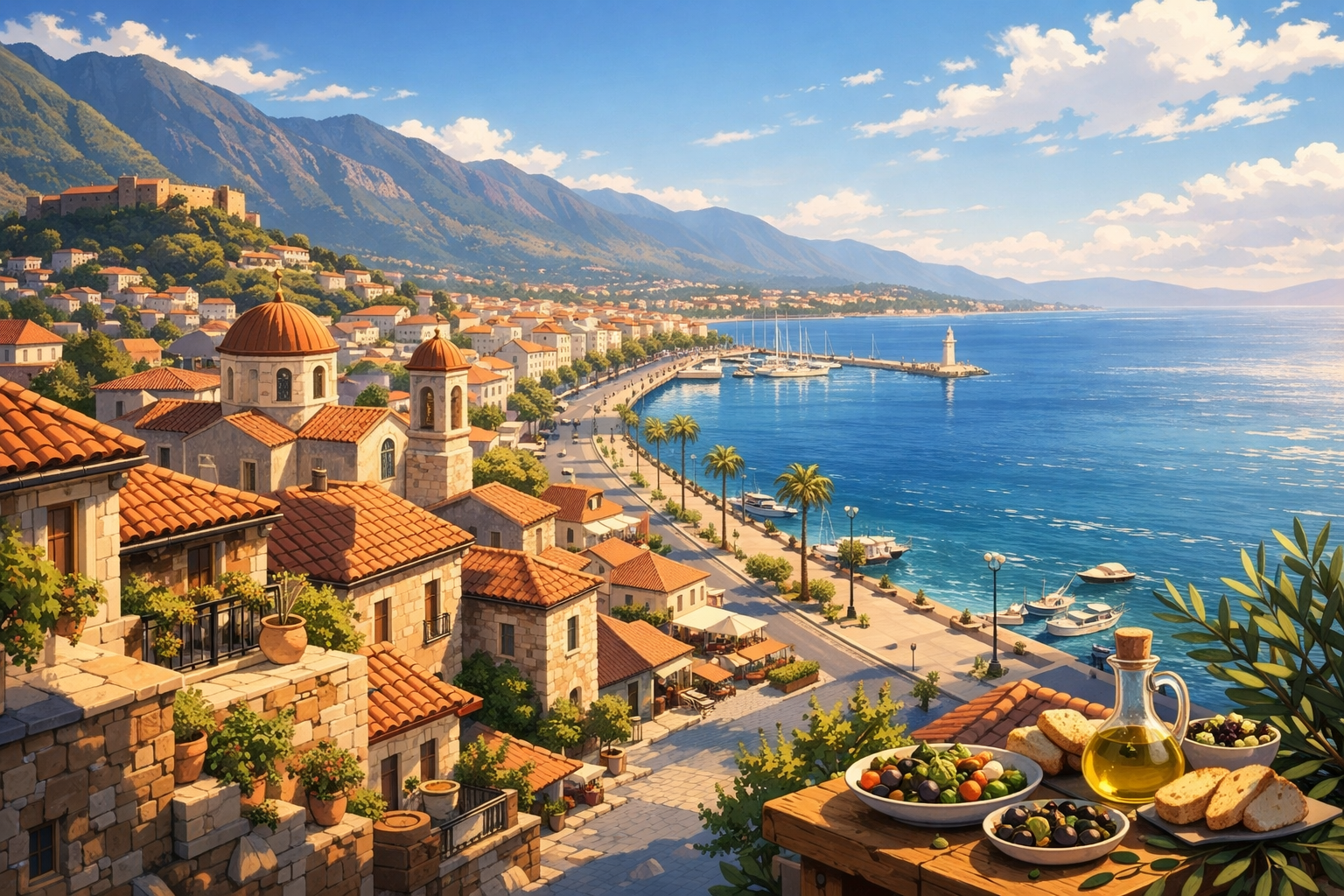
Wander from Kalamata’s charming old town down to the seafront, where the city opens onto a long, sunlit beach. Finish with the flavors that define the region, from famous olives to fresh Mediterranean dishes by the sea.

🧭 DAY-BY-DAY ITINERARY

Ready-made country and city routes with daily plans, sights, transport and accommodation. Buy PDF guides for independent travel.

🧭 DAY-BY-DAY ITINERARY


Day 1 — Kalamata Old Town: castle, squares, museum and an evening by the sea

  • 🚶 Start getting to know Kalamata from the old town — this is where the character of Messenia is felt best: stone lanes, stairways, terracotta roofs, warm light on the facades, and the constant sense that the sea is very close, even though city neighborhoods and the hillside with the fortress are already rising around you. The historic core of the city is easy to explore on foot: first head up to Kalamata Castle, located on a low hill at the northeastern edge of the center. From here, you get views over the urban fabric, the plain, and the direction of the sea, while the fortress itself preserves Byzantine and Frankish layers of history. It’s best to allow about 1.5–2 hours for the climb, sightseeing, and photo stops, because this place is less about “ticking a box” and more about atmosphere and panoramas.

  • 🏛️ After the castle, head down into the historic center to the Archaeological Museum of Messinia. It is housed in a restored building of the old municipal market and does an excellent job of explaining why Kalamata is not only a resort by the gulf, but also a gateway to one of the most interesting historical regions of the Peloponnese. The exhibition covers a huge span of time — from prehistoric eras to the Byzantine period — and is organized in a way that even a leisurely 60–90 minute visit feels coherent. Nearby, it is pleasant to simply wander without a strict plan: around you are paved lanes, small cafés, old churches, and calm Mediterranean urban life without the rush of major capitals.

  • 🍽️ Dedicate lunch to your first introduction to Messenian cuisine. Kalamata’s main theme is olives and olive oil, and here this is not a decorative tourist cliché, but the foundation of flavor. Look for dishes where the quality of the oil is truly noticeable: rustic bread with golden local olive oil, Greek salad with rich tomatoes and Kalamata olives, baked vegetables, briam, gigante beans, fresh fish or squid, simple meze where the product is not hidden under heavy sauces. In the old town, it’s worth having a long lunch of about 1.5 hours and not rushing onward.

  • 🚶 In the second half of the day, follow the route old town → central streets → seafront area. From the historic center to Kalamata’s promenade and beach zone, it is generally comfortable to walk in about 30–40 minutes at an easy pace, but if the heat is strong, it’s better to take a taxi for 10–15 minutes or use a city bus. This transition is especially good because it shows the true rhythm of the city: from the hill and old quarters to straighter streets, then to palm trees, sea air, and the long line of Navarinou.

  • 🌅 Spend the evening on your first walk along the Navarinou promenade and Kalamata Beach. This is not a “beach resort outside the city,” but a rare combination of полноценное city space and the sea literally at your feet: sun loungers sit beside cafés, promenade life naturally flows into swimming, and the Taygetos massif is visible in the background. At sunset, it is especially beautiful here: the light becomes softer, the water in the Messenian Gulf takes on a deep blue-steel shade, and the city seems to change its pace. It’s worth allowing 3–4 hours without rushing for a swim, an aperitif, and a relaxed dinner by the sea.


Day 2 — Sea day: beach, Railway Park and gastronomy with an olive focus

  • 🏖️ It’s best to make the second day more relaxed and sea-oriented. Start the morning at Kalamata Beach, while the sun is still soft and the water is especially pleasant. The city beach stretches along the Navarinou district, so it is easy to walk here from most coastal hotels in 2–10 minutes. A beach day here is easy to arrange without complicated logistics: swimming, short coffee breaks, returning to your room, and then back to the sea. The ideal rhythm is to spend about 2–3 hours on the shore in the morning, then take a break for a shower and lunch.

  • 🚶 After relaxing by the sea, walk to the Municipal Railway Park of Kalamata — an unusual open space on the grounds of old railway infrastructure, about 20–30 minutes on foot from the central coastal zone and 10–15 minutes by taxi from most beach hotels. The park is interesting because it does not resemble a standard city park: here old locomotives, rail cars, platforms, and the railway setting itself function as an open-air museum. It is a good location for a slow walk in the shade, a family outing, and a small break from the beach sun.

  • 🏛️ If you want to add another cultural accent, stop by the Kalamata branch of the War Museum. It is relatively compact, so it does not overload the day, but it helps you better understand the local historical context, especially Kalamata’s role in the events of 19th–20th century Greek history. Usually 45–60 minutes is enough for a visit. Thanks to its small scale, the museum fits conveniently between the beach and dinner without turning a relaxed day into a marathon.

  • 🍴 The evening of the second day is ideal for focusing on “olive cuisine” as the tour’s theme. Look for a dinner built not only around olives themselves, but around Messenian oil as the main flavor tool. A good idea is to order several dishes for the table: dakos or rustic bruschetta with oil and tomatoes, salad with local olives, fried or baked fish, grilled vegetables, horta greens, saganaki, stewed meat, or seafood prepared as simply as possible. In Kalamata, the best dinners are often exactly like this: not pretentious, but honest, fragrant, and very local.

  • 🌃 After dinner, don’t rush back to the hotels. Kalamata’s promenade comes alive in the evening softly and naturally: families stroll, bars are open, the sea can be heard, but there is no feeling of an overcrowded resort. You can walk along the shore for another 30–60 minutes, sit with a glass of wine or a coffee, and simply watch how the city breathes beside the gulf. For a 3-day tour, this is an important contrast to the historic center: Kalamata shows itself not only as an old town with a fortress, but also as a very lively seaside city.

Day 3 — Morning in the city, a market of flavors, and a gentle finale by the sea

  • 🚶 The final day is best started back in the center, but without the rush of a first introduction. Returning to the old part of the city lets you notice what usually slips by on day one: the texture of the stone, small courtyards, balconies with greenery, quiet side streets, and changing views between the castle hill and the flatter part of town. If a museum rhythm suits you, you can add the Historical and Folklore Museum of Kalamata as a more “human” complement to archaeology: crafts, everyday life, the fabric of daily living, and local memory make the image of the city fuller.

  • ☕ Then have a late breakfast or an early lunch as a gastronomic farewell to Kalamata. Focus on local products: Kalamata olives, new harvest oil, cheeses, fresh pastries, tomatoes, herbs, honey, and seasonal vegetables. If you come across a shop with local delicacies, you can take home olive oil, olive paste, or vacuum-packed olives — one of the most logical gastronomic souvenirs from here.

  • 🚆 If time before departure allows, devote part of the day to a calm city walk without strict checklists: from the central streets to the seafront strip, through cafés, little squares, and shops. Within Kalamata, distances for this kind of plan are comfortable: between the center, the old town, and the promenade, it is easy to move on foot with stops, and if tired, you can quickly switch to a taxi. For transfers between key points, usually allow 10–15 minutes by taxi or 25–40 minutes on foot, depending on your exact accommodation base.

  • 🏖️ End the tour with one more visit to the sea. Even if it is only 1–2 hours before your transfer, the final walk along the beach and promenade is what best “completes” the image of Kalamata: a city where the old center does not compete with the sea, and olive cuisine does not exist separately from everyday coastal life. You can swim if the season allows, or simply have a coffee overlooking the water. This kind of ending makes the route feel whole: history, beach, and gastronomy come together in one very southern and very light rhythm.

  • 🚕 It’s best to allow extra time for the road to Kalamata Airport. From the city to KLX airport, a taxi usually takes about 15–25 minutes depending on the departure point and traffic. Bus options by KTEL Messinias are also available via the Kalamata–Airport–Messini route, but for a flight, a taxi or pre-booked transfer is usually calmer and more reliable, especially if you have luggage and an early departure.

Flight tickets

eSIM for travel

Buy PDF guide

Buy PDF guide — 6.43 USD

PDF — 6.43 USD