
Buy PDF guide

Buy PDF guide — 10.71 USD

PDF — 10.71 USD

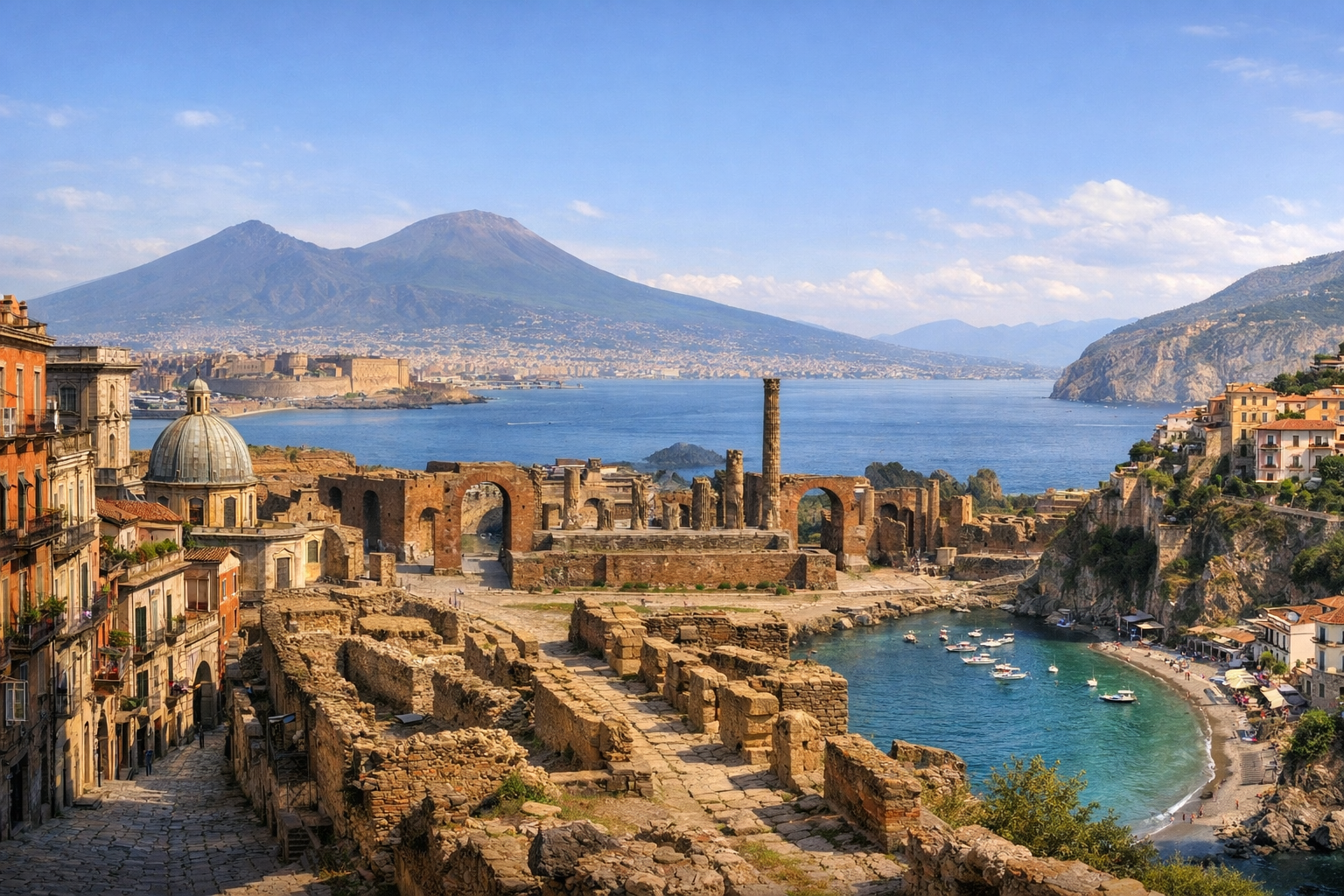
Italy, Naples and Pompeii. A budget trip through the historic quarters of Naples, the archaeological complex of Pompeii, and the coast of the Bay of Naples.

Italy, Naples and Pompeii. A budget trip through the historic quarters of Naples, the archaeological complex of Pompeii, and the coast of the Bay of Naples.

Wander through Naples’ lively historic quarters, where grand churches, street markets, and legendary pizza come together in a city full of character. Then step into the ancient streets of Pompeii before ending along the sparkling Bay of Naples, where coastal views and island horizons make a budget trip feel unforgettable.

🧭 DAY-BY-DAY ITINERARY

Ready-made country and city routes with daily plans, sights, transport and accommodation. Buy PDF guides for independent travel.

🧭 DAY-BY-DAY ITINERARY


Day 1 — Naples: the historic center and Spaccanapoli

  • 🚶 The first day is best devoted to the liveliest and at the same time most historic layer of Naples — the Centro Storico district, listed as a UNESCO site. The budget format works especially well here: the main impressions come not from an expensive ticket, but from the walk itself. Start with Spaccanapoli — the long, almost cinematic axis of the old city that seems to split Naples in two. Here, narrow streets with hanging laundry, tiny shops, workshops, old courtyards, and the smell of coffee and pastries create that dense, noisy, and very southern rhythm people come here for. It makes sense to build the route on foot: Piazza del Gesù Nuovo → Santa Chiara with its famous majolica cloister → San Domenico Maggiore → Via San Gregorio Armeno → Piazza San Gaetano. It’s a full but realistic day without unnecessary transfers and with plenty of places to stop for an inexpensive espresso, pizza al taglio, or a portion of pasta.

  • 🚶 If you want to add one paid but truly worthwhile experience, choose Napoli Sotterranea near Piazza San Gaetano. Beneath the noisy city, another Naples opens up — cavities carved into tuff, ancient passageways, traces of Greco-Roman history, and the striking feeling of a layered city that has lived and been rebuilt for thousands of years. This is a good paid option for the first day because it enhances the impression of walking through the center rather than requiring separate logistics. For the evening, it’s convenient to leave a calm walk to Via Toledo and Piazza Dante: this stretch is well lit, lively, and suitable for returning to the hotel without complicated connections.

  • 💸 Day budget: food approximately €18–35, public transport €0–6 for a walking day or with 1–2 rides, paid sights optional from €6–18 per entry.


Day 2 — Naples: archaeology and the panoramas of Vomero

  • 🏛️ The second day is best built around the National Archaeological Museum of Naples — one of Italy’s key museums and the best prologue to a trip to Pompeii. Many famous finds from the buried Vesuvian cities are kept here: mosaics, frescoes, everyday objects, sculpture, and items that unexpectedly make the ancient world feel not like abstract history but almost tangible daily life. For a budget itinerary, this is a smart investment: one truly strong museum helps you understand the ruins of Pompeii more deeply afterward and avoids spending money on chaotic extra excursions.

  • 🚇 After the museum, head up to the Vomero district on Metro Linea 1 and then continue on foot or by funicular. Here Naples changes sharply: from the cramped and noisy streets of the center, the city opens into air, slopes, and panoramas. Castel Sant’Elmo and the surrounding viewpoints offer one of the most impressive views over the entire Bay of Naples, Vesuvius, the port, and the dense urban fabric. Nearby is Certosa di San Martino — one of the most beautiful historic complexes on the hill. Even if you limit yourself to the exterior views and a walk around the district, the day turns out very full, photogenic, and comparatively inexpensive.

  • 🚶 In the evening, you can walk back down to the center along the city’s long stairways and streets if the weather is good and you still have energy. It’s almost a free excursion in itself: the city reveals itself in layers — balconies, domes, street altars, unexpectedly quiet courtyards, and turns that open back onto the bay. If you’re tired, return by metro or funicular: for a budget trip, what matters is not maximalism, but a realistic pace without exhaustion.

  • 💸 Day budget: food €20–35, transport €3–8, museum/sights approximately €10–20 depending on the entrances you choose.

Day 3 — Pompeii: a full day at the archaeological complex

  • 🚆 The main outing of the itinerary is Pompeii, and it’s best to allocate a whole day to it without trying to squeeze in too many neighboring stops. From Naples, it is most convenient to go early in the morning on the Circumvesuviana/EAV line toward Pompei Scavi, so you arrive at opening time or shortly after. This saves time, helps avoid part of the queues, and lets you walk through the archaeological park in softer light and temperatures. Pompeii is not just ruins but a huge frozen city: streets with wheel ruts, houses, baths, forums, shops, frescoes, gardens, and theaters come together into a remarkably complete picture of Roman life cut short by the catastrophe of AD 79.

  • 🏛️ In a budget format, it is especially important here not to try to cover everything. It is more practical to choose a compact 5–7 hour route with breaks for water and rest: Porta Marina, the Forum, the basilica, baths, painted houses, Via dell’Abbondanza, the amphitheater, and the Antiquarium. This approach reduces fatigue and makes the visit more meaningful. The site is large, open, and in places very hot, so water, a hat, comfortable shoes, and enough time for a slow pace are essential. It’s best to buy tickets in advance through the official channel, since admission is nominative and visitor numbers are limited.

  • 🚶 After the main part, you can briefly step out into the modern town of Pompeii, have a relaxed lunch in an inexpensive café near the station, and return to Naples without late-night transfers. It’s best to leave the evening in the city free: at most, a short walk near the hotel and dinner. After Pompeii, it’s not worth overloading the program — an archaeological day takes energy, and the sun on an open site is more tiring than it seems.

  • 💸 Day budget: round-trip transport €6–15 depending on the train type and tickets, entry to Pompeii approximately €18–24, food €18–30.

Day 4 — Bay of Naples: the waterfront, Castel dell’Ovo, and seaside neighborhoods

  • 🌊 After a busy archaeological day, it makes sense to switch the itinerary to a lighter and almost free format — the coast of the Bay of Naples. Start in the Municipio area or at Piazza del Plebiscito, then walk toward the Lungomare waterfront. Here the city becomes more spacious and brighter: the line of the water, the silhouette of Vesuvius, the small islands, and the long seafront open up, making it pleasant to simply walk without rushing. This is one of the best walks in Naples for a budget traveler: the main resource here is the view, the air, and the atmosphere, not paid tickets.

  • 🏰 Castel dell’Ovo on the former islet of Megaride is one of the city’s symbols and a very good stop for a slow-paced day. Even if the interior spaces are partially limited by event programming or opening hours, the area around the castle itself, the Borgo Marinari marina, and the views over the bay are already worth the visit. This is where the maritime side of Naples is felt especially strongly: boats, old stone walls, reflections on the water, and the soft contrast between the medieval fortress and the modern city behind you. From here you can continue walking toward Chiaia, stop for an inexpensive lunch, and return to the water closer to sunset.

  • 🚶 If you still have energy, end the day in Quartieri Spagnoli or on Via Toledo, but avoid going into sparsely populated alleys late at night. For a budget itinerary, this is a good evening for simple city life: grab pizza, frittatina, or pasta at an inexpensive place and stroll calmly through lively streets. A day like this gives your legs and your budget a rest, while still leaving one of the most beautiful impressions of the whole trip.

  • 💸 Day budget: food €18–35, transport €3–8, sights mostly free or with minimal entry costs.

Day 5 — Naples: market, local life, and a weather backup day

  • 🧺 It’s best to keep the fifth day flexible and inexpensive: it works both as a nice end to the trip and as a buffer in case of heat, rain, transport disruptions, or schedule changes. A good option is the Porta Nolana area and the surroundings of the market, then a walk through the old streets toward the cathedral, local bakeries, and small squares. This is a less polished but very authentic Naples, where the city’s everyday life is especially visible: morning deliveries, conversations at the stalls, the smell of baking, street fish, fruit, coffee bars, and a rhythm in which the tourist layer blends with ordinary life.

  • ⛪ If you didn’t have time for Santa Chiara, Napoli Sotterranea, or one of the museums in the first days, today is a convenient moment to catch up on exactly that. If you want a fully free scenario, dedicate the day to walking along the Decumani, the cathedral, artisan street shops, and a long farewell route through the center. This is the best format for a short trip: instead of fussing with another distant outing, you get time to feel the city more deeply, buy edible souvenirs, have a relaxed lunch, and prepare for departure without rushing.

  • ✈️ If your flight is on the same day, leave at least 2.5–3 hours of buffer before departure, taking into account the trip to the airport. Napoli Centrale and the port are easy to reach by city transport, and the airport by Alibus, taxi, or official airport shuttle according to the current schedule. On a short itinerary, exactly this kind of buffer makes the trip safer and more realistic, especially in high season.

  • 💸 Day budget: food €15–30, transport €3–8, additional entries optional €0–18.

Flight tickets

eSIM for travel

Buy PDF guide

Buy PDF guide — 10.71 USD

PDF — 10.71 USD