
Buy PDF guide

Buy PDF guide — 8.57 USD

PDF — 8.57 USD

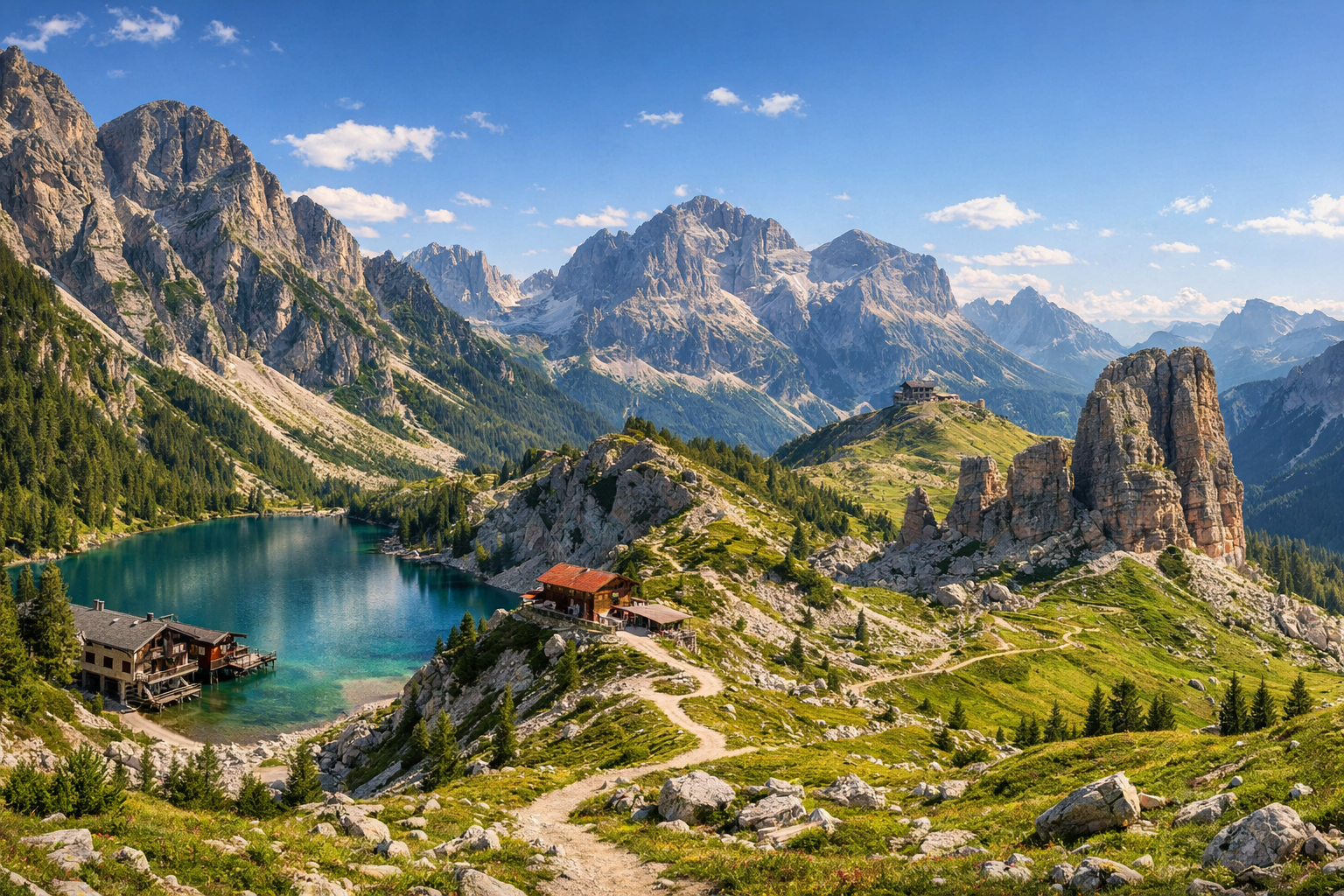
Italy, Dolomites. Alta Via 1: a four-day trek through the northern part of the route from Lake Lago di Braies to the Lagazuoi and Cinque Torri area. Difficulty: moderate or high. Season: July - September.

Italy, Dolomites. Alta Via 1: a four-day trek through the northern part of the route from Lake Lago di Braies to the Lagazuoi and Cinque Torri area. Difficulty: moderate or high. Season: July - September.

Follow one of the Dolomites’ most iconic trails on a four-day trek from the turquoise waters of Lago di Braies to the dramatic peaks of Lagazuoi and Cinque Torri. Expect high alpine passes, rugged limestone scenery, and unforgettable mountain huts on a rewarding route best tackled between July and September.

🥾 DAY-BY-DAY ROUTE

Ready-made country and city routes with daily plans, sights, transport and accommodation. Buy PDF guides for independent travel.

🥾 DAY-BY-DAY ROUTE


Day 1 — Lago di Braies: lake, forest, and ascent to the high Biella plateau

  • 🥾 Start at Lago di Braies, one of the most photogenic lakes in the Dolomites, where the classic northern section of Alta Via 1 begins. It’s worth spending the morning on a short walk along the lakeshore and then heading onto the marked trail no. 1 to Rifugio Biella / Seekofel Hütte. This is already a true mountain day: the forest quickly gives way to rocky slopes and panoramas over the Fanes–Sennes–Braies massif. The active part of the day usually takes about 3.5–5 hours depending on pace and breaks; the distance is roughly about 6–7 km, with an elevation gain of around +900 m. In terms of effort, this is a moderately difficult / hard day, but it suits a regular hiker without special gear because it follows a well-known marked walking trail with no glacier, no ferrata, and no mountaineering sections. All you need are good trekking shoes or boots, water, and enough time. In July at the start of the season, there may still be patches of snow on the upper sections after a cold spring, while in August and September the main concern is starting early because of afternoon thunderstorms. In summer, the Braies valley has traffic regulations in place: during the high season, daytime access by car may require pre-booked parking or use of a shuttle/bus, so it’s best to check the logistics to the trailhead in advance.


Day 2 — Sennes and Fanes plateau: alpine meadows, wide valleys, and a calm trek toward the Fanes area

  • 🥾 The second day leads through the most pleasant part of the route for relaxed hiking: from the Biella / Sennes area toward Rifugio Fanes across open alpine landscapes. There is less “dramatic” climbing here, but more of a feeling of space: rolling pastures, broad grassy saddles, pale dolomite walls, and long scenic sections where the relief of the whole natural park is easy to read. The active part of the day is about 4.5–6 hours; the distance is roughly 11–13 km, with a total elevation gain of about +600–700 m with alternating ascents and descents. In terms of difficulty, this is a moderate walk for a prepared regular hiker: technically the route is not difficult, the trails are popular and easy to follow, navigation in season is usually good, and there are well-known rifugios along the way for rest and water. In good weather, this day is especially beautiful in the second half of summer, when the meadows are bright green and the rock bastions look almost theatrical. The seasonal nuance is the same: in July–September it’s better to set out early, because thunderstorms and fog are possible on the plateau after lunch; after rain, the limestone rocks can be slippery in places, so there’s no need to rush on the descents.

Day 3 — Fanes → Lagazuoi: valley, rock walls, and a panoramic finish at Passo Falzarego

  • 🥾 The third day is one of the most impressive while still being realistic for an ordinary hiker. From the Fanes area, the route heads toward Lagazuoi / Passo Falzarego through austere valley landscapes, pasture basins, and an increasingly rocky high-mountain zone. Visually, this is a transition from soft meadows to grand gray-pink walls and the historic panoramas of the Lagazuoi area. The active part of the day usually takes 4–6 hours; the distance is about 8–10 km, with an elevation gain of around +450–550 m, but the day feels more serious because of the altitude and terrain. The difficulty is moderate with some more demanding sections, yet the route remains trekking rather than mountaineering: no helmet, no rope, and no ferrata are needed if you stick to the standard hiking option and do not go onto the equipped wartime tunnels and harder side routes. If you want to reduce the effort, you can finish the day in the Passo Falzarego area and use the Lagazuoi cable car only as a scenic ascent/descent without a heavy backpack. In summer, the cable car usually operates from early June to mid-October, which makes it a convenient backup logistics option. Seasonal note: the area is very popular, so on clear days there are more people here, and while sunset is beautiful, it is important to make the last cable car down or stay overnight at the right base in advance.

Day 4 — Cinque Torri: a scenic walk among towers, meadows, and open panoramas

  • 🥾 The final day is best kept lighter and more scenic: a walk in the Cinque Torri area is the perfect gentle finish after three trekking days. This is a natural amphitheater of stone towers, alpine meadows, easy marked trails, and very beautiful views of Averau, Nuvolau, and the massifs around Cortina d’Ampezzo. If you go up from Bai de Dones by chairlift to Rifugio Scoiattoli, the active part of the day turns into a comfortable hike of 2.5–4 hours: walking the trails around the towers, to viewpoints, and to the open-air First World War museum. The distance is roughly 5–7 km, and the elevation gain when using the lift is about +200–300 m; without the lift, you can add an uphill walk and make the day noticeably harder. The difficulty is easy or moderate, making it ideal for regular tourists without special gear, because the paths here are wide and popular, the junctions are easy to understand, and there is plenty of infrastructure. In July and August, it is better to come in the morning or closer to evening: in the middle of the day there are many visitors and less open space for photos. After rain, the dirt-and-rock sections may be slippery, and by late September you can already feel the cold and wind in the morning, so a light warm jacket will come in very handy.

Flight tickets

eSIM for travel

Buy PDF guide

Buy PDF guide — 8.57 USD

PDF — 8.57 USD