
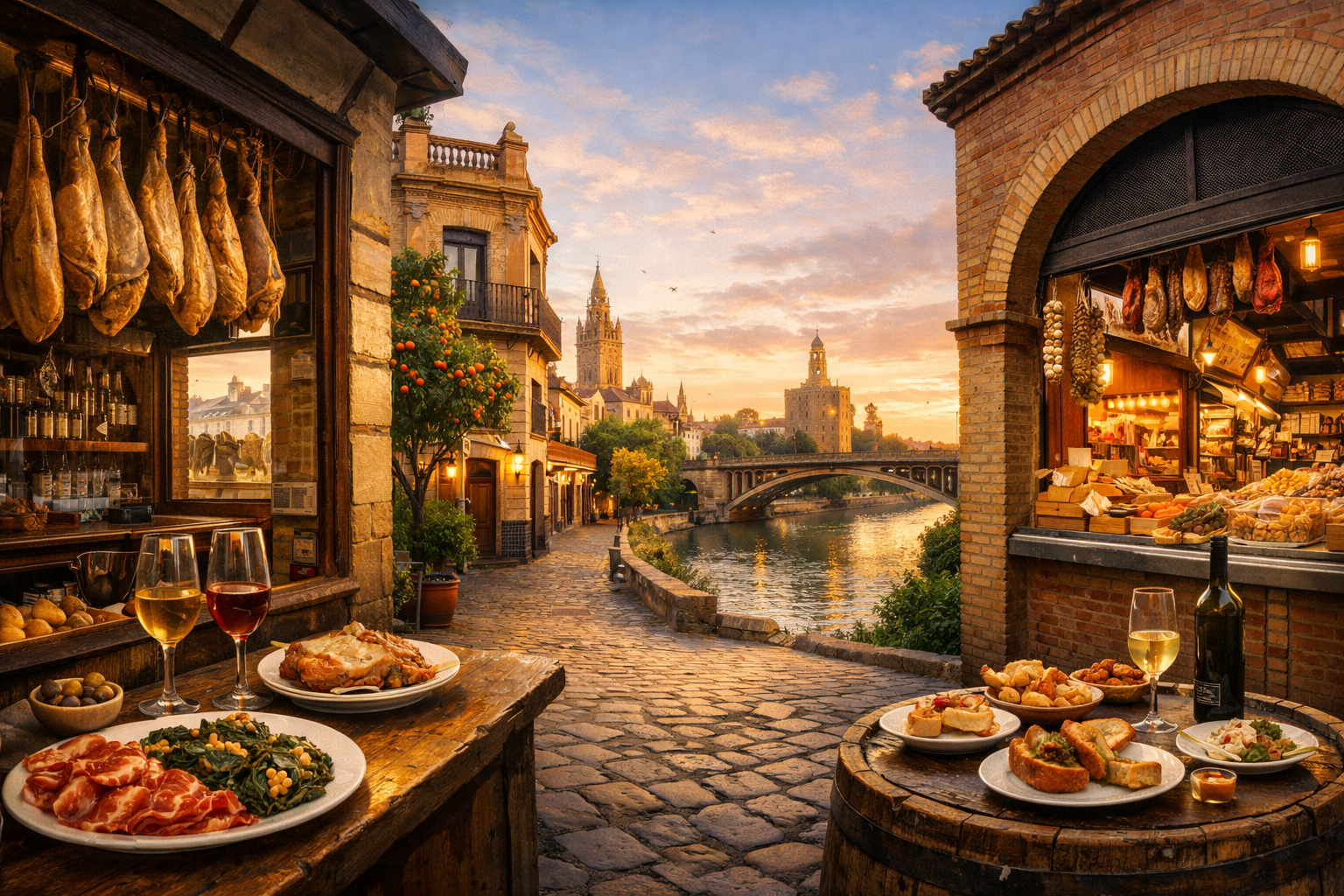
Day 1 — Seville: historic center, El Rinconcillo and an evening in Santa Cruz
🚶 Start getting to know Seville not with a museum, but with the taste of the city. It is best to spend the morning calmly: check-in, a short rest after the journey, and your first walk through the old streets between Santa Catalina, Las Setas and the cathedral area. This day is intentionally planned without long transfers: the main points are in the historic center, so the route is easy to do on foot, with breaks for water and rest in the shade. Seville is most beautiful at a slow pace: white-ochre facades, ceramics, the scent of orange trees, and that rare urban rhythm in which food is not an addition to sightseeing, but its main storyline.
🍽️ The first key gastronomic stop is El Rinconcillo, the oldest and one of Seville’s most legendary taverns, operating since the 17th century on Gerona, 40. It is worth going either for an early lunch or closer to evening opening time to avoid the biggest crowds. The place is valuable not only for its age, but also because it still offers one of the clearest examples of the classic Sevillian tapas culture code: the counter, quick service, short orders, plates for sharing, and an emphasis on traditional recipes rather than touristy showiness. Look here for spinach with chickpeas, jamón, Andalusian stews and seasonal dishes; the dense old Sevillian flavors are especially enjoyable with a glass of sherry or vermouth. For those who do not eat pork, it is almost always possible to build an order around vegetable and fish tapas; for vegetarians, the most realistic option is spinach with chickpeas, vegetable dishes and simple cold appetizers, but the selection of such dishes in historic bars like this is usually limited, so it is better to check the ingredients directly when ordering.
🏛️ After lunch, take a long walk through the area around the Cathedral, Archivo General de Indias and the narrow streets of Santa Cruz. This is a good moment not to overload your stomach and to let the route “breathe”: from El Rinconcillo to the cathedral area it is about a 15–20 minute walk, and along the way it is easy to stop for coffee or cold water. Archivo General de Indias by the cathedral is not just a beautiful Renaissance building, but part of the famous monumental complex in central Seville. Even if you are not planning a full museum visit, this part of the route matters as a cultural frame for the gastronomic day: Seville historically lived on trade flows, wine, spices and products from the Atlantic and Mediterranean worlds — and that connection is felt especially strongly here.
🍷 In the evening, move on to Bodega Santa Cruz, also known as Las Columnas, in the Santa Cruz quarter. This is one of Seville’s liveliest and most recognizable bar spots for classic tapas hopping: it is usually crowded, full of locals and has a dynamic bar atmosphere, so it makes sense to arrive a little before the main evening rush. The format is ideal not for a long dinner, but for the second gastronomic act of the day: take 2–4 tapas to share, try a glass of dry sherry or local wine, and compare the style with El Rinconcillo. This is the right place to try Andalusian snacks, simple meat and seafood dishes, and to observe the ritual of the Sevillian evening meal itself — noisy, standing, lively and very communal.
💡 Tip of the day: do not order too much for dinner right away. In Seville, historic bars are best experienced in sets of 2–3 dishes, moving from place to place. If a traveler needs a gluten-free diet, it is important to immediately ask about bread, sauces and frying oil; if alcohol is not tolerated, sherry can easily be replaced with sparkling water, mosto or a non-alcoholic drink without breaking the evening rhythm. Reservations in such bars are useful, but not always necessary for a short visit at the counter; if you specifically want a table at prime time, it is best to check ahead.