
Buy PDF guide

Buy PDF guide — 6.43 USD

PDF — 6.43 USD

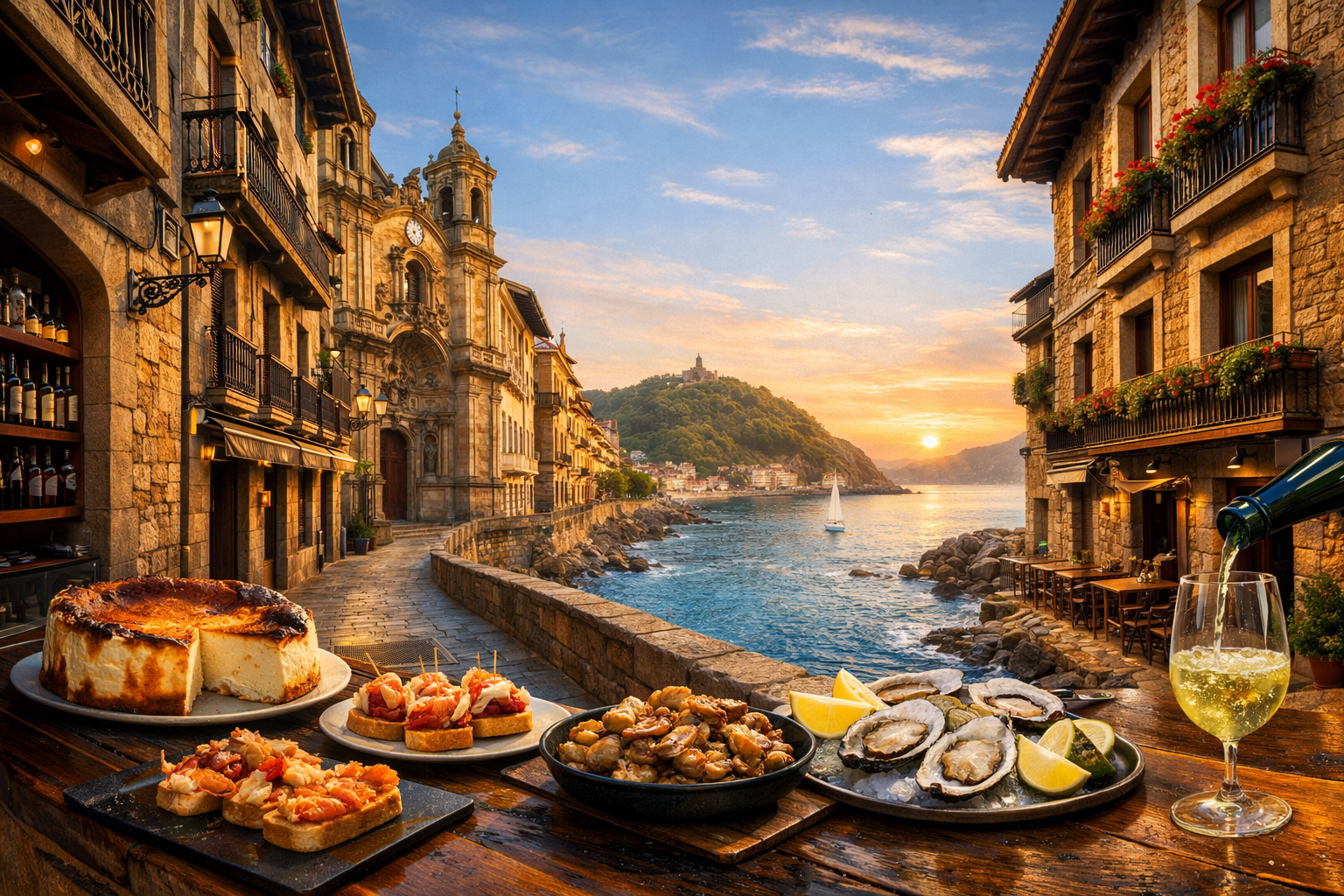
Spain, San Sebastián. A gastronomic route through the old quarters with visits to La Viña, Ganbara, Bar Martínez, and the restaurant Casa Urola: pintxos, Basque cheesecake, mushrooms, seafood, and txakoli.

Spain, San Sebastián. A gastronomic route through the old quarters with visits to La Viña, Ganbara, Bar Martínez, and the restaurant Casa Urola: pintxos, Basque cheesecake, mushrooms, seafood, and txakoli.

Spend three delicious days in San Sebastián, wandering the narrow lanes of Parte Vieja and nearby neighborhoods in search of the city’s most memorable flavors. From pintxos at Ganbara and Bar Martínez to Basque cheesecake at La Viña, mushrooms, seafood, and a glass of crisp txakoli at Casa Urola, this is a feast woven into every corner.

🧭 DAY-BY-DAY ROUTE

Ready-made country and city routes with daily plans, sights, transport and accommodation. Buy PDF guides for independent travel.

🧭 DAY-BY-DAY ROUTE


Day 1 — Parte Vieja: La Bretxa market, Bar Martínez, Ganbara, La Viña

  • 🚶 Start the tour at the historic La Bretxa market at Boulevard Zumardia, 3. This is one of Donostia’s key gastronomic spots: under one roof you’ll find traditional stalls with fish, meat, cured sausages, groceries, and local products. It’s here that you especially understand why Basque cuisine relies so confidently on the quality of its ingredients: Atlantic fish, seasonal vegetables, sheep’s cheeses, pickles, preserves, cider, and txakoli are seen here not as souvenirs, but as part of the city’s everyday life. It makes sense to come in the morning, while the market is operating at full pace: you can look over the selection, buy edible gifts, and take note of products you’ll later see on plates in the bars of the old town.
  • 🥬 For travelers with dietary restrictions, this is an especially convenient start: the market is the easiest place to understand product ingredients and put together safe snacks. If you don’t eat meat, look for local cheeses, bread, olives, preserved vegetables, and seasonal mushrooms; if you avoid gluten, ask about gluten-free bread and separately packaged products; if you have a seafood allergy, it’s best to warn vendors right away with a Spanish phrase about your allergy, because fish and shellfish are found literally everywhere in this region. It’s reasonable to set aside 1–1.5 hours for the market itself.
  • 🚶 From La Bretxa to 31 de Agosto street is only a few minutes on foot. This is the heart of Parte Vieja — a narrow, lively, noisy, and aromatic street where the “from bar to bar” format works better than any carefully planned scenario. Make your first food stop at Bar Martínez, Calle 31 de Agosto, 13. The venue operates as a classic Basque bar and is well suited to a gentle introduction to the world of pintxos: it’s easy to order a glass of txakoli and 1–2 small items here without overloading the start of the day. Historically, it’s a very important place in the street’s gastronomic memory, and in atmosphere it feels like exemplary old Donostia: a tight counter, the rhythm of short orders, local guests, and a highly concentrated atmosphere.
  • 🍷 Recommended format at Bar Martínez: a glass of dry txakoli, 1 hot pintxo, and 1 cold snack or half-portion, if available. The bar usually operates 12:00–16:00 and 19:00–23:00. In winter and summer, closing days vary slightly, so it’s worth double-checking the hours before heading out. It’s best not to make this a long lunch stop, but to use the place as the first tasting stop on the route.
  • 🚶 A few doors down is the legendary Ganbara, San Jeronimo, 21. This is already an almost mandatory gastronomic “station” for anyone coming to San Sebastián for pintxos. The bar area cannot be reserved, and at lunch and especially in the evening it can get very crowded, so it’s best to come either close to the start of the daytime service or after the first peak hour. Ganbara is famous for its respect for ingredients: this is an especially good place to order mushrooms, seafood, and signature hot dishes, as well as to pay attention to seasonal offerings. The restaurant and bar menu includes mushrooms and seasonal setas, revuelto de hongos y gambas, dishes with seafood, shrimp, anchovies, cod, and hake — exactly the flavor line around which this tour is built.
  • 🍄 At Ganbara, it makes sense to make the main gastronomic highlight of the day: if you eat everything, choose mushrooms, seafood, and something with fish; if you don’t eat meat, you can focus on mushrooms, vegetables, and fish; if you are allergic to shellfish or crustaceans, say so in advance and don’t rely on visual presentation, because many hot dishes and sauces in Basque cuisine are built on fish or seafood bases. For a proper stop here, set aside 60–90 minutes. If you want the restaurant dining room specifically, it makes sense to book in advance, since reservations are accepted only for the comedor, not for the bar.
  • 🌊 After a substantial tasting, take a break for a walk: from Parte Vieja it’s easy to head to the waterfront, stroll to the port, and continue toward La Concha. This break is needed not only for the beautiful views, but also for the logistics of flavor: in San Sebastián, it’s better to eat slowly, in short stages, leaving room for the next counter and the next glass. Allow 1.5–2 hours for the walk and rest.
  • 🍰 In the evening, return to the same gastronomic axis of 31 de Agosto street and end the day at La Viña, Calle del 31 de Agosto, 3. This place has long become a global point of attraction thanks to its famous Basque cheesecake, but it’s not worth limiting yourself only to dessert: the venue also has pintxos and a restaurant section. Still, the cheesecake should be the culmination of the day here. The presentation looks simple from the outside, but the dessert has a memorable character: a caramelized top, an almost creamy center, a warm, slightly flowing texture, and that very taste people return for again and again.
  • ⏰ La Viña usually operates Tuesday through Sunday 10:30–16:00 and 19:00–23:00, with Monday as a day off. The evening format here is best planned as an early dinner or a late dessert after your walk. If you avoid gluten, it’s worth checking in advance the ingredients of the specific cheesecake version and the risks of cross-contact; if you are intolerant to lactose or milk protein, on the other hand, it’s better to treat this place as an iconic stop “for photos and atmosphere” rather than as a must-taste. The day is very compact logistically: almost everything is done on foot within the old town.


Day 2 — cooking class, Casa Urola, and an evening in the gastronomic quarters

  • 👩‍🍳 Dedicate the second day not only to tasting, but also to understanding Basque cuisine from the inside. The best format is a cooking class with a market component at Mimo, one of San Sebastián’s best-known gastronomic operators. They offer formats such as a market tour and a seasonal/fish cooking class, where participants first get to know the products and then cook dishes under the guidance of a chef. It’s an ideal way to see how local cuisine works with fish, olive oil, vegetables, seasonal mushrooms, broths, and the traditional logic of “not overloading the product.” It’s reasonable to allow 3–4 hours for this experience, and it usually fits best in the first half of the day.
  • 🥘 The practical value of a cooking class for a food trip is huge: afterward, you begin to read menus in bars and restaurants differently. It becomes clearer why seasonality, fish texture, degree of doneness, bread quality, txakoli acidity, minimalist sauces, and precision of heat treatment matter so much in Donostia. For vegetarians and those limiting seafood, a cooking class is also useful as a space for pre-arranged adaptations: many such programs are willing to accommodate preferences, but restrictions need to be communicated before booking, not on the spot.

  • 🚶 After a short rest and a walk through the center, head to Casa Urola, Fermín Calbetón, 20, one of Parte Vieja’s most iconic addresses. This restaurant is especially good because it combines the atmosphere of a lively Basque bar with a more composed, ingredient-focused restaurant kitchen. This is where you should have the main seated meal of the whole tour: unhurried, with wine, several courses, and attention to seasonal items. Casa Urola is strong both in its classic pintxos in the bar area and in full restaurant dishes, including seafood, fish, seasonal vegetables, and a carefully selected wine list.
  • 📅 An important practical detail: Casa Urola accepts reservations at least 24 hours in advance and holds the table for a limited time, so it’s best to make the reservation for this day ahead of time. The bar usually operates 12:00–15:15 and 19:00–23:15, the restaurant 13:15–15:15 and 20:15–22:45. Tuesday and Wednesday are weekly closing days, and this is critical to keep in mind when actually planning dates. If your three-day visit falls exactly on those days, swap lunch and dinner within the route or shift the focus to bar culture at other available venues.
  • 🦐 What to order at Casa Urola: focus on the catch of the day, seasonal vegetables, seafood, and dishes with a pronounced but not heavy Basque structure. This is a very good place to try the more “restaurant” side of the region after the street and bar dynamics of the first day. If you want to keep the theme of the tour, pair seafood or fish with a glass of txakoli, then move on to white wine from other Spanish appellations. For guests who don’t eat meat, a comfortable route through vegetables, fish, mushrooms, and desserts is possible; for vegans, the choice is usually narrower, so it’s better to mention restrictions when reserving.
  • 🚶 After lunch or dinner, take a slow walk along the Parte Vieja → Boulevard → Centro/Romántica stretch. This part of the city is great because gastronomy isn’t locked into a single quarter: from the cramped bar atmosphere of the old town, you move out to wide boulevards, gourmet shop windows, and a calmer urban rhythm. If you still have energy, you can stop by Mercado San Martín and see how a traditional market in San Sebastián blends with modern city life. It’s a useful complement to La Bretxa: a different scale, a different pace, but the same idea of respect for local produce.
  • 🍷 In the evening, the day can be finished in a “one quarter — one glass” format: don’t try to do another marathon of many bars. After the cooking class and a serious meal, it’s better to choose a light finale — for example, a glass of txakoli or cider with a small snack. San Sebastián is at its best when it gives you time not only to eat, but also to digest your impression of the city: the sound of dishes from the bars, the smell of the sea, the damp air from the bay, the light in the narrow alleys, and the constant feeling that food here is the language the whole city speaks.

Day 3 — museum, park/sculptures, gourmet gifts, and a final seaside accent

  • 🏛️ Start the third day a little more calmly and culturally — with San Telmo Museoa, located in the old town at Plaza Zuloaga, 1. This is not just a museum “for the sake of it,” but an important context for the entire gastronomic journey: the history of Basque society, crafts, urban life, and identity helps you understand more deeply where the local cuisine’s cult of seasonality, product, and regional pride comes from. A morning at the museum nicely balances the intense tasting days and gives your body a break. Usually, it’s worth allowing 1–1.5 hours for the visit.
  • 🌿 Then you can choose one of two scenarios. The first is to stay in the city and walk along La Concha promenade, the port, and the viewpoints of Monte Urgull. The second — if you want to add art and greenery — is to go to Chillida Leku in Hernani: this is a museum and landscape space dedicated to sculptor Eduardo Chillida. For a three-day tour, this is already a semi-excursion outing, but it rounds off the trip beautifully because it gives the Basque experience another dimension — not only taste, but also form, matter, space, and the connection between art and nature. If you choose Chillida Leku, allow half a day including transport.
  • 🛍️ After the cultural part, return to gastronomy in a gentle, practical way: buy edible gifts and products to take home. The best categories to bring back are preserved seafood, local cheeses, cured meats, sweets, a bottle of txakoli, and products from shops around the markets. This is exactly the moment when you don’t need to chase another big lunch: it’s better to focus on choosing things that will continue the journey once you’re already home. It’s most convenient to do this kind of shopping in the first half or middle of the day, while the market and specialized shops are open without evening bustle.

  • 🐟 Build your final lunch around the sea and simplicity. If you want to revisit a successful spot, go back to the place that made the strongest impression in the first two days: Ganbara for mushrooms and seafood, Casa Urola for a full kitchen experience, or La Viña for a light repeat of the cheesecake as a farewell dessert. Such repetition in San Sebastián is completely normal: a gastronomic trip here is often built not on an endless list of addresses, but on going deeper into a few truly strong places.

  • 🍽️ For travelers with restrictions, the third day is best used as a day of control and comfort: choose places you already know, where you understand the kitchen style and can more accurately ask for adaptations. In Basque gastronomy, meat-free dishes are most often relatively easy to adapt, but fully without fish/seafood or without traces of dairy products is more difficult. If you have celiac disease, a nut allergy, or a shellfish allergy, on the final day it is especially sensible to avoid spontaneous crowded counter stops and prefer ordering from the menu with direct clarification of ingredients.

  • 🌅 End the trip on La Concha promenade or by the port with a view of the evening city. San Sebastián knows how to leave you with not only a list of what you ate, but also a very complete sense of place: a city where the market, bar, restaurant, sea, and regional pride are joined into one system. In three days, you move from ingredients to plate, from street counter to thoughtful restaurant cooking, from legendary cheesecake to an understanding of why Basque gastronomy rests not on fashion, but on discipline of taste.

Flight tickets

eSIM for travel

Buy PDF guide

Buy PDF guide — 6.43 USD

PDF — 6.43 USD