
Buy PDF guide

Buy PDF guide — 6.43 USD

PDF — 6.43 USD

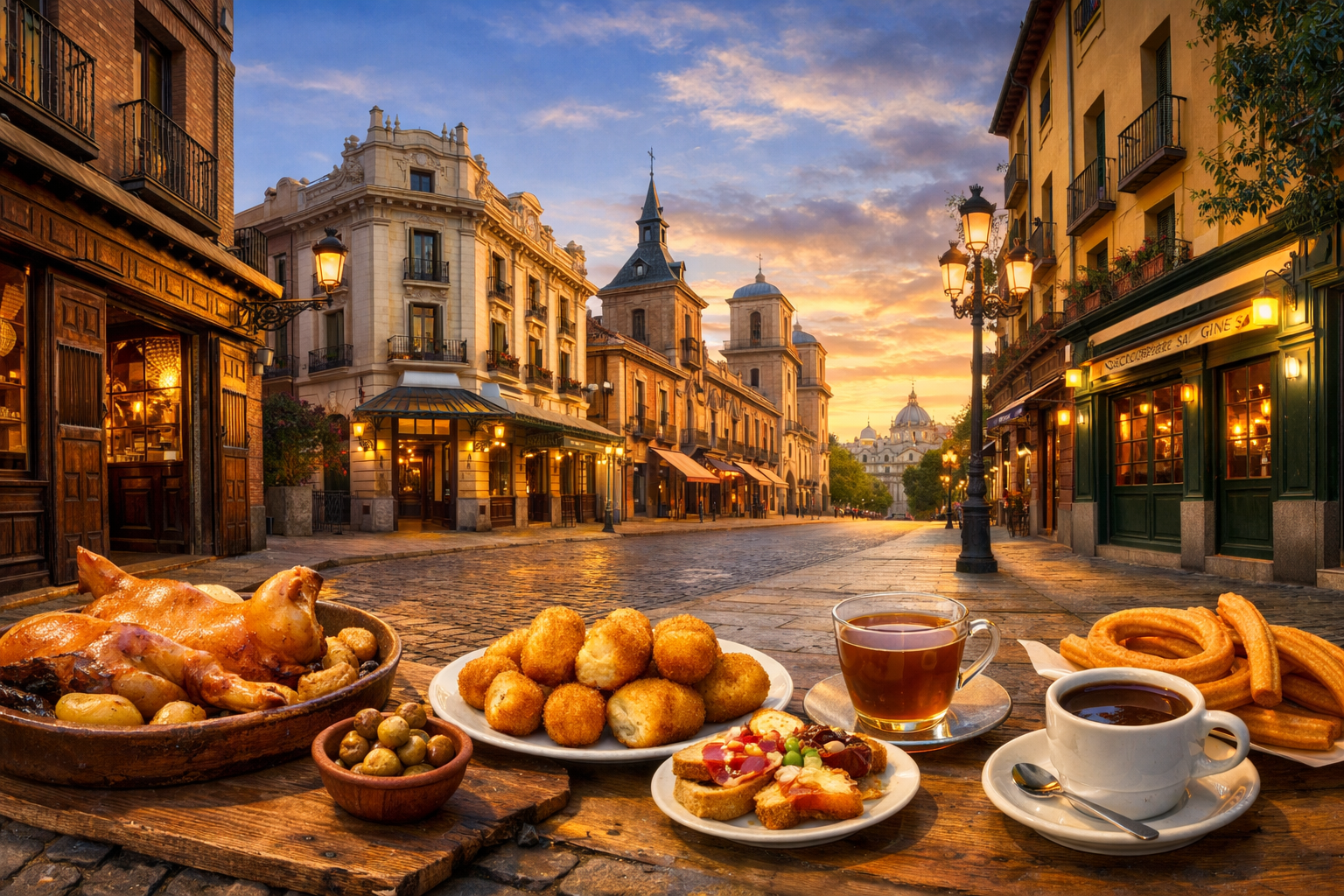
Spain, Madrid. A route through the capital's oldest restaurants with visits to Sobrino de Botín, Lhardy, Casa Labra, and Chocolatería San Ginés: milk-fed suckling pig, cod croquettes, consommé, tapas, and churros with chocolate.

Spain, Madrid. A route through the capital's oldest restaurants with visits to Sobrino de Botín, Lhardy, Casa Labra, and Chocolatería San Ginés: milk-fed suckling pig, cod croquettes, consommé, tapas, and churros with chocolate.

Taste Madrid through its oldest dining rooms, where history lingers in every plate and counter. From Sobrino de Botín’s milk-fed suckling pig to consommé at Lhardy, cod croquettes at Casa Labra, and late churros with chocolate at San Ginés, this route turns the capital into a feast of timeless flavors.

🧭 DAY-BY-DAY ITINERARY

Ready-made country and city routes with daily plans, sights, transport and accommodation. Buy PDF guides for independent travel.

🧭 DAY-BY-DAY ITINERARY


Day 1 — Madrid of the Austrias: Botín, Plaza Mayor and San Ginés

  • ✈️ Arrival at Adolfo Suárez Madrid-Barajas. The easiest way to reach the center is by official taxi, Airport Express Shuttle, or metro/commuter train with a transfer. If you are staying around Plaza Mayor / Sol, allow about 25–40 minutes depending on the terminal and traffic. After check-in, it’s best not to try to “cram in” too many stops: this food tour is designed so that there’s time between meals for walking, an aperitif, and rest.

  • 🚶 Start your route in old Madrid — around Plaza Mayor, Cava de San Miguel, and Cuchilleros Street. This is the part of the city where gastronomy feels not like a trendy attraction but like a continuation of centuries of urban life: stone arches, narrow descents, old shops, wine cellars, roasting ovens, taverns, and an endless flow of locals, tourists, and waiters carrying trays. This is where Castilian cuisine is felt especially well: more direct, hearty, built around roasts, offal, bread, wine, broths, and quality meat.

  • 🍽️ The main gastronomic stop of the day is Sobrino de Botín, C. de Cuchilleros, 17, 28005 Madrid. This is one of the city’s most famous historic restaurants and an essential stop on any route through the capital’s oldest restaurants. It’s worth coming here for an early lunch or early dinner with a reservation: the place is extremely popular, and for some bookings the restaurant may request a bank card as a guarantee. The classic order here is cochinillo asado, roast suckling pig cooked in an old oven. The dish has crispy caramelized skin, juicy meat, and a very straightforward flavor without extra “theatrics”: all the power here lies in the roasting technique, the quality of the product, and respect for Castilian tradition. If you do not eat pork, a sensible alternative is roast lamb or more neutral dishes from the current menu; vegetarians and people with significant dietary restrictions should check the options in advance when booking, because the kitchen’s profile is historically meat-centered.
  • ⏳ After lunch, give yourself at least 1.5–2 hours for an unhurried walk. From Botín it’s very convenient to stroll through Plaza Mayor, look under the arcades, and then head to Mercado de San Miguel. The walking logistics here are ideal: the key points are 5–10 minutes apart, with no need for taxis or metro. This is important for a food tour — you do not waste energy on long transfers, and you naturally “walk up” your appetite.

  • 🥂 Mercado de San Miguel, Plaza de San Miguel, s/n, 28005 Madrid — not just a market, but a gastronomic showcase of the city. It is especially convenient as a place for a second, lighter meal: a glass of wine, ibérico, cheeses, olives, seafood, preserves, pintxos, and small tapas portions. You should come here not for a “cheap local market,” but for the chance to try several flavors in a row in one space. For this itinerary, the market works as a gastronomic pause after Botín: instead of a heavy second dinner, selective tastings of regional products. If you want a table on a Tuesday evening, the market has a separate table-booking format with time slots; on other days it is more comfortable to come before the main evening rush.
  • 🍫 The finale of the day is Chocolatería San Ginés, Pasadizo de San Ginés, 5, 28013 Madrid. It is only a few minutes’ walk from the market through the center. This is the perfect ending to the first day: after roast dishes, wine, and tapas — thick hot chocolate and fresh churros. The main hall is open 24 hours, but in practice it is better to come either late in the evening after a walk or early the next morning if you want to avoid the crowd. On weekends, holidays, and during the Christmas season, they do not take reservations; there is a system where you get a receipt at the cashier before being seated. For travelers with gluten or milk intolerance, it is important to clarify the ingredients and risk of cross-contact separately: the classic churrería format is not always convenient for strict dietary restrictions.
  • 💤 It makes sense to spend the night in the Sol / Plaza Mayor area. This will allow you to do the entire first day on foot and not depend on transport. If dinner at Botín is planned for a late hour, it is better not to book the earliest possible breakfast the next day and to leave at least 8 hours for rest.


Day 2 — Historic taverns in the center: Casa Labra, Lhardy and the Letras quarter

  • ☕ Start the morning calmly, without overloading it. After a filling first day, it is better to choose a light breakfast at the hotel or coffee with tostada, and shift the main gastronomic program toward late morning and lunch. Today the route is built around old Madrid food formats: standing tapas at the counter, iconic cod snacks, broth from a samovar, a pastry-and-gastronomy display, and a walk through the literary center of the city.

  • 🚶 The first stop is Casa Labra, C. de Tetuán, 12, 28013 Madrid, literally just a few steps from Puerta del Sol. This is a historic tavern from 1860, famous for its cod dishes. It is best to come here closer to the start of daytime service or at a non-peak hour: the place is compact, very famous, and fills up quickly. You should order exactly what generations have come here for: croquetas de bacalao and pieces of cod in batter. The flavor here is built not on excessive complexity but on contrast: a hot, creamy, slightly salty filling and a crisp shell, plus a simple glass of beer or vermouth. For those who do not eat fish, the choice is noticeably narrower, so Casa Labra is best understood as a specialized gastronomic stop rather than a full universal lunch.
  • 🏛️ After Casa Labra, it is convenient to walk around the Sol area, Calle del Arenal, and Plaza de Canalejas, and then head toward Barrio de las Letras. The walk to Lhardy usually takes about 12–15 minutes at a comfortable pace. This is one of the most pleasant combinations in the whole route: you go from a noisy popular tavern to a more refined, almost theatrical Madrid of the 19th century.

  • 🍲 Lhardy, Carrera de San Jerónimo, 8, 28014 Madrid — an iconic address of old gastronomic Madrid. The restaurant operates from Monday to Saturday from 13:00 to midnight, and on Sundays only until 16:00, while its shop and gastronomic section open earlier. That is why it makes sense to plan lunch or a late lunch here, rather than a very late Sunday dinner. Reserving a table is highly recommended, especially if you want a full seated meal in the restaurant. The establishment has a smart casual dress code; sportswear, shorts, and flip-flops are not welcome.
  • 🥣 The essential gastronomic highlight at Lhardy is consomé, the famous clear rich broth that has historically been served here both in the shop area and as part of the wider experience. It is not just “soup,” but an important gastronomic symbol of Madrid: soft depth of flavor, warmth, aroma, and a sense of old urban elegance. If you want to expand the tasting, look at the croquettes, puff pastry snacks, classic Madrid dishes, and seasonal items. The menu mentions products tied to Spanish regions and farms, so Lhardy works especially well as a place to understand how the capital’s cuisine absorbed ingredients from across the country. For vegetarians, the selection is more limited than in modern gastro-bistros, so it is better to mention special requests in advance.
  • 🛍️ After lunch, linger in Lhardy’s shop section. This is one of those places where gastronomy continues to live not only in the restaurant dining room but also in the form of delicacies, sweets, takeaway broth, and signature snacks. For gifts, it is worth looking at long-shelf-life gourmet products, but check transport rules and temperature requirements before buying.

  • 🌆 Dedicate the evening to Barrio de las Letras and Paseo del Prado. This is important not only for culture, but also for the right rhythm of the tour: after two strong gastronomic stops, it is useful to walk for 30–45 minutes, pause for coffee or a glass of wine, and not try to organize a third heavy dinner. If you wish, you can return to the Mercado de San Miguel area just for light tapas or choose a modern wine bar, but do not overload the day. This itinerary is designed to be rich, but realistic.

Day 3 — Markets, products and culinary Madrid: the final assembly of flavors

  • 🧺 The third day should be dedicated to a more “product-focused” Madrid. After getting acquainted with historic restaurants and taverns, it makes sense to see how the capital lives through markets, cheese, ham, preserves, olives, vermouth, sweets, and urban tasting formats. Start with a calm morning and leave your airport departure for late evening or the next day so as not to cut the route short.

  • 🥖 Head again to the central quarters, but this time with a focus on gastronomic shopping and short tastings. If you visited Mercado de San Miguel in the evening on the first day, it is especially interesting to come back there during the day on the third day: the crowd is usually a bit lighter, the products themselves are easier to see, and it is simpler to arrange a conscious “small tasting” from several stands — Spanish cheeses, Iberian meat delicacies, canned seafood, olives, sweets, and a glass of wine or vermouth. This format works well both for those who eat small portions and for those who want to leave room for a final meal.

  • 👨‍🍳 For a gastronomic tour, it is useful to add a cooking class or tasting format in the city itself. In Madrid, offers of this type regularly appear at gastronomic spaces and private cooking studios, but the schedule and language of instruction depend heavily on the date. If you want to include a tapas, paella, ham, or sangria workshop, plan it specifically for the morning/day of the third day and book in advance: it is convenient to allow 2–3 hours for this format. If you do not need a workshop, replace it with a longer walk through the Las Letras area and Paseo del Prado with breaks for coffee, vermouth, and small snacks.

  • 🍷 As a final lunch or early dinner, put together your own “Madrid selection of flavors”: tapas, good bread, cheese, ham, marinated products, and dessert. If you want to repeat historic classics, you can return to one of the places you liked not for a full set meal, but for one signature dish: for example, have consommé once more at Lhardy, get a portion of cod croquettes at Casa Labra, or repeat churros at San Ginés in a daytime rhythm. This kind of repetition works wonderfully in a good food tour: instead of chasing new addresses, you remember the taste of the city more deeply.

  • 🧭 If you want to add a cultural layer without complicated logistics, choose places near the route: the Royal Palace, Plaza Mayor, the streets of Madrid de los Austrias, Paseo del Prado, or El Retiro Park. All of them combine easily with the gastronomic scenario and do not require a separate transport day. It is important not to split the final day into stops that are too far apart: the value of this short tour lies precisely in its compactness.

  • 🥗 For travelers with dietary restrictions, the third day is the most convenient. In markets and modern gastronomic spaces, it is easier to put together a selection without pork, without alcohol, with a predominance of vegetables, cheeses, bread, sweets, or seafood. However, in case of celiac disease, severe allergies to nuts, milk, or seafood, always ask about cross-contact and request an allergen list. Historic establishments are often less flexible in their kitchen formats than new restaurants.

  • 🚖 Before departure, leave yourself a time buffer. From the center to the airport by taxi, people usually allow about 30–40 minutes, but during rush hour it is better to count on 50–60 minutes to be safe. If you are flying in the evening after a full day, it is wiser not to book the last table too close to your departure time.

Flight tickets

eSIM for travel

Buy PDF guide

Buy PDF guide — 6.43 USD

PDF — 6.43 USD