
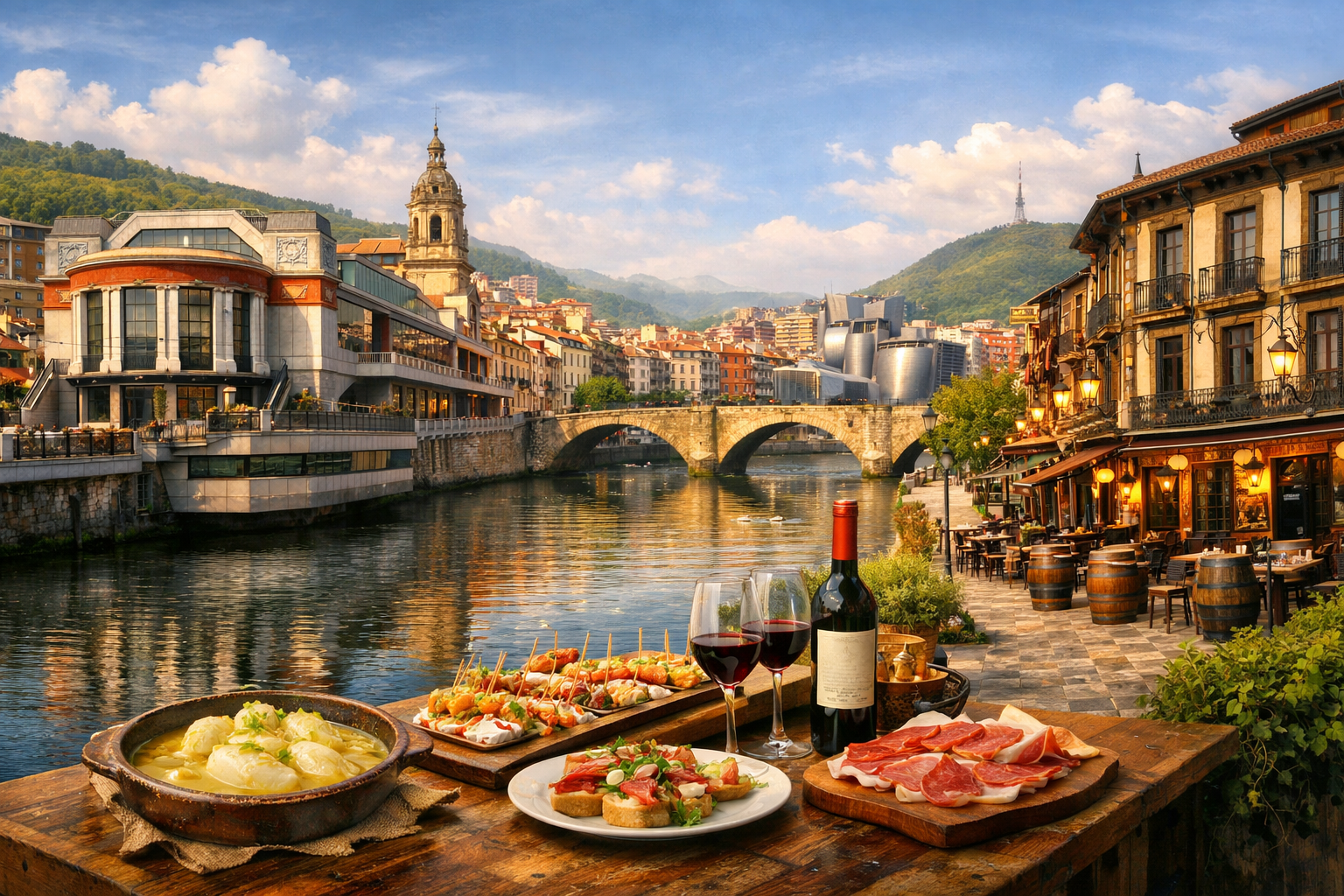
Day 1 — Bilbao: Mercado de la Ribera → Casco Viejo → Víctor Montes → Café Iruña
🚶 Begin your gastronomic introduction to Bilbao at Mercado de la Ribera — the historic market by the Nervión riverfront, in the heart of Casco Viejo. It is not just a place to shop, but one of the city’s main gastronomic stages: under its high vaults and stained glass, the philosophy of Basque cuisine is especially visible, where the product always takes center stage. It’s best to come in the morning, when the stalls look their richest: fresh fish and seafood from the Bay of Biscay, salted and fresh cod, seasonal peppers, tomatoes, white asparagus, sheep’s cheeses, sausages, jamón, olives, preserved delicacies, and sweets. This is exactly the right place for a first “lesson in taste”: to understand why bacalao holds such an important place in the region, how to recognize good jamón by aroma and texture, and why Rioja Alavesa wines pair so well with pintxos. Set aside 1.5–2 hours for the market without rushing, with tastings and short stops at gastro bars. If you want a full market-style lunch, it’s convenient to choose dishes of the day or small portions of pintxos, and if you have dietary restrictions, ask about the ingredients right away: many places can offer pork-free, gluten-free, or vegetable- and seafood-focused options.
🍽️ Food strategy: around the market and the old town, it makes sense to try Basque snacks in portions rather than ordering a heavy lunch right away. Look for classic pintxos with anchovies, tuna, goat cheese, mushrooms, tortilla, gilda, and from the hot dishes — bacalao al pil-pil, if it appears on the menu of the day or as a special. For travelers with dietary restrictions, it’s important to remember that in old bars bread is often used in pintxos by default, so a gluten-free version usually needs to be requested separately; for vegetarians, pimientos, tortilla, cheeses, salads, and mushroom snacks are most commonly available, and for those who do not eat pork, it’s best to focus on fish, seafood, and vegetable options.
🚶 After the market, walk through Casco Viejo — this is the most natural way to weave gastronomy into Bilbao’s urban rhythm. Narrow streets, arcades, old facades, lively bars, and proximity to Plaza Nueva create the perfect setting for the txikiteo tradition, when people move from bar to bar, trying one or two pintxos and a small glass of wine in each. From Mercado de la Ribera to Plaza Nueva is only about an 8–10 minute walk at a relaxed pace, so the route is very realistic even for an unhurried trip.
🍷 For lunch or a late lunch, stop by Víctor Montes at Plaza Nueva, 8 — one of the best-known and most atmospheric establishments in old Bilbao, where classic Basque cuisine meets elegant, almost theatrical presentation. This place fits perfectly in the middle of the first day: you’ve already seen the product at the market, and now you move on to a more refined restaurant interpretation of those same regional flavors. It works well to order a selection of pintxos and 1–2 signature hot dishes here, and if you want to emphasize the region, ask for a wine recommendation from Rioja Alavesa. In practice, this is one of the best ways to feel the combination of “local product + urban restaurant style.” Logistically, everything is simple: the market and Plaza Nueva are within a short walk of each other. The restaurant is open daily, but during popular lunch and early evening hours it’s better to book a table in advance, especially on Friday, Saturday, and in high season.
🚶 After lunch, it’s worth taking a gastronomic pause and walking toward Teatro Arriaga, along the river and then onward toward Ensanche. This transition is useful not only for seeing the city, but also for maintaining the right pace: Basque cuisine is rich, and it’s better to leave 1.5–2 hours for a walk between tastings. From Plaza Nueva to Jardines de Albia, where Café Iruña is located, it’s about a 15–20 minute walk. Along the way, you can calmly admire the transition from the medieval old town to the more formal and bourgeois Bilbao of the 19th–20th centuries.
☕ In the evening, stop by Café Iruña by Jardines de Albia — a historic café from 1903, famous for its neo-Moorish interior, painted ceilings, and the atmosphere of an old urban salon. It is not just a beautiful place for a break, but an important part of Bilbao’s gastronomic biography. It is especially good for ending the day with a late coffee, a glass of wine, vermouth, or a light dinner of pintxos and seasonal dishes. The venue also has a weekday menu of the day, which makes it convenient for those who want a more budget-friendly format without losing the atmosphere. If by evening you no longer want heavy food, choose several cold snacks, cheese, vegetable pintxos, or fish dishes. For travelers with dietary restrictions, Café Iruña is usually convenient because the café-and-restaurant format makes it easier to ask for a simpler adaptation of a dish.
💤 It’s best to spend the night in central Bilbao — either around Plaza Moyúa / Ensanche or closer to the Guggenheim and Abandoibarra. This will make it possible to walk to almost all the key gastronomic points on the route and avoid wasting energy on transfers.