
Buy PDF guide

Buy PDF guide — 6.43 USD

PDF — 6.43 USD

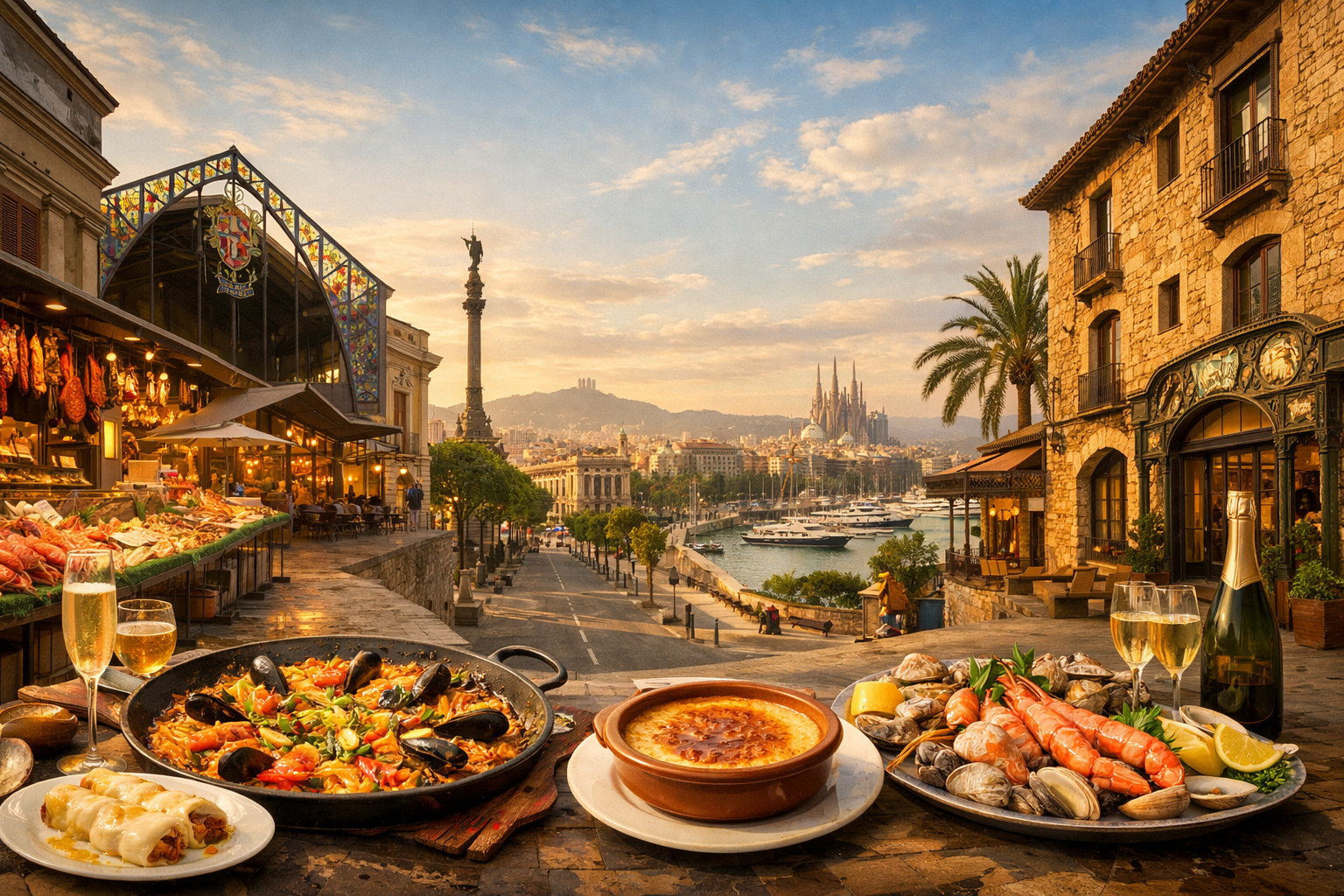
Spain, Barcelona. A journey through Catalan cuisine with the La Boqueria market, the 7 Portes and Can Culleretes restaurants, as well as the Escribà pastry shop: paella, cannelloni, crema catalana, seafood, and cava.

Spain, Barcelona. A journey through Catalan cuisine with the La Boqueria market, the 7 Portes and Can Culleretes restaurants, as well as the Escribà pastry shop: paella, cannelloni, crema catalana, seafood, and cava.

Discover Barcelona through three delicious days of Catalan flavor, from the vibrant stalls of La Boqueria to the historic tables of 7 Portes and Can Culleretes. Savor paella, cannelloni, fresh seafood, crema catalana, and a glass of cava, with a sweet stop at Escribà to complete the journey.

🧭 DAY-BY-DAY ROUTE

Ready-made country and city routes with daily plans, sights, transport and accommodation. Buy PDF guides for independent travel.

🧭 DAY-BY-DAY ROUTE


Day 1 — Barcelona: La Boqueria, a cooking class and a sweet finale at Escribà

  • 🚶 Start your gastronomic introduction to Barcelona in the morning at the Mercat de Sant Josep de la Boqueria (La Boqueria), at La Rambla, 91, 08001 Barcelona. It is one of the city’s most iconic markets, open Monday to Saturday roughly from 08:00 to 20:30, and it is at its best in the morning: fewer crowds, more local shoppers, and stalls with fish, shellfish, jamón, olives, cheeses, vegetables and fruit look especially abundant. Here it is important not just to stroll around, but to view regional produce as the foundation of Catalan cuisine: fresh seafood from the coast, seasonal vegetables for sofrito, sausages, nuts, olive oil and ingredients for desserts. Plan about 1.5–2 hours for the market, including a leisurely breakfast at one of the reliable food counters. For travelers with dietary restrictions, this is a convenient starting point: it is easier to find fruit, cheeses, bread, seafood without complicated sauces, as well as choose vegetarian or gluten-free snacks based on the ingredients.
  • 🍳 After getting to know the ingredients, it makes sense to move on to practice and book a paella and tapas cooking class at one of Barcelona’s genuinely operating schools. A good format is a class with a visit or short introductory block about market produce followed by cooking paella, tapas and sangria or a non-alcoholic alternative. Usually such classes last about 3 hours and require advance booking; in some cases, a visit to La Boqueria is not included every day, and on Sundays or holidays it is replaced by an ingredient overview already in the kitchen. Logistically, this block is ideal for late morning or early afternoon after the market: you have already seen the real food context and better understand why rice, stock, saffron, olive oil and seafood are so important to the Mediterranean cuisine of Catalonia. If there are vegetarians in the group, people with shellfish allergies or alcohol intolerance, you should inform the school in advance: many classes can offer vegetable paella, substitutions for certain tapas and non-alcoholic drinks.
  • 🚶 After lunch, take a relaxed walk on foot through Raval → Rambla → Plaça de Catalunya with a rest break so the day does not feel overloaded. From La Boqueria to the Escribà pastry shop on Gran Via, it is convenient to walk in about 20–25 minutes or take a short metro/taxi ride. This rhythm matters for a gastronomic route: a substantial lunch and a cooking class are best balanced with unhurried time so that by evening you have an appetite again.
  • 🍰 Dedicate the evening to Pastisseria Escribà — a historic Barcelona pastry shop associated with the name Christian Escribà. For this route, the address Gran Via de les Corts Catalanes, 546, 08011 Barcelona is especially convenient. This is not just a dessert display, but an important part of the local sweet tradition: it is the right place to try Catalan desserts and observe how craft, modernist aesthetics and festive culture come together in Barcelona. As part of the tour, order a dessert tasting with an emphasis on crema catalana or its seasonal interpretations, and also choose something to pair with coffee. If you want a glass of sparkling wine, the evening can be complemented with cava at a nearby bar or restaurant without overloading the program. For guests with dietary restrictions, it is especially important here to clarify the ingredients on site: the presence of nuts, gluten, dairy products and eggs in desserts is very likely.
  • 🚕 Day logistics: Barcelona airport is most conveniently connected to the center via Aerobús or the metro; for the route itself on the first day, walking and the metro are optimal. If you arrive in the morning, leave your things at the hotel and go straight to the market; if you arrive late, this day still remains realistic, but then it is better to move the cooking class to early on the second day and reduce the first day to the market, a light lunch and Escribà.


Day 2 — Barcelona: the Born quarter, seafood and the legendary restaurant 7 Portes

  • 🚶 Build the second day around the maritime and festive side of Catalan cuisine. Start the morning in the El Born area and at Mercat de Santa Caterina, address Avinguda Francesc Cambó, 16, 08003 Barcelona. This market often feels like a calmer alternative to Boqueria: there is less tourist noise and it is easier to feel the neighborhood rhythm of the city. Under the undulating roof that has become a modern icon of Barcelona, it is especially interesting to look at cheese stalls, seasonal vegetables, salted fish, meat delicacies and the way the market serves everyday local cooking. This is exactly the place to talk about Catalan cannelloni, Christmas and family dishes, sofrito, stocks, stews and seafood that connect urban and coastal gastronomy.
  • 🏛️ Nearby, it is convenient to add a short cultural block without leaving the food theme: a walk through MUHBA Plaça del Rei in the Gothic Quarter. The underground archaeological layers of ancient Barcino help you understand how the city was shaped, where trade in wine, food and craft had always been part of daily life. This is not a “distracting” attraction, but a good historical context before the main gastronomic dinner. Usually 60–90 minutes is enough for the museum.
  • 🥘 The main highlight of the day is a late lunch or early dinner at Restaurant 7 Portes, address Passeig d'Isabel II, 14, 08003 Barcelona. This is one of Barcelona’s most famous historic establishments, operating since the 19th century and especially suitable for getting acquainted with the classic Catalan and Mediterranean restaurant tradition. People come here not for a casual snack, but for a full ritual: white tablecloths, old urban elegance, old-school service and a kitchen that sticks to the canon while remaining understandable to the modern traveler. It makes sense here to order the dishes around which your tour is built: paella or another rice dish, seafood, fish starters, as well as cava or wine from Catalan appellations of origin. Booking here is highly desirable and essentially mandatory if you want to get in at a convenient time without waiting.
  • 🍽️ For this route, the following ordering strategy works especially well at 7 Portes: start with a selection of starters for two or three people, then take one large rice dish or paella for sharing, and finish with a Catalan-style dessert or something light. This format is closer to the local restaurant logic than ordering one heavy dish per person. If you have allergies to shellfish or fish, clarify the composition of the stock and rice base in advance; if you need a vegetarian option, it makes sense to request vegetable paella or vegetable main dishes already at the booking stage. For those who do not drink alcohol, cava is easily replaced with mineral water or a non-alcoholic aperitif — the important thing is to preserve the rhythm of the meal, not necessarily the alcoholic part.

  • 🚶 After the restaurant, take a gentle walk through Pla de Palau → Passeig del Born → Santa Maria del Mar. After a substantial lunch or dinner, this is the best way to end the day: the Born quarter is beautiful at dusk, and the distances between points are short. On foot from 7 Portes to the main streets of the area is only a matter of minutes. If you still have energy, you can stop for a glass of cava at a neighborhood wine bar, but without overdoing it: the next day you still have another important gastronomic layer ahead — traditional Catalan home cooking.

Day 3 — Barcelona: Sant Antoni, Can Culleretes, chocolate and the Catalan home tradition

  • 🚶 Dedicate the third day to the more “homely” and urban side of Catalan cuisine. Start the morning in the Sant Antoni area and at Mercat de Sant Antoni, address Carrer del Comte d'Urgell, 1, 08011 Barcelona. This is one of the city’s large historic markets, noticeably less open to the tourist spectacle than Boqueria, and therefore especially good for understanding the everyday food rhythm of Barcelona. Here it is interesting to look not only at fish and meat, but also at ingredients for family lunches: pasta, vegetables, poultry, stock bases, cheeses, seasonal pastries, products for festive cannelloni and Catalan Sunday meals. This is a good place to discuss that Catalan cuisine is not only paella and seafood, but also a thoughtful culture of the home table.
  • 🍲 Then head to the historic center for lunch at Can Culleretes, address Carrer d'en Quintana, 5, 08002 Barcelona. This is the oldest restaurant in Barcelona and one of those places where it is especially appropriate to try dishes associated with the city’s Catalan tradition. In the context of your tour, it is worth focusing here on canelons, home-style meat and seasonal dishes, Catalan sauces, and, if available on the menu, fish or seafood in a more classic, not ceremonial but specifically “homestyle” interpretation. It is also pleasant to have dinner here, but for a three-day route it is more convenient to place Can Culleretes specifically at lunch: after the market and a walk, this comes together into a complete story about urban cuisine, while the evening remains free for a sweet finale, a museum or a leisurely departure. Booking is advisable, especially in high season and on weekends.
  • 🍮 For dessert, ask for crema catalana if it is on the current menu, or another traditional Catalan dessert. It is here that the difference between a “restaurant legend” and a living tradition is felt particularly well: dishes are served without excessive theatricality, but with a strong connection to the city’s history. For people with dietary restrictions, it is important to clarify in advance the ingredients of sauces, stocks and cannelloni fillings, because meat and dairy components are common here. Vegetarians are better off requesting possible alternatives in advance, and guests with celiac disease should clarify the question of bread, breading and cross-contact.
  • 🍫 After lunch, add a short sweet and cultural touch at Museu de la Xocolata, address Carrer del Comerç, 36, 08003 Barcelona. This is a logical conclusion to the gastronomic route: you have already experienced the market, rice, seafood, old restaurants and Catalan desserts, and now you see how chocolate and pastry culture are shaped in Barcelona as part of the city’s identity. The museum is suitable not only for families, but also for adult travelers interested in craftsmanship, dessert history and the festive side of cuisine. Usually 45–60 minutes is enough for a visit.
  • 🥂 The finale of the route can be built in two ways. The first is a light aperitif with cava and small snacks in the center before heading to the airport or an evening walk. The second is a calm farewell dinner without a heavy program if your flight is the next day. After three rich gastronomic days, it is better not to try to add another big restaurant booking: it is much more pleasant to leave room for one glass of sparkling wine, a couple of local snacks and the feeling that Barcelona revealed itself not through a list of tourist spots, but through taste, the market, the city rhythm and real Catalan cuisine.

Flight tickets

eSIM for travel

Buy PDF guide

Buy PDF guide — 6.43 USD

PDF — 6.43 USD