
Buy PDF guide

Buy PDF guide — 17.14 USD

PDF — 17.14 USD

Germany. Cycling tour along the Baltic coast: from Lübeck to Stralsund. Difficulty: easy or moderate. Season: May - September.

Germany. Cycling tour along the Baltic coast: from Lübeck to Stralsund. Difficulty: easy or moderate. Season: May - September.

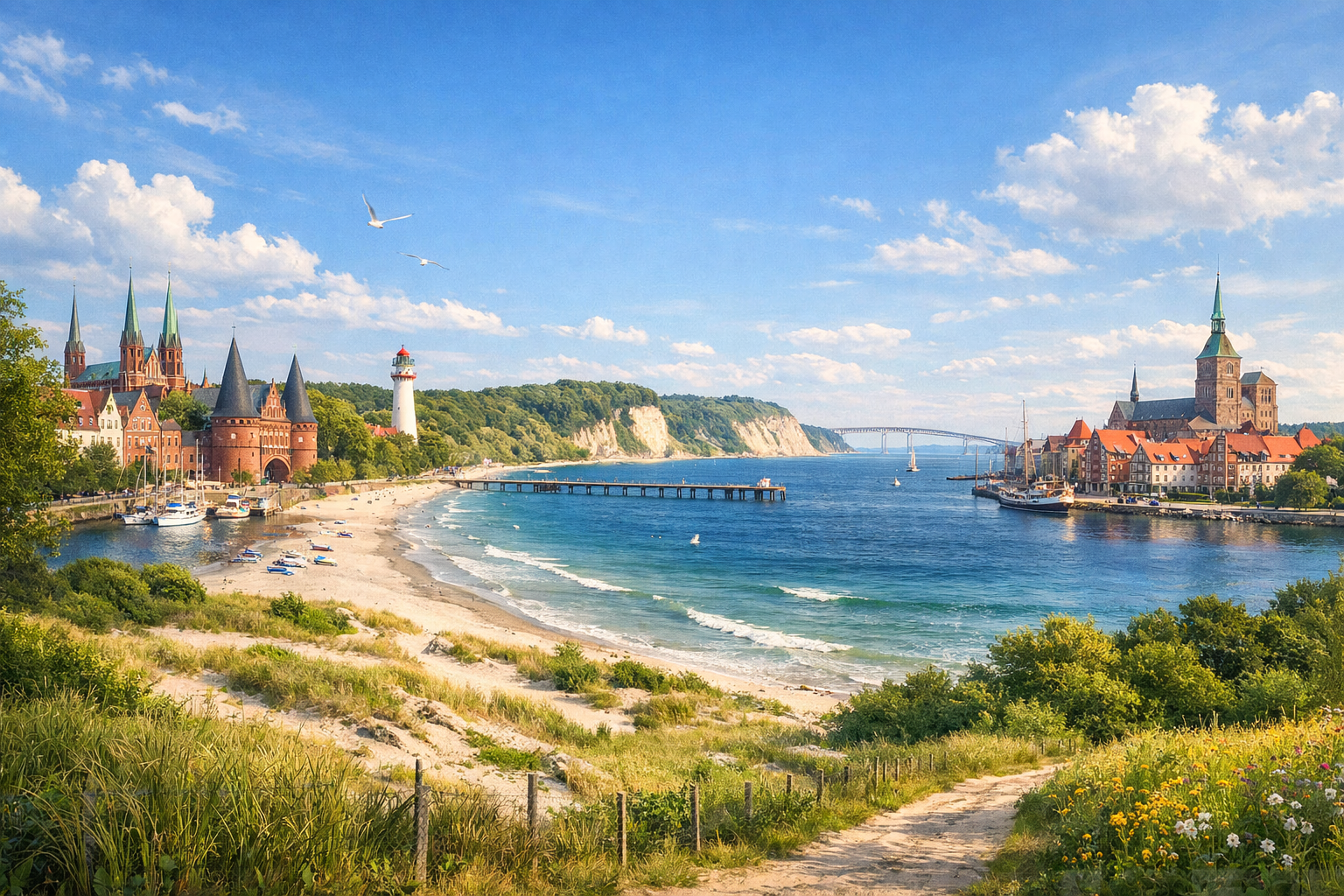
Discover Germany’s Baltic coast on a relaxed cycling journey from Lübeck to Stralsund, where Hanseatic towns, sandy beaches, and breezy seaside promenades unfold stage by stage. Best from May to September, this easy to moderate route leads through elegant resorts like Kühlungsborn and Warnemünde to the wild beauty of the Fischland-Darß-Zingst peninsula.

🚲 DAY-BY-DAY ROUTE

Ready-made country and city routes with daily plans, sights, transport and accommodation. Buy PDF guides for independent travel.

🚲 DAY-BY-DAY ROUTE


Day 1 — Lübeck → Travemünde: a gentle start to the sea

  • 🚲 Start in Lübeck, finish in Travemünde. About 23–28 km, actual riding time around 1.5–2.5 hours, elevation gain negligible — up to 80 m. Surface is mostly asphalt, city bike paths, and calm coastal sections. This is a warm-up day: a good chance to pick up or adjust your bike, check your luggage, and avoid overloading yourself on day one. Along the way, it makes sense to make 1–2 stops by the Trave waterfronts and in Lübeck’s historic quarters before departure, and closer to the finish — stroll along the Travepromenade and, if you like, take the short ferry to Priwall, which accepts both pedestrians and cyclists. It’s convenient to get water and snacks in Lübeck before the start and top up later in Travemünde by the promenade. It’s best to stay overnight in Travemünde: that way, the next day you start directly on the coastal route. Road nuances: the city has plenty of cycling infrastructure, but in tourist areas and on promenades you need to slow down; with a crosswind by the sea, the last kilometers may feel harder than they look on the map. The day is realistic for an ordinary cycle tourist because the distance is short, the profile is flat, and the route helps you settle calmly into the rhythm of a Baltic bike tour.


Day 2 — Travemünde → Boltenhagen / Wismar: a long but flat coastal transfer

  • 🚲 Start in Travemünde, finish in Wismar. About 58–66 km, actual riding time 4–5.5 hours, elevation gain around 150–250 m due to gentle coastal undulations. Surface is mixed: bike paths, asphalt on secondary roads, some firm gravel, and rural coastal sections through Schleswig-Holstein and Mecklenburg. Main stops along the way are Priwall with its dunes and natural landscape, the resort town of Boltenhagen for a long coffee break, and then arrival in Hanseatic Wismar. Refill water in Travemünde, Boltenhagen, and in villages at shops or cafés; on the more natural sections, services are not continuous, so two bottles are sensible even in summer. It’s best to stay overnight in central Wismar near the route, so you can enjoy a relaxed evening walk in the old town. Road nuances: you may face a headwind from the sea, and some coastal sections do not run right along the shoreline but turn inland on safer local roads — that’s normal for the Ostseeküsten-Radweg. If the weather worsens or you run out of energy, it’s reasonable to shorten the day with a regional train on part of the route, but in dry weather this day is realistic for an ordinary tourist: it’s longer than average, but with almost no serious climbs and along one of the most classic Baltic cycling corridors.

Day 3 — Wismar → Kühlungsborn: resorts, piers, and an open shoreline

  • 🚲 Start in Wismar, finish in Kühlungsborn. About 44–50 km, actual riding time 3–4.5 hours, elevation gain around 120–220 m. Surface: good asphalt, sections along the sea, quiet roads between resort villages, and some compacted gravel. Along the way, it’s convenient to stop near Poel Island or at scenic sections of Wismar Bay, and then take a longer break in one of the seaside villages before Kühlungsborn. It’s easy to get water and food in Wismar and top up in resort settlements, where there are usually bakeries, supermarkets, and seasonal cafés. Staying overnight in Kühlungsborn makes sense: the town is well adapted for holidaymakers and cyclists, and the next day gives you a convenient start farther east. Road nuances: the route is very pleasant scenically, but on open sections the wind may slow you down; after rain, dirt inserts can become a bit harder for narrow tires. The day is realistic thanks to the moderate distance and the good infrastructure of the coastal region: it’s a typical comfortable day for a cycle tourist without athletic training.

Day 4 — Kühlungsborn → Warnemünde / Rostock: coastline and a comfortable entry into the city

  • 🚲 Start in Kühlungsborn, finish in Warnemünde. About 35–45 km, actual riding time 2.5–4 hours, elevation gain around 100–180 m. Surface: seaside bike paths, asphalt, calm local roads, and resort promenades, where at times you need to ride slowly or walk beside the bike. Main stops are Heiligendamm with its historic resort appearance, then the wooded and beach sections of Stoltera, followed by a beautiful arrival into Warnemünde with its harbor atmosphere. Resort cafés, bakeries, and supermarkets along the whole line of villages are good for breaks and refilling water; in summer it’s better not to wait until late in the day but to drink regularly, because the open sun by the sea dehydrates quickly. It’s best to stay overnight in Warnemünde: it’s convenient to walk along Alten Strom, and in the morning it’s easy to continue the route via the ferry connection. Road nuances: in high season there are many pedestrians on the promenades, so you need to keep a calm tourist pace; in strong sea winds, it’s more comfortable to ride a bit farther from the beach edge along the official cycle route. The day is very realistic: the distance is short, the route is full of highlights, and the remaining time can be spent swimming, resting, and exploring the harbor.

Day 5 — Warnemünde → Graal-Müritz: via the ferry at Hohe Düne and wooded shores

  • 🚲 Start in Warnemünde, finish in Graal-Müritz. About 32–40 km, actual riding time 2.5–3.5 hours, elevation gain up to 100 m. Surface: city bike paths, asphalt, forest sections, and waterfront promenades. The day begins with a short ferry crossing over the Warnow between Warnemünde and Hohe Düne — this is safer and more logical than looking for road detours. Then the route goes through Markgrafenheide and on to Graal-Müritz along calm resort roads and bike paths among pines and coastal forests. Main stops are the harbor point by the ferry, the beach sections of Markgrafenheide, and the pier in Graal-Müritz. Water and snacks are easy to find in Warnemünde before the crossing, then in the resort villages along the way; on greener sections, services are less frequent, so it’s better to stock up in advance. Staying overnight in Graal-Müritz is good because it lets you take it easy and save strength for the long next stage. Road nuances: it’s better to check the ferry timetable in the morning, and in windy or rainy weather the forest sections may be slower. The day is realistic because the distance is gentle, the profile is flat, and the ferry removes a potentially unpleasant urban connection.

Day 6 — Graal-Müritz → Barth / Zingst: the longest coastal day

  • 🚲 Start in Graal-Müritz, finish in Zingst. About 60–68 km, actual riding time 4.5–6 hours, elevation gain around 120–200 m. Surface is mixed: asphalt, roadside bike paths, firm gravel on natural sections and dikes. Along the way, it’s convenient to make 2–3 stops: in Ribnitz-Damgarten for coffee and a supermarket, then in Barth as an important logistics point before the Fischland-Darß-Zingst peninsula, and toward the end — on the approach to Zingst with bodden views. It’s best to refill water in every larger settlement; this is the day when two full bottles and a quick snack in the bag are genuinely useful. It’s best to stay overnight in Zingst so that the next morning you can ride the shorter and more scenic final stretch to Stralsund. Road nuances: long open sections are sensitive to headwinds, and after rain the gravel can be slower in places; if a tourist is struggling, Barth is a natural point for an early finish and backup train/transfer. Despite its length, the day is realistic for an ordinary cycle tourist thanks to the flat terrain, clear navigation, and the presence of intermediate towns for rest.

Day 7 — Zingst → Prerow → Ahrenshoop → back to Zingst: the best nature loop day

  • 🚲 Start and finish in Zingst. About 40–52 km depending on how deep you explore the peninsula, actual riding time 3–4.5 hours, elevation gain minimal — up to 80 m. Surface: bike paths, asphalt, sections of forest roads and compact dirt in the approach areas to the Vorpommersche Boddenlandschaft National Park. This is a day without moving base, but with a very beautiful radial outing: Zingst — Prerow — Ahrenshoop and back, or a shorter option to Prerow and the beaches. Main stops are Seebrücke Zingst, the seaside sections near Prerow, and the artistic village atmosphere of Ahrenshoop. It’s convenient to take water and food in Zingst, then top up in Prerow and resort cafés; in the natural sections of the national park, you need to respect the rules and not leave the permitted routes. Overnight remains in Zingst — this is convenient for laundry, rest, charging an e-bike, and possible minor repairs. Road nuances: in the area of dunes, forests, and bird habitats, it’s important to ride only on open paths and keep in mind that some sections may be sandy at the edges, so it’s better not to use tires that are too narrow. The day is realistic because it’s a restful stage between long transfers, with an easy profile and many opportunities to shorten the distance.

Day 8 — Zingst → Barth → Stralsund: the finale through lagoons and bodden bridges

  • 🚲 Start in Zingst, finish in Stralsund. About 55–63 km, actual riding time 4–5.5 hours, elevation gain around 100–180 m. Surface: bike paths, asphalt on local roads, dikes, and calm rural links. Along the way, it’s convenient to use Barth again as the main service stop, and then ride toward Stralsund along lagoons and fields, gradually entering a more urban landscape. Main stops are the Barther Bodden, historic Barth, and the final entry into Stralsund’s old town. Refill water and food in Zingst before the start and definitely in Barth; in the second half of the day there are fewer services than in the resort zone. It’s best to stay overnight in central Stralsund near the station and old town: that way it’s convenient to finish the tour, return a rental bike, or plan a train/ferry. Road nuances: open sections depend heavily on the wind, and in bad weather this stretch is easiest to shorten with a regional train from Barth or nearby hubs. The day is realistic for an ordinary cycle tourist because it is flat, without extreme climbs, and completes the route in the clear logic of the coastline.

Flight tickets

eSIM for travel

Buy PDF guide

Buy PDF guide — 17.14 USD

PDF — 17.14 USD