
Buy PDF guide

Buy PDF guide — 4.28 USD

PDF — 4.28 USD

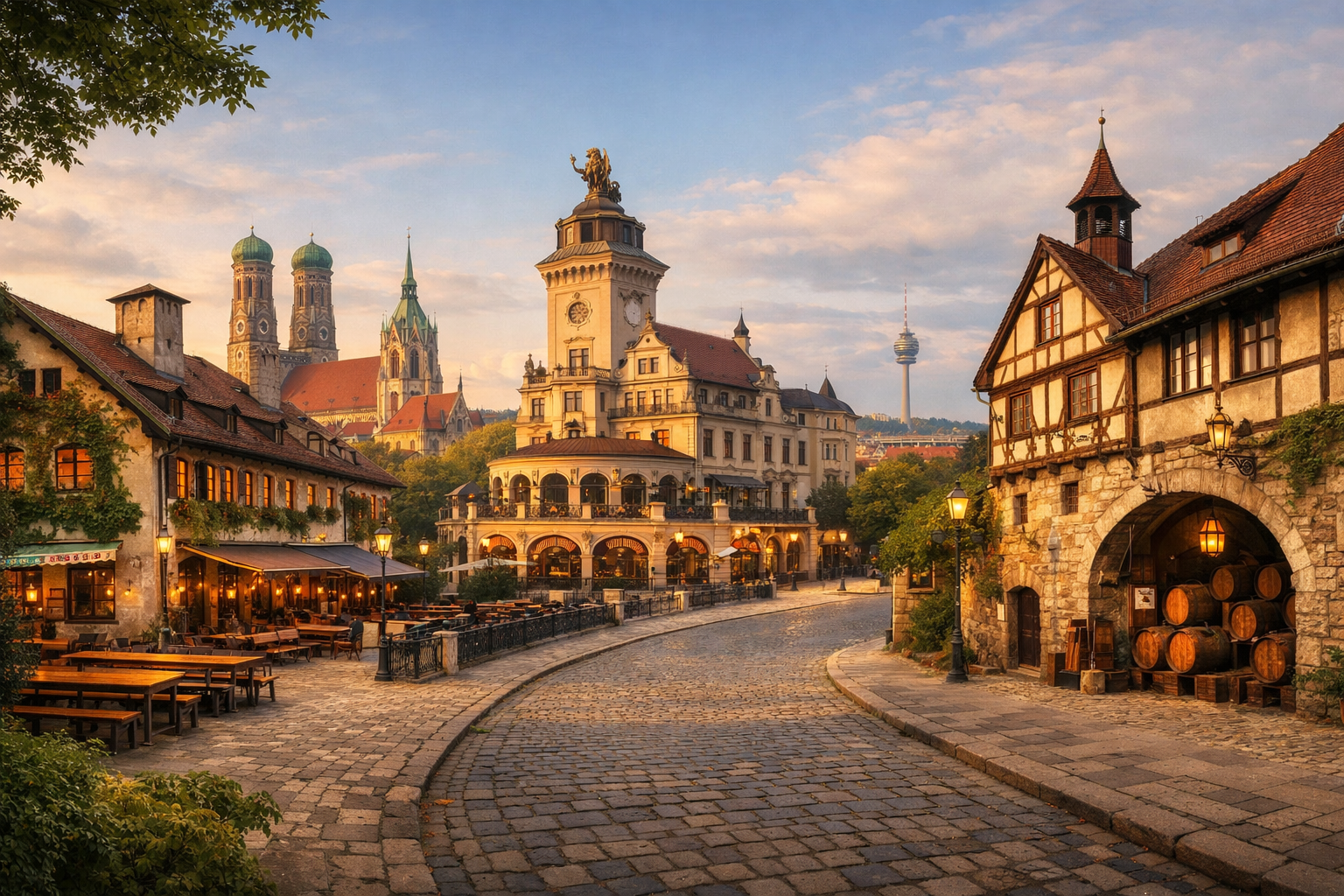
Germany, Bavaria. A beer journey through Munich's oldest establishments with a visit to Augustiner Bräustuben, Löwenbräukeller, and the Beer and Oktoberfest Museum (Bier- und Oktoberfestmuseum).

Germany, Bavaria. A beer journey through Munich's oldest establishments with a visit to Augustiner Bräustuben, Löwenbräukeller, and the Beer and Oktoberfest Museum (Bier- und Oktoberfestmuseum).

In Bavaria’s capital, follow Munich’s rich beer heritage through some of its most storied venues. From the old-world charm of Augustiner Bräustuben and Löwenbräukeller to the Beer and Oktoberfest Museum, this journey blends tradition, atmosphere, and the city’s legendary brewing culture.

🧭 DAY-BY-DAY ROUTE

Ready-made country and city routes with daily plans, sights, transport and accommodation. Buy PDF guides for independent travel.

🧭 DAY-BY-DAY ROUTE


Day 1 — Munich: Augustiner Bräustuben + old town center + Bier- und Oktoberfestmuseum

  • 🚆 It’s best to plan your arrival in Munich via public transport: from the airport to the center, the S-Bahn S1 or S8 is convenient, usually taking about 45 minutes to Hauptbahnhof, and the Lufthansa Express Bus takes about 45 minutes to the central station. You won’t need a car for this beer route: the whole day is easy to do on foot and by city transport.

  • 🏨 It makes sense to stay in the center or near Hauptbahnhof/Marienplatz so you don’t have to make extra transfers between historic beer halls. After the trip, leave yourself 45–60 minutes to rest and have a light snack: tastings are best not started on an empty stomach.

  • 🍺 The first major stop is Augustiner Bräustuben, one of Munich’s most authentic beer halls, closely tied to the city’s oldest brewing tradition, Augustiner. This place is valued not so much for grandeur as for its genuine atmosphere: wooden halls, heavy mugs, calm local patrons, classic Bavarian cuisine, and the feeling that you’ve stepped not into a “set for tourists” but into a living tradition. It’s an especially good place to get acquainted with Munich helles — a soft, bready, clean lager with delicate hop bitterness — as well as richer seasonal beers if they are available on draft. Plan your visit for late lunch or early evening so you can sit down calmly and begin the tour without rushing. Before your trip, always check the official opening hours and reservation conditions: historic venues may have private events, peak occupancy, and seasonal adjustments.
  • 🚇 After the tasting, don’t get behind the wheel: from the Augustiner Bräustuben area, continue the route by S-Bahn/U-Bahn, tram, or taxi. If you still feel energetic, part of the way can be done on foot, turning the route into a beautiful walk through Munich’s central districts.

  • 🚶 Next, the route naturally moves into the old town center. Along the way, it’s pleasant to feel the urban context of Munich’s beer culture: here, beer historically was not just a drink, but part of everyday rhythm, craftsmanship, urban identity, and the famous gastlichkeit — that very Bavarian culture of hospitality where unhurriedness, a table for company, a snack, and respect for ritual all matter. If you have time before the museum, walk around Marienplatz, Tal, and Isartor — it is in these quarters that the connection between medieval Munich and its beer history is felt especially strongly.

  • 🏛️ The key cultural point of the day is the Bier- und Oktoberfestmuseum, located at Sterneckerstraße 2, 80331 München, in one of the city’s oldest houses. The museum is open Monday to Saturday from 11:00 to 19:00 and closed on Sundays and public holidays, so this route is especially convenient to plan for weekdays or Saturday. Inside, over several floors, it reveals not only the history of brewing, but also the evolution of Oktoberfest, city taverns, tableware, advertising, daily habits, and the cultural environment thanks to which Munich became one of the world capitals of lager beer.
  • 🍻 At the museum, it’s worth paying attention not only to the exhibition itself, but also to the very way beer is presented as a cultural phenomenon. This is a good place to structure your impressions: how Munich helles differs from dunkles, why märzen is so closely connected with festival tradition, how city rules for brewing, storing, and serving beer changed over time, and why Oktoberfest grew from a local celebration into a global symbol of Bavaria. Group tours and special tasting formats may be available, but they need to be arranged in advance; before your trip, be sure to check operating days, booking rules, and minimum group size.

  • 🍽️ To end the day, you can stay at the museum’s Museumsstüberl or choose dinner in the old town center with a moderate tasting of local beers. It’s better to limit yourself to 1–2 careful samples rather than turning the evening into a marathon: this helps preserve your palate, rhythm, and energy for the second day. Return to the hotel on foot, by U-/S-Bahn, tram, or taxi; within this tour, do not plan on using a car or motorcycle at all after drinking alcohol.


Day 2 — Munich: Löwenbräukeller + Königsplatz/Maxvorstadt + Bavarian beer styles

  • 🥨 It’s best to start the second morning calmly: a hearty breakfast, water, a walk, and only then the next tasting. A beer tour in Bavaria benefits from an unhurried pace — this way, the differences between styles, cuisine, and historic venues come through better.

  • 🚶 The first part of the day is for walking and architecture. The Maxvorstadt district and the axis toward Königsplatz work well as a “sober prologue” to the next beer stop: broad streets, a university atmosphere, monumental facades, and a calmer rhythm compared with the old center. This creates a beautiful contrast: Munich shows itself not only as a city of festivals and beer halls, but also as a cultural capital with a museum and intellectual environment.

  • 🍺 The main location of the day is Löwenbräukeller, a historic venue at Nymphenburger Straße 2, 80335 München, near Stiglmaierplatz. This is not just a restaurant, but an important part of Munich’s beer scene with a long-standing reputation as a place of large halls, events, a beer garden, and festival evenings. The venue currently usually operates daily from 11:00 to 00:00, with the kitchen roughly until 22:00, and longer on Friday and Saturday, but these details should definitely be rechecked before your visit, because banquets and private events are not uncommon here.
  • 🍻 At Löwenbräukeller, it’s especially pleasant to arrange a comparative tasting of styles. If the first day focused on the Augustiner atmosphere and museum context, here you can shift attention to the broader image of Munich beer hall culture: space, clinking mugs, Bavarian cuisine, the beer garden, and the communal nature of the table. Ask for small pours or share drinks with your group if you want to try more styles responsibly. To get acquainted with the region, it helps to keep the basic styles in mind: Helles — a soft and rounded pale lager; Dunkles — dark, with bready and caramel notes; Weissbier — wheat beer with banana and clove tones; Märzen/Festbier — a fuller festival profile, especially relevant in conversations about Oktoberfest.
  • 🌳 If the weather allows, choose a place in the beer garden: Munich’s biergarten have a special rhythm, where beer is perceived not as a “bar” experience, but as part of the urban summer, socializing, and leisurely rest under chestnut trees. In the tradition of Bavarian beer gardens, simplicity, openness, and unhurriedness matter — and that is exactly what makes the format especially pleasant for a traveler who wants not just to “try beer,” but to understand how it is woven into local everyday life.

  • 📅 If your trip falls during the strong beer season or major beer events, check the Löwenbräukeller event calendar and citywide festivals in advance. In Munich, not only the world-famous Oktoberfest matters, but also more intimate seasonal formats, including strong beer events. On such dates, reservations are especially advisable, and sometimes practically mandatory.

  • 🚇 After the final tasting, it’s best to move only on foot, by U-Bahn, tram, S-Bahn, or taxi. From Stiglmaierplatz, transport connections are excellent, and many central districts can be reached quickly without transfers. If your flight is on the same day, allow extra time: by public transport, it is usually about 45 minutes to Hauptbahnhof plus the time for the ride itself from the beer hall area.

  • ⚠️ Important tour rules: alcohol in Germany is permitted only for adults; always carry ID, especially if you look young. Before your trip, check the official opening hours of the museum and restaurant, tour dates, reservation availability, and possible closures for private events or repairs. Tastings should be moderate: this route is designed as a cultural and gastronomic experience, not a race by the liter.

Flight tickets

eSIM for travel

Buy PDF guide

Buy PDF guide — 4.28 USD

PDF — 4.28 USD