
Buy PDF guide

Buy PDF guide — 6.43 USD

PDF — 6.43 USD

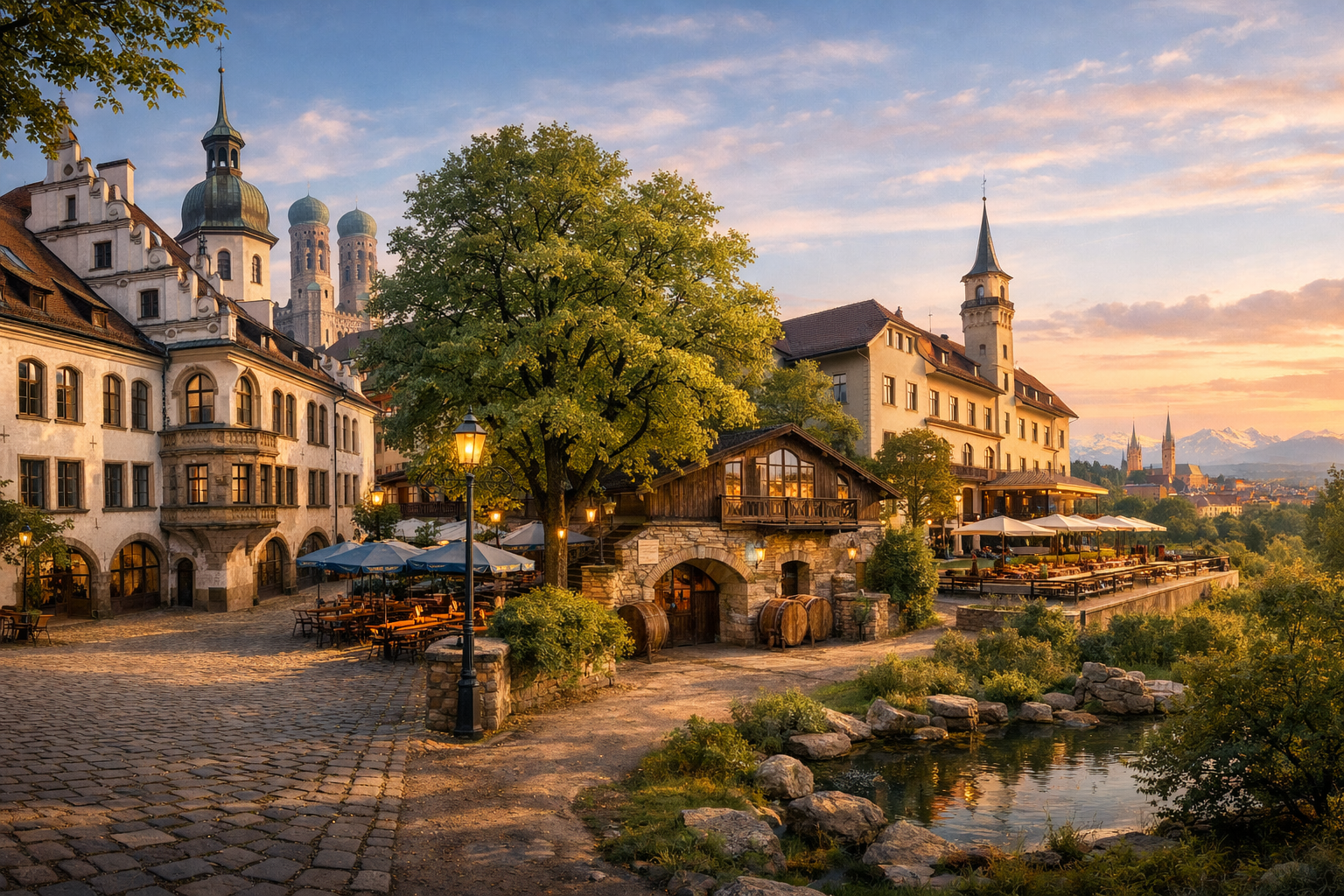
Germany, Bavaria. A Munich route through the historic beer halls Hofbräuhaus München, Augustiner-Keller, and the brewery restaurant Paulaner am Nockherberg, featuring Bavarian cuisine and an introduction to varieties of Munich lager.

Germany, Bavaria. A Munich route through the historic beer halls Hofbräuhaus München, Augustiner-Keller, and the brewery restaurant Paulaner am Nockherberg, featuring Bavarian cuisine and an introduction to varieties of Munich lager.

Discover Munich through its legendary beer halls, from the lively Hofbräuhaus München to the traditional Augustiner-Keller and Paulaner am Nockherberg. Along the way, savor hearty Bavarian cuisine and get to know the rich variety of classic Munich lagers in the city where beer culture runs deep.

🧭 ROUTE BY DAY

Ready-made country and city routes with daily plans, sights, transport and accommodation. Buy PDF guides for independent travel.

🧭 ROUTE BY DAY


Day 1 — Old Munich: Bier- und Oktoberfestmuseum → Hofbräuhaus München → Viktualienmarkt

  • 🚶 Start your beer weekend by immersing yourself in the context rather than jumping straight into large steins: the Beer and Oktoberfest Museum in the very center of Munich is a rare place where the history of the city’s brewing, the traditions of Munich lager styles, and the phenomenon of Oktoberfest come together into one coherent picture. The museum is housed in one of the city’s oldest buildings, and the atmosphere itself sets the right pace: first understand how Münchner Helles differs from Dunkel, why lager culture in Bavaria is so closely tied to urban breweries, and how beer halls became part of public life. Across three floors, the exhibits clearly cover raw ingredients, fermentation, the development of Munich breweries, and the evolution of folk festivals. If you can book a guided tour with tasting in advance, it is one of the best ways to enter the subject without rushing and without chaotic bar-hopping. The museum is usually open Monday to Saturday from 11:00 to 19:00 and closed on Sundays and holidays, so it makes sense to build the first day around it; address: Sterneckerstraße 2, 80331 München.

  • 🚶 After the museum, walk a few minutes to Hofbräuhaus München — the city’s most famous beer hall, long since beyond the role of a mere tourist symbol. Behind the facade on Platzl lies a living stage of Munich beer culture: massive halls, painted vaults, orchestral music, the noise of long wooden tables, and that very feeling that you have arrived somewhere beer was not a trendy pastime, but part of everyday urban life for generations. This is an especially good place to try classic Munich styles paired with solid Bavarian cuisine: roast pork, sausages, pretzels, dumplings, and snacks designed not for a hurried tasting, but for a long table-centered rhythm. Officially, the restaurant is open daily from 11:00 to 00:00, the kitchen usually closes around 22:00, and the last drink orders are taken closer to 23:30. Address: Platzl 9, 80331 München. For an evening visit, booking is highly recommended, especially on Fridays, Saturdays, and during high season.

  • 🍺 For your first full introduction to Munich lager at Hofbräuhaus, it is wise to choose not the maximum volume, but a comparative tasting at a moderate pace: start with a softer pale lager profile, then move on to the more bready, malty, and richer shades of dark Munich beer. The point of this day is not to “manage to try everything,” but to learn to recognize the difference between clean lager fermentation, bready maltiness, a herbal hop note, and the overall balance of body. Take breaks, order water and food between servings, and if you are traveling as a pair or group, share tastings among yourselves. In Germany, alcohol consumption for beer is permitted only for adults under local rules, and the tour should be planned strictly for guests 18+.

  • 🚶 To finish the day, take a calm walk through the old center to Viktualienmarkt — this is a useful part of the route precisely after tastings. The historic market helps change the pace: among the city fountains, stalls with local products, and open food spots, it is easy to pause, drink coffee or mineral water, or eat something light before returning to the hotel. The market itself is usually active Monday through Saturday, with Sunday off, though individual food vendors may follow their own schedule. It is best to plan your return to the hotel on foot, by U-Bahn/S-Bahn, or by taxi. After tastings, do not take a car, motorcycle, or scooter.


Day 2 — Classic beer Munich: Augustiner-Keller → Hackerbrücke/center → Englischer Garten

  • 🚶 Dedicate the second day to Augustiner-Keller — a place that feels more “Munich to the core” than ceremonial, and therefore especially valuable for those who want to understand local beer culture more deeply. Augustiner is one of the city’s most respected brewing traditions, and Augustiner-Keller itself combines a large historic restaurant, a beer garden, and that very atmosphere of unhurried urban conviviality, where beer does not exist separately from life, but within it. Address: Arnulfstraße 52, 80335 München. The location is very convenient logistically: Hauptbahnhof and Hackerbrücke are nearby, so it is best reached by public transport. According to official information, the beer garden is usually open from 11:00 to midnight, the restaurant from 10:00 to 01:00, and the cellar hall roughly from 16:00 to 01:00; however, the venue reserves the right to close earlier when business is slow. Booking is advisable for dinner and larger groups.

  • 🍺 Here it makes particular sense to focus on the Münchner Helles style and on the culture of serving fresh lager in a traditional urban beer hall. If the first day emphasized the legendary status and scale of Hofbräuhaus, then at Augustiner-Keller it is interesting to catch the nuances: malt softness, rounded flavor, delicate hop bitterness, a clean dry finish, and the overall drinkability for which Munich pale lager is loved by both locals and visitors. If seasonal offerings or service from traditional barrels are available, do not miss them, but keep a moderate pace: one or two tastings with a long break and substantial food will give more impressions than trying to turn the day into a marathon.

  • 🍽️ Augustiner-Keller pairs well with classic Bavarian dishes without excessive gastronomic complexity: roast chicken, schnitzel, sausages, Obatzda, pretzels, and hearty snacks that help not only open up the beer, but also maintain a comfortable tasting pace. Plan lunch in the late afternoon or an early dinner so you do not have to rush afterward. If you want to add a visually pleasant walk before returning, you can head toward the area around Hackerbrücke and then return to the center by S-Bahn or tram — a short and convenient scheme without a car.

  • 🌳 For relaxation after a full beer day, Englischer Garten is an excellent choice — Munich’s largest city park, where you can quite literally “air out” your impressions. The southern part of the park is especially convenient: broad paths, lawns, views of the Chinese Tower, a calm walking pace, and the feeling that the city has suddenly become quieter. This is an important part of a responsible route: between tastings and the evening, you need fresh air, water, and unhurried movement. If you are tired, return to the hotel by U-Bahn, tram, or taxi. No self-driving after visiting beer halls.

Day 3 — Nockherberg and Bavarian gastronomy: Paulaner am Nockherberg → Bavaria/Theresienwiese → final evening

  • 🚶 Dedicate the final day to Paulaner am Nockherberg — this is no longer just a historic beer hall, but a place where Bavarian cuisine, beer tradition, and a clear connection with the brewing process come together especially well. Inside, there is an on-site brewery with copper kettles, and the restaurant itself emphasizes a modern interpretation of Bavarian dishes and seasonal beer specialties. Address: Hochstraße 77, 81541 München. According to official information, the restaurant is open daily from 12:00 to 24:00; the summer self-service beer garden usually operates depending on the weather, generally Monday to Friday from 16:00 to 23:00, and on weekends and holidays from 12:00 to 23:00. The venue may have exceptions by date, private events, and separate areas, so before your trip you should definitely check current opening hours and booking rules on the official website.

  • 🍺 This is exactly where it is best to end the tour by getting to know not only basic Munich lager, but also the house’s seasonal or special beers, if they are available on the current list. At Paulaner am Nockherberg, the contrast itself matters: on one hand, it is the tradition of Nockherberg, closely tied to a strong Bavarian beer identity; on the other, it offers a more modern restaurant presentation that helps show how classic lager culture continues to live in a contemporary urban format. If special brews are available on your date, ask the staff to help arrange a tasting sequence from lighter and cleaner flavors to richer ones. Do not overload the day: the end of the tour is better made gastronomic rather than extremely alcoholic.

  • 🍽️ Bavarian cuisine here is not a secondary accompaniment, but a full part of the experience. Seasonal dishes, regional products, meat specialties, rich sauces, and Bavaria’s bread culture show well why lager styles became so naturally integrated into local gastronomy. This is the right moment to compare the character of the food and service with the first two days: Hofbräuhaus offers scale and theatricality, Augustiner-Keller offers coziness and a traditional rhythm, and Paulaner am Nockherberg offers a more polished restaurant finale with a visible link between the kitchen and the brewing process.

  • 🏛️ Before or after lunch, it is convenient to include a walk to Bavaria and Ruhmeshalle at Theresienwiese — a symbolic place for Munich’s entire beer history, because Oktoberfest is held here. The huge Bavaria statue and the Theresienwiese grounds help conclude the tour not only through taste, but through the urban scale of the tradition. If your trip is not during the festival period, it will be much quieter here, and you can imagine how this area turns into one of the most famous beer stages in the world. During the season and on event days, there may be significantly more people around, and the access hours for the observation part of Bavaria should be checked separately. It is best to plan your return to the center by tram, U-Bahn, bus, or taxi.

Flight tickets

eSIM for travel

Buy PDF guide

Buy PDF guide — 6.43 USD

PDF — 6.43 USD