
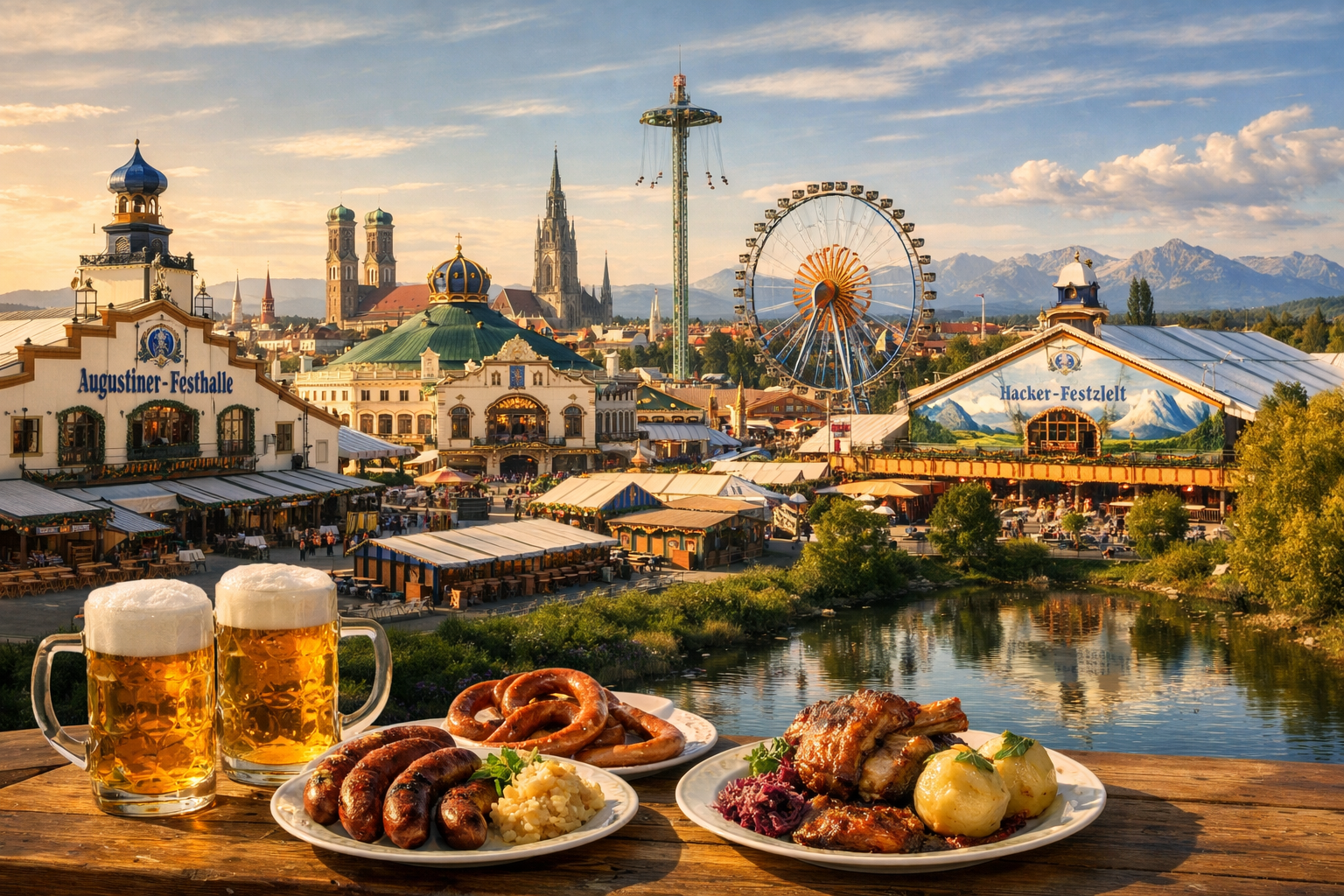
Day 1 — Munich: getting acquainted with the city's beer culture and historic center
🚆 Arrival in Munich. From Franz Josef Strauß Airport, the easiest way to get to the center is by S-Bahn or by booking a transfer in advance; for a beer tour this is especially important, because the rest of the route is best planned without a car. Check into a hotel in Altstadt or near Marienplatz/Hauptbahnhof: this makes it easier to combine walks through the old town, evening beer halls, and trips to Wiesn.
🏛️ Start with the Bier- und Oktoberfestmuseum at Sterneckerstraße 2 — arguably the best introduction for the whole trip. The museum is located in one of Munich’s oldest town houses and explains very well why beer in Bavaria is not just a drink, but part of the city’s identity, craftsmanship, economy, and festive culture. Across three floors, you’ll find material on the development of Munich brewing, the history of Oktoberfest, old beer traditions, festival tableware, music, and everyday life. Keep in mind that the museum usually operates Monday to Saturday, roughly from 11:00 to 19:00, and is closed on Sundays and public holidays; tours and tastings are available by reservation, so before your trip be sure to recheck the schedule and whether an English- or Russian-language format is available.
🍺 After the museum, it makes sense to walk a few minutes to Hofbräuhaus München, Platzl 9 — the city’s most famous historic beer hall, whose image has long become one of Munich’s symbols. This is not just a tourist postcard: huge halls with painted vaulted ceilings, copper and wood details, traditional music, and the lively density of the crowd create that very “classic” Munich experience. It’s a great place to start exploring local styles and serving traditions: you can try a pale lager in Bavarian style and pair it with white sausages, pretzels, Schweinshaxe, or Obatzda. Officially, the restaurant is open daily from about 11:00 until midnight, the kitchen usually until 22:00, and the last drink service is closer to 23:30. If you want a calmer meal, it’s better to come before the evening peak.
🚶 Then continue your walk through the old center: Marienplatz, Viktualienmarkt, and the area around Platzl are especially good for the first day, when you don’t want to rush and would like to ease into the city’s rhythm. Around Viktualienmarkt, it is convenient to notice Bavaria’s gastronomic contrasts: from cheeses and meat delicacies to mustard, pickles, and bread, all of which open up very differently when paired with local beer. Even if the main theme of the tour is beer, alternating tastings with food and walks will help you keep the pace without overload.
🍽️ In the evening, end the day at Ayinger am Platzl, Platzl 1A, if you want a more intimate and carefully composed Bavarian dinner with a focus on Ayinger brewery. It’s a good contrast to the louder Hofbräuhaus: here it’s easier to taste beer thoughtfully rather than “carried by the moment.” The venue usually opens at 11:00; from Sunday to Thursday it stays open roughly until 23:00, and on Friday and Saturday until midnight, with the kitchen daily until 22:00. For dinner, it’s worth reserving a table in advance, especially during Oktoberfest.
⚠️ Responsible consumption: in Germany, buying and drinking beer and wine is allowed from age 16, and spirits from 18, but for a comfortable route it’s better to plan no more than 2–3 tasting stops per day, always with food and water. After evening tastings, return to the hotel on foot, by U-Bahn/S-Bahn, or by taxi; do not use a rental car or drive yourself as part of this tour.