
Buy PDF guide

Buy PDF guide — 6.43 USD

PDF — 6.43 USD

Gastronomic Toronto - markets - cuisines of the world - bars

Gastronomic Toronto - markets - cuisines of the world - bars

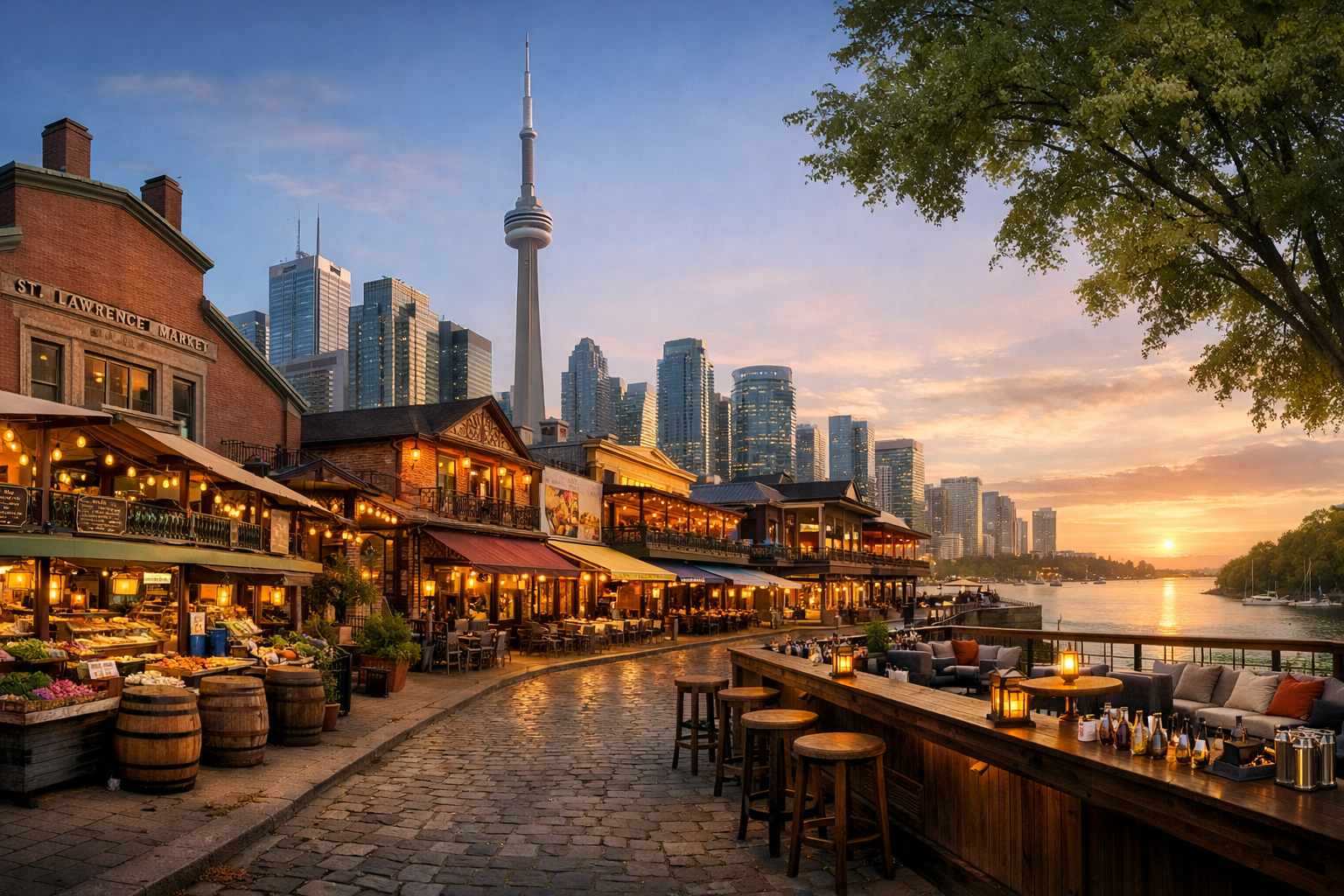
Taste your way through Toronto, where global cuisines, lively markets, and stylish bars turn every neighborhood into a new discovery. From the bustle of St. Lawrence and Kensington Market to cocktails in the Distillery District, late nights in the Entertainment District, and polished dining in Yorkville, the city serves up one unforgettable stop after another.

🧭 DAY-BY-DAY ITINERARY

Ready-made country and city routes with daily plans, sights, transport and accommodation. Buy PDF guides for independent travel.

🧭 DAY-BY-DAY ITINERARY


Day 1 — Toronto: St. Lawrence Market, Old Town and Distillery District

  • 🚶 It’s best to start the first day with the Toronto where gastronomy feels like part of the city’s memory. In the morning, head to St. Lawrence Market — the legendary market of Old Toronto, where artisan shops, cheese counters, bakeries, meat delicacies, and the feeling of an old lakeside trading city all come together in one place. It’s an ideal spot for a relaxed breakfast, a stroll between the stalls, a taste of local products, and a chance to catch the city’s rhythm not through “checkmarks,” but through flavor and aromas. After the market, continue on foot through Old Town: the area is known for its brick architecture, calmer pace, and short visual pauses — this is a Toronto that is neither glassy nor rushed, but almost European in scale.

  • 🍽️ After lunch, it makes sense to make a gentle transition to the Distillery District. From St. Lawrence Market, it’s an easy walk of about 20–25 minutes; if you want to save energy, a taxi usually takes around 10 minutes, and a streetcar/bus with a transfer takes roughly 15–20 minutes depending on waiting time. This former distillery district now works as one of the city’s most atmospheric walking areas: Victorian industrial architecture, brick courtyards, art spaces, designer shops, coffeehouses, wine bars, and restaurants. It’s a great place to plan a long evening: first a leisurely walk and photos, then an aperitif, then dinner at one of the neighborhood venues. Distillery is especially well suited for the first evening because it doesn’t require long transfers and beautifully brings together the theme of the trip — food, drinks, history, brick, light, and the feeling of an “urban theater” under the open sky.


Day 2 — Toronto: Kensington Market, Chinatown and bars of the western downtown

  • 🚶 Dedicate the second day to Toronto’s most layered food district — Kensington Market. In the morning, it’s convenient to leave from central Toronto by TTC: from the King/Union area, the trip usually takes about 20–30 minutes including the walk to the stop and waiting for the streetcar, while by taxi it’s about 12–20 minutes depending on traffic. Kensington is not about a “pretty postcard,” but about character: independent food shops, street food, small grocery stores, vintage storefronts, graffiti, coffeehouses, and the cuisines of Latin America, the Caribbean, the Middle East, and Asia literally a few steps from one another. This is a district best not rushed through: it’s important to leave time for spontaneous stops, tastings, coffee, dessert, and small purchases.

  • 🥟 After a walk through Kensington, it’s natural to extend the route toward Chinatown and the western downtown. The walk takes about 10–15 minutes, and this is exactly where you feel especially clearly why Toronto is considered a city of world cuisines: dim sum, noodles, bakeries, tea shops, Asian desserts, small family-run restaurants, and more contemporary food projects coexist without feeling like a “set for tourists.” During the day, it makes sense to plan a long lunch, then give yourself 1–1.5 hours of quiet rest — for example, in a park, gallery, or café — so that by evening you can return to the bar theme. In the evening, move toward Queen West or the Entertainment District: by taxi it’s usually 10–15 minutes, on foot 25–35 minutes. The end of the day is a cocktail or wine bar where you can finally slow down and feel another side of Toronto: energetic, evening-filled, urban, but without excessive hustle.

Day 3 — Toronto: Yorkville, ROM/AGO by choice, final dinner and rooftop bar

  • 🚶 It’s good to make the third day more “put together” and elegant. In the morning, head to Yorkville — a district where Toronto no longer sounds like markets and street food, but like calm urban luxury: stylish facades, good coffeehouses, pastry shops, wine lists, terraces, and a more measured rhythm. It’s easy to get here from downtown by subway: from Union Station to the Bloor-Yonge / Bay area it’s usually about 15–20 minutes plus a short walk; by taxi, approximately 15–25 minutes. It’s especially pleasant here to have a late breakfast and then add a cultural block: the Royal Ontario Museum is literally next to Yorkville, and if you want to shift toward art, the Art Gallery of Ontario can be left as a separate goal for the day with a transfer of about 15 minutes by taxi or 20–30 minutes by public transport.

  • 🍷 Build the finale of the route around a beautiful dinner and a bar spot with a view. After the daytime program, don’t try to overload yourself with new neighborhoods: it’s better to leave 1–2 hours to rest at the hotel so you can head out in a different rhythm in the evening. For the final evening, the Entertainment District or the waterfront area work especially well: you can get there from Yorkville in about 15–20 minutes by taxi or 20–30 minutes by subway/streetcar. The logic of the day is simple and very effective: first the calm urban polish of Yorkville, then a museum or gallery, then a pause, and in the evening — Toronto’s final chord through creative cuisine, good wine or a cocktail, and views of the city. This kind of ending leaves the feeling that you saw not only the “sights,” but the city’s gastronomic personality itself — multicultural, confident, diverse, and very alive.

Flight tickets

eSIM for travel

Buy PDF guide

Buy PDF guide — 6.43 USD

PDF — 6.43 USD